ART WIKI32.963 udstillet
KortSamlingKunstnereMuseerUdstillingerJournal
Log ind

ART WIKI

Hvor mesterværket hænger, og hvornår man bliver lukket ind.

Samlinger: Art Institute of Chicago, Det Russiske Museum, Eremitagen, Getty Villa, Harvard Art Museums, Hirshhorn Museum and Sculpture Garden, J. Paul Getty Museum, Louvre, Metropolitan Museum of Art, Minneapolis Institute of Art, Museum of Modern Art, National Gallery of Art, National Museum of Asian Art, National Portrait Gallery (Smithsonian), Pusjkinmuseet, Rijksmuseum Amsterdam, Smithsonian American Art Museum, Statens Museum for Kunst, The Cleveland Museum of Art, Tretjakovgalleriet, Victoria and Albert Museum, Whitney Museum of American Art, Ruslands statskatalog over museumsfonden (274 museer), Europeana (19 museer), Wikidata (6 museer), Paris Musées (12 museer) og Joconde, det franske kulturministeriums museumsdatabase (495 museer). Billederne tilhører deres rettighedshavere.

Afsnit

  • Kort
  • Søgning
  • Samling
  • Mesterværker
  • Udstillet nu
  • Kunstnere

Mere

  • Museer & gallerier
  • Udstillinger
  • Journal
  • Hvor data kommer fra
  • Privatliv & cookies
ForsideKortKatalog
  1. Kunstnere/
  2. Fernand Léger
Fernand Léger — portræt

Frankrig · 1881–1955

Fernand Léger

Joseph Fernand Henri Léger var en fransk maler, skulptør og filmmager.

  • 293i kataloget
  • 17udstillet nu
  • 19samlinger
  • 6lande
VærkerLivKort

Joseph Fernand Henri Léger (født 4. februar 1881, død 17. august 1955) var en fransk maler, skulptør og filmmager.

Hans billeder kan ses på Fondation Maeght ved Saint-Paul de Vence i Provence i Frankrig.

Léger var aktiv som underviser i mange år, og danske malere modtog undervisning af ham: Blandt andre Franciska Clausen (1899-1986), Rita Kernn-Larsen (1904-98), Asger Jorn (1914-73) og Ole Høst (1915-43).

Franciska Clausen var i flere år Fernand Légers elskerinde.
Læs videre på Wikipedia

Fernand Léger

1881–1955

Født
4. februar 1881, Argentan
Død
17. august 1955, Gif-sur-Yvette74 år gammel
Begravet
Gif-sur-Yvette
Family
  • Nadia Léger
Pupils
  • Ruth Reeves
  • Tarsila do Amaral
  • Donald Deskey
  • Lygia Clark
  • Gordon Onslow Ford
  • Yen Shui-long
Uddannelse
  • Académie Julian
  • École nationale supérieure des arts décoratifs
Arbejdssteder
  • New York City
  • Munich
  • Berlin
  • Paris
  • Gif-sur-Yvette
  • Caen
  • Vienna
Medlem af
  • Koninklijke Vlaamse Academie van België voor Wetenschappen en Kunsten
  • American Abstract Artists
Movement
  • modernism
  • cubism
Influences
  • Henri Rousseau

Krønike

  1. 1880
  2. 1890
  3. 1900
  4. 1910
  5. 1920
  6. 1930
  7. 1940
  8. 1950

1880– 1889

  1. 1881

    Fødsel · 4. februar 1881

    Argentan

1890– 1899

  1. 1890

    Uddannelse · 1890–1899

    College in Argentan and architectural training

    In 1890–1896 Léger attends the college in Argentan and a church school in Tinchebray, and in 1897–1899 trains as an architect. His father, Henri Armand Léger, a cattle breeder, died a few years after his son's birth; his mother, Marie Adèle Dunon, lived on her farm in Lisores.

1900– 1909

  1. 1900

    Karriere · 1900–1903

    Move to Paris and service in the sappers

    In 1900 Léger moves to Paris and supports himself as an architectural draftsman. In 1902–1903 he serves in the 2nd sapper regiment at Versailles.

  2. 1903

    Uddannelse · after 1903

    Rejected by the Beaux-Arts and “three empty and useless years”

    After his service Léger tries to enter the École des Beaux-Arts, is rejected, and enrolls at the School of Decorative Arts instead. He nevertheless attends the Beaux-Arts as a non-enrolled student, studying with Gérôme and Ferrier, and also the Académie Julian; he later described these three years as “empty and useless”.

  3. 1904

    Karriere · 1904–1907

    A studio with André Mare; “My Mother's Garden”

    In 1904–1907 Léger shares a studio with his fellow countryman André Mare, working for an architect and as a retoucher for a photographer. He begins to work seriously as a painter only at 25; from this period, marked by the influence of Impressionism, survives “My Mother's Garden” (1905), one of the few early paintings he did not later destroy.

  4. 1907

    Begivenhed

    The 1907 Cézanne exhibition and a turn to geometry

    Cézanne's posthumous exhibition of 1907 (at the Salon d'Automne by some accounts, at the Salon des Indépendants by others) strongly influences Léger: a new emphasis on drawing and geometry appears in his work.

  5. 1908

    Bopæl · 1908–1909

    La Ruche and Montparnasse: Archipenko, Lipchitz, Chagall, Rousseau

    In 1908 Léger settles in La Ruche (other accounts have him moving to Montparnasse in 1909) and meets Alexander Archipenko, Laurens and Jacques Lipchitz, later Chaïm Soutine, Marc Chagall and Robert Delaunay and their guests (Max Jacob, Apollinaire, Raynal, Blaise Cendrars); some become his friends. In 1909 he also meets Henri Rousseau, “le Douanier”, whose frontal compositions, firm contours and smoothly blended colours his own work of the 1920s frequently recalls.

    • Bridge, Fernand Léger, 1908?
      Bridge1908?
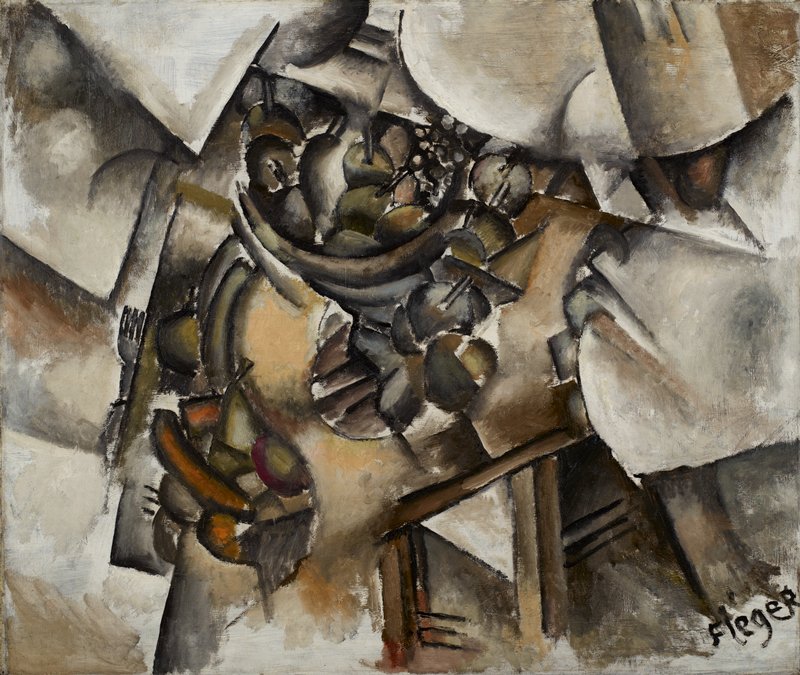
    • Table and Fruit, Fernand Léger, 1909
      Table and Fruit1909
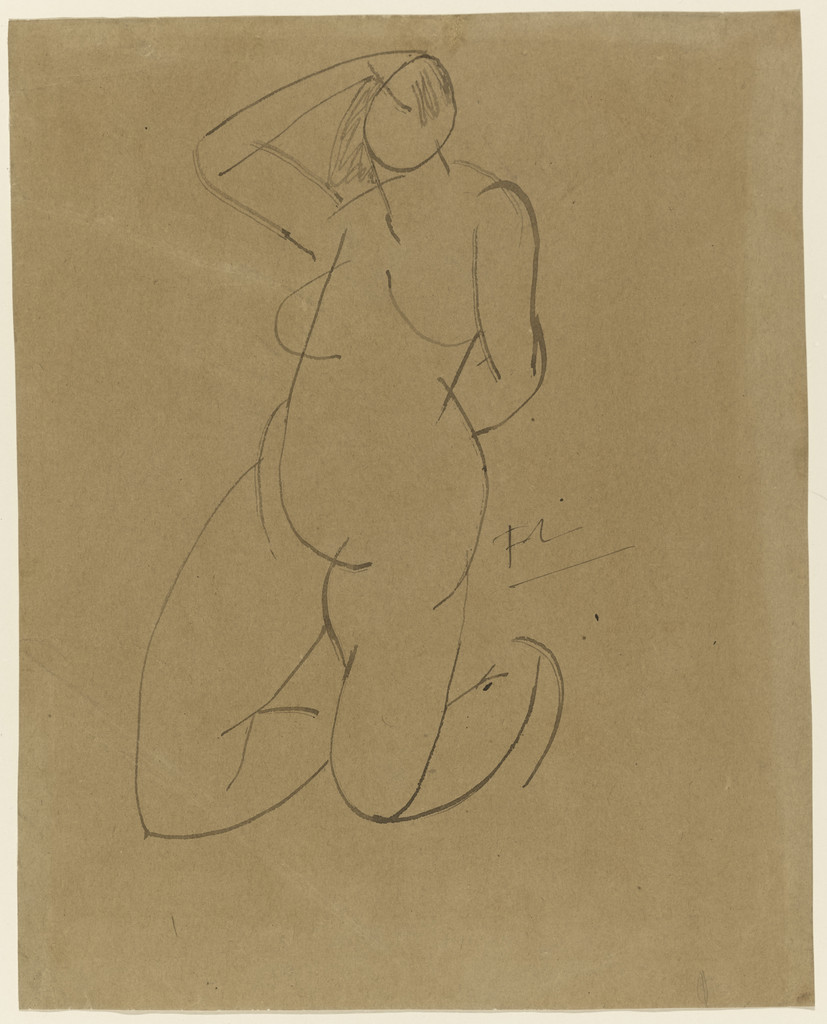
  • Kneeling Nude, Fernand Léger, c. 1907–08
    Kneeling Nudec. 1907–08

1910– 1919

  1. 1910

    Udstilling

    The 1910 Salon d'Automne: “Nudes in the Forest”

    In 1910 Léger exhibits at the Salon d'Automne in the same room (salle VIII) as Jean Metzinger and Henri Le Fauconnier. The major painting of these years is “Nudes in the Forest” (1909–1910), in which he develops a personal form of Cubism that critics called “Tubism” for its emphasis on cylindrical forms.

    Karriere

    Kahnweiler buys his paintings

    In 1910 the dealer Daniel-Henry Kahnweiler, a supporter of Picasso and Georges Braque, buys several of Léger's paintings, which allows the artist to move a year later to the rue de l'Ancienne Comédie.

  2. 1911

    Udstilling

    The “Cubists' room” at the Salon des Indépendants

    In 1911 the hanging committee of the Salon des Indépendants places the painters identified as Cubists together — Metzinger, Gleizes, Le Fauconnier, Delaunay and Léger; in room 41, nicknamed the “Cubists' room”, Léger shows “Nudes in the Forest”. It is the first time Cubism is revealed to the general public as an organized group; with the same group Léger also exhibits in Brussels.

  3. 1912

1920– 1929

  1. 1920

    Møde

    Friendship with Le Corbusier, “The Mechanic” and “The Great Lunch”

    In 1920, at the founding of the journal “L'Esprit nouveau”, Léger befriends Le Corbusier, who remains a lifelong friend. In the same year he paints the canvases “The Mechanic” and “The Great Lunch”, and from this year he exhibits at the Indépendants for many years.

  2. 1921

    Møde

    Meeting van Doesburg and Mondrian

    In 1921 Léger meets van Doesburg and Mondrian.

    Karriere

    Gance's “La Roue” and Malraux's “Lunes en papier”

    In 1921, together with Blaise Cendrars, Léger works on Abel Gance's film “La Roue” and illustrates André Malraux's book “Lunes en papier”. He is so drawn to cinema that he considers for a time giving up painting for filmmaking.

  3. 1922

    Karriere · 1922–1924

    Stage and screen: the Swedish Ballet and “L'Inhumaine”

    In 1922 Léger designs sets, costumes and the curtain for “Skating Rink” (music by Milhaud) for Rolf de Maré's Swedish Ballet, and in 1923 for the ballet “La Création du monde” (Milhaud, libretto by Cendrars). In 1923–24 he designs the laboratory set for Marcel L'Herbier's film “L'Inhumaine”.

1930– 1939

  1. 1930

    Møde

    Meeting Calder

    In 1930 Léger meets Calder. In the same year his work is shown at the Leicester Galleries in London and at Paul Rosenberg's gallery in Paris, and he paints “The Mona Lisa with Keys” (now in the Léger Museum in Biot).

  2. 1931

    Rejse · September – December 1931 · New York City

    First trip to the United States: New York and Chicago

    Léger spends the summer of 1931 in Austria with his friends the Murphys and from September to December makes his first trip to the United States, to New York and Chicago. His work is shown at the galleries of John Becker and Durand-Ruel.

  3. 1933

    Udstilling

    An exhibition in Zurich and a trip to Greece with Le Corbusier

    In 1933 a large exhibition of Léger's work is held at the Kunsthaus in Zurich, which he attends in person. In the same year he travels with Le Corbusier to Greece for the international congress of modern architecture, and on the ship home he gives a lecture, “Architecture and Life”.

1940– 1949

  1. 1940

    Bopæl · 1940–1945

    The war years in exile in the United States

    In 1940–1945 Léger lives in exile in the United States. He teaches at Yale University, where Focillon, Milhaud and Maurois also teach, gives “Composition with Two Parrots” to the Museum of Modern Art in New York, and in the summer gives a course of lectures at Mills College (Oakland, California), where he organizes an exhibition of his paintings.

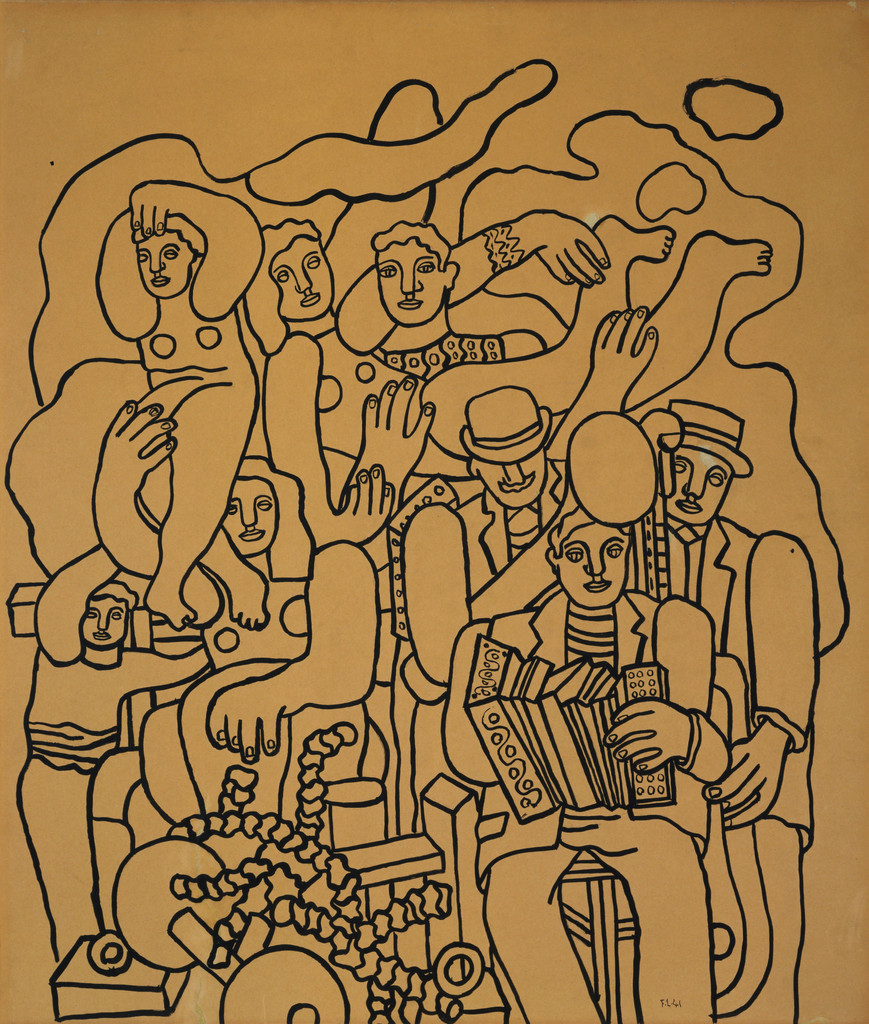
    • Les saltimbanques, Fernand Léger, 1940
      Les saltimbanques1940
    • Circus Family, Fernand Léger, 1941
      Circus Family1941
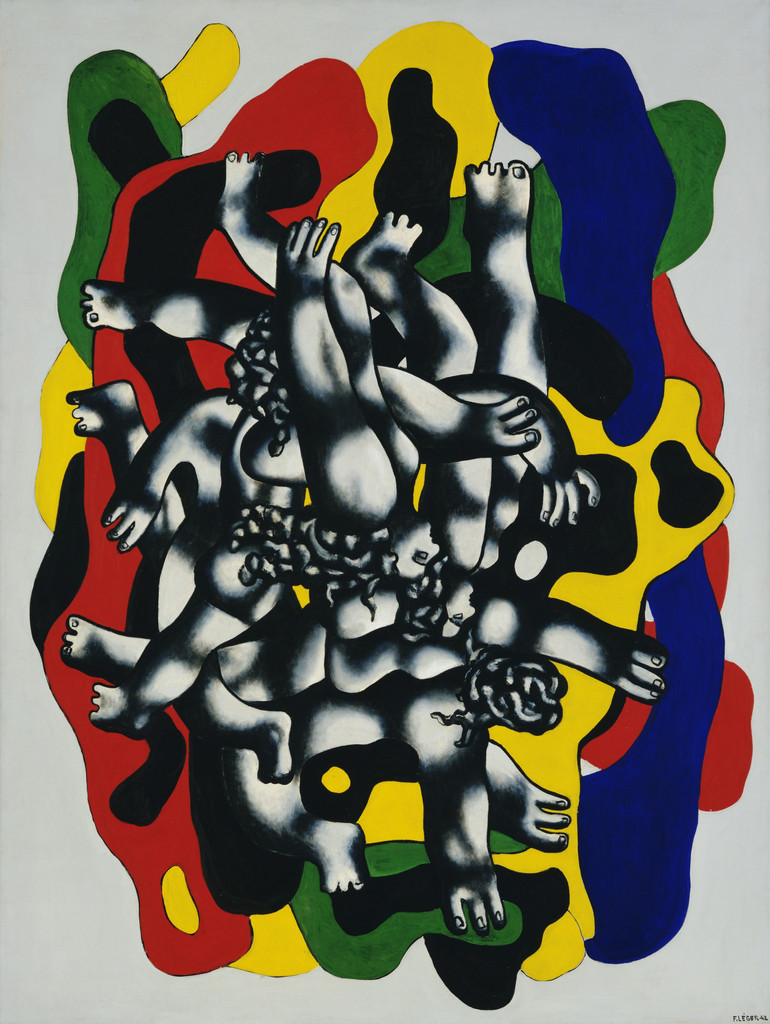
    • The Divers, Fernand Léger, 1941-42
      The Divers1941-42
    • Abstraction, Fernand Léger, 1943
      Abstraction

1950– 1959

  1. 1950

    Værk

    “The Builders”

    In 1950 Léger completes the painting “The Builders” (other accounts date it to 1951; it is now in the Pushkin Museum of Fine Arts in Moscow).

    Familie

    The death of his wife Jeanne

    In 1950 Léger's first wife, Jeanne-Augustine Lohy, whom he had married in 1919, dies.

  2. 1951

    Udstilling

    The first polychrome sculptures

    In 1951 Léger exhibits his first polychrome sculptures at the Galerie Leiris and a large composition at the Triennale in Milan.

    Værk · September 1951

    Seventeen stained-glass windows for the church at Audincourt

    In September 1951 Léger makes 17 stained-glass windows and a tapestry for the church at Audincourt. During an attack of sciatica he stays at Chevreuse.

Posthumously

  1. 1964

    Udstilling · 28. juni 1964 – 6. oktober 1964

    Documenta III

Udstilling

First exhibition at Kahnweiler's gallery

In 1912 Léger's first exhibition takes place at Kahnweiler's gallery. In the same year he shows “The Smokers” at the Indépendants and “Woman in Blue” at the Salon d'Automne and takes part in the exhibitions of the Section d'Or group.

Karriere

The Section d'Or group at Puteaux

In 1912 Léger joins Le Fauconnier, Metzinger, Gleizes, Picabia and the Duchamp brothers (Jacques Villon, Raymond Duchamp-Villon and Marcel Duchamp) to form the Puteaux Group, also called the Section d'Or; he had met Jacques Villon, and through him the group, at Puteaux as early as 1911.

Værk · 1912–1914

The “Contrasting Forms” series

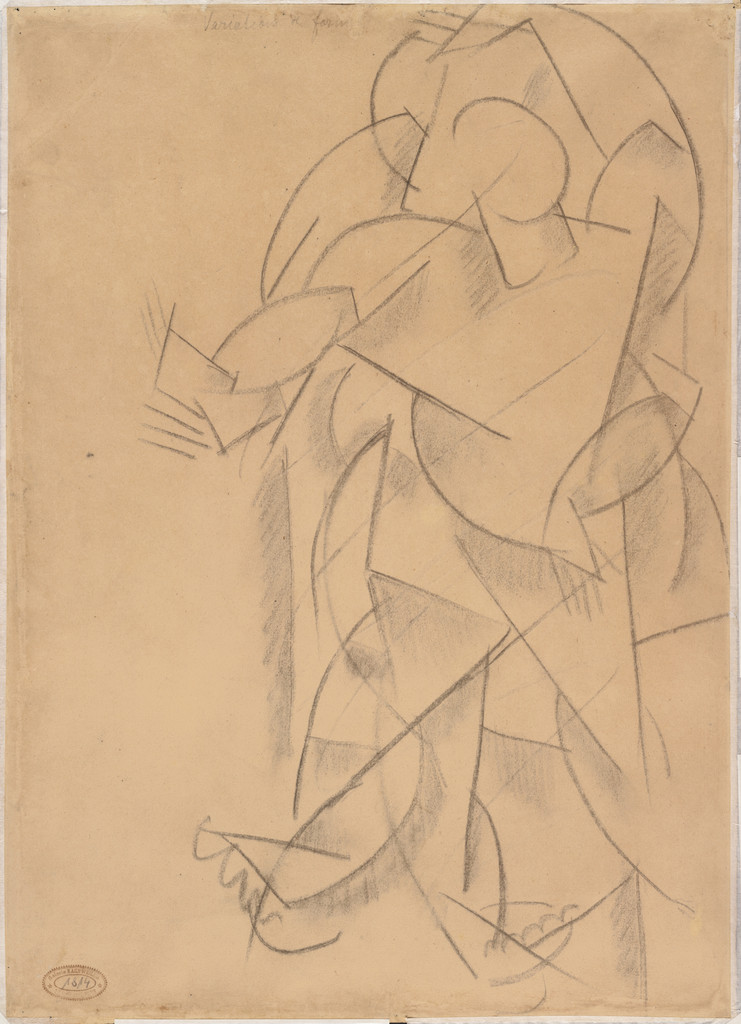
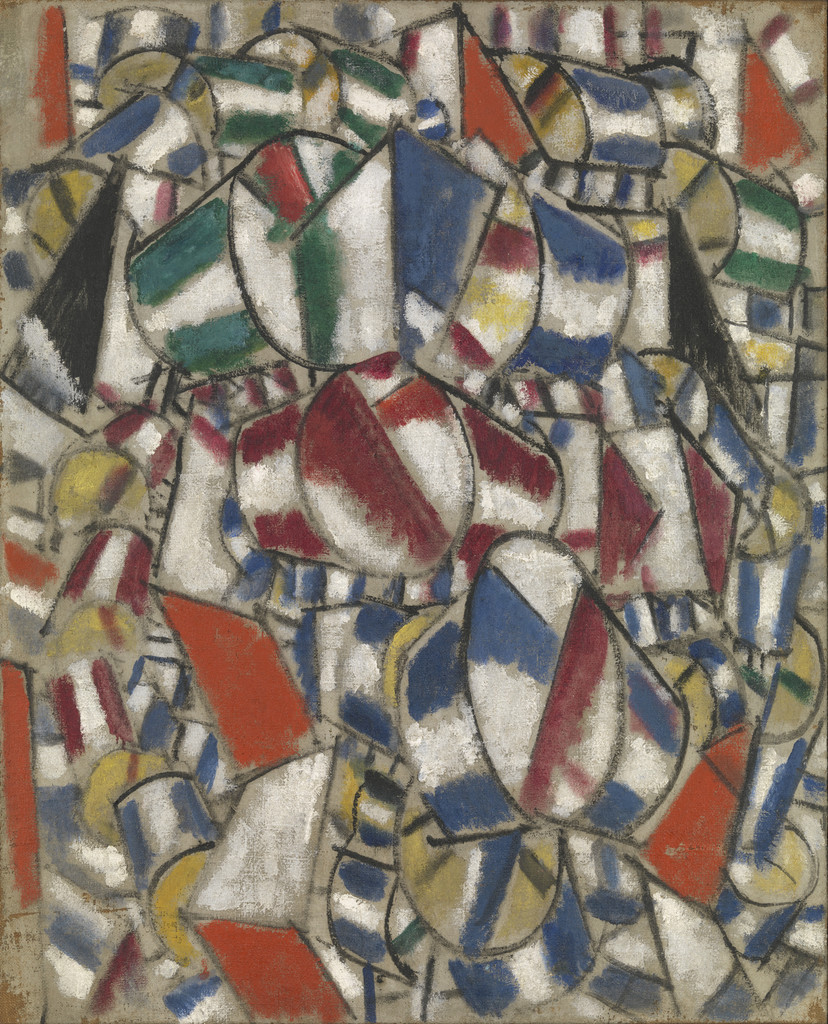
From 1912 to 1914 Léger's paintings grow increasingly abstract: tubular, conical and cubed forms are laconically rendered in rough patches of primary colours plus green, black and white, as in the series “Contrasting Forms”. He makes no use of the collage technique pioneered by Braque and Picasso.

  • 1913

    Udstilling

    The Indépendants, the Armory Show and the Berlin Autumn Salon

    In 1913 Léger takes part in the exhibition of the Indépendants, in the Armory Show and in the first exhibition of the Salon d'Automne in Berlin. In May he gives a lecture at the Vassilieff Academy, “The Origins of Painting and Its Representational Value”, whose text is published in Paris, Berlin and Bergen; in May 1914 a second lecture follows there, “New Discoveries in Modern Painting”.

    Karriere · October 1913

    A contract with Kahnweiler and the studio on rue Notre-Dame-des-Champs

    In October 1913 Léger signs a contract with Kahnweiler to sell him his works. Soon afterwards he rents a studio at 86 rue Notre-Dame-des-Champs, which he keeps for the rest of his life.

  • 1914

    Samtiden · 1914–1916 · Argonne

    Mobilized: two years at the front

    On 2 August 1914, soon after the outbreak of the First World War, Léger is mobilized and sent to the sappers; for two years he is at the front near the Argonne and Verdun, drawing artillery pieces, airplanes and fellow soldiers in the trenches and billets. He paints “Soldier with a Pipe” (1916) while on furlough.

  • 1916

    Helbred · September 1916

    Gassed at Verdun

    In September 1916 at Verdun, where he is transporting the wounded, Léger is gassed — he almost dies after a German mustard-gas attack.

  • 1917

    Værk

    Villepinte: “The Card Players” and the mechanical period

    In 1917, while convalescing in Villepinte, Léger paints “The Card Players”, a canvas of monstrous robot-like figures that reflects his war experience and opens his “mechanical period”; at the front, he explained, he was stunned by the breech of a 75-millimetre gun in the sunlight — the magic of light on white metal made him forget the abstract art of 1912–1913 and want to paint “in slang” with all its colour and mobility. At the end of the year he is discharged from military service.

  • 1918

    Værk · 1918–1919

    “Disks”, “The City”, “Mechanical Elements”

    In 1918–1919 Léger works intensively: he illustrates works by Cendrars, begins the “Disks” series, in which disks suggestive of traffic lights figure prominently, and the paintings “The City” (1919, Philadelphia Museum of Art) and “Mechanical Elements”. He exhibits at Léonce Rosenberg's Galerie L'Effort moderne in Paris and at the Galerie Sélection in Antwerp.

  • 1919

    Familie · December 1919

    Marriage to Jeanne Lohy

    In December 1919 Léger marries Jeanne-Augustine Lohy; she remains his wife until her death in 1950.

    • Contrast of Forms, Fernand Léger, 1912
      Contrast of Forms1912
    • Contrast of Forms, Fernand Léger, 1913
      Contrast of Forms1913
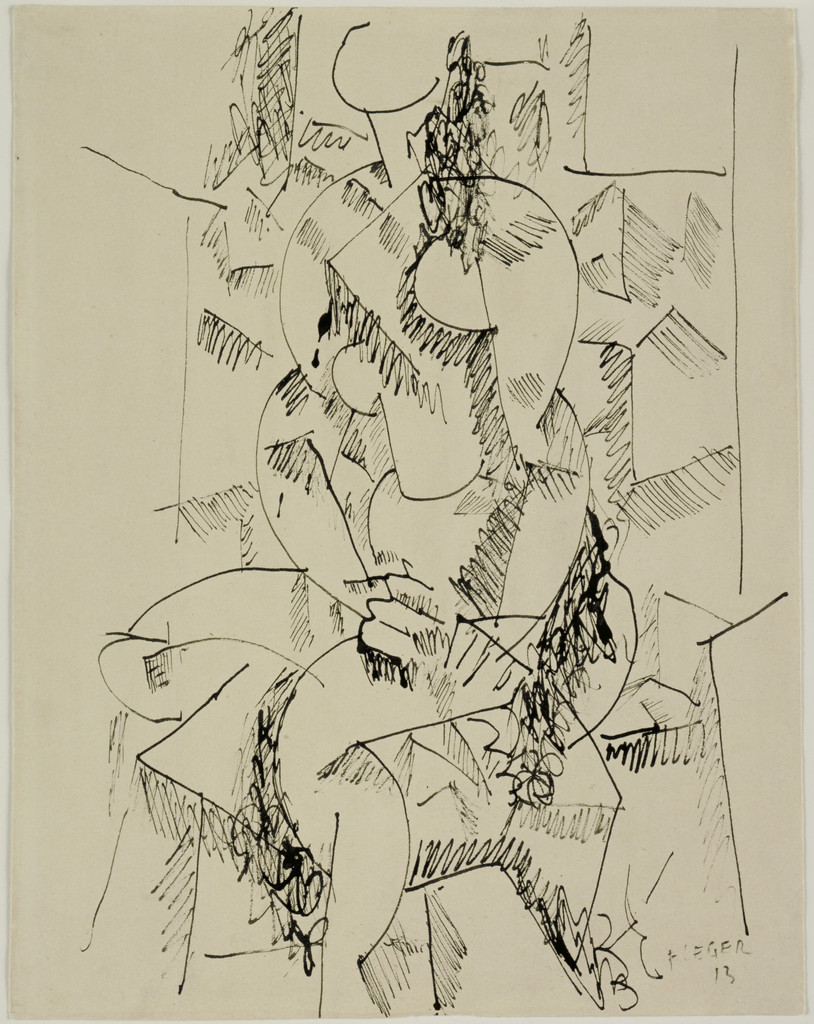
    • Seated Nude, Fernand Léger, 1913
      Seated Nude1913
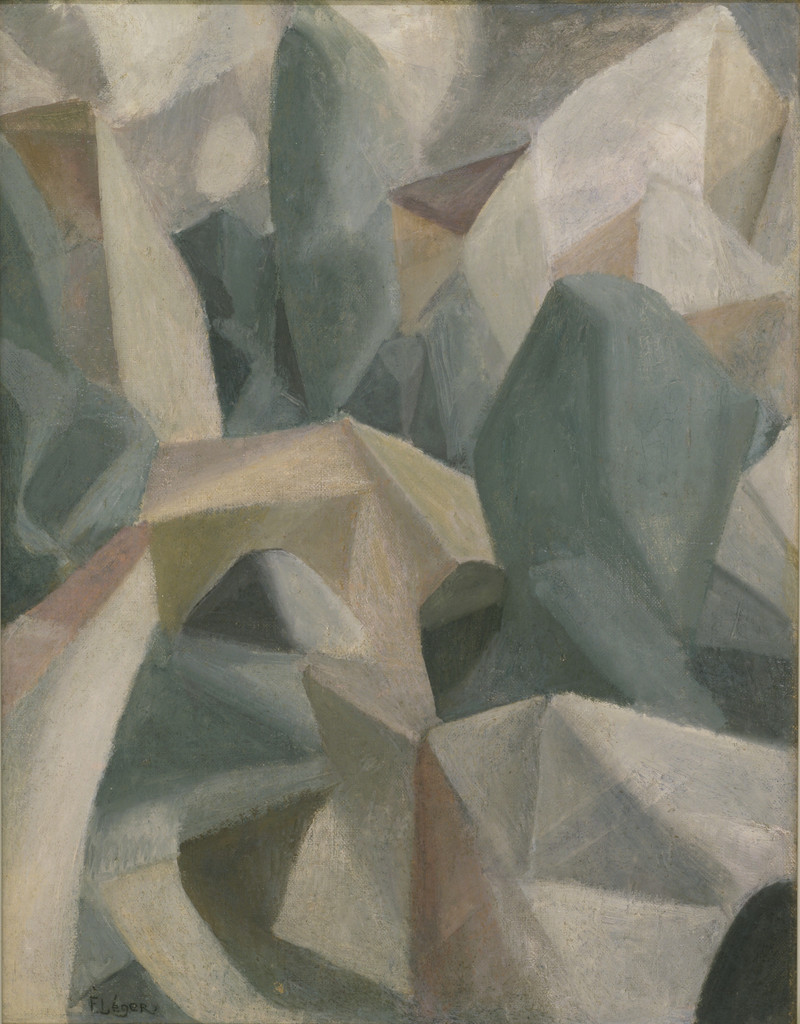
    • The Village, Fernand Léger, 1914
      The Village1914
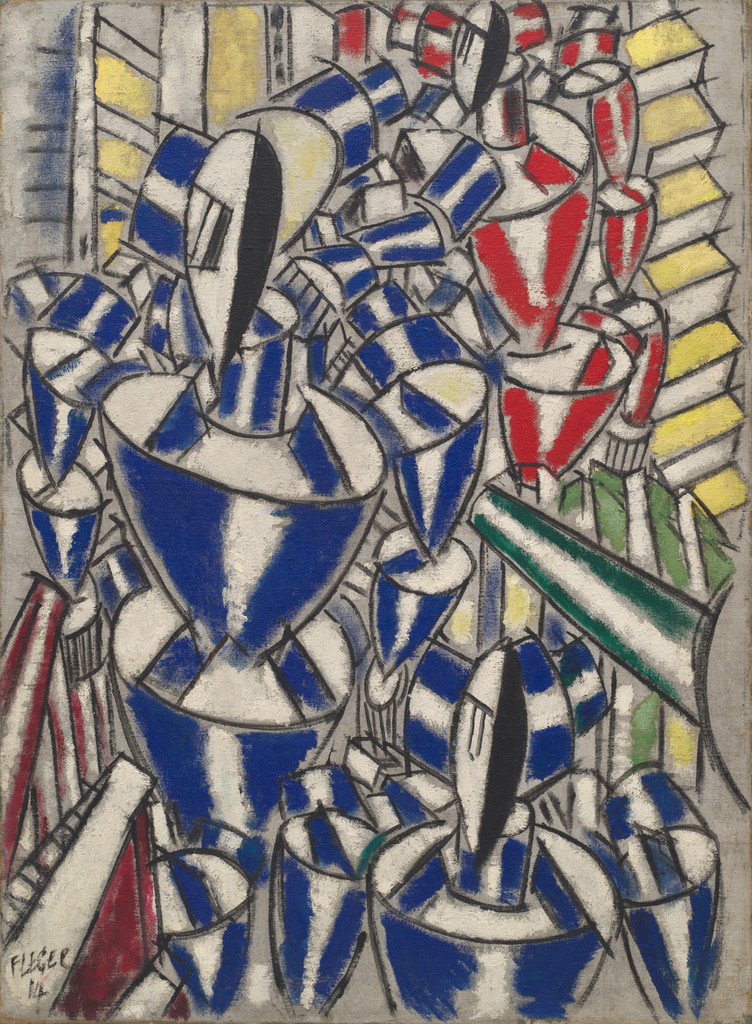
    • Exit the Ballets Russes, Fernand Léger, 1914
      Exit the Ballets Russes1914
    • The Smoker, Fernand Léger, 1914
      The Smoker1914

    Familie · Lizor

    The death of his mother

    In 1922 Léger's mother, Marie Adèle Dunon, dies; she had lived on her farm in Lisores until her death.

  • 1924

    Værk

    The film “Ballet Mécanique”

    In 1924 Léger, with the filmmaker Dudley Murphy and in collaboration with Man Ray and the composer George Antheil, co-produces and co-directs the iconic, Futurism-influenced film “Ballet Mécanique” — neither abstract nor narrative, a series of images of a woman's lips and teeth, close-ups of ordinary objects, and repeated images of people and machines in rhythmic movement.

    Karriere

    A free academy with Ozenfant, and the pupil Nadia Khodossevitch

    In 1924 Léger, with Amédée Ozenfant, Marie Laurencin and Alexandra Exter, sets up the Académie Moderne, a free school where he teaches. Among its students from 1924 is Nadia Khodossevitch, a cousin of the poet, later Léger's assistant and wife; other accounts place the opening of a “Modern Academy” with Ozenfant in 1929.

    Rejse

    Through Italy with Rosenberg: Ravenna

    In 1924 Léger travels through Italy with Rosenberg and is enraptured by Ravenna. In the same year he gives a lecture at the Sorbonne.

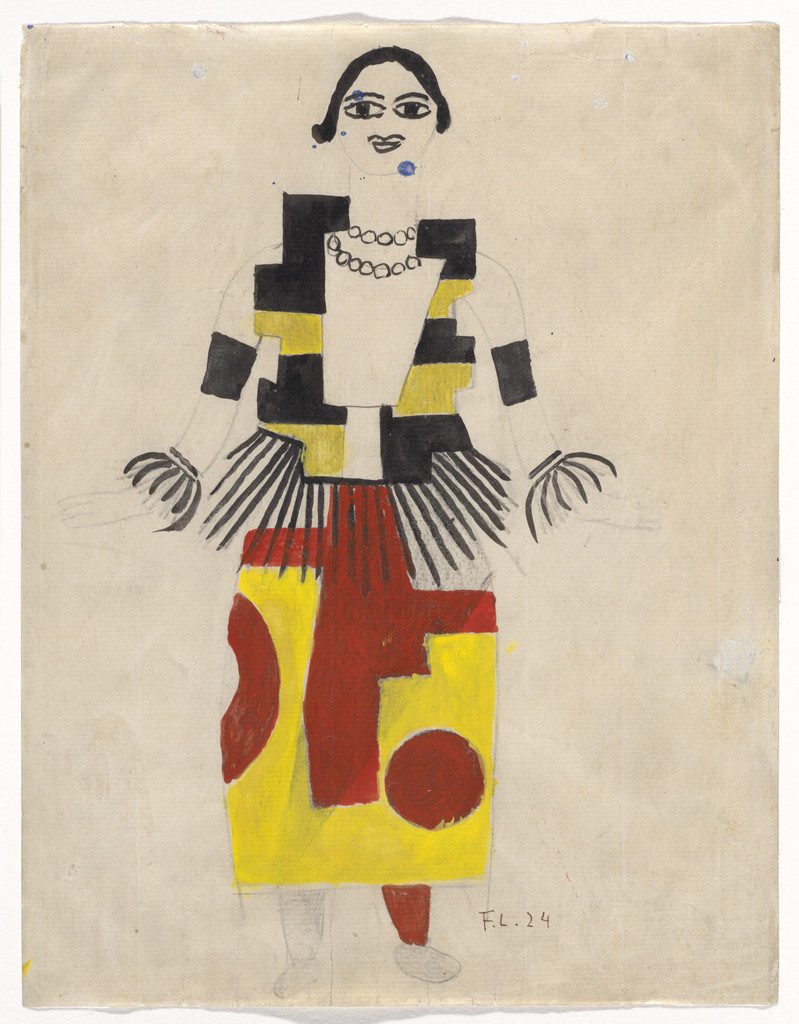
    • A Skater. Costume design for the ballet Skating Rink, Fernand Léger, 1924
      A Skater. Costume design for the ballet Skating Rink1924
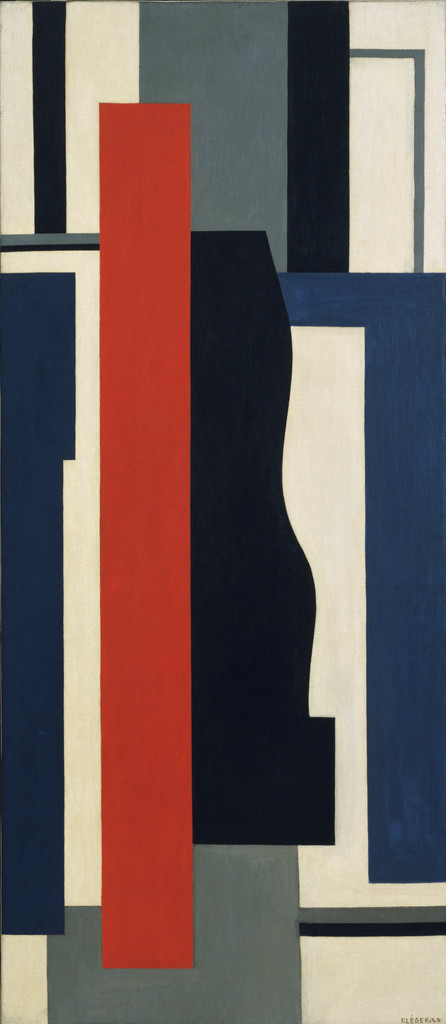
    • Composition, Fernand Léger, 1924
      Composition1924
    • Mural Painting, Fernand Léger, 1924
      Mural Painting1924
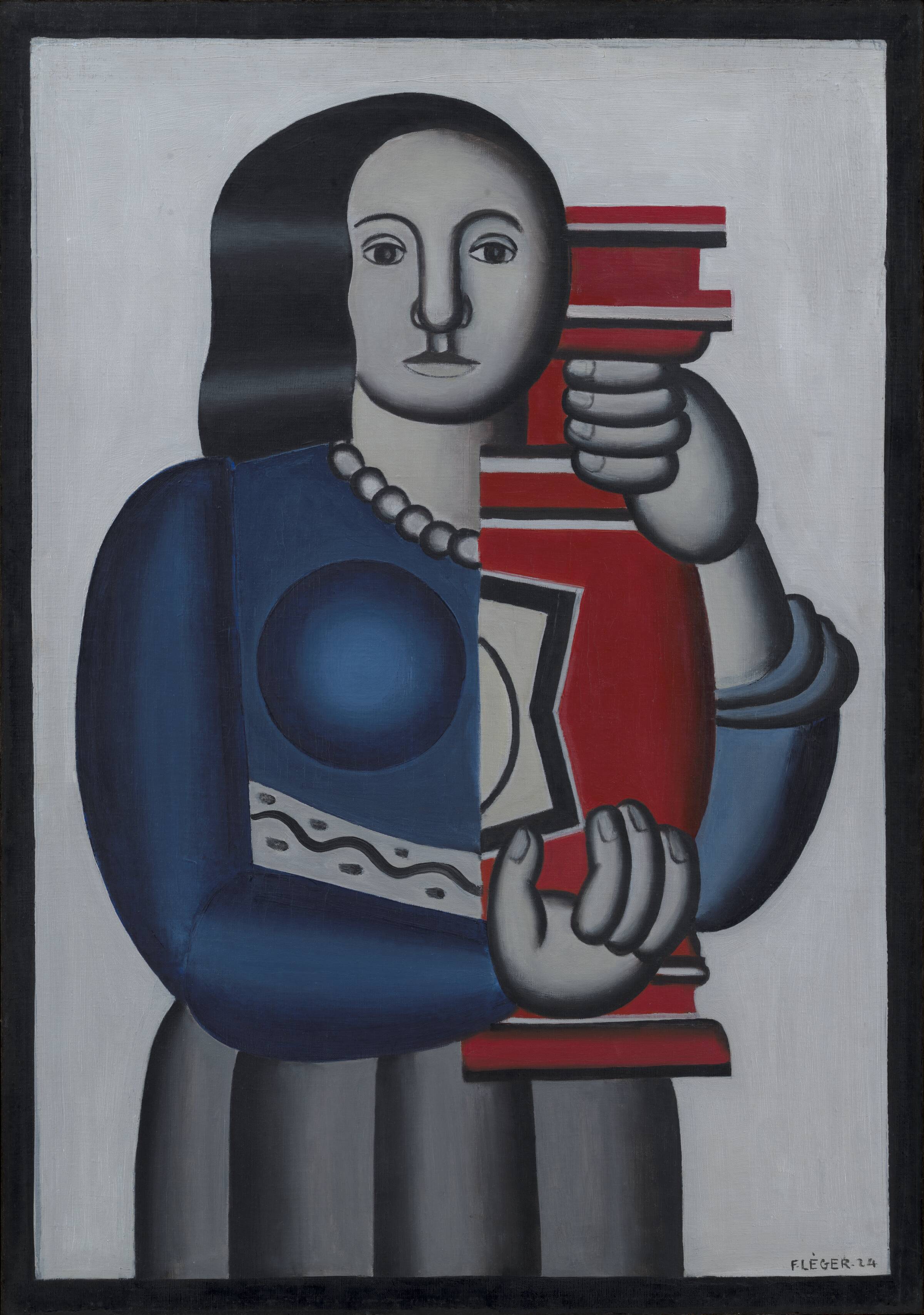
    • Kvinde med vase, Fernand Léger, 1924
      Kvinde med vase1924
  • 1925

    Udstilling · 1925–1927

    The international decorative arts exhibition and shows in the USA

    In 1925–1927 Léger manages, with some difficulty, to exhibit an abstract panel at the International Exhibition of Modern Decorative and Industrial Arts — in Le Corbusier's pavilion and in the Mallet-Stevens pavilion, which shows designs for a French embassy building. His work is shown at the Anderson Galleries in New York, at the Brooklyn Museum and at the Galerie des Quatre Chemins in Paris, and there is a solo retrospective at the Indépendants.

    Værk

    The first “mural paintings”

    In 1925, influenced by Le Corbusier's theories, Léger produces the first of his “mural paintings”. Intended to be incorporated into polychrome architecture, they are among his most abstract paintings, featuring flat areas of colour that appear to advance or recede.

  • 1927

    Værk

    “Nude on a Red Background” and new forms

    “Nude on a Red Background” is painted in 1927 — a monumental, expressionless woman, machinelike in form and colour. From this year the character of Léger's work gradually changes as organic and irregular forms assume greater importance.

  • 1928

    Udstilling

    A hundred works at Flechtheim's gallery in Berlin

    In 1928 Léger exhibits a hundred works at Flechtheim's gallery in Berlin and gives a lecture; in the same year there is an exhibition of his work at the Galerie L'Effort moderne in Paris.

    • Woman at the Mirror from Das Kunstblatt, IV annual, Fernand Léger, 1920
      Woman at the Mirror from Das Kunstblatt, IV annual1920
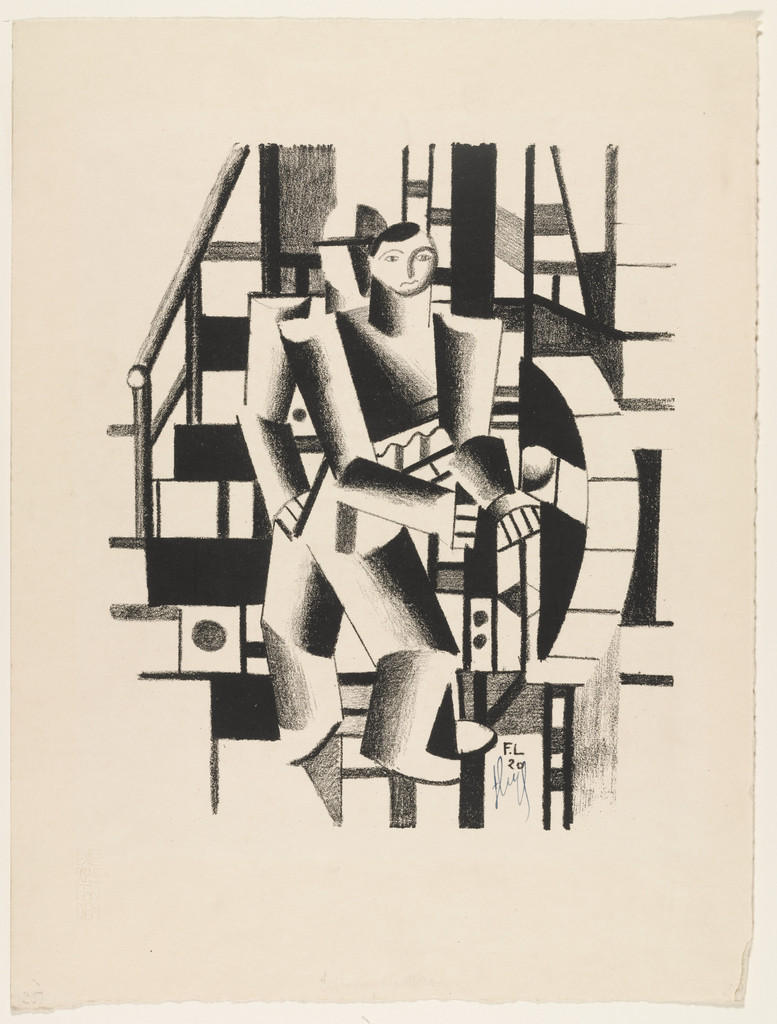
    • Two Men, Fernand Léger, 1920
      Two Men1920
    • The Aviator, Fernand Léger, 1920
      The Aviator1920
    • Femme au miroir, Fernand Léger, 1920
      Femme au miroir1920
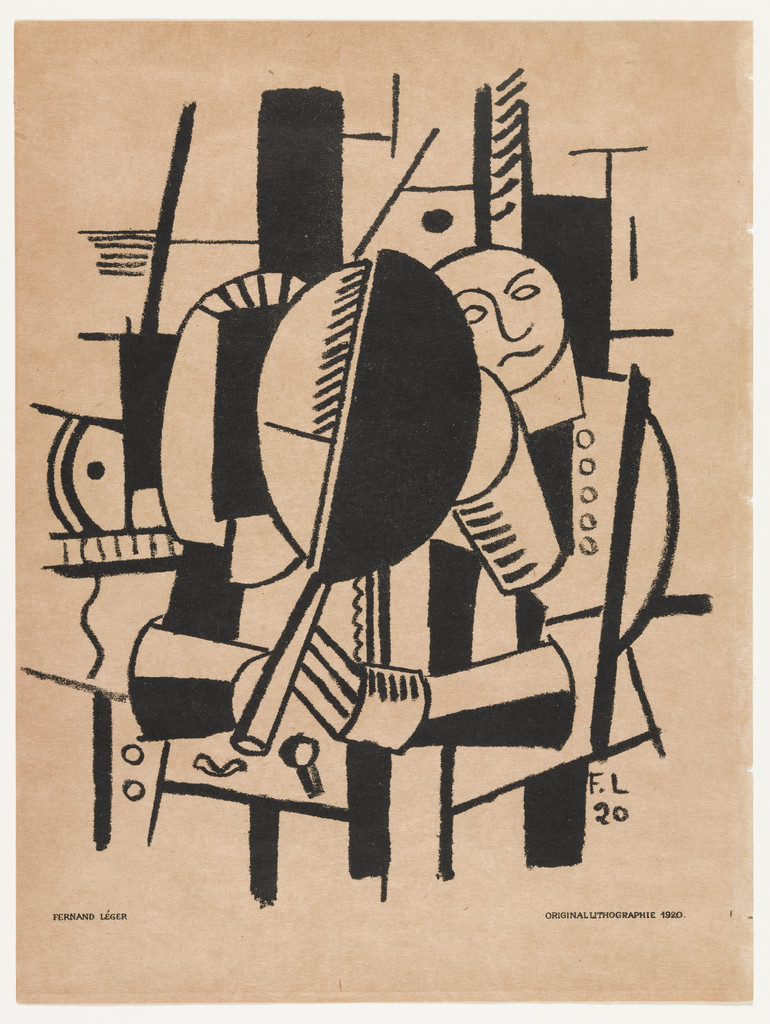
    • L'homme à la pipe, Fernand Léger, 1920
      L'homme à la pipe1920
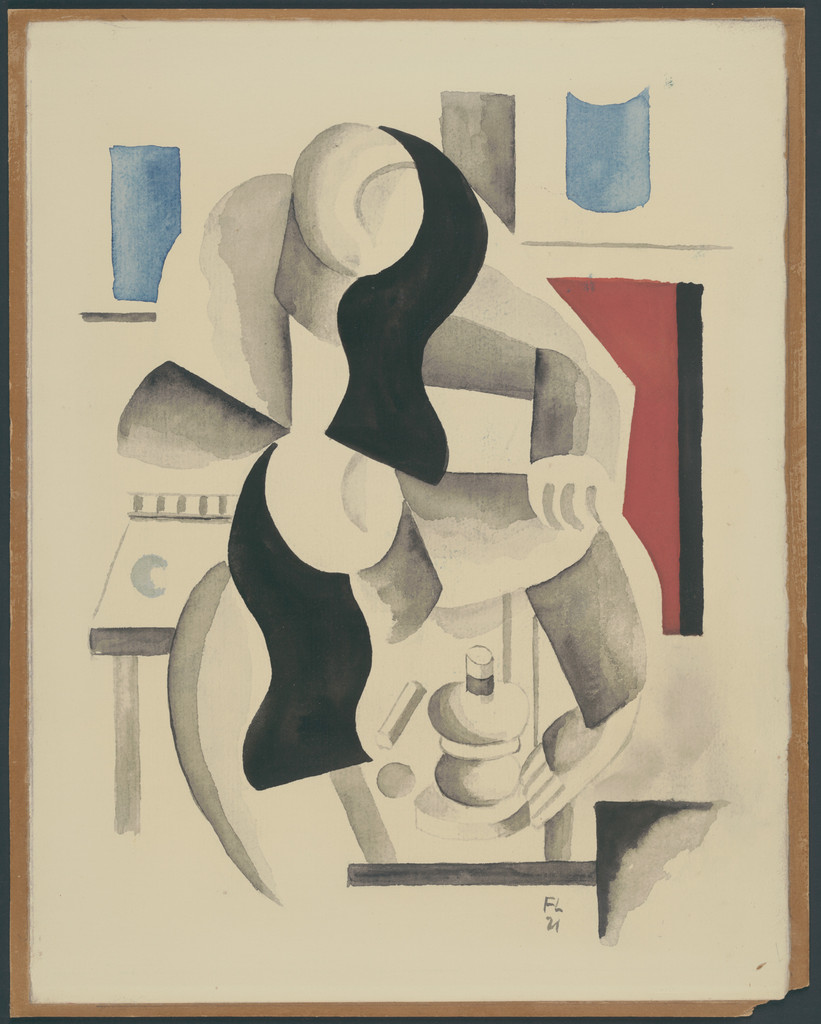
    • Two Women (Deux Femmes ), Fernand Léger, 1921
      Two Women (Deux Femmes )1921
    1934

    Karriere · August 1934

    Sets for the Wells film in London

    In August 1934 in London Léger prepares sets for the film after H. G. Wells, “The Shape of Things to Come”; he spends the summer with the Marphys at Antibes, in September an exhibition of his work opens at the Modern Gallery in Stockholm, and at the Sorbonne he gives a lecture, “From the Acropolis to the Eiffel Tower”.

  • 1935

    Udstilling · New York City

    Exhibitions at MoMA and the Art Institute of Chicago

    In October 1935 Léger again travels to the United States, where he meets Le Corbusier; in the same year a large exhibition of his work is shown at the Museum of Modern Art in New York and at the Art Institute of Chicago. In 1935 he also designs the physical-culture hall at the world's fair in Brussels, built to Charlotte Perriand's design.

    Værk

    “Two Sisters”

    From 1927 organic forms increasingly mark Léger's work, and the figural style of the 1930s is fully displayed in “Two Sisters” (1935) and in several versions of “Adam and Eve”. With characteristic humour he portrays Adam in a striped bathing suit, or sporting a tattoo.

  • 1936

    Begivenhed

    The “Discussion on Realism”

    In 1936, in the “Discussion on Realism”, Léger stresses his spiritual independence; he also exhibits at the Salon of Mural Art.

    Took part · 1. august 1936 – 15. september 1936

    D.O.O.D.

  • 1937

    Værk · Paris

    A panel for the Palace of Discovery at the World's Fair

    In 1937 Léger makes a panel for the Palace of Discovery at the World's Fair in Paris, after the fair's directors had already rejected several projects. In the same year he designs sets for a trade-union festival at the Vélodrome d'Hiver and for Serge Lifar's ballet “David triomphant” (music by Rieti) at the Paris Opéra.

    Møde

    Meeting Aalto in Helsinki

    In 1937 Léger exhibits at the Artek gallery in Helsinki, where he meets Aalto. In November he gives a lecture in Antwerp, “Colour in the World”.

  • 1938

    Værk · 1938–1939 · United States

    Murals for Rockefeller and lectures at Yale

    Léger spends the summer of 1938 with Le Corbusier at Vézelay and from September to March 1939 is in the United States, where he paints murals for the apartment of Nelson A. Rockefeller Jr. and gives a course of eight lectures at Yale University, “Colour in Architecture”. In Paris he designs sets for J. R. Bloch's play “Naissance d'une cité”.

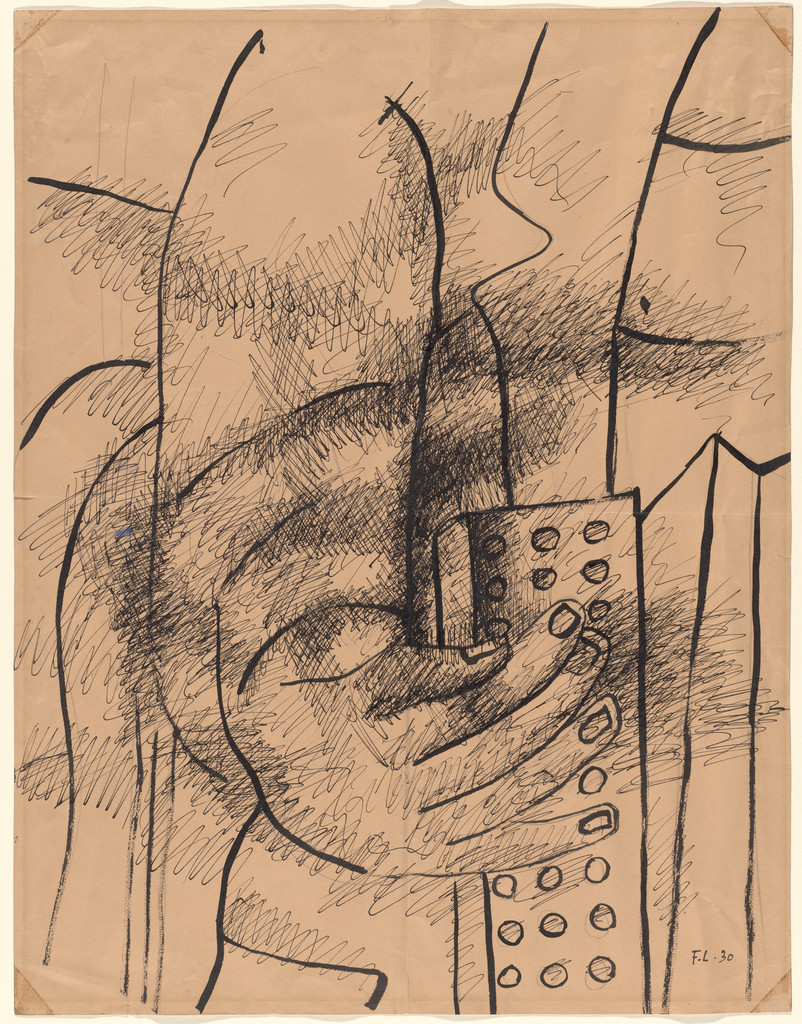
    • The Accordionist, Fernand Léger, 1930
      The Accordionist1930
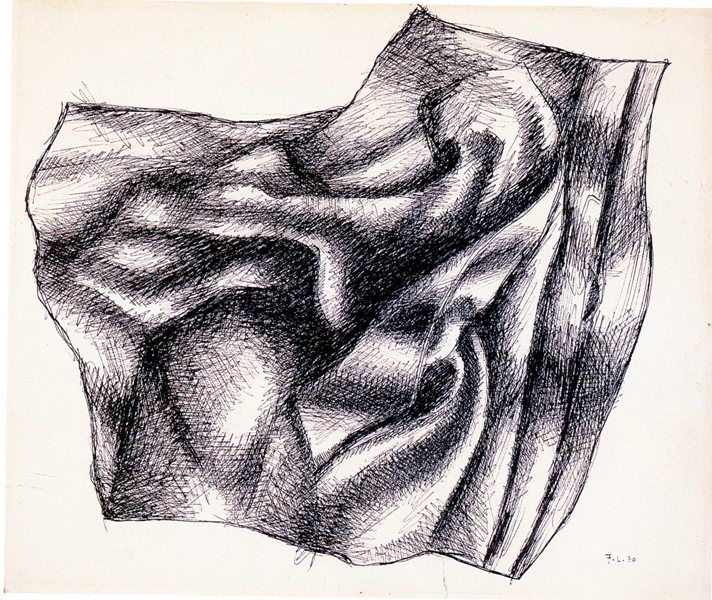
    • Le Mouchoir, Fernand Léger, 1930
      Le Mouchoir1930
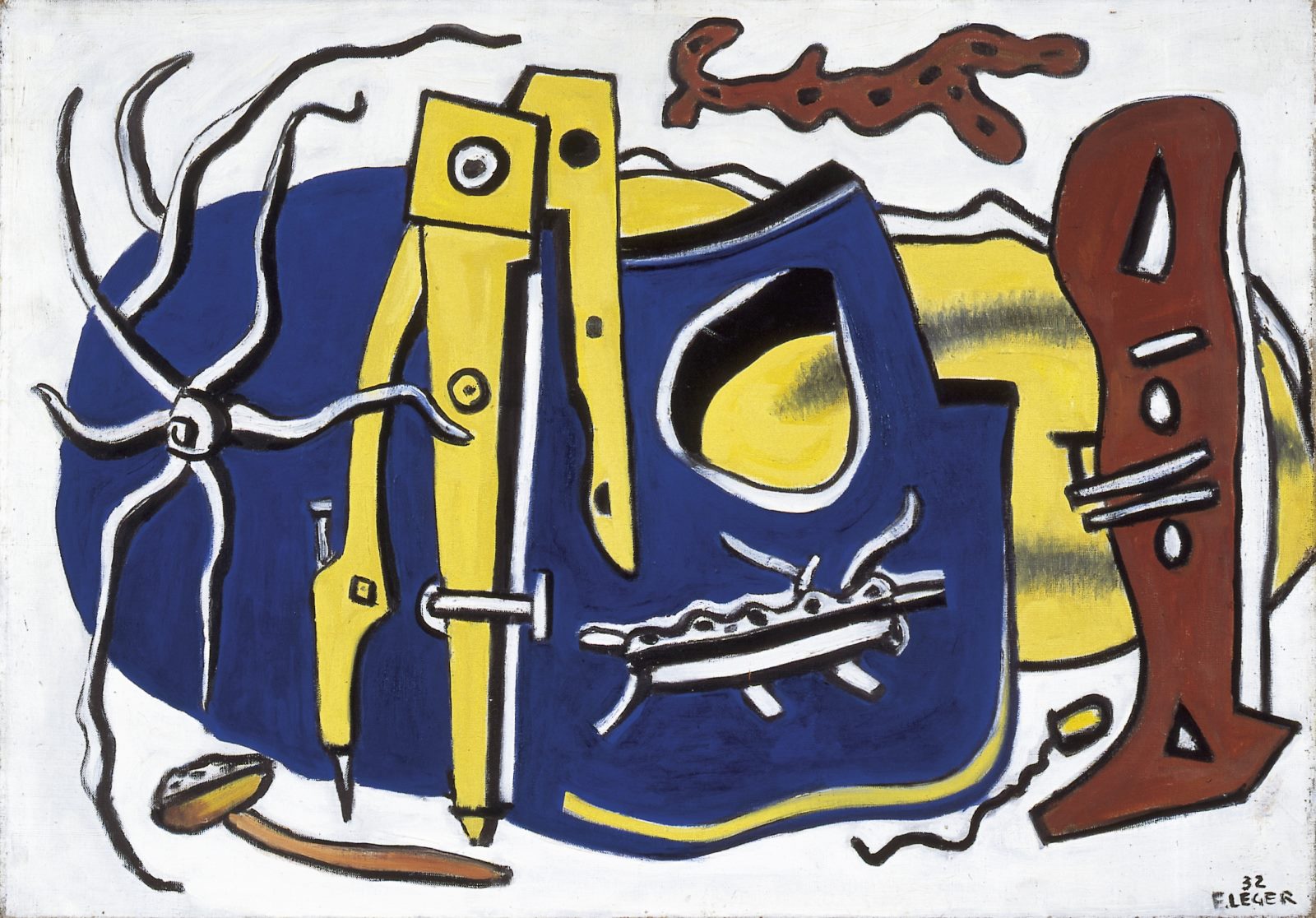
    • Composition au compas, Fernand Léger, 1932
      Composition au compas1932
    • Hands and Foot, Fernand Léger, 1933
      Hands and Foot1933
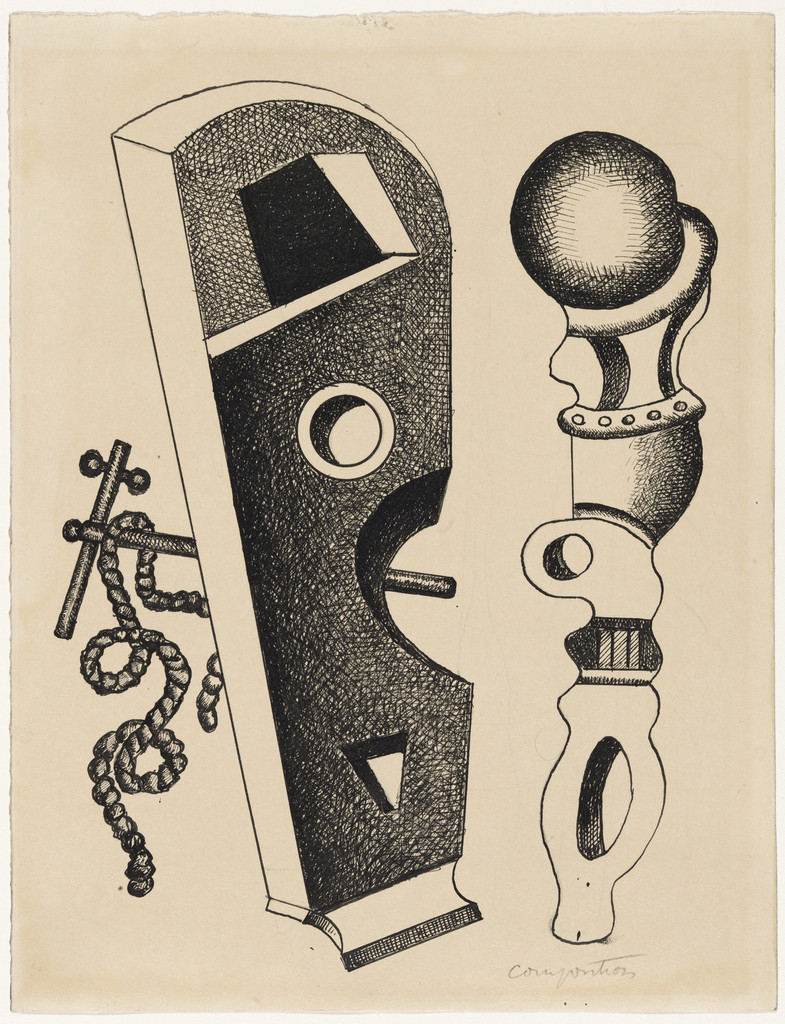
    • Composition, Fernand Léger, 1933
      Composition1933
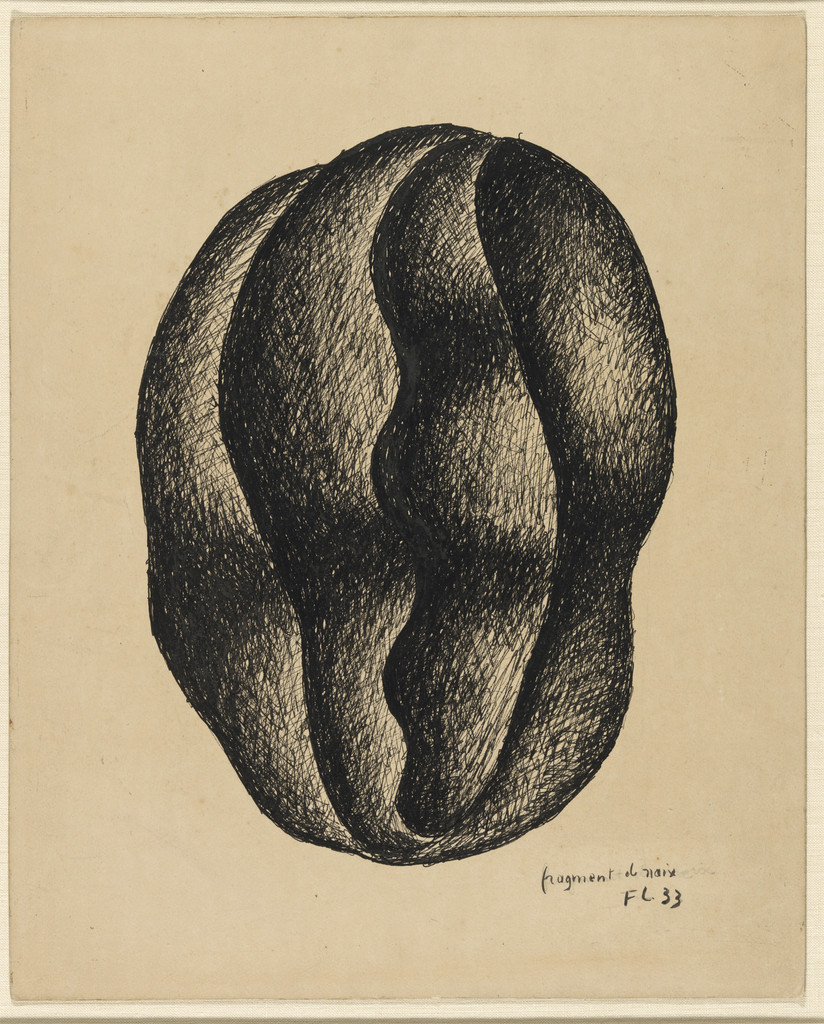
    • Fragment of a Nut, Fernand Léger, 1933
      Fragment of a Nut1933
    1943

    Værk · 1940–1945

    “Divers” and drawings for Richter's film

    In 1940–1945 Léger begins the “Divers” series and makes a series of drawings for Hans Richter's film “Dreams That Money Can Buy”.

    Begivenhed · 1940–1945 · New York City

    Broadway neon and bands of colour

    During his American sojourn Léger begins making paintings in which freely arranged bands of colour are juxtaposed with figures and objects outlined in black. He credited the neon advertisements of Broadway as the source of this innovation: you talk to someone and he suddenly turns blue, then the colour fades, another one comes and turns him red or yellow.

    Møde · 1940–1945

    A circle of refugees: Pierre Matisse and Father Couturier

    In his years of exile Léger meets other refugee artists at Pierre Matisse's and forms a friendship with Father R. P. Couturier.

  • 1943

    Værk · 1943–1944

    The “law of contrast” and “The Tree in the Ladder”

    In America Léger finds inspiration for a new series of paintings in the novel sight of industrial refuse in the landscape — heaps of abandoned machines with flowers growing out of them and birds perching on top. The shock of juxtaposed natural and mechanical forms is what he calls the “law of contrast”; it results in “The Tree in the Ladder” (1943–44) and later “Romantic Landscape” (1946).

  • 1944

    Værk

    “Three Musicians”

    In 1944, reprising a composition of 1930, Léger paints “Three Musicians” (Museum of Modern Art, New York) — a folk-like picture reminiscent of Rousseau that exploits the law of contrast in the juxtaposition of three men and their instruments.

  • 1945

    Begivenhed · France

    Joining the French Communist Party

    In 1945, on his return to France, Léger joins the Communist Party. According to the art historian Charlotta Kotik, his determination to depict the common man, and to create for him, came from socialist theories widespread among the avant-garde, but his social conscience was not that of a fierce Marxist but of a passionate humanist.

    Rejse · December 1945

    Return to France

    In December 1945 Léger returns to France after five years in the United States. His work becomes less abstract, and he produces many monumental figure compositions of popular life — acrobats, builders, divers, country outings.

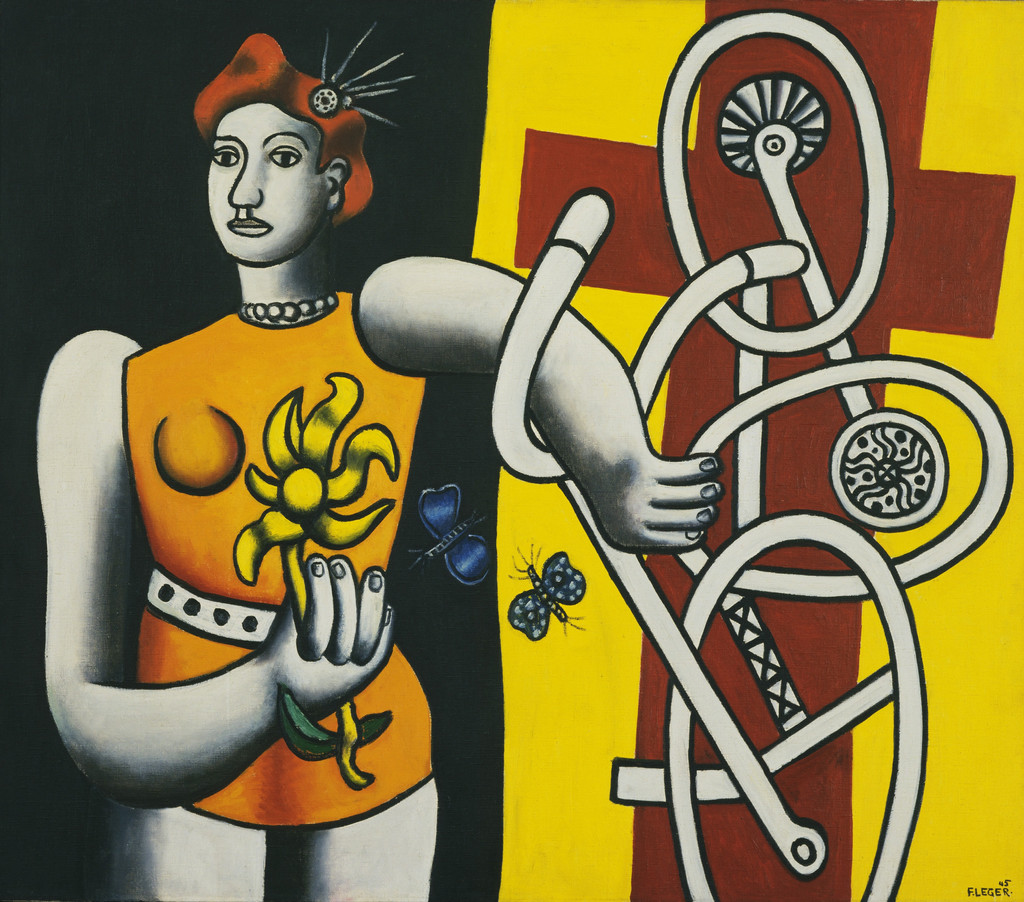
    • Big Julie, Fernand Léger, 1945
      Big Julie1945
    • Racine grise, Fernand Léger, 1945
      Racine grise1945
  • 1946

    Værk · 1946–1949 · Plato d'Assi

    Mosaic and stained glass for the church at Plateau d'Assy

    In 1946–1947 Father Couturier commissions Léger to make mosaics and stained glass for the church at Plateau d'Assy; the artist completes them in 1949 and in 1950 attends the consecration of the church.

  • 1948

    Rejse

    The Congress of Intellectuals in Wrocław

    In 1948 Léger travels to Poland for the World Congress of Intellectuals in Defence of Peace in Wrocław. In the same year he designs sets for Prokofiev's ballet “Le Pas d'acier” staged by Serge Lifar and, with his students, decorates the premises for the International Women's Congress in Paris.

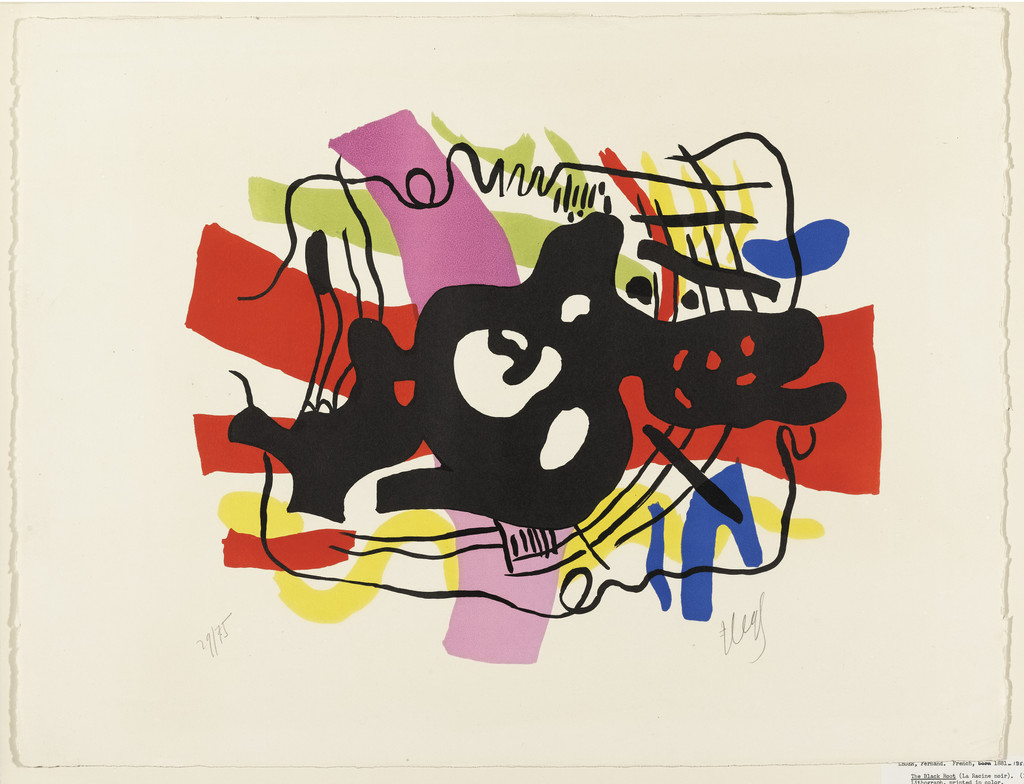
    • The Black Root, Fernand Léger, 1948
      The Black Root1948
    • La racine noire, Fernand Léger, 1948
      La racine noire1948
    • Butterflies (Les papillons), Fernand Léger, 1948
      Butterflies (Les papillons)1948
    • Paysage 48, Fernand Léger, 1948
      Paysage 481948
  • 1949

    Udstilling · Paris

    A retrospective at the National Museum of Modern Art

    In 1949 a retrospective exhibition of Léger's work is held at the National Museum of Modern Art in Paris.

    Udgivelse

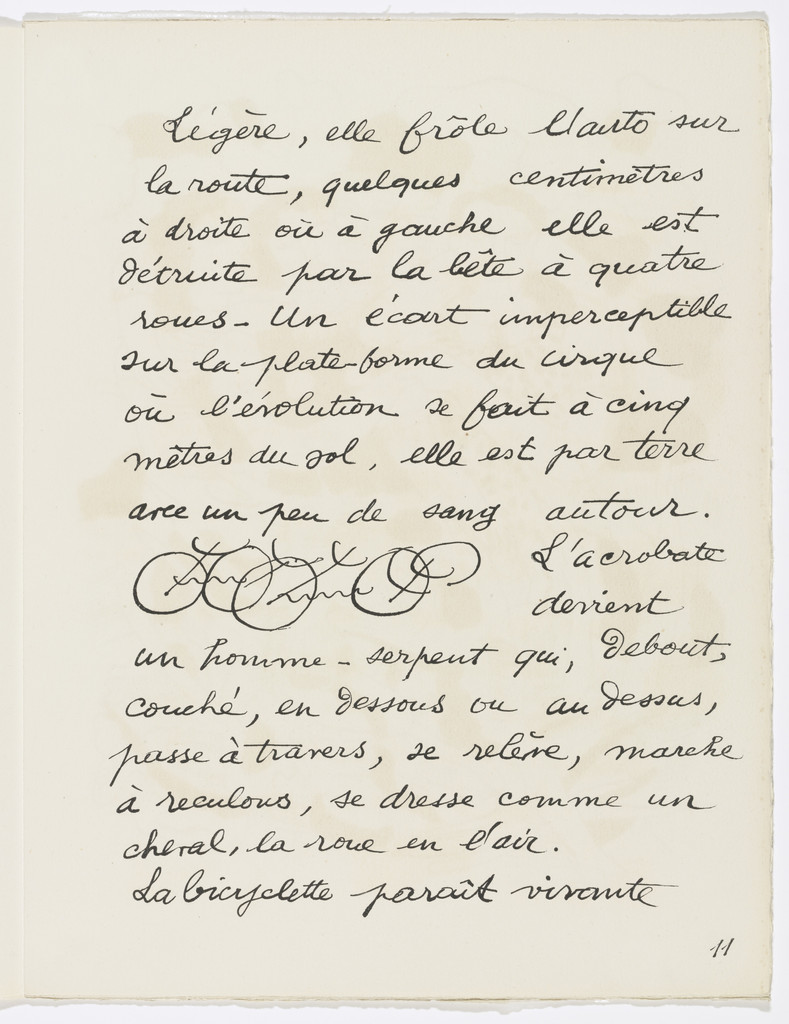
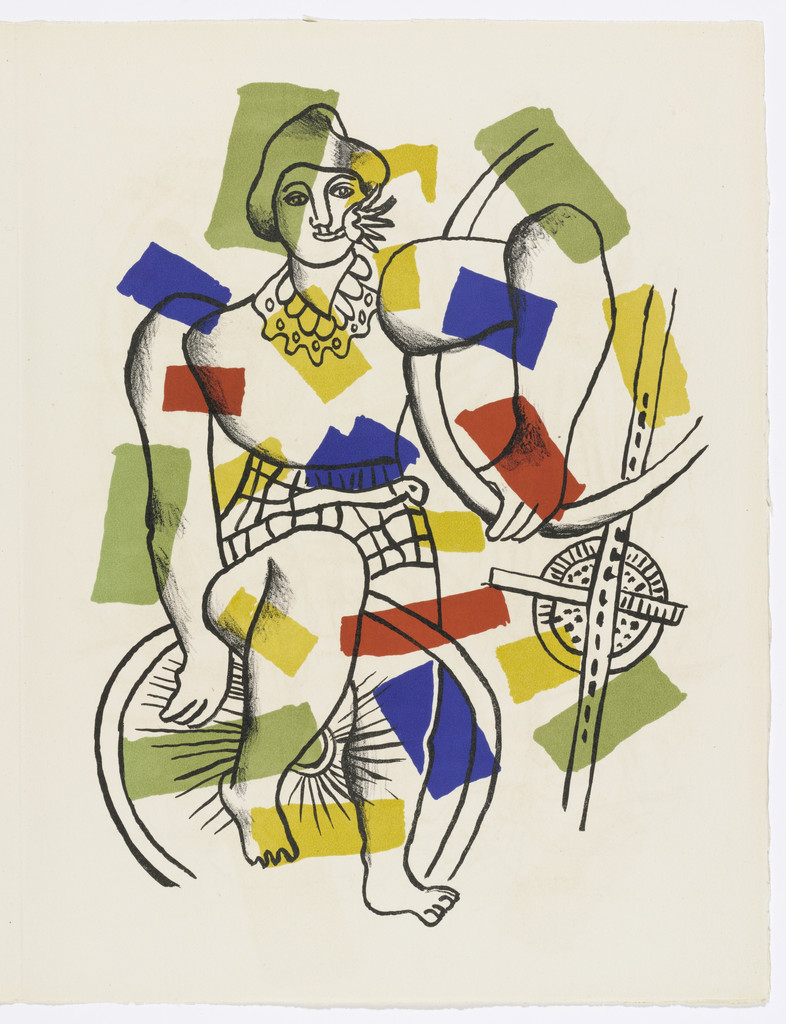
    The album “Cirque” for Tériade

    In 1949 Léger writes the text and makes the drawings for the album “Cirque”, published by Tériade; he also illustrates Rimbaud's “Illuminations” and designs sets and costumes for Milhaud's opera “Bolivar”.

    Karriere

    First ceramics at Biot with Roland Brice

    In 1949, together with Roland Brice, Léger makes his first ceramic works at Biot; in 1950 he sets up a ceramics workshop there.

    Udgivelse

    The essay “How I Conceive the Human Figure”

    In 1945 Léger wrote that the object in modern painting must become the main character and overthrow the subject, and that if the human form in turn becomes an object it can considerably liberate possibilities for the modern artist. In his 1949 essay “How I Conceive the Human Figure” he elaborates: the figure is to be seen as a plastic value, not a sentimental one — which is why it has remained willfully inexpressive.

    • Acrobats, Fernand Léger, 1940
      Acrobats1940
    • Women and Birds, Fernand Léger, 1940
      Women and Birds1940
    • Divers on a Yellow Background, Fernand Léger, 1941
      Divers on a Yellow Background1941
    • The Divers, Fernand Léger, 1941
      The Divers1941
    • The Divers, Fernand Léger, 1942
      The Divers1942
    • The Divers, Fernand Léger, 1942
      The Divers1942
  • 1952

    Værk · New York City

    Murals for the United Nations

    In 1952 a pair of Léger murals is installed in the General Assembly Hall of the United Nations headquarters in New York.

    Udstilling

    The 26th Venice Biennale

    In 1952 Léger takes part in the 26th Venice Biennale. In April he has an exhibition and gives a lecture at the Kunsthalle in Bern, and there are exhibitions at Paris galleries and at Sidney Janis's gallery in New York.

    Familie · 21 February 1952

    Marriage to Nadia Khodossevitch and a home in Gif-sur-Yvette

    On 21 February 1952 Léger marries Nadia Khodossevitch, a cousin of the poet, who had been a student of his Academy since 1924 and later its assistant. They settle in the Gros-Tilleul quarter of Gif-sur-Yvette.

  • 1953

    Udstilling

    A touring exhibition in Japan

    In 1953 an exhibition of Léger's work tours Japan; his work is also shown at the Gallery of Modern Art in New York, the Art Institute of Chicago and in San Francisco, and an exhibition of coloured sculptures is held at the Louis Carré gallery.

    Udgivelse

    Illustrations for Éluard's “Liberté”

    In 1953 Léger illustrates Éluard's poem “Liberté” and gives a lecture in Brussels, “Modern Painting”.

  • 1954

    Værk

    Mosaic and stained glass for the university in Caracas

    In 1954, on commission from Raúl Villanueva, Léger makes a mosaic and stained glass for the university in Caracas, a window for Inocente Palacios and stained glass for the church at Courfaivre. In the same year he shows “Country Outing” and “The Big Parade” at the Maison de la pensée française.

    Værk

    A mosaic project for the São Paulo Opera

    In 1954 Léger begins a project for a mosaic for the São Paulo Opera, which he would not live to finish.

  • 1955

    Udmærkelse

    The Grand Prix in São Paulo and a retrospective in Lyon

    In 1955 Léger receives the Grand Prix at the São Paulo Art Biennial, and a retrospective exhibition of his work is held at the Lyon museum.

    Værk

    First sketches for “The Battle of Stalingrad”

    In 1955 Léger makes the first sketches for “The Battle of Stalingrad”, travels to Czechoslovakia for the Spartakiad and paints a mural for the Gaz de France building in Alfortville. He dies suddenly at home in the summer of that year.

    Udstilling · 16. juli 1955 – 18. september 1955

    documenta

    Død · 17. august 1955

    Gif-sur-Yvette

    Begravelse

    Gif-sur-Yvette

    • In-text plate (page 11) from Cirque (Circus), Fernand Léger, 1950
      In-text plate (page 11) from Cirque (Circus)1950
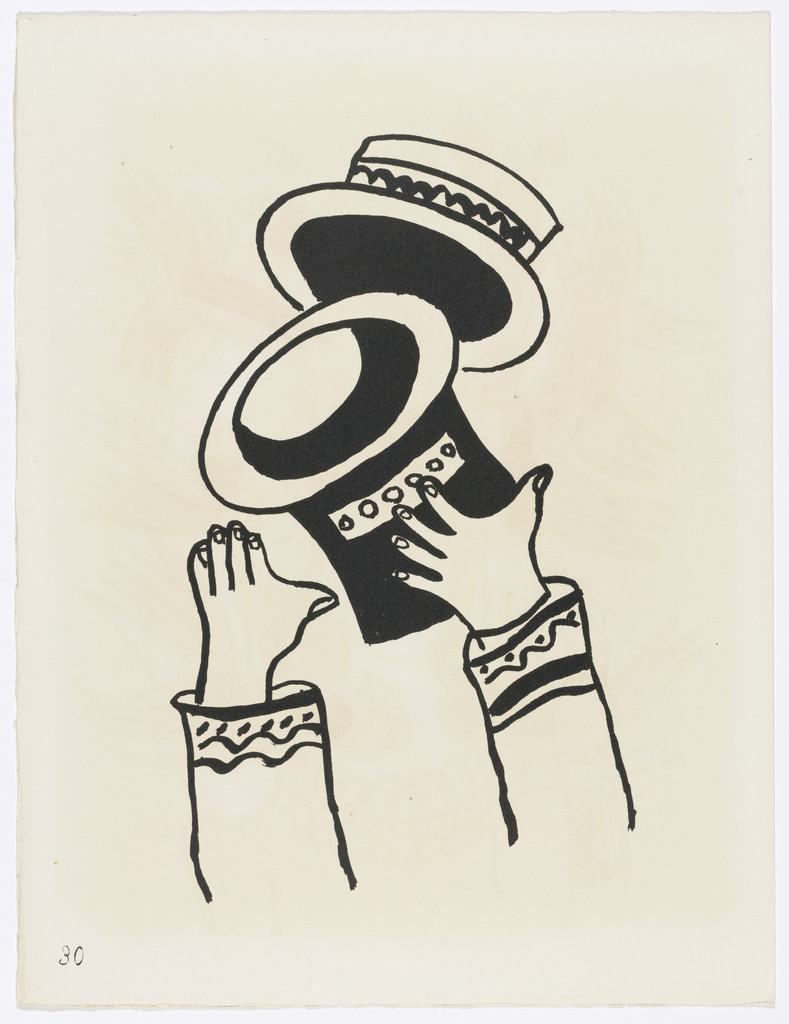
    • Plate (page 30) from Cirque (Circus), Fernand Léger, 1950
      Plate (page 30) from Cirque (Circus)1950
    • Tailpiece (page 50) from Cirque (Circus), Fernand Léger, 1950
      Tailpiece (page 50) from Cirque (Circus)1950
    • Plate (page 95) from Cirque (Circus), Fernand Léger, 1950
      Plate (page 95) from Cirque (Circus)1950
    • Plate (page 7) from Cirque (Circus), Fernand Léger, 1950
      Plate (page 7) from Cirque (Circus)1950
    • Строители (Строители с алоэ), Fernand Léger, 1951
      Строители (Строители с алоэ)1951