Edward Steichen美国, 1879–1973
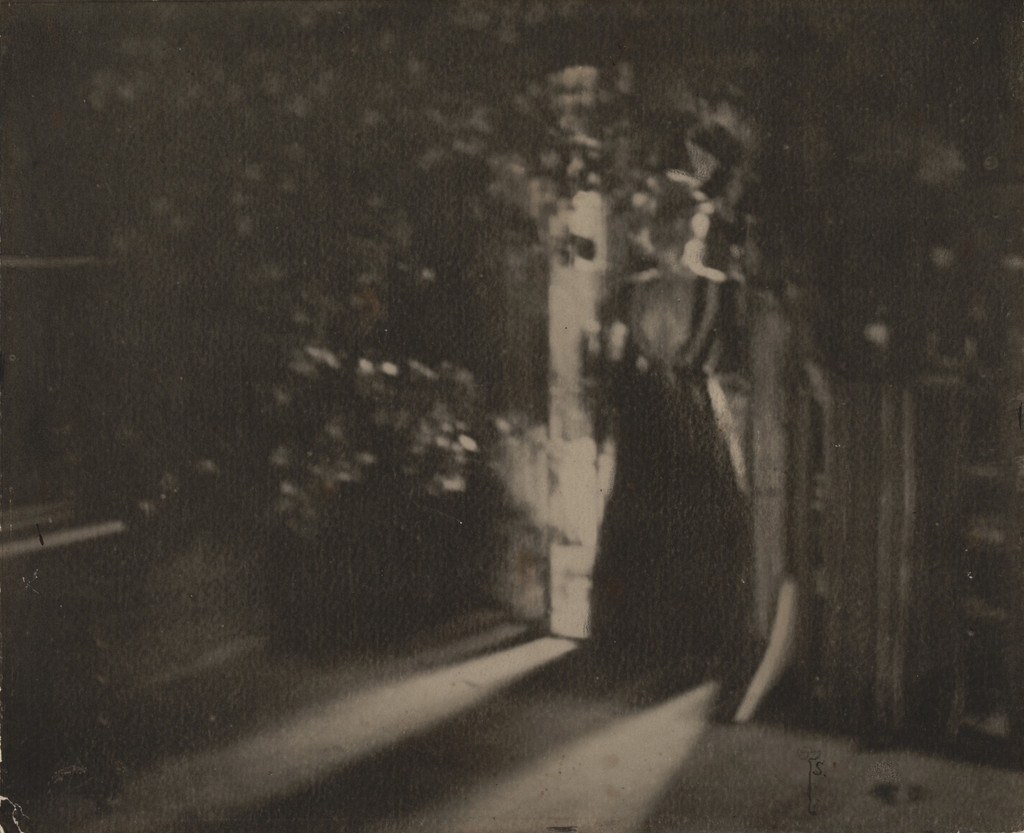
Portrait - Evening
能看到吗?
目前未展出
《Portrait - Evening》现在在哪里? 收藏方: J·保羅·蓋蒂博物館, 洛杉矶. 目前未展出. 核实 2026年10月7日.
洛杉矶, 美國
仍属馆藏,只是目前没有展出。
- 核实
- 此状态始于
- 出处
- 博物馆
关于作品
Edward Steichen made this portrait in 1903 while honeymooning with his new wife Clara at Lake George, New York. The cloudy, dreamlike print echoes the romantic mood Steichen described in a letter to his close friend and fellow photographer, Alfred Stieglitz: "We had a moon night before last--the life of which I had never seen before--the whole landscape was bathed in a warm twilight glow . . . and we both rose and floated off into it." Steichen made this photograph shortly after he and Stieglitz founded the Photo-Secession group, which aimed to promote photography as a fine art. To make this wistful image, Steichen employed the gum bichromate process, which required a great deal of handwork but allowed for the creation of a unique picture that conveys mood and atmosphere. Steichen and Stieglitz--both exponents of Pictorialist photography--advocated manipulation and individualistic treatment of the photographic print to emphasize feelings and senses. Many photographers at the time considered such one-of-a-kind prints to be the hallmark of artistic photography.
J·保羅·蓋蒂博物館
作品信息
- 馆藏编号
- 98.XM.175.1
已收入目录
出处
- J·保羅·蓋蒂博物館
- 图片: J·保羅·蓋蒂博物館 — ; In Copyright
Edward Steichen当时的生活
完整生平1902
The Camera Work logo and the Photo-Secession
When Stieglitz is planning the magazine that becomes Camera Work, he asks Steichen to design its logo with a custom typeface; Steichen becomes the most frequently shown photographer in the journal. In the same year he is one of the founders of the Photo-Secession in New York.
1904
First experiments with colour photography
He begins experimenting with colour photography and becomes one of the earliest in the United States to use the Autochrome Lumière process.
1904年7月1日
Daughter born: Mary Calderone
1905
The Little Galleries of the Photo-Secession
With Stieglitz he creates the Little Galleries of the Photo-Secession in what had been Steichen’s portrait studio; the gallery later becomes known as 291 after its address and presents some of the first American exhibitions of Rodin, Matisse, Cézanne, Picasso and Brâncuși. Constantly crossing between Europe and the US by steamship, he becomes, in the art historian William A. Ewing’s words, one of the earliest “jet setters,” bringing European art to America.