 Jackson Pollock美国, 1912–1956
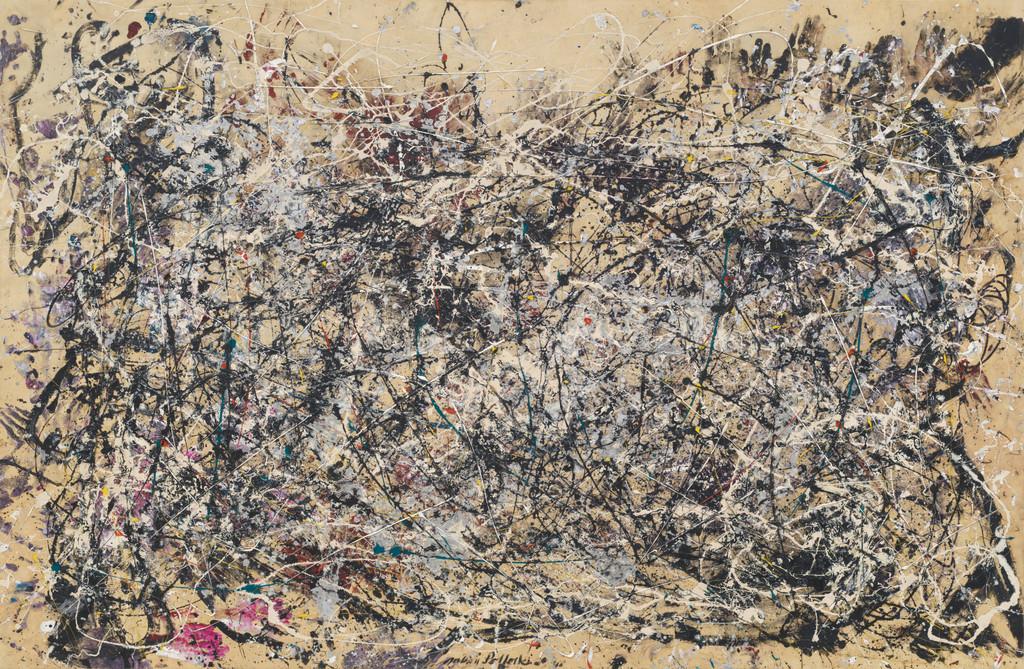
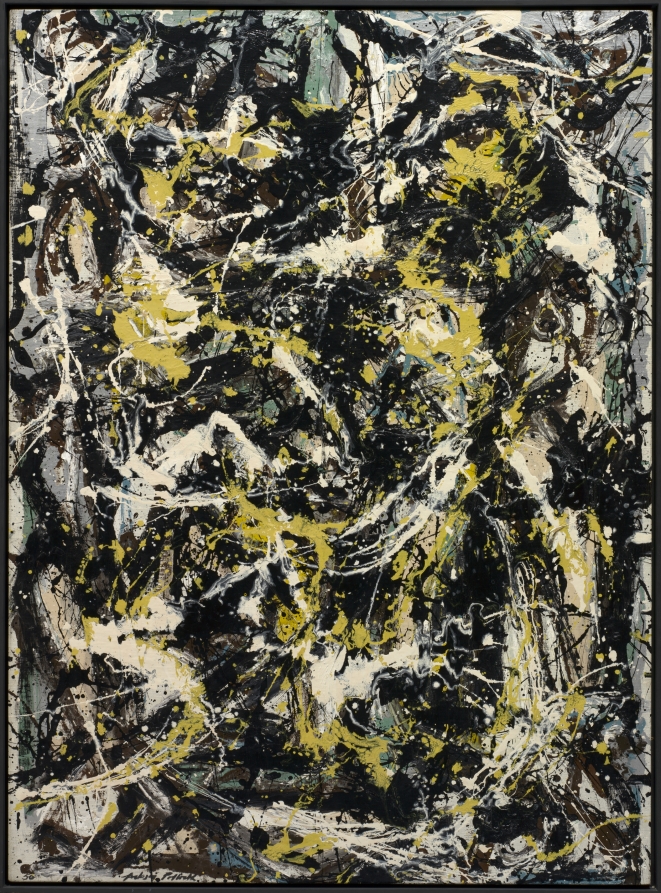
Number 5, 1950
可否一睹真容?
可以,正在迎客

正对公众展出。由谁担保,见下文。
- 核实
- 前天
- 此状态始于
- 2026年8月19日
- 出处
- 博物馆自己的馆藏数据
About the painting
Jackson Pollock popularized the method of flinging pigment from store-bought cans of paint onto canvas placed flat on the floor. Filled with intricate webs of lines and intermingled spatters, paintings such as Number 5, 1950 are direct records of the artist’s moving body and hand gestures. By creating this way, the artist explained, “I feel nearer, more part of the painting, since this way I can walk around it, work from the four sides and literally be in the painting.” In addition to their unconventional technique at the time, Pollock’s “drip” canvases feature compositions that cover their entire surfaces without an obvious center or direction, a recent development in the history of modern art.
克利夫蘭藝術博物館
作品信息
- 馆藏编号
- 1980.180
已收入目录
出处
- 克利夫蘭藝術博物館: the museum's own open data · 6天前获取
- 图片: 克利夫蘭藝術博物館 — © Pollock-Krasner Foundation / Artists Rights Society (ARS), New York
与此同时,在Jackson Pollock的生活中
完整生平1948
A sensational show at Betty Parsons
Pollock's 1948 exhibition at the Betty Parsons Gallery was a sensation and a financial success. He was then able to get a larger studio.
8 August 1949
Life asks if he is the greatest living US painter
On 8 August 1949 Life published an article on Pollock under a headline asking whether he was the greatest living painter in the United States.
1950
Hans Namuth photographs and films Pollock at work
In 1950 the young photographer Hans Namuth photographed and filmed Pollock at work. Pollock had promised to start a new painting for the session but said it was already finished — then, as if realising it was not, he flung paint onto the canvas for about half an hour in an almost dancelike movement.
1950
“No. 12, 1949” at the Venice Biennale
Pollock's “No. 12, 1949”, a medium-sized drip painting, was shown in the United States Pavilion at the 1950 Venice Biennale.
from 7 March 1952
First Paris exhibition at Paul Facchetti's
From 7 March 1952 the first exhibition of Pollock's works of 1948–1951 in Paris and in Europe was held at Paul Facchetti's studio, arranged through the mediation of Pollock's close friend Alfonso Ossorio and the art historian Michel Tapié.
1952年4月9日–1952年7月27日
Exhibition: 15 Americans