Jackson Pollock美国, 1912–1956
Greyed Rainbow
能看到吗?
是,正在展出
《Greyed Rainbow》现在在哪里? 芝加哥藝術博物館, 展厅 291, 芝加哥. 是,正在展出. 核实 2026年11月16日.

芝加哥, 美國
闭馆· 11:00 开馆
正对公众展出。
- 核实
- 此状态始于
- 出处
- 博物馆
关于这幅画
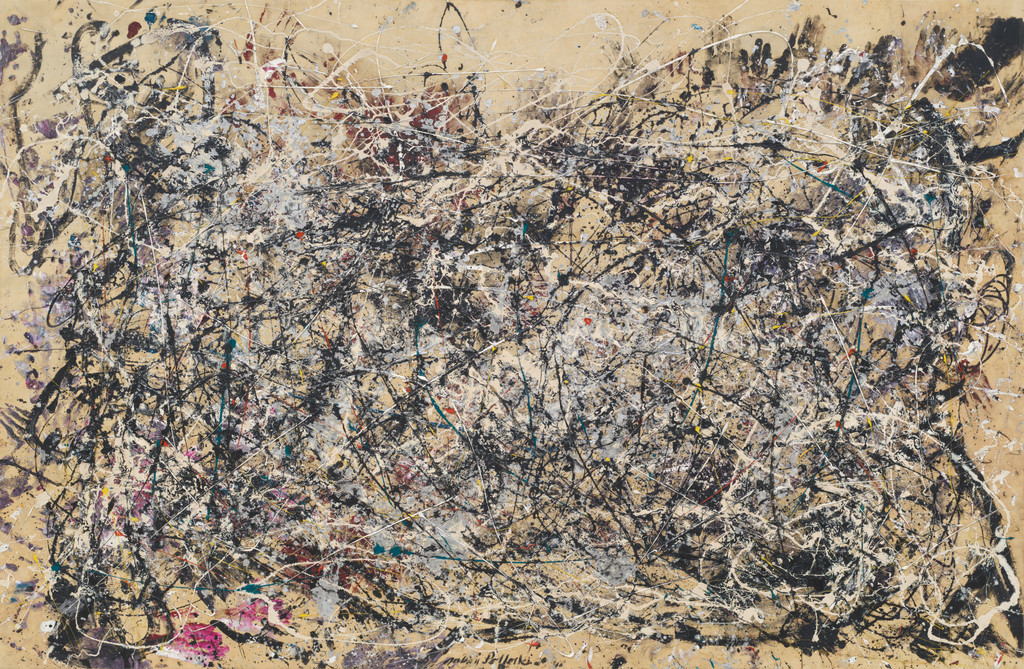
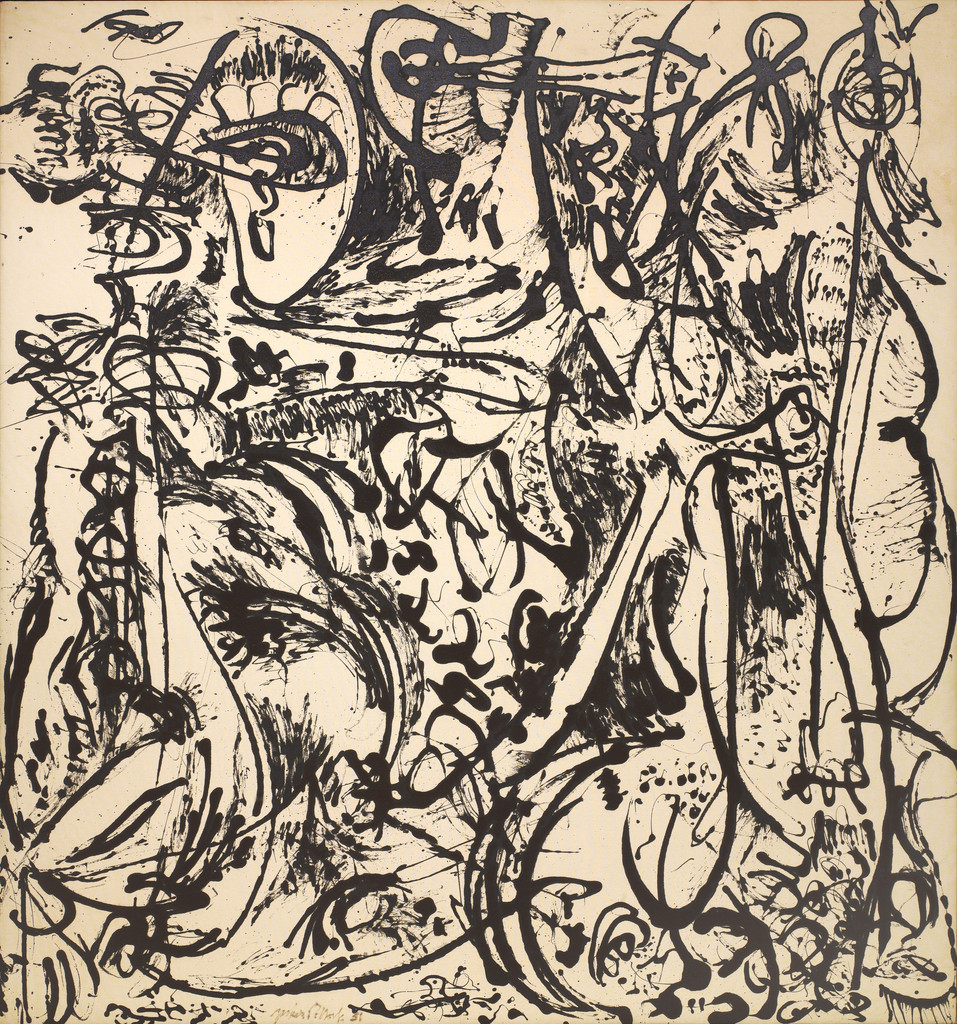
Jackson Pollock’s Greyed Rainbow (1953), at the Art Institute of Chicago, Chicago, hides its rainbow near the bottom of the canvas. Beneath thin layers of paint lie orange, yellow and green, alongside blue and violet. Elsewhere black, white, grey and silver dominate. Pollock varied his application from thick paint pressed straight from a tube to wandering threads poured through a small opening or expelled from a baster. The title probably refers to the partly obscured colours in the lower third. On view in gallery 291.
博物馆的介绍
In the late 1940s Jackson Pollock developed a revolutionary form of Abstract Expressionism by dripping, pouring, and splashing paint onto large-scale canvases. Pollock emphasized the expressive power of the artist’s gestures, materials, and tools, often applying paint with sticks, trowels, and palette knives instead of brushes. He also challenged the concept of easel painting by working on canvases placed either on the floor or fixed to a wall. With no apparent beginning or end, top or bottom, his paintings imply an extension of his art beyond the edges of the canvas, engulfing the viewer. Among the last great purely abstract paintings Pollock made before his untimely death in 1956, Greyed Rainbow is a quintessential example of action painting.
继续阅读
The paint application ranges from thick chunks squeezed directly from a tube to thin, meandering lines poured from a container with a small hole or squirted from a baster. The work is predominantly black, white, gray, and silver; in the bottom third of the canvas, however, Pollock thinly concealed orange, yellow, green, blue, and violet. The title of the work presumably refers to these grayed sections of hidden color.
芝加哥藝術博物館CC BY 4.0
作品信息
- 馆藏编号
- 1955.494
画面内容
已收入目录
出处
- 芝加哥藝術博物館
- 图片: 芝加哥藝術博物館 — © the artist or rights holder
Jackson Pollock当时的生活
完整生平after 1951
Abandons the drip style: the “black pourings”
At the peak of his fame Pollock abruptly abandoned the drip style: after 1951 his work grew darker, including a group painted in black on unprimed canvas. These “black pourings” were shown at the Betty Parsons Gallery in New York, and none of them sold.
after 1951
Moves to the Sidney Janis Gallery
Pollock moved to the more commercial Sidney Janis Gallery; collectors' demand for his work was great, and under this pressure, along with personal frustration, his alcoholism deepened.
1952
Harold Rosenberg coins “action painting”
In a 1952 ARTnews article the critic Harold Rosenberg coined the term “action painting”; many assumed he had modelled his “action painter” on Pollock.
from 7 March 1952
First Paris exhibition at Paul Facchetti's
From 7 March 1952 the first exhibition of Pollock's works of 1948–1951 in Paris and in Europe was held at Paul Facchetti's studio, arranged through the mediation of Pollock's close friend Alfonso Ossorio and the art historian Michel Tapié.
1952年4月9日–1952年7月27日
Exhibition: 15 Americans