Oskar Kokoschka奥地利, 1886–1980
Commerce Counselor Ebenstein

关于这幅画
The sitter for this portrait, Ernest Ebenstein, was a distinguished tailor to the Austrian aristocracy. Ebenstein took an interest in the young Oskar Kokoschka and offered not only to make the artist’s clothes but also to instruct him in anatomy. In exchange for a fine suit, the tailor commissioned this portrait, which was one of the first mature works Kokoschka ever completed. Shortly after the Art Institute acquired the work in the mid-1950s, the artist visited the museum and recalled Ebenstein as a charming and kind man who taught him more about anatomy than anyone else.
芝加哥藝術博物館CC BY 4.0
作品信息
- 馆藏编号
- 1956.364
画面内容
已收入目录
出处
- 芝加哥藝術博物館
- 图片: 芝加哥藝術博物館 — © the artist or rights holder
与此同时,在Oskar Kokoschka的生活中
完整生平1908
A scandalous debut at the Vienna Kunstschau
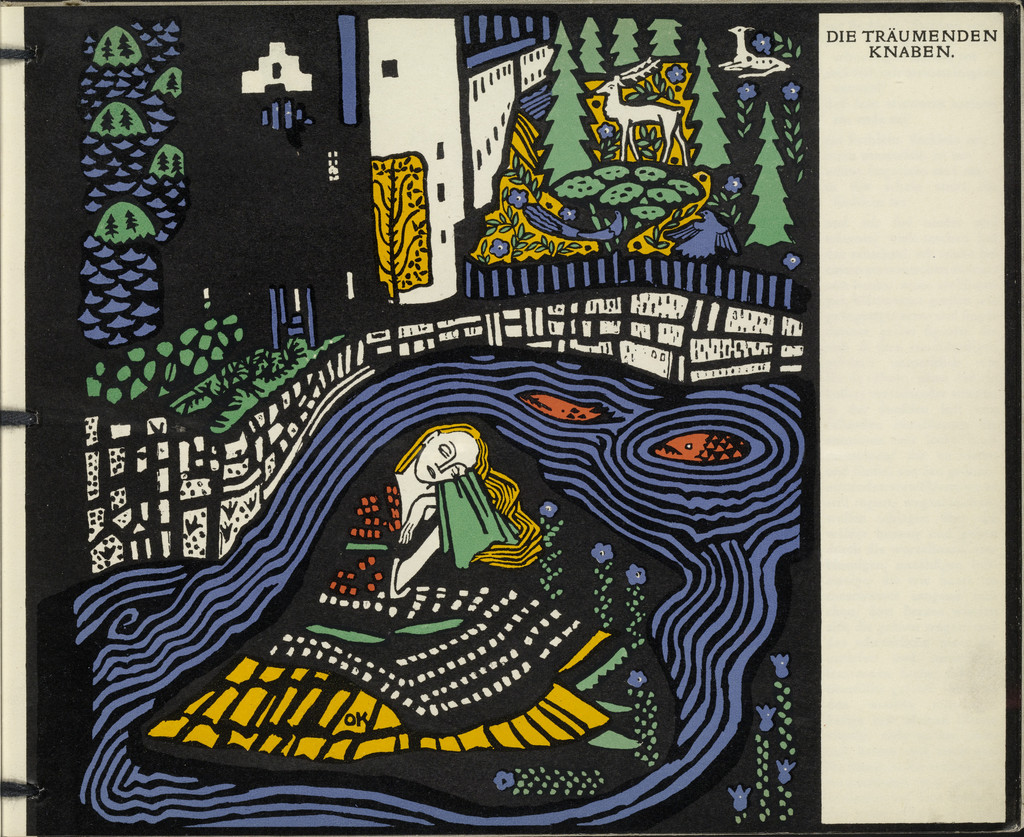
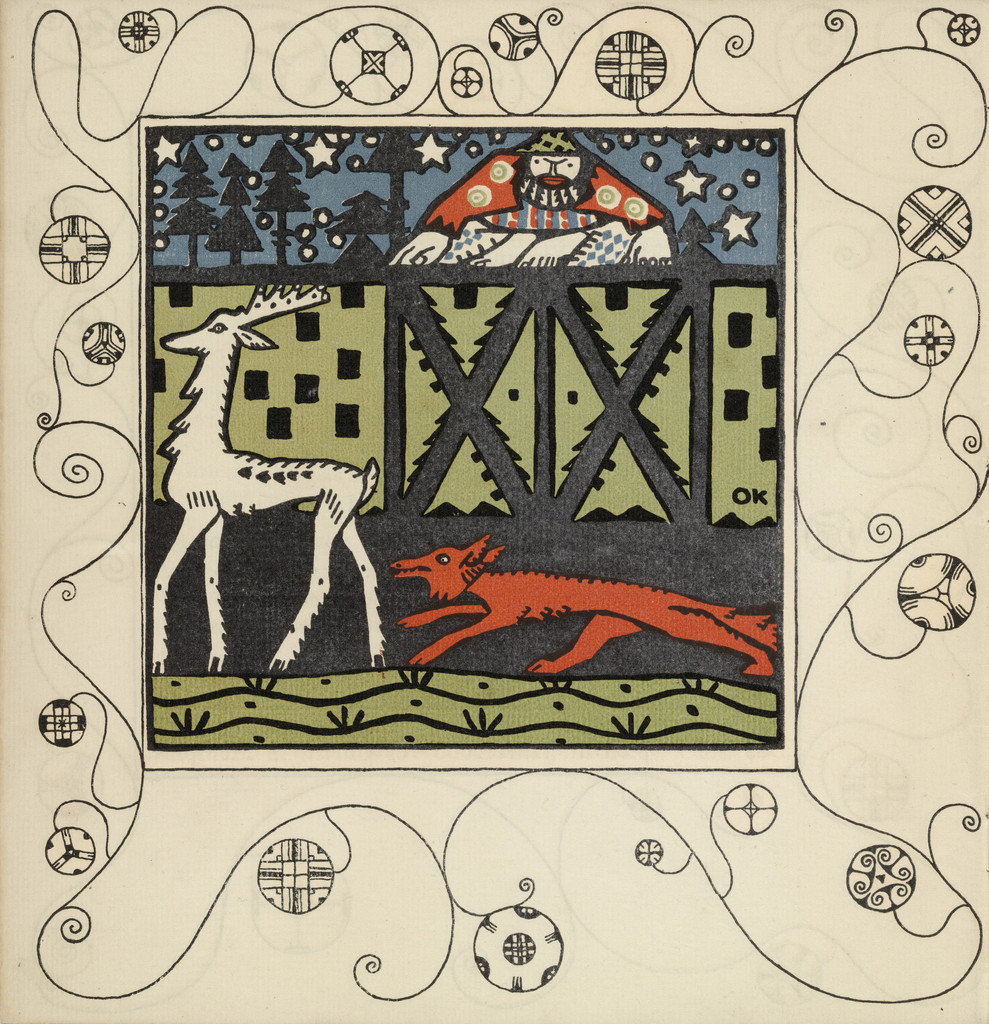
In 1908 Kokoschka was invited to submit works to the first Vienna Kunstschau. Instead of the colour pictures for a children’s book commissioned by Fritz Wärndorfer, director of the Wiener Werkstätte, he showed illustrations to his own poem “Die träumenden Knaben” and a tapestry, “The Dream Bearers” (now lost); the frank adolescent fantasies provoked a backlash from conservative officials and he was expelled from the school, but found his place in the Viennese avant-garde.
1908
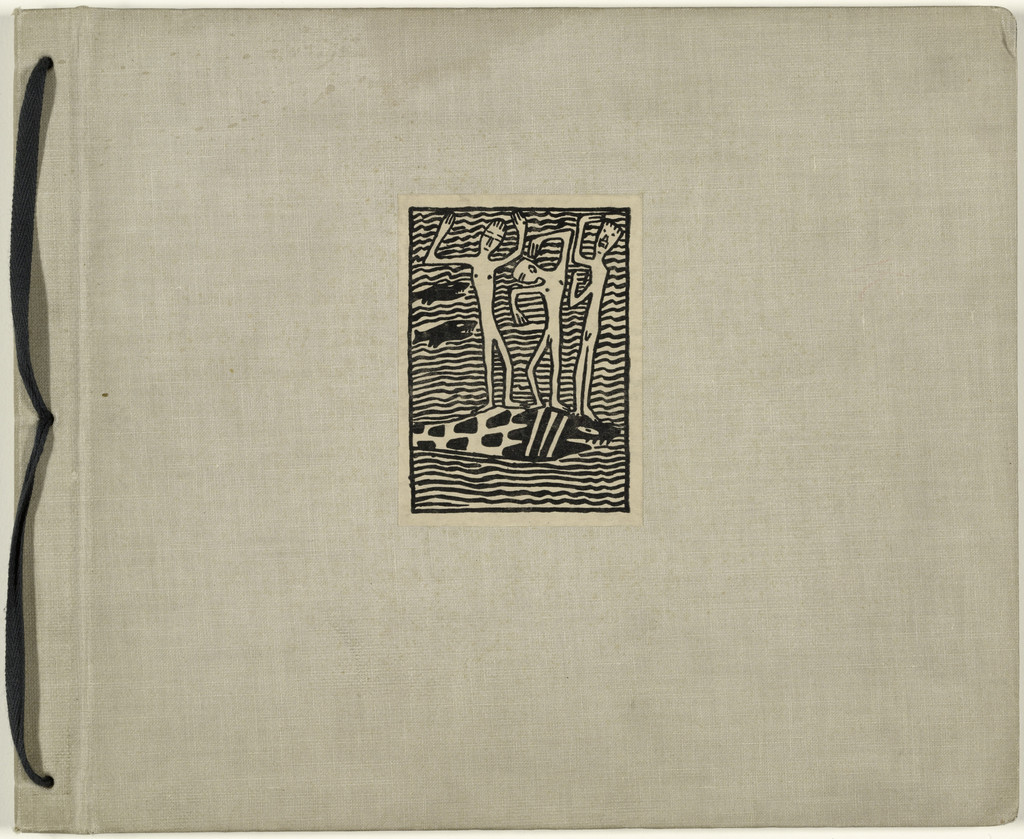
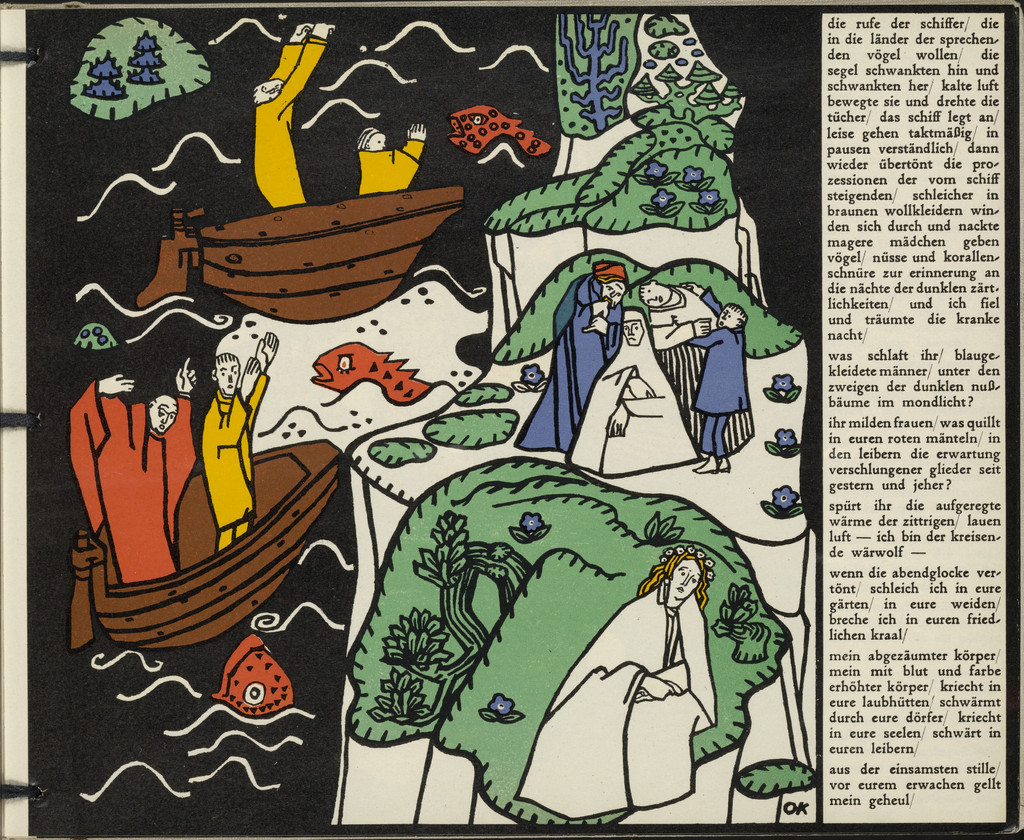
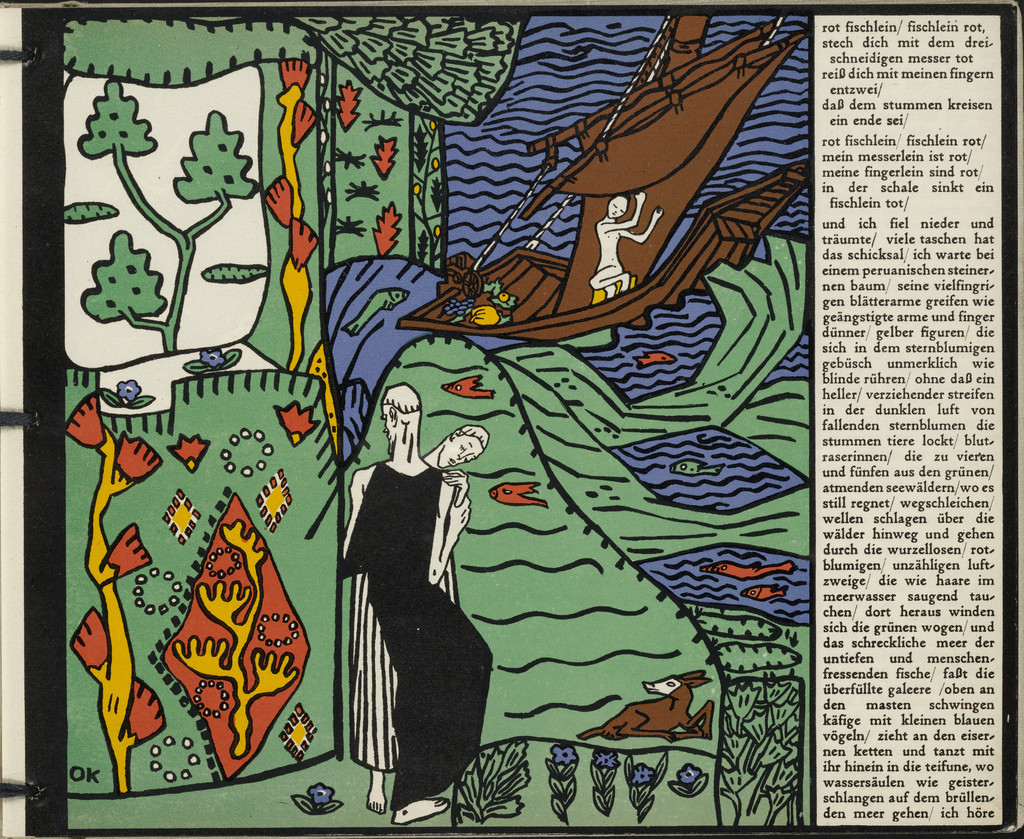
The book “Die träumenden Knaben” with lithographs
Kokoschka published the poem, written a year earlier, with the Wiener Werkstätte, with two small black-and-white and eight larger colour lithographs, and dedicated it to Gustav Klimt. Of the five hundred copies only a small proportion were bound and sold; the poem is an autobiographical adolescent fantasy about his love for a Swedish classmate, Lilith.
1909
The scandalous staging of “Murderer, the Hope of Women”
Kokoschka’s play “Murderer, the Hope of Women” was first staged in 1909, and the production on a Viennese stage caused a scandal. The play is often called the first Expressionist drama; Paul Hindemith made an opera of it in 1921.
1909–1914
Adolf Loos: patron and commissioner of portraits
The architect Adolf Loos befriended Kokoschka, introduced him to the Viennese avant-garde and ordered portraits of his clients and friends, agreeing to buy the work if the sitter declined. This left Kokoschka complete artistic freedom; he painted the bulk of his portraiture between 1909 and 1914.
1910
Berlin: Cassirer and Walden
In 1910 Kokoschka moved to Berlin. The art dealer Paul Cassirer saw promise in his work and launched him into the international circle, and the publisher and critic Herwarth Walden, introduced to him by Loos, employed him as an illustrator for his magazine “Der Sturm”; over the next four years Kokoschka travelled back and forth between Vienna and Berlin.
1910
Drawings and a cover for the magazine “Der Sturm”
Twenty-eight drawings by Kokoschka were published in “Der Sturm” during its first year; the first was a drawing from the series “Menschenköpfe” dedicated to Karl Kraus, and the twentieth issue carried his first cover illustration, for “Murderer, the Hope of Women”, and his first literary contribution.