 William HogarthInglaterra, 1697–1764
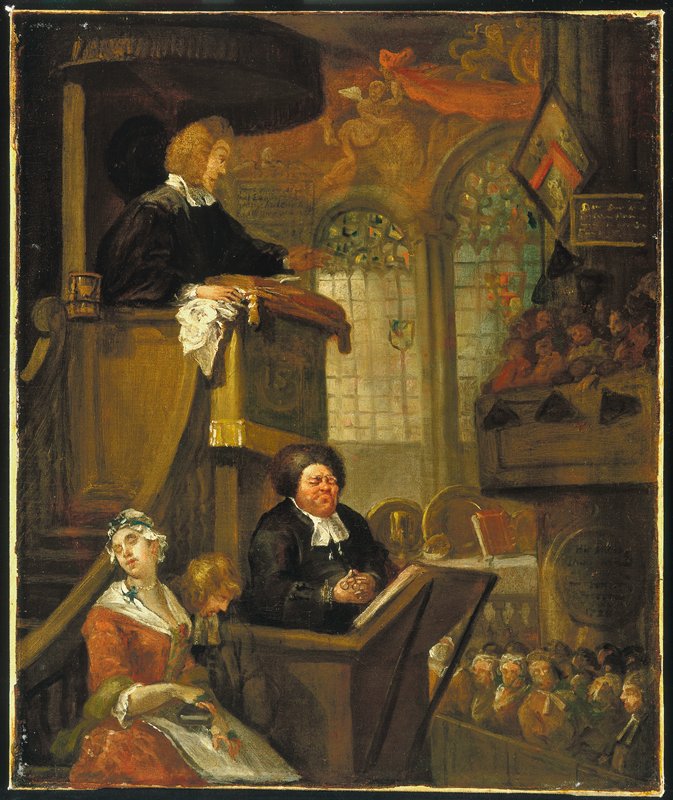
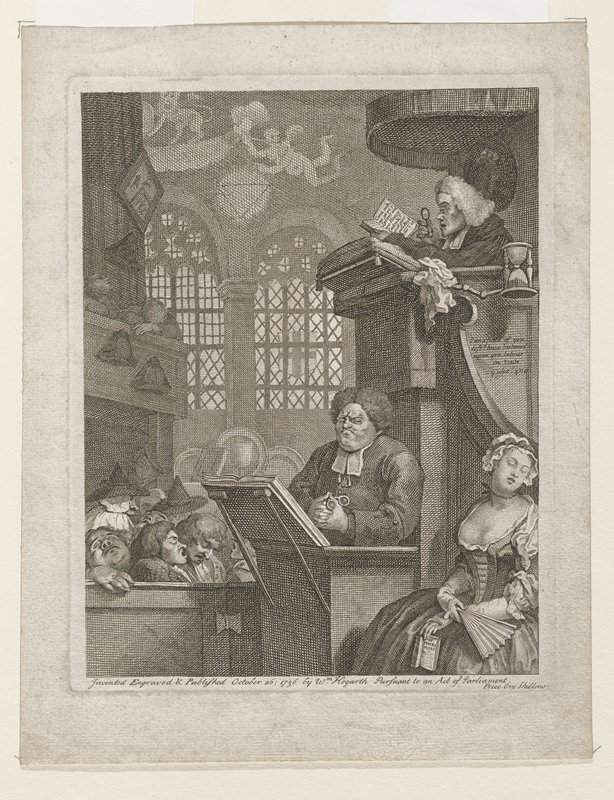
The Sleeping Congregation
Será possível contemplá-la?
De momento, não recebe

Instituto de Artes de Minneapolis
Minneapolis, Estados Unidos
Pertence à coleção, mas de momento não está exposta.
- Verificado
- Neste estado desde
- Fonte
- Os dados da própria coleção do museu
Sobre a obra
Human weakness was an endless source of humor for Hogarth, and his pointed satires sought to draw lessons through full disclosure of people's failings. Here religion-a frequent target of caricature-takes a backseat to more basic needs; sleep and sex, not piety, captivate the faithful during Sunday services. A shortsighted old preacher clutches his magnifying glass as he delivers what is surely a long-winded and dull sermon. Meanwhile, the undignified congregants appear in different stages of slumber, and a portly clerk sneaks an amorous glance at the bosom of a young maiden who sleeps, her dream colored by her biblical reading on matrimony.
Hogarth was a master storyteller, incisively capturing the characters and customs of his time in amusing narratives.
Instituto de Artes de Minneapolis
Pormenores
- Número de inventário
- P.12, 612
No catálogo
Fontes
- Instituto de Artes de Minneapolis: the museum's own open data · obtido há 7 dias
- Imagem: Instituto de Artes de Minneapolis — public domain
Entretanto, na vida de William Hogarth
A vida inteira1712–1764 · Local de trabalho
London
1735
Founds the St Martin’s Lane Academy
In 1735 Hogarth founded the St Martin’s Lane Academy in London — in essence a drawing studio that grew out of a circle of painters, draughtsmen and engravers who met at Slaughter’s coffee house on St Martin’s Lane. It became a forerunner of the Royal Academy of Arts and spread new artistic ideas in England.
25 June 1735
“Hogarth’s Act”: copyright for engravings
When the success of the two series produced numerous pirated copies, Hogarth lobbied Parliament for a law protecting engravers: the Engravers’ Copyright Act, known as “Hogarth’s Act”, became law on 25 June 1735 — the first copyright law to cover visual works and to recognise the authorial rights of an individual artist.