 Rembrandt van RijnPaíses Baixos, 1606–1669
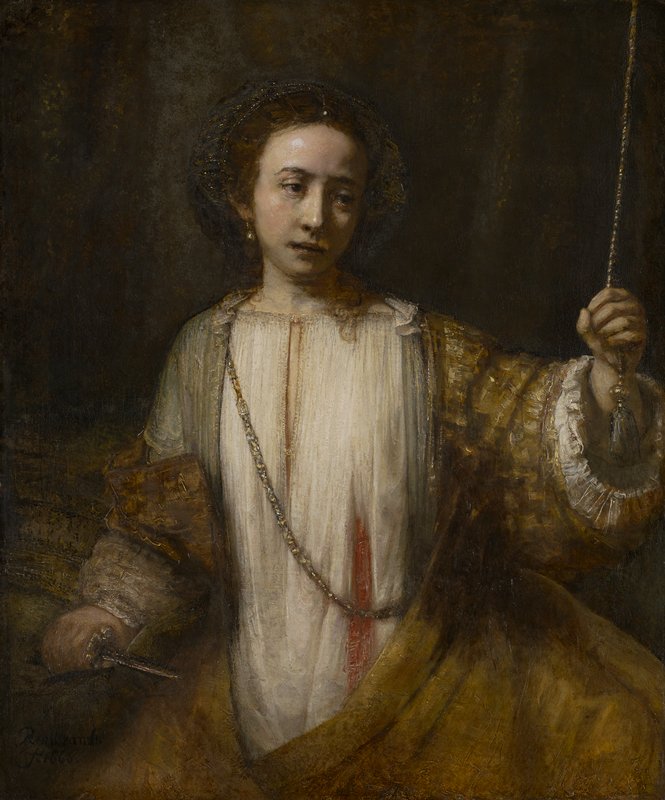
Lucretia
Posso vê-la?
Sim, exposta agora
Onde está «Lucretia» hoje? Instituto de Artes de Minneapolis, G311, Minneapolis. Sim, exposta agora. Verificado 29 de setembro de 2026.

Minneapolis, Estados Unidos
Aberto agora· até às 17:00
Exposta ao público.
- Verificado
- Neste estado desde
- Fonte
- O museu
Sobre a pintura
Lucretia is a 1666 history painting by the Dutch Golden Age painter Rembrandt Harmenszoon van Rijn. It is an oil painting on canvas that depicts a myth about a woman named Lucretia who lived during the ancient Roman eras. She committed suicide to defend her honor after being raped by an Etruscan king's son. For her self-sacrifice she is known as a heroine to the Romans, who celebrated the ideals of virtue and chastity.
The painting is in the collection of the Minneapolis Institute of Art.
Nas palavras do museu
Rembrandt represents the death of Lucretia with striking vividness and sympathy. The legendary story recounted by the ancient Roman historian Livy occurred during the tyrannical reign of Tarquinius Superbus of Rome in the sixth century B.C.E. and led to the birth of the Roman republic. It begins with Lucretia’s husband, Collatinus, a man full of pride, who frequently boasted about his wife. While drinking with fellow soldiers after a failed battle waged for King Tarquin outside of Rome, Collatinus bragged that Lucretia’s loyalty and virtue were greater than all of the wives of his fellow soldiers. Taking up the challenge, the men rode immediately to Rome, where they discovered Lucretia alone with her handmaidens spinning wool, while the other wives were idly enjoying their leisure.
Ler mais
Lucretia's virtue inspired ravenous lust in Sextus Tarquinius, son of the king, who returned to see Lucretia without Collatinus’ knowledge a few days later. The unsuspecting noblewoman received him as an honored guest . Then in the cover of night, Sextus snuck into Lucretia’s bedchamber while she slept, drawing his sword and threatening to kill her if she made a sound. Lucretia resisted in vain. Sextus hissed "If death will not move you, dishonor shall. I will kill you first, then cut the throat of a slave and lay his naked body by your side. Will they not believe that you have been caught in adultery with a servant and paid the price?" As Livy wrote "Even the most resolute chastity could not have stood against this dreadful threat. Lucretia yielded. Sextus raped her, and rode away, proud of his success."
After Tarquin left, Lucretia was destroyed by the moral atrocity done to her. She summoned her father and husband to return home and revealed the crime to them. They tried to comfort her, but despite their protestations of her innocence, she was determined to take her own life. Following a final plea that they punish the perpetrator, "Lucretia drew a knife from under her robe, drove it into her heart, and fell forward, dead." Overwhelmed by grief, the father, husband, and two accompanying friends swore to avenge her death. They incited a mass revolt against the tyrannical rule of Tarquin after parading Lucretia’s body through the streets. The king and his family were forced into exile, and Sextus Tarquinius was subsequently assassinated.
Rembrandt omits most of these details and figures from Lucretia’s story to focus solely on Lucretia herself. The spectator is confronted with Lucretia's anguish and interior monologue in the moments before her death. She grasps a cord to steady herself--perhaps suspended from a bed hanging or a bell cord. Blood stains her white bed clothes and begins to fill her mouth, as her eyes well with tears.
Instituto de Artes de Minneapolis
Pormenores
- Número de inventário
- 34.19
No catálogo
Fontes
- Instituto de Artes de Minneapolis
- Imagem: Instituto de Artes de Minneapolis — public domain