 William HogarthInglaterra, 1697–1764
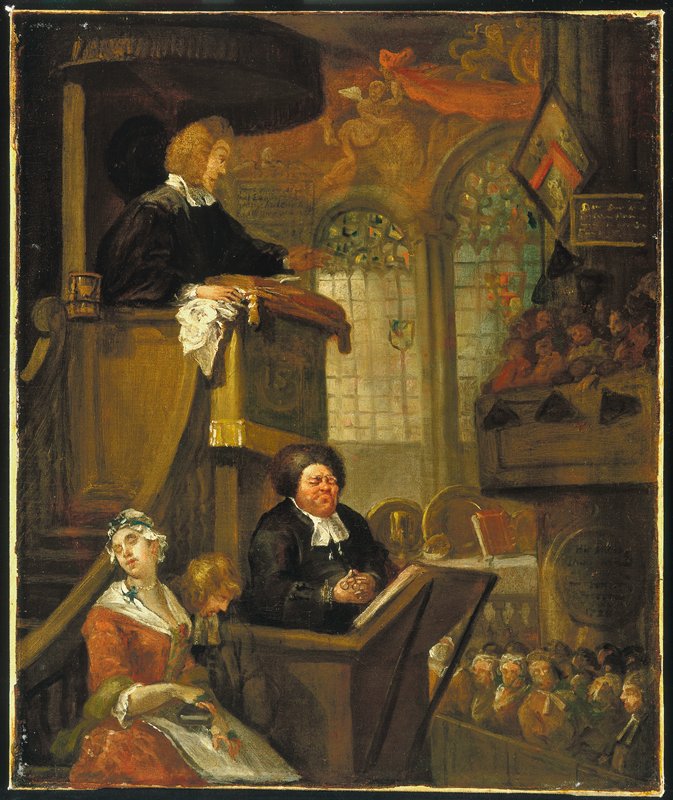
The Sleeping Congregation
Será possível contemplá-la?
Sim, recebe visitas

Instituto de Artes de Minneapolis
SalaG307Minneapolis, Estados Unidos
Exposta ao público. Quem o garante vem indicado abaixo.
- Verificado
- há 8 horas
- Neste estado desde
- 25 de set. de 2026
- Fonte
- Os dados da própria coleção do museu
About the painting
This rough oil sketch is Hogarth’s earliest dated painting. As a social satirist, Hogarth favored familiar, everyday subjects presented with a wry, comic twist. Here, the minister’s dull sermon has put the entire congregation to sleep before he is halfway through (note the hourglass by the pulpit).
Instituto de Artes de Minneapolis
Pormenores
- Número de inventário
- 58.10
No catálogo
Fontes
- Instituto de Artes de Minneapolis: the museum's own open data · obtido há 6 dias
- Imagem: Instituto de Artes de Minneapolis — public domain
Entretanto, na vida de William Hogarth
A vida inteira1712–1764 · Local de trabalho
London
1727 – 28 May 1728
A lawsuit against the weaver Morris: “an engraver, and no painter”
In 1727 the tapestry worker Joshua Morris commissioned from Hogarth a design for “The Element of Earth”, but on hearing that he was “an engraver, and no painter” refused the finished work. Hogarth sued him in the Westminster court and won: judgment was given in his favour on 28 May 1728.
until 1728
Initiated as a Freemason
Before 1728 Hogarth was initiated as a Freemason in the lodge at the Hand and Apple Tree Tavern in Little Queen Street, and later belonged to the Carrier Stone Lodge and the Grand Stewards’ Lodge; for the latter he designed the “Hogarth Jewel”, the badge of the Lodge’s Master (the original is now in storage and a replica is worn by the present Master). Freemasonry is also a theme of “Night”, the fourth print of the “Four Times of the Day”.
23 March 1729
A secret wedding to Jane Thornhill
Not hoping for Sir James’s consent — he saw the match as unequal, Hogarth being a rather obscure artist then — William and Jane married in secret at Paddington Church. Jane and her mother helped to reconcile him with his father-in-law: they hung the first paintings of “A Harlot’s Progress” in his house, and on learning the artist’s name Sir James admitted that a man who could produce such pictures could also keep a wife without a dowry.