 Gustav KlimtÁustria, 1862–1918
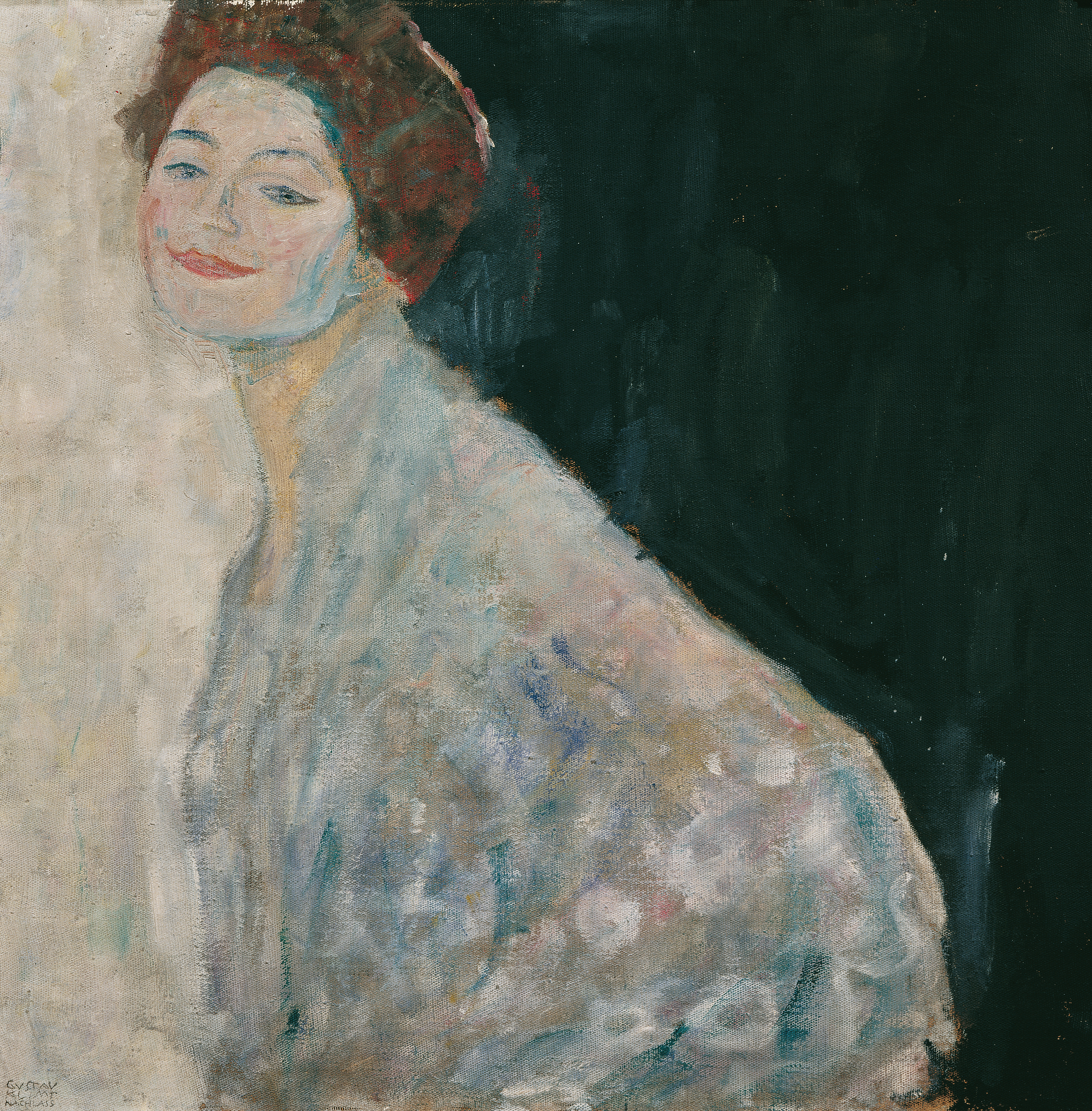
Dame in Weiß
Será possível contemplá-la?
Desconhecido

Österreichische Galerie Belvedere
Viena, Áustria
O proprietário é conhecido; não se sabe se hoje está exposta.
- Neste estado desde
- Fonte
- O museu
Sobre a pintura
Nas palavras do museu — em alemão
Dame in Weiß ist eines jener unvollendeten Gemälde, die nach Gustav Klimts Tod in seinem Atelier verblieben waren und beispielhaft für die Arbeitsweise im Spätwerk des Malers sind: Klimt positioniert sein unbekanntes Modell so auf der quadratischen Leinwand, dass es die Bildfläche in der Diagonale teilt. Dabei ergibt sich eine Komposition in drei Teilen mit der Dargestellten im Zentrum, einem hellen Hintergrund in der linken Bildhälfte und einer dunklen Fläche auf der gegenüberliegenden Seite. Während die sichtbaren Pinselstriche typisch für Klimts späte Bilder sind, ist die betonte Flächigkeit charakteristisch für die Kunst des Wiener Jugendstils.
Österreichische Galerie Belvedere
Pormenores
No catálogo
Fontes
- Österreichische Galerie Belvedere
- Imagem: Österreichische Galerie Belvedere — CC BY-SA 4.0
Entretanto, na vida de Gustav Klimt
A vida inteira1897–1917
Society portraits of Viennese ladies
Over twenty years Klimt painted nearly twenty society portraits of women, which gave him financial independence; Carl Moll introduced him to many of the sitters, most of them from the Jewish upper bourgeoisie. In the portraits the ladies are hidden in sumptuous clothing, their heads and hands seeming to float detached from reality.
1914–1918
The war: colourful ladies and a good income
As if pushing the war out of his world, Klimt again painted the “beautiful Viennese women” — “Lady with a Fan”, “The Bride”, both “Dancers”; “Death and Life” is his only picture on a topical subject. His notebook shows that he earned well in the war years, collectors readily buying his portraits of elegant strangers.
1915
Death of his mother
His mother, Anna Klimt, died; Gustav continued to live on Westbahnstrasse with his two unmarried sisters.
1917
Honorary member of the academies of Vienna and Munich
Klimt was elected an honorary member of the academies of fine arts of Vienna and Munich.
11 January 1918
A stroke, the hospital, pneumonia
A stroke paralysed Klimt's right side; in hospital, where he was put on a water bed for bedsores, he caught influenza and pneumonia. For three weeks the press printed bulletins, and on his deathbed he demanded that his sisters send for Emilie Flöge.
6 de fevereiro de 1918
Died