ART WIKI32 963 em exposição
MapaColeçãoArtistasMuseusExposiçõesRevista
Entrar

ART WIKI

Onde está a obra-prima, e a que horas se abre a porta.

Coleções: Art Institute of Chicago, Galeria Nacional de Arte, Galeria Tretiakov, Getty Villa, Harvard Art Museums, Hermitage, Hirshhorn Museum and Sculpture Garden, Instituto de Artes de Minneapolis, Museu de Arte de Cleveland, Museu de Arte Moderna, Museu do Louvre, Museu Estatal de Amesterdão, Museu J. Paul Getty, Museu Metropolitano de Arte, Museu Nacional de Arte da Dinamarca, Museu Pushkin, Museu Russo, Museu Smithsoniano de Arte Americana, Museu Vitória e Alberto, Museu Whitney de Arte Americana, National Museum of Asian Art, National Portrait Gallery, Catálogo Estatal do Fundo Museológico da Rússia (274 museus), Europeana (19 museus), Wikidata (6 museus), Paris Musées (12 museus) e Joconde, a base de museus do Ministério da Cultura de França (495 museus). As imagens pertencem aos titulares dos direitos.

Secções

  • Mapa
  • Pesquisa
  • Coleção
  • Obras-primas
  • Em exposição agora
  • Artistas

Mais

  • Museus e galerias
  • Exposições
  • Revista
  • De onde vêm os dados
  • Privacidade e cookies
InícioMapaCatálogo
  1. Coleção/
  2. Museu de Arte Moderna/
  3. Esperança II
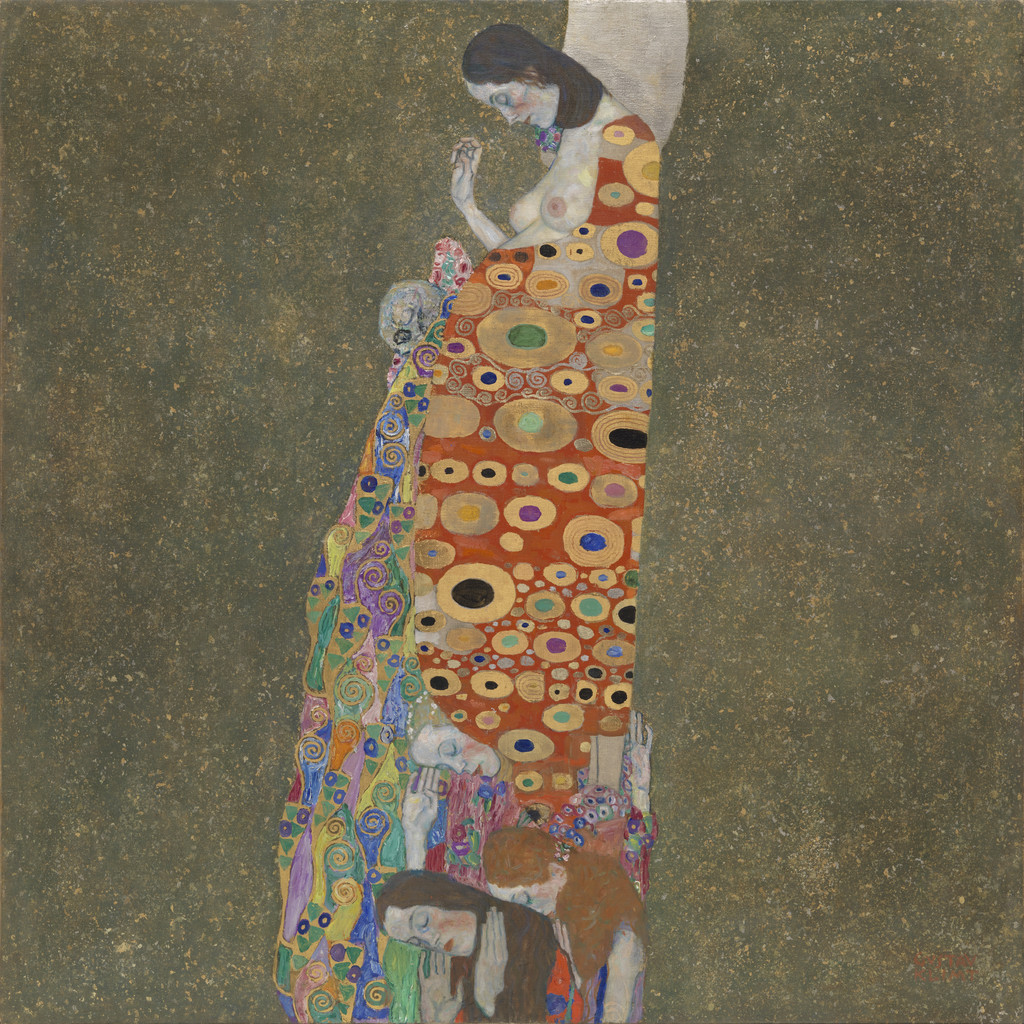
Esperança II, Gustav Klimt, 1907-08
Gustav Klimt, retratoGustav KlimtÁustria, 1862–1918

Esperança II

Hope, II

1907-08 · Painting

Será possível contemplá-la?

Sim, recebe visitas

Museu de Arte Moderna

Nova Iorque, Estados Unidos

SalaMoMA, Floor 5

Exposta ao público. Quem o garante vem indicado abaixo.

Verificado
há 9 dias
Fonte
O museu
No mapaPágina do museu

Sobre a pintura

Hope II (German: Die Hoffnung II) is a 1907–1908 oil-on-canvas painting with gold and platinum, by the Austrian symbolist painter Gustav Klimt. It depicts a pregnant woman with closed eyes and was the second of Klimt's works to focus on a pregnant woman, both depicting Herma, one of his favourite models. It was originally entitled Vision by Klimt, but has become known as Hope II after the earlier work Hope, which is now distinguished as Hope I. Hope II was acquired by the Museum of Modern Art in New York City in 1978.

Wikipédia · CC BY-SA

Pormenores

1907-08 · aos 45 anos
18621918
Número de inventário
468.1978

Entretanto, na vida de Gustav Klimt

A vida inteira
  1. 1900–1907

    He returns the advance and keeps the paintings

    The state commission refused to accept the three “Faculty Paintings”; Klimt told the minister he would return the 60,000-krone advance, refused to work for the Austrian state again and kept the pictures. The ministry demanded them, but Klimt did not open the door to the removal men — and the affair ended in his victory.

  2. 1905

    Klimt and his group leave the Secession

    Klimt and his “stylist” followers, who held that art should enter every sphere of life, fell out with the “naturalists”; the decision against Klimt's group was carried by a single vote. For the next three years the group had no joint exhibitions.

  3. 1906

    The “Kunstschau” group

    A year after the split Klimt formed the “Kunstschau” group, or “Klimt group”, which included Carl Moll, Otto Wagner and other leading Austrian artists.

  4. 1908

    Klimt defends Kokoschka

    The public and critics fell on the debutant Oskar Kokoschka so fiercely that the scandal of the “Faculty Paintings” came to mind; Klimt did not turn away from his pupil and defended his place in the show even if it were to be closed. Hevesi granted him talent but denied him taste; Klimt replied that art has nothing to do with taste.

  5. 1 June – 16 November 1908

    The first Vienna Art Show

    For the sixtieth anniversary of Franz Joseph's reign pavilions with 54 rooms were built on a temporary site and over 900 works shown. Room 22, which Peter Altenberg called “the church of modern art named after Gustav Klimt”, held “The Kiss”, “Adele Bloch-Bauer I”, “Danaë” and “The Three Ages of Woman”.

Mais obras de Gustav Klimt

Todas as obras

Na mesma sala · MoMA, Floor 5, Museu de Arte Moderna

Página do museu
  • 1909

    The second Vienna Art Show

    The second generation of modernists was represented by Kokoschka and Egon Schiele, and Klimt showed “Judith II” and “Hope II”. The works of Van Gogh, Munch, Gauguin, Vallotton, Bonnard and Matisse gave him the impulse for a new phase, but he never organized exhibitions again.

  • No catálogo

    PinturasÓleoPintura austríacaModernismoSéculo XX

    Fontes

    • Museu de Arte Moderna
    • Imagem: Museu de Arte Moderna — © the artist or rights holder
    Mäda Primavesi (1903–2000), Gustav Klimt, 1912–13

    Mäda Primavesi (1903–2000)

    1912–13 · Museu Metropolitano de Arte

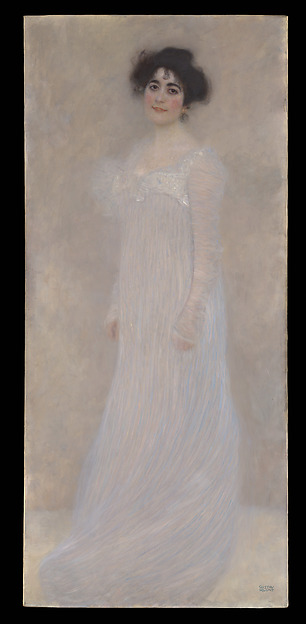
    Serena Pulitzer Lederer (1867–1943), Gustav Klimt, 1899

    Serena Pulitzer Lederer (1867–1943)

    1899 · Museu Metropolitano de Arte

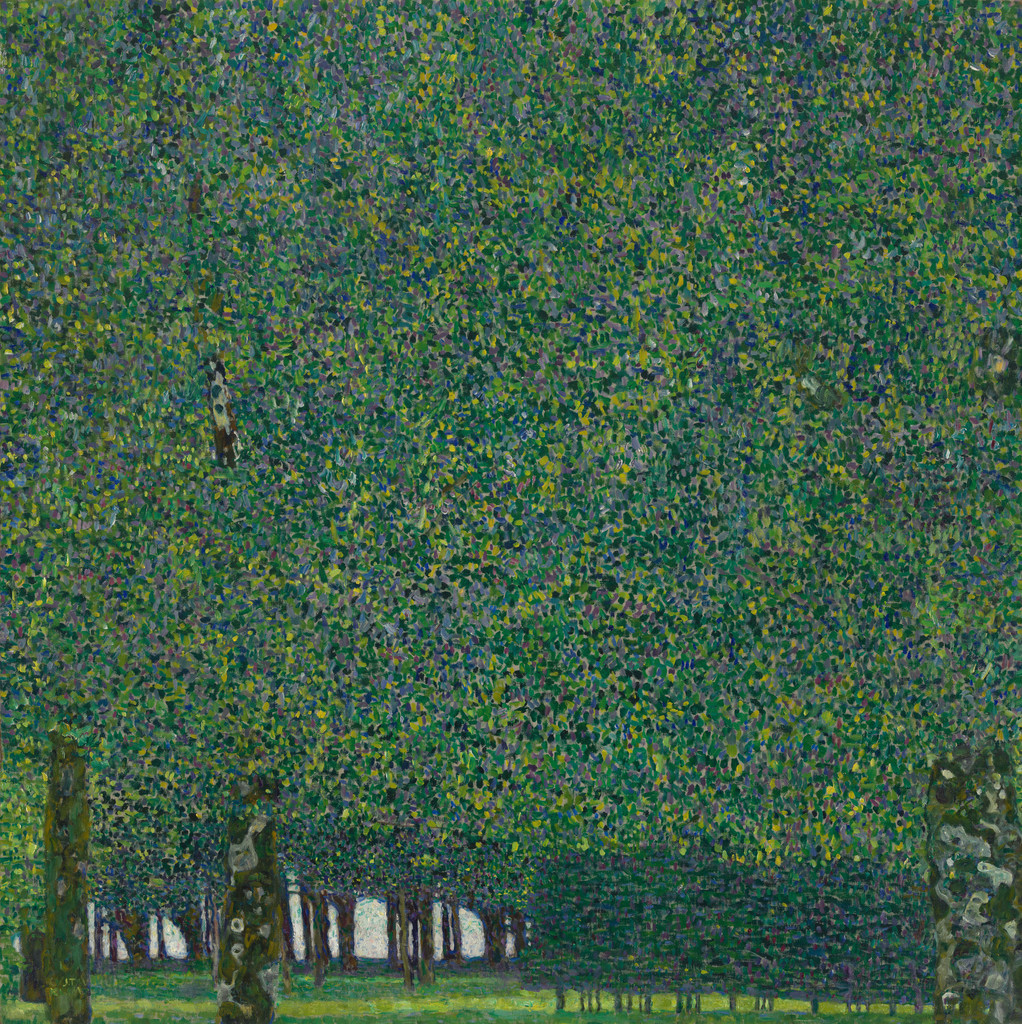
    The Park, Gustav Klimt, 1910 or earlier

    The Park

    1910 or earlier · Museu de Arte Moderna

    Baby (Cradle), Gustav Klimt, 1917/1918

    Baby (Cradle)

    1917/1918 · Galeria Nacional de Arte

    Pear Tree, Gustav Klimt, 1903 (reworked by the artist 1903/1918)

    Pear Tree

    1903 (reworked by the artist 1903/1918) · Harvard Art Museums

    Studie van een in een plaid gewikkelde, rustende vrouw, Gustav Klimt, 1872 - 1918

    Studie van een in een plaid gewikkelde, rustende vrouw

    1872 - 1918 · Museu Estatal de Amesterdão

    Studie für „Bildnis Johanna Staude“, Gustav Klimt

    Studie für „Bildnis Johanna Staude“

    Albertina

    Brustbild einer Frau, Gustav Klimt

    Brustbild einer Frau

    Albertina

    The Park, Gustav Klimt, 1910 or earlier

    Gustav Klimt

    The Park, 1910 or earlier

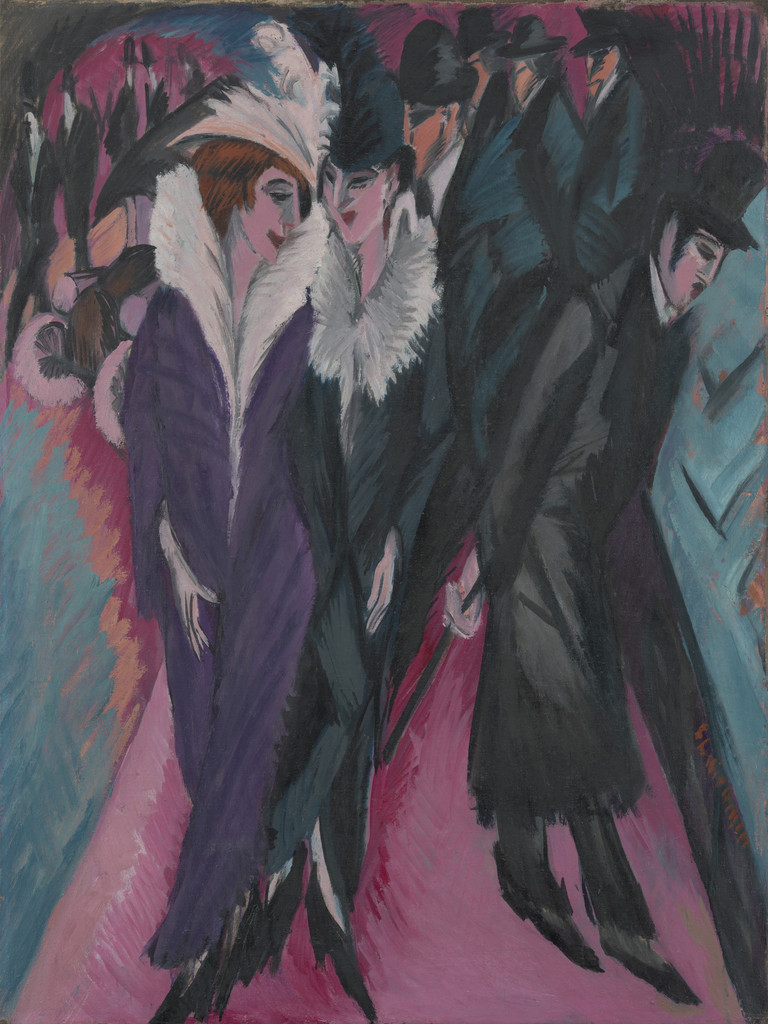
    Street, Berlin, Ernst Ludwig Kirchner, 1913

    Ernst Ludwig Kirchner

    Street, Berlin, 1913

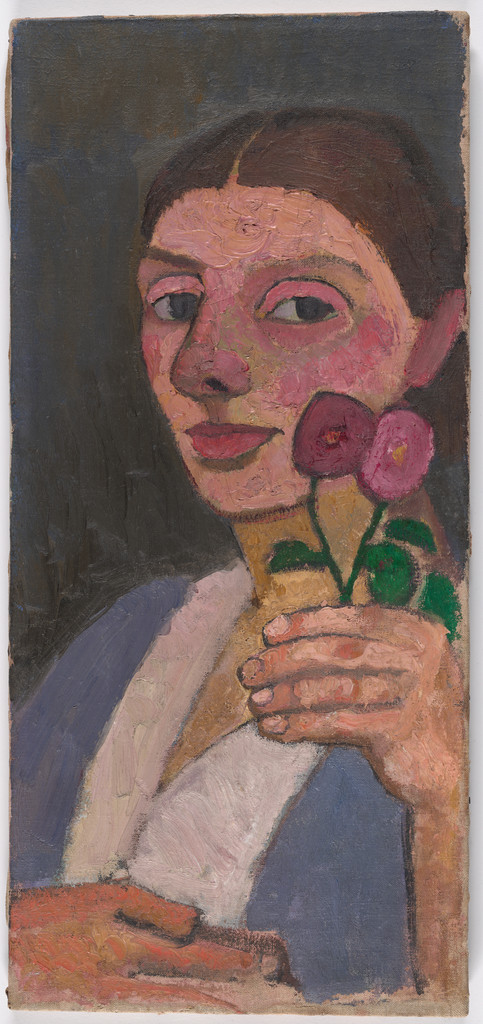
    Self-Portrait with Two Flowers in Her Raised Left Hand, Paula Modersohn-Becker, 1907

    Paula Modersohn-Becker

    Self-Portrait with Two Flowers in Her Raised Left Hand, 1907