 Jean-Léon GérômeFrança, 1824–1904
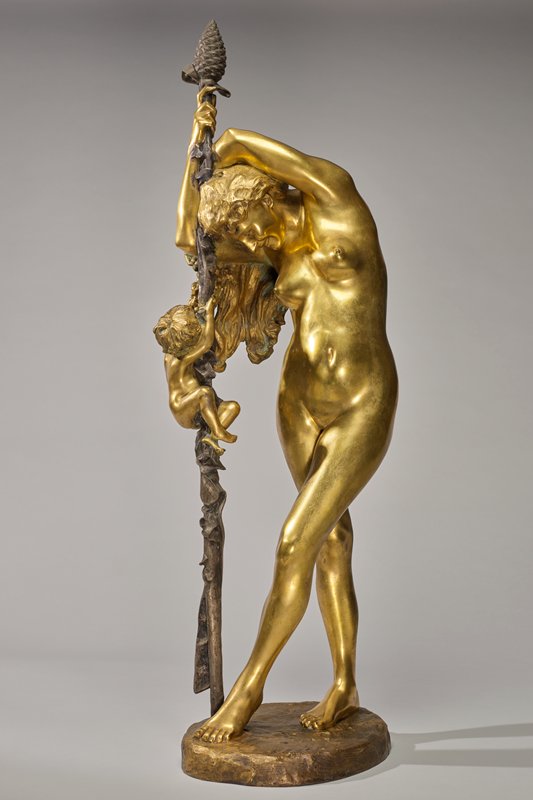
Bacchante à l'Amour
Será possível contemplá-la?
De momento, não recebe

Instituto de Artes de Minneapolis
Minneapolis, Estados Unidos
Pertence à coleção, mas de momento não está exposta.
- Verificado
- Neste estado desde
- Fonte
- O museu
Sobre a escultura
The same realism and meticulous attention to detail are evident in both Gerome's sculpture and in his paintings. The classical subject matter is rendered here in a combination of different materials following the practice of sculptors in ancient times. Although Gerome was one of the most famous academic painters of the 1800s, in 1878 he renounced his paintings as inferior and devoted himself to sculpture for the rest of his career, becoming equally well known in this area
Instituto de Artes de Minneapolis
Pormenores
- Número de inventário
- 2016.33.13
No catálogo
Fontes
- Instituto de Artes de Minneapolis
- Imagem: Instituto de Artes de Minneapolis — public domain
Entretanto, na vida de Jean-Léon Gérôme
A vida inteira1864–1904
The studio everyone wanted to join
Places in Gérôme’s atelier were limited and keenly sought: only the best students were admitted. Students progressed from drawing after antique works and casts to drawing from the live model and only then were allowed to paint in oils; he attended every Wednesday and Saturday and was known as a severe critic, but helped his students outside the school too, inviting them to his own studio and recommending them to the Salon.
1864–1904
The most “riotous” studio of the École
According to John Milner, who studied with Gérôme, his atelier was the most “riotous” and “lewd” of all the studios at the École: newcomers were put through bizarre initiation rites — slashing each other’s canvases, being thrown down stairs, out of windows and onto upturned stools, and fencing on the model’s dais, nude and with paintbrushes loaded with paint.
1889–1890
Influenza during the Paris epidemic
In 1889–1890 an influenza epidemic raged in Paris and the artist fell victim to it; even American newspapers reported on his health, since he was extremely popular in the United States. He recovered and declared that he would like to die at work.
1891
His son Jean dies
In 1891 Gérôme’s son Jean, who had shown artistic inclinations, died of consumption at the age of twenty-seven; in his memory the artist made the statue “Grief” (La Douleur).
1894
Campaigns against the Caillebotte bequest
After the death of Gustave Caillebotte, who bequeathed sixty-five paintings from his Impressionist collection to the Luxembourg Museum, Gérôme raised a great din in the newspapers, declaring that young artists would now all start with Impressionism because the state wanted it; he also organised a public demonstration in his atelier. No one listened to him, and he found himself isolated.