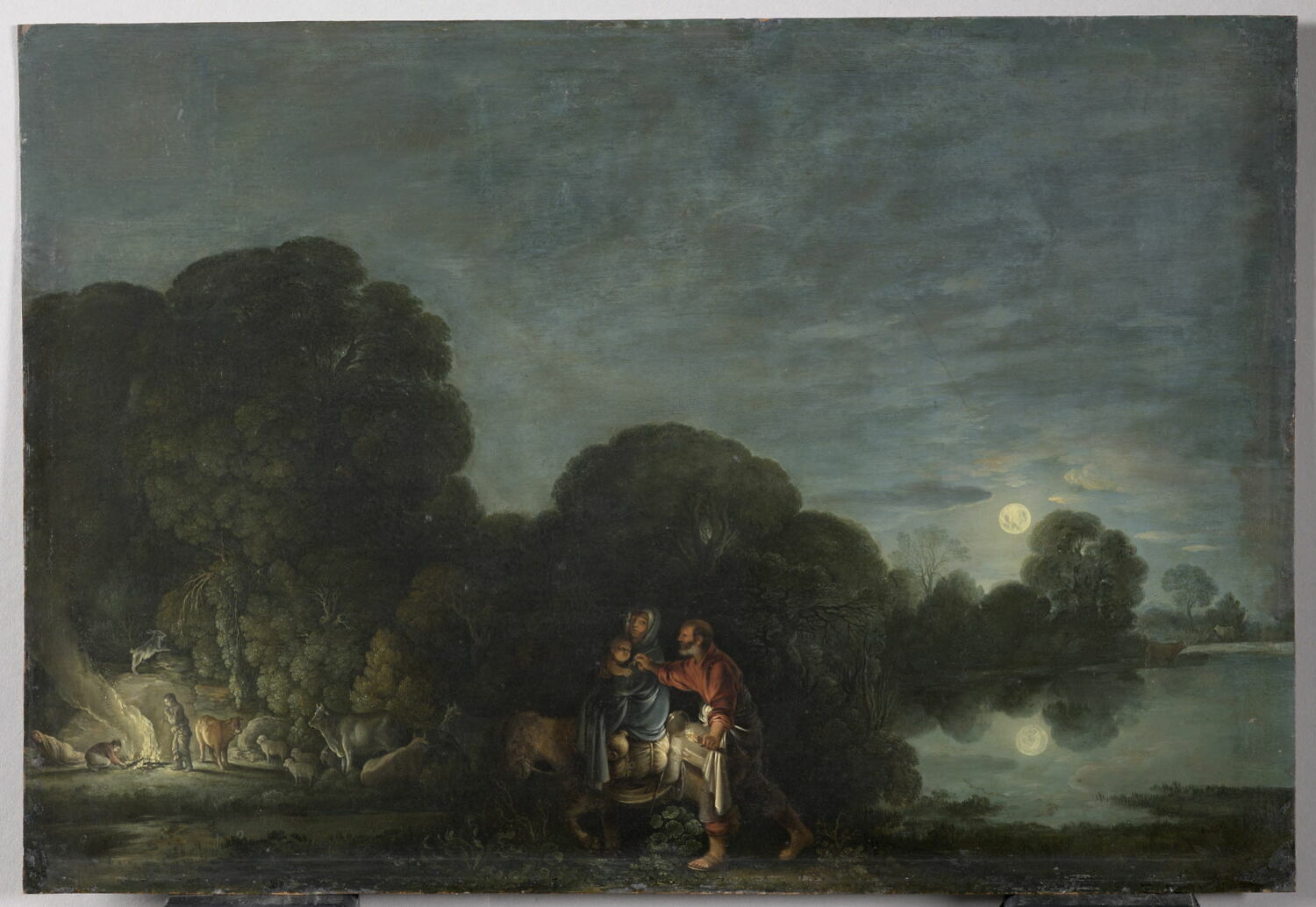
Adam ElsheimerDuitsland, 1578–1610
Saint Agnes (recto); Figure Studies (verso)
Kan ik het zien?
Nu niet te zien
Waar is „Saint Agnes (recto); Figure Studies (verso)” nu? Collectie: J. Paul Getty Museum, Los Angeles. Nu niet te zien. Gecontroleerd 7 oktober 2026.
Los Angeles, Verenigde Staten
Het hoort bij de collectie, maar is momenteel niet tentoongesteld.
- Gecontroleerd
- Ongewijzigd sinds
- Bron
- Het museum
Over het werk
Against a sketchy landscape with a distant city in the lower left, the young Saint Agnes holds a lamb, symbol of her "marriage" to Jesus Christ, the Lamb of God. The freedom and rhythm of this drawing, with its loose strokes and inky washes, all focus attention on Agnes's embracing gesture. A prolific draftsman, Adam Elsheimer often covered both sides of sheets with varied figures and themes rendered with his characteristically dynamic energy. Scholars generally connect the Saint Agnes drawing on the recto with a series of saints that Elsheimer painted on copper panels. He may have drawn *Saint Agnes* as a study for a panel in the series that was either lost or never made. The verso includes zigzag and tangled pen flourishes and a forcefully drawn study of a muscular nude and a reclining figure shown in sharp perspective. The abrupt cropping of the figures indicates that Elsheimer cut down and reused a larger sheet when he drew *Saint Agnes* .
J. Paul Getty Museum
Gegevens
- Inventarisnummer
- 91.GA.2
In de catalogus
Bronnen
- J. Paul Getty Museum
- Afbeelding: J. Paul Getty Museum — Open Content
In het leven van Adam Elsheimer
Het hele leven1604
Van Mander praises him in the Schilder-Boeck
The Dutchman Karel van Mander, recently returned from Rome, publishes his Schilder-Boeck, which praises Elsheimer’s work and describes him as slow-working and making few drawings.
1606
Marries Carola Antonia Stuarda
His bride, a fellow Frankfurter of Scottish ancestry, was the recent widow of the artist Nicolas de Breul (born in Verdun). Giovanni Faber and Paul Bril were the witnesses at the wedding.
1606
Admitted to the Accademia di San Luca
He is admitted to the Accademia di San Luca, the Roman painters’ guild, and gives it a self-portrait, now in the Uffizi. It is his only portrait and his only painting on canvas.
1606–1608
Converts from Lutheranism to Catholicism
He converts to Catholicism by 1608, possibly as early as 1606, following the path of his Roman friends Faber and Bril.