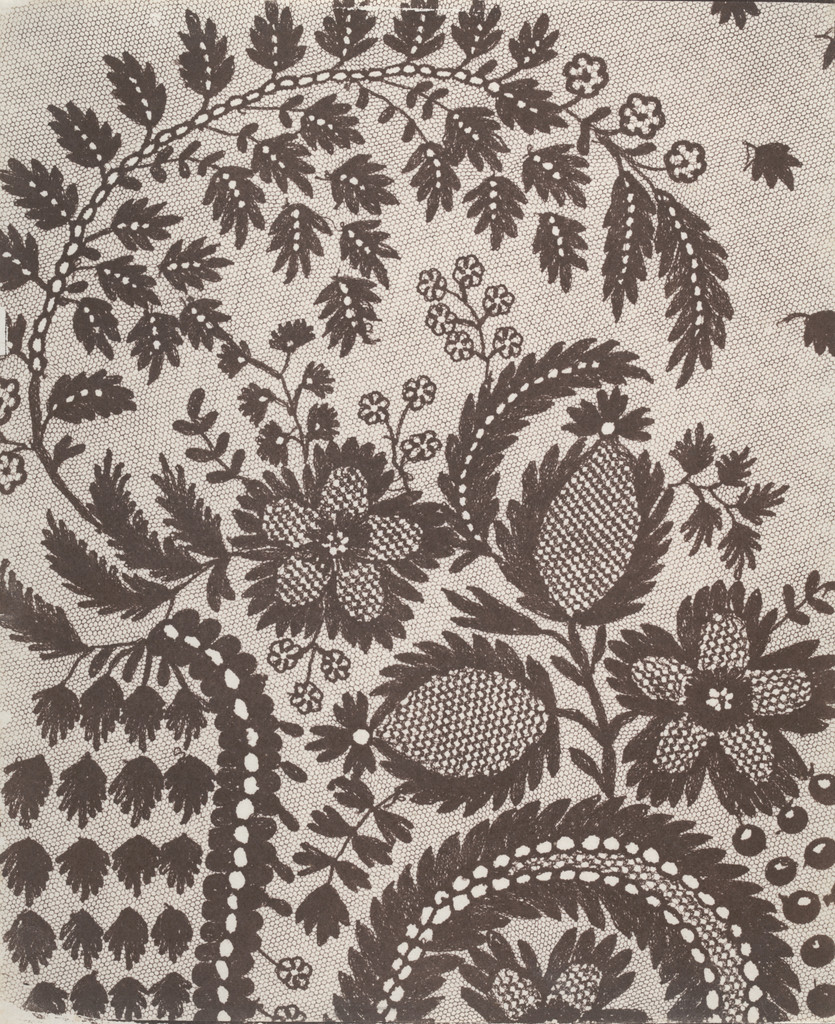
![[Linen], William Henry Fox Talbot, about 1835](https://media.getty.edu/iiif/image/fcfc5756-351a-460c-975f-26cafd3eee1c/full/!1200,1200/0/default.jpg)
 William Henry Fox TalbotEngeland, 1800–1877
[Linen]
Mag men het zien?
Ontvangt momenteel niet
J. Paul Getty Museum
Los Angeles, Verenigde Staten
Het hoort bij de collectie, maar is momenteel niet tentoongesteld.
- Gecontroleerd
- Ongewijzigd sinds
- Bron
- Het museum
Over het werk
> William Henry Fox Talbot began his experiments with light-sensitive materials in mid-1834 and in 1835 achieved results that have survived to the present day. His first pictures created with light are the shadows of plants ([85.XM.150.13](http://www.getty.edu/art/collection/objects/53337)) or of textiles (such as this image) placed directly on top of a piece of ordinary paper that was brushed with a solution of table salt and then a solution of silver nitrate. When the silver nitrate comes in contact with the salt it becomes light sensitive silver chloride. Eventually Talbot made pictures by exposing sensitized paper to sunlight through a lens fitted to a wooden box known as a camera obscura ([85.XM.150.22](http://www.getty.edu/art/collection/objects/53345)). He called these images "photogenic drawings," thus associating them with the history of art rather than natural history.
Verder lezen
Until the spring of 1839, most of Talbot's pictures were negatives, that is, the tones of nature are reversed, with the light areas reading as dark and vice versa. Adapted from Weston Naef, *The J. Paul Getty Museum Handbook of the Photographs Collection* (Los Angeles: J. Paul Getty Museum, 1995), 8-9. © 1995 The J. Paul Getty Museum.
J. Paul Getty Museum
Gegevens
- Inventarisnummer
- 85.XM.150.14
In de catalogus
Bronnen
- J. Paul Getty Museum
- Afbeelding: J. Paul Getty Museum — Open Content
Intussen, in het leven van William Henry Fox Talbot
Het hele leven10 december 1832 – 29 december 1834
Post: member of the 11th Parliament of the United Kingdom
1832–1835 · Loopbaan
Parliament for Chippenham
A moderate Reformer who generally supported the Whig ministers, Talbot sat in Parliament for Chippenham and retired from it in 1835.
early 1834
Photographic experiments begin
In early 1834 Talbot began the experiments on which he later based his claim to priority of invention. For his “photogenic drawing” he bathed writing paper in a weak solution of table salt and brushed it with a strong solution of silver nitrate; unlike Thomas Wedgwood and Nicéphore Niépce, he found ways to fix the image chemically so that it would not darken in daylight.
1835
The first negative on salted paper
Talbot made his first negative on paper soaked in silver nitrate and a salt solution, as he later recounted in “The Pencil of Nature”. Among his early pictures is the window of his own library, taken from inside with a camera whose optical lens measured only 8 centimetres.
1836
Daughter born: Ella Talbot
1836
Discovers the Talbot effect
In a paper in the Philosophical Magazine Talbot described how the image of a diffraction grating periodically changed colour as the focusing lens was moved away from it; the paper offered neither measurements nor an explanation. The self-imaging of a periodic grating is now called the Talbot effect.
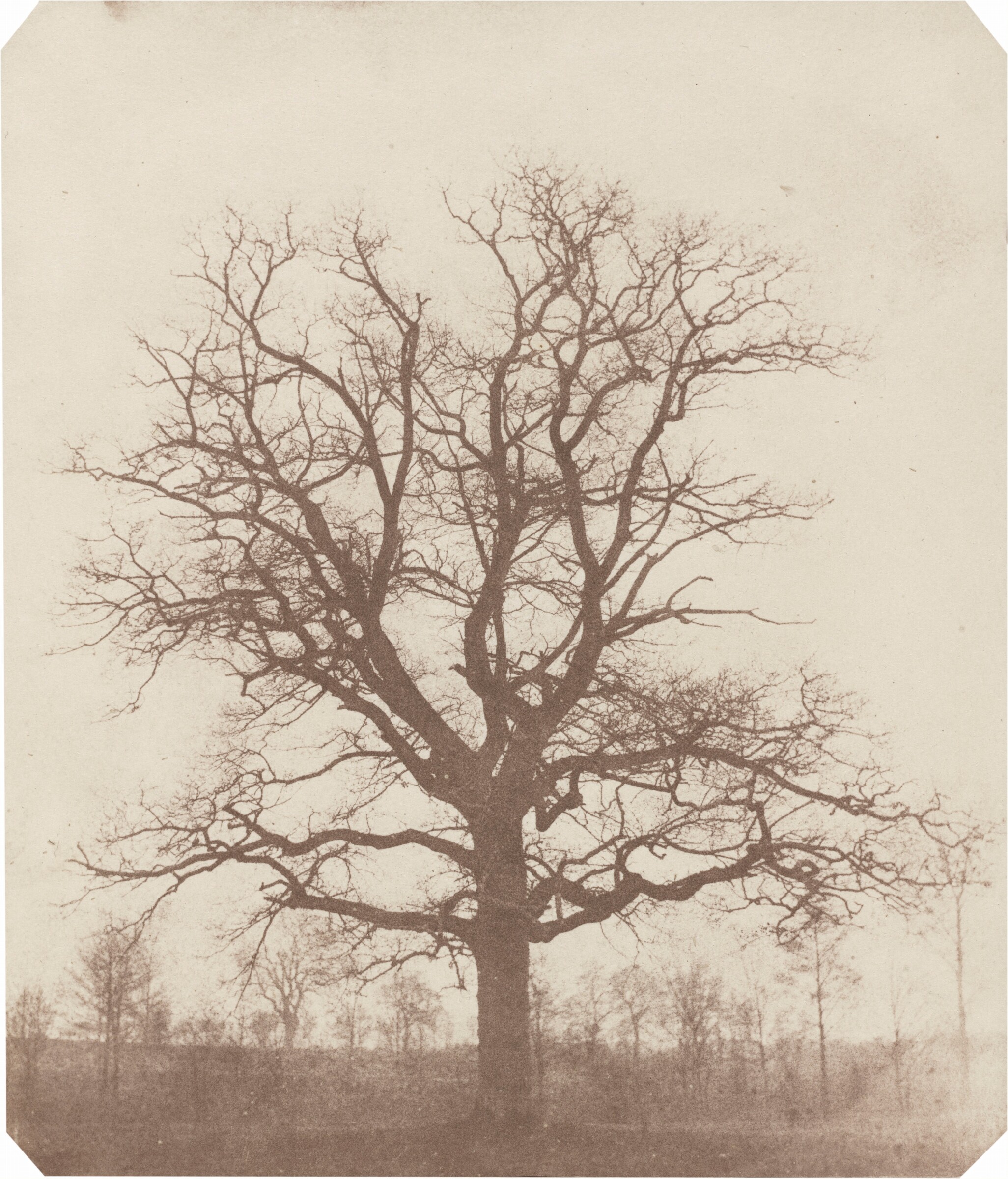


![[Group of Trees from the American Walnut], William Henry Fox Talbot, June 1, 1840](https://media.getty.edu/iiif/image/e2239044-50e4-44d2-be46-db53cdc317f1/full/!1200,1200/0/default.jpg)


