![[Lacock Abbey], William Henry Fox Talbot, 1835–1839](https://media.getty.edu/iiif/image/47183f67-553e-46a9-ba22-da97e076a848/full/!1200,1200/0/default.jpg)
 William Henry Fox TalbotEngeland, 1800–1877
[Lacock Abbey]
Mag men het zien?
Ontvangt momenteel niet
Los Angeles, Verenigde Staten
Het hoort bij de collectie, maar is momenteel niet tentoongesteld.
- Gecontroleerd
- Ongewijzigd sinds
- Bron
- Het museum
Gegevens
- Inventarisnummer
- 84.XM.1002.32
In de catalogus
Bronnen
- J. Paul Getty Museum
- Afbeelding: J. Paul Getty Museum — Open Content
Intussen, in het leven van William Henry Fox Talbot
Het hele leven10 december 1832 – 29 december 1834
Post: member of the 11th Parliament of the United Kingdom
early 1834
Photographic experiments begin
In early 1834 Talbot began the experiments on which he later based his claim to priority of invention. For his “photogenic drawing” he bathed writing paper in a weak solution of table salt and brushed it with a strong solution of silver nitrate; unlike Thomas Wedgwood and Nicéphore Niépce, he found ways to fix the image chemically so that it would not darken in daylight.
1835
The first negative on salted paper
Talbot made his first negative on paper soaked in silver nitrate and a salt solution, as he later recounted in “The Pencil of Nature”. Among his early pictures is the window of his own library, taken from inside with a camera whose optical lens measured only 8 centimetres.
25 January 1839
First showing of photographs at the Royal Institution
Shortly after Louis Daguerre’s daguerreotype was announced in early January, Talbot asserted his priority and, at a Friday Evening Discourse at the Royal Institution, exhibited several paper photographs he had made in 1835. Within a fortnight he described the nature of his process to the Royal Society, while Daguerre revealed no useful details of his own until mid-August.
1840
Invents the calotype
Talbot found a way to print any number of positives on salted paper from a paper negative; new chemicals cut the exposure to a minute in bright sunlight. He called the method the “calotype” (from kalos, beautiful), informally the “talbotype”: unlike the daguerreotype with its single positive, it effectively created modern photography.
February 1841
Patents the calotype
Talbot obtained an English patent for the calotype process and sold licences at £20 each, later lowering the fee for amateurs to £4 while professionals paid up to £300 a year; scientists saw it as a hindrance to scientific freedom. He justified his rigour by the roughly £5,000 he had spent on photography; for science the method was free, and Talbot himself published the first known photomicrograph of a mineral crystal.


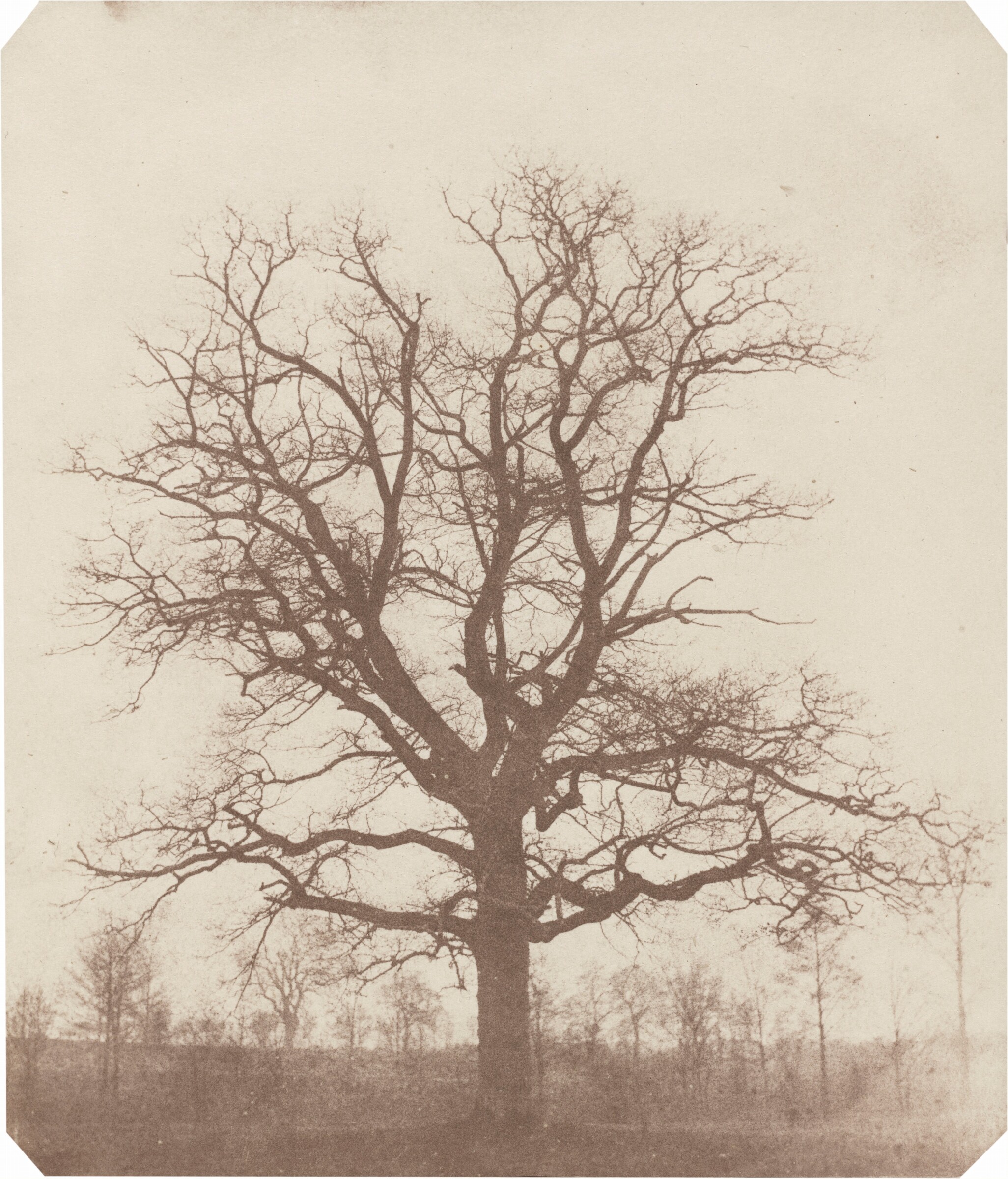
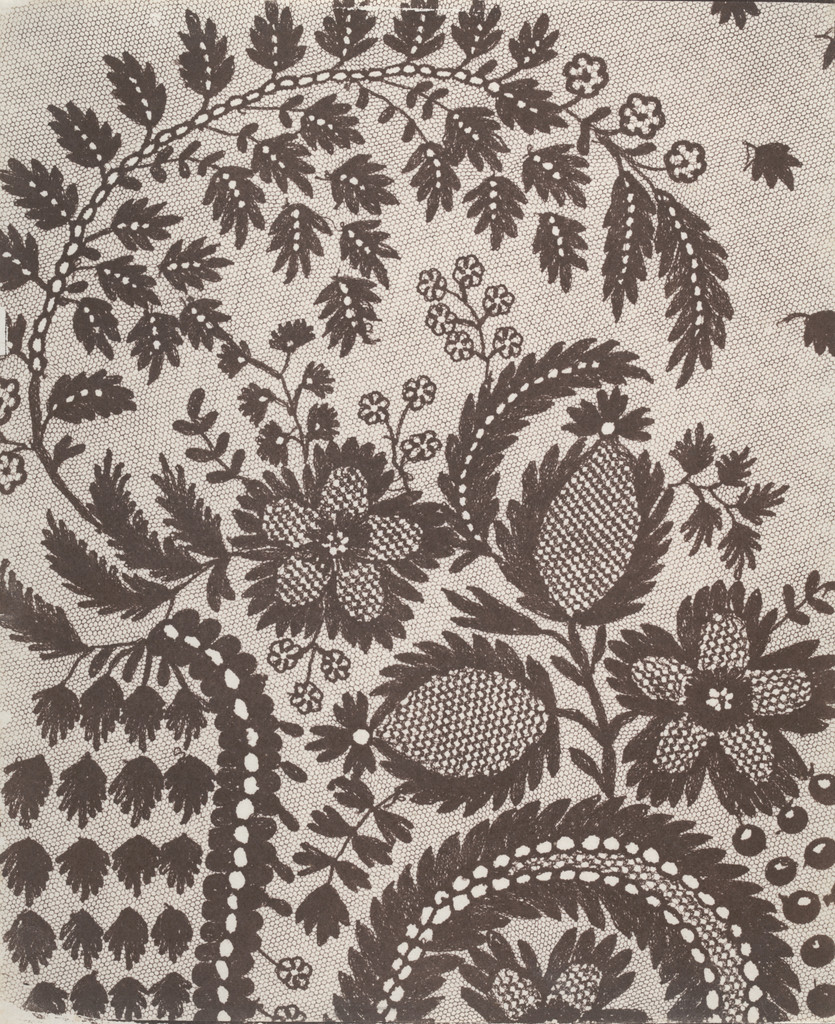

![[Group of Trees from the American Walnut], William Henry Fox Talbot, June 1, 1840](https://media.getty.edu/iiif/image/e2239044-50e4-44d2-be46-db53cdc317f1/full/!1200,1200/0/default.jpg)


