Vasily Kandinskyフランス, 1866–1944
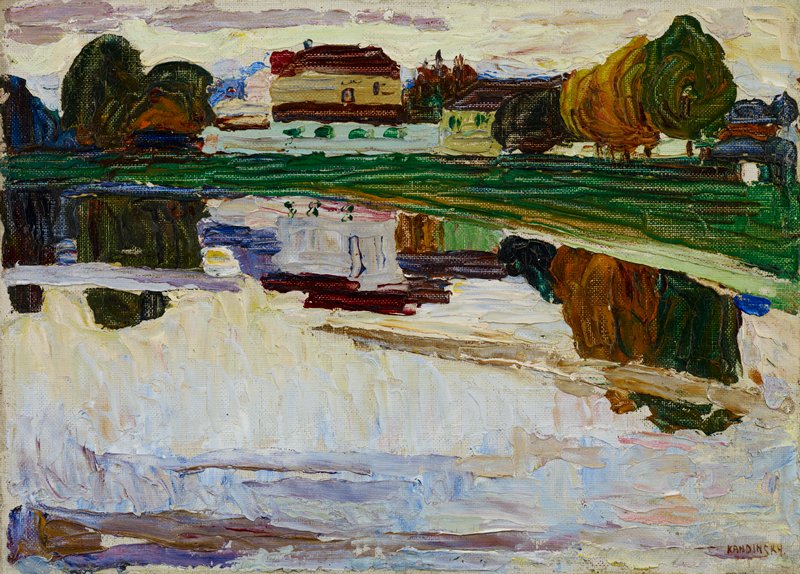
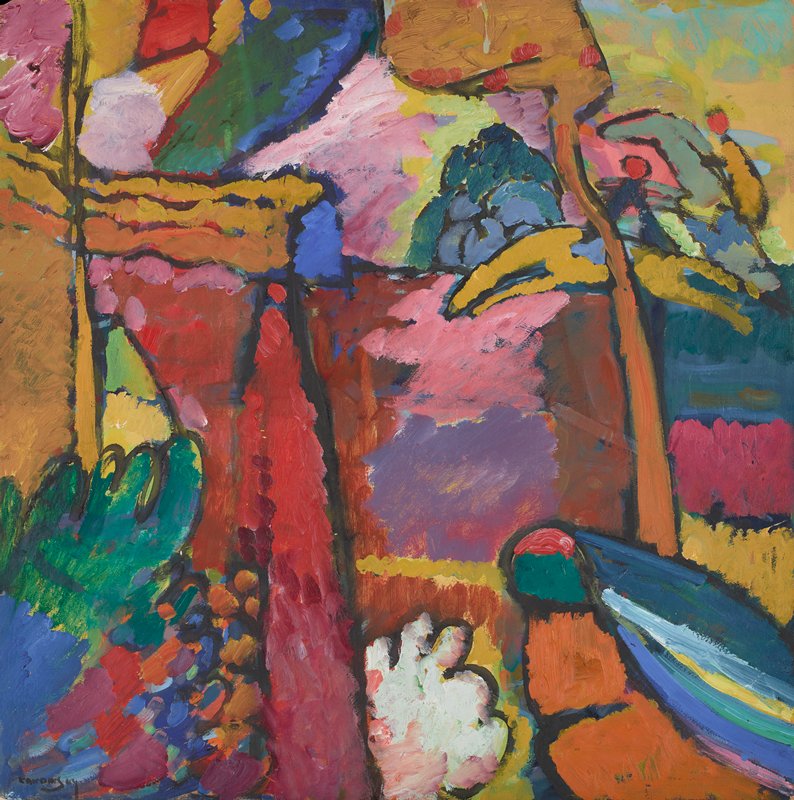
View of Murnau
お目にかかれますか?
不明:美術館は黙して語らず

エルミタージュ美術館
サンクトペテルブルク, ロシア
所蔵者はわかっています。いま展示されているかどうかは美術館が公表しておらず、当て推量は私どもの流儀ではありません。
- 出典
- 美術館自身の所蔵データ
作品データ
- 収蔵番号
- ГЭ-8943
カタログ収録
出典
- エルミタージュ美術館:美術館のオープンデータ · 8 日前に取得
- 画像: エルミタージュ美術館 — Museum open access
その頃、Vasily Kandinskyの人生では
生涯をすべて見る1906–1908
Years of travel across Europe; the Blue Rose
From 1906 to 1908 Kandinsky travelled a great deal across Europe, was an associate of the Moscow symbolist group the Blue Rose, and then settled in the small Bavarian town of Murnau.
1908–1909
Murnau and Münter's “Russian House”
Gabriele Münter bought a summer house in Murnau, where the couple happily entertained colleagues; it is still known as the “Russenhaus”. Later Münter used its basement to hide many works by Kandinsky and others from the Nazis.
1908–1909
“Thought-Forms” and the Theosophical Society
In 1908 Kandinsky bought a copy of “Thought-Forms” by Annie Besant and Charles Webster Leadbeater, and in 1909 he joined the Theosophical Society.
1909
President of the Neue Künstlervereinigung München
Kandinsky helped found the Neue Künstlervereinigung München and became its president. The group dissolved in late 1911: it could not reconcile the radical approach of Kandinsky and others with conventional ideas of art.
1909
Budapest: Unkovskaya's system of colour hearing
At the Theosophical Congress in Budapest Kandinsky heard Aleksandra Unkovskaya present her system of music education based on sound-to-colour synesthesia; it led to his own discoveries, and he formulated the chain “emotion — sensation — the work of art — sensation — emotion”.
1910–1911
The treatise “Concerning the Spiritual in Art”
The treatise defended and promoted abstract art and affirmed that all forms of art are equally capable of reaching spirituality; colour in a painting can be autonomous, apart from the depiction of an object. Kandinsky distinguished three kinds of painting: impressions, improvisations and compositions.
_MET_DP236124.jpg?width=1280)