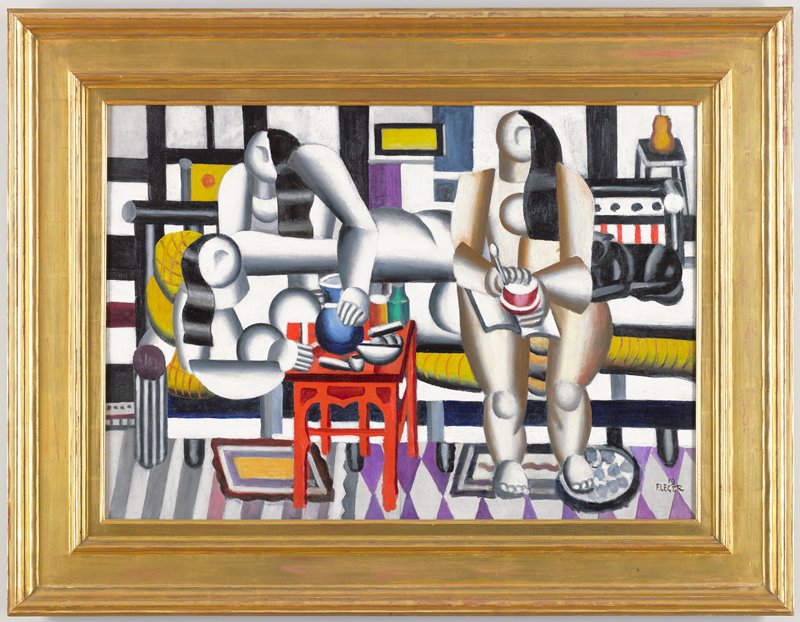
 Fernand Légerフランス, 1881–1955
Three Women

この絵画について
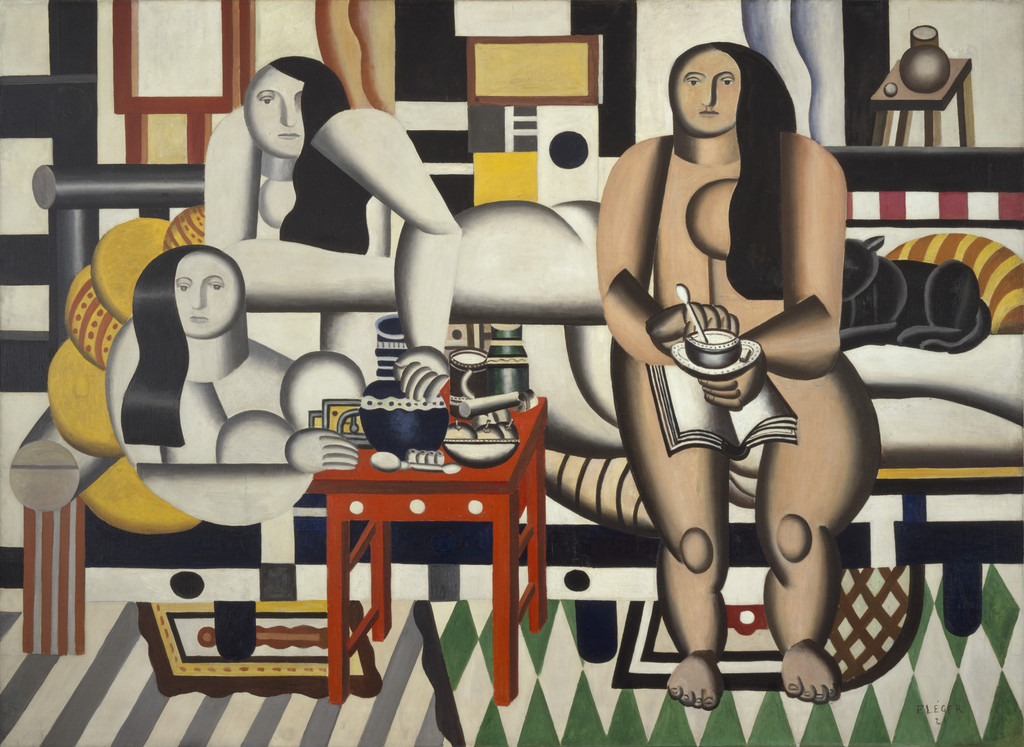
Around 1920, Léger turned away from the dynamic mechanical cubism of his earlier paintings to a more ordered, figural style. Looking to art traditions of the past, he gave such time-honored themes as the Three Graces and scenes of odalisques a modern interpretation. In Le Petit Déjeuner (Breakfast) three female nudes are seated by a small table in a domestic interior complete with a dog. Monumental and impersonal, the figures interlock in an anatomical puzzle of interchangeable parts. The emphasis is on pictorial effect and compositional innovation, with strong conflicting perspectives in careful balance. Le Petit Déjeuner is one of two oil studies for the famous Le Grand Déjeuner in the Museum of Modern Art in New York.
ミネアポリス美術館
作品データ
- 収蔵番号
- 76.5
カタログ収録
出典
- ミネアポリス美術館
- 画像: ミネアポリス美術館 — ©Artists Rights Society (ARS), New York / ADAGP, Paris
その頃、Fernand Légerの人生では
生涯をすべて見るDecember 1919
Marriage to Jeanne Lohy
In December 1919 Léger marries Jeanne-Augustine Lohy; she remains his wife until her death in 1950.
1920
Friendship with Le Corbusier, “The Mechanic” and “The Great Lunch”
In 1920, at the founding of the journal “L'Esprit nouveau”, Léger befriends Le Corbusier, who remains a lifelong friend. In the same year he paints the canvases “The Mechanic” and “The Great Lunch”, and from this year he exhibits at the Indépendants for many years.
1921
Meeting van Doesburg and Mondrian
In 1921 Léger meets van Doesburg and Mondrian.
1921
Gance's “La Roue” and Malraux's “Lunes en papier”
In 1921, together with Blaise Cendrars, Léger works on Abel Gance's film “La Roue” and illustrates André Malraux's book “Lunes en papier”. He is so drawn to cinema that he considers for a time giving up painting for filmmaking.