 Giorgio de Chiricoイタリア, 1888–1978
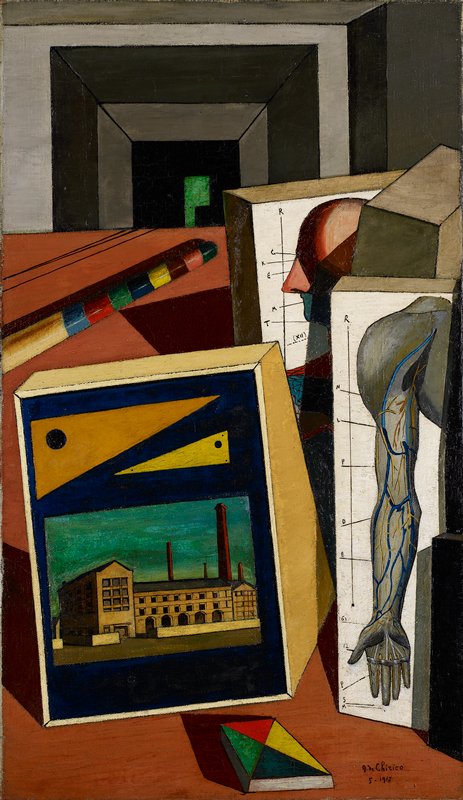
The Scholar's Playthings

この絵画について
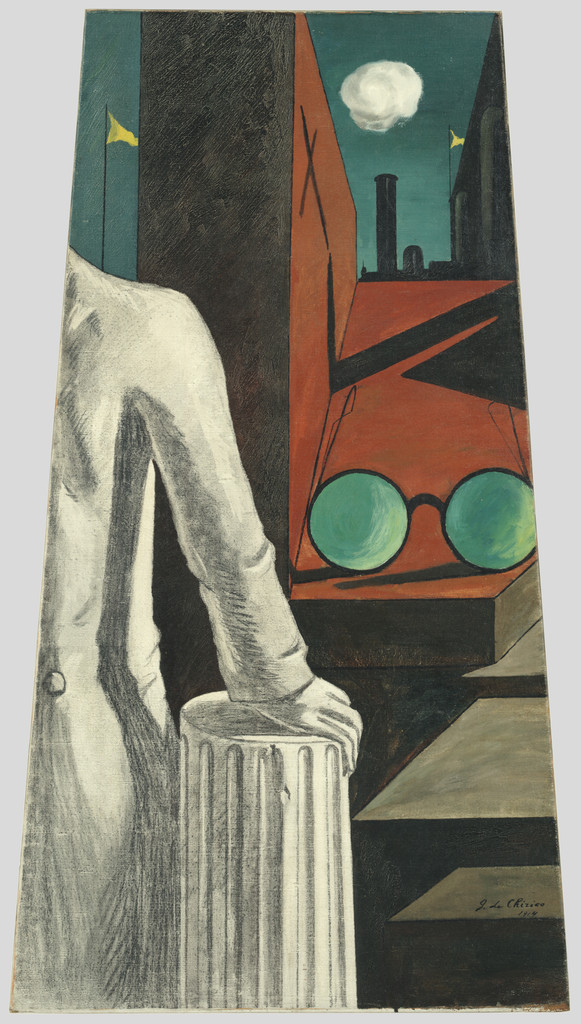
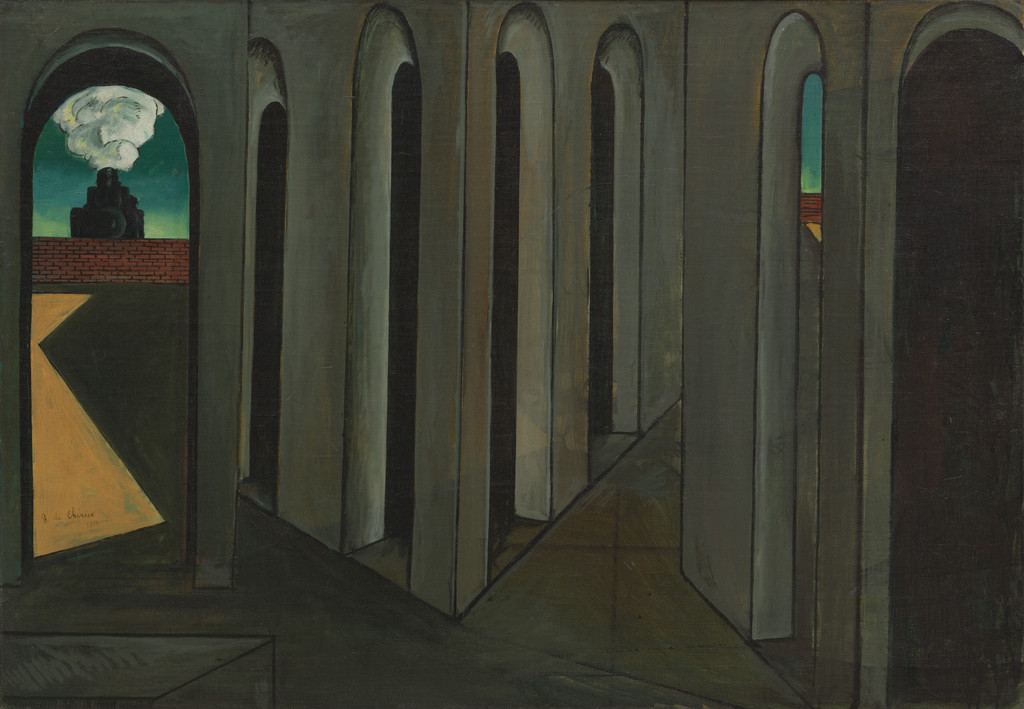
As a leader of the Metaphysical school of painting in Italy, Giorgio de Chirico had an important influence on the development of Surrealism in the early 1920s. In his own art, he combined stark images of buildings and empty urban spaces with objects from everyday life and often distorted scale and perspective to accentuate their haunting quality.
Made while serving in the Italian army during World War I, this painting dates to the height of the artist's Metaphysical period. On the left he pictured a view of a factory in Modena, the city where he was stationed. The other objects included - drafting tools and anatomical charts - symbolize the playthings of the artist who must study anatomy, drawing, and architecture as part of his training. The anatomical charts may also be an autobiographical allusion to the artist's frequent illnesses.
ミネアポリス美術館
作品データ
- 収蔵番号
- 72.75
カタログ収録
出典
- ミネアポリス美術館
- 画像: ミネアポリス美術館 — © Artists Rights Society (ARS), New York / SIAE, Rome
その頃、Giorgio de Chiricoの人生では
生涯をすべて見る1915
Return to Italy and the hospital at Ferrara
At the outbreak of the First World War de Chirico returns to Italy; on his arrival in May 1915 he enlists in the army but is considered unfit for work and assigned to the hospital at Ferrara. The shop windows of the town inspire a series of paintings featuring biscuits, maps and geometric constructions in indoor settings.
1917
Friendship with Carlo Carrà: metaphysical painting
In 1917, in the military hospital at Ferrara, de Chirico befriends the painter Carlo Carrà, and together they found the movement of metaphysical painting. Between 1908 and 1917 he creates his most significant works — views of deserted city squares and still lifes.
1918
Moving to Rome
In 1918 de Chirico moves to Rome; from this year his work is exhibited extensively in Europe.
November 1919
The article “The Return of Craftsmanship”
In November 1919 de Chirico publishes in the journal Valori plastici the article “The Return of Craftsmanship,” advocating a return to traditional methods and iconography; it heralds an abrupt change of orientation toward a classicizing manner inspired by Raphael and Signorelli and makes him an outspoken opponent of modern art.