ART WIKI33.040 in sala
MappaCollezioneArtistiMuseiMostreRivista
Accedi

ART WIKI

Dove è appeso il capolavoro, e quando si può entrare.

Collezioni: Art Institute of Chicago, Cleveland Museum of Art, Ermitage, Galleria Tret'jakov, Getty Museum, Harvard Art Museums, Hirshhorn Museum and Sculpture Garden, Metropolitan Museum of Art, Minneapolis Institute of Art, Museo del Louvre, Museo Puškin delle belle arti, Museo russo, Museum of Modern Art, National Gallery of Art, National Museum of Asian Art, National Portrait Gallery, Rijksmuseum, Smithsonian American Art Museum, Statens Museum for Kunst, Victoria and Albert Museum, Villa Getty, Whitney Museum of American Art, Catalogo statale del fondo museale russo (274 musei), Europeana (19 musei), Wikidata (6 musei), Paris Musées (12 musei) e Joconde, la banca dati dei musei del Ministero della Cultura francese (495 musei). Le immagini appartengono ai titolari dei diritti.

Sezioni

  • Mappa
  • Ricerca
  • Collezione
  • Capolavori
  • Esposte ora
  • Artisti

Altro

  • Musei e gallerie
  • Mostre
  • Rivista
  • Da dove vengono i dati
  • Privacy e cookie
HomeMappaCatalogo
  1. Collezione/
  2. Art Institute of Chicago/
  3. Young Bull
Young Bull, Albrecht Dürer, c. 1496, erroneously inscribed in another hand 1508

Young Bull

c. 1496, erroneously inscribed in another hand 1508 · Drawing and Watercolor

Sull’opera

From an early age, Albrecht Dürer displayed an inquisitive mind and exceptional talent as a draftsman. He was born in Nuremberg and first trained as a goldsmith in his father’s shop before apprenticing with the painter Michael Wolgemut. One of his earliest animal drawings, Young Steer shows its subject grazing in an unseen field. The artist’s sure strokes and adept cross-hatching delineate the steer’s sculptural form, with taut skin stretched over a strong yet bony frame. Dürer’s precise draftsmanship recalls the drawings and prints of the celebrated German master Martin Schongauer, whom he greatly admired. This work was probably a study from nature; sketchy lines around the animal’s right hind foot, back, muzzle, and horns reveal that the artist originally drew the steer in a slightly different position, with his mouth open.

Continua a leggere

A masterful engraver who would elevate printmaking to an expressive art form over the course of his career, Dürer employed the steer’s hindquarters for the barnyard scene in his engraving The Prodigal Son amid the Swine (1494/96), an impression of which is in the Art Institute.

Art Institute of Chicago · CC BY 4.0

Scheda

Nel frattempo, nella vita di Albrecht Dürer

Tutta la vita
  1. July 1494

    Marries Agnes Frey

    Soon after returning to Nuremberg the 23-year-old Dürer married Agnes Frey, daughter of a prominent brass worker and amateur harpist; the match had been arranged in his absence, and marriage was required to open a workshop of his own. They had no children, and his letters suggest the marriage was not a happy one.

  2. 7 luglio 1494

    Married: Agnes Dürer

  3. 1494–1495

    First journey to Italy

    Within three months of the wedding Dürer left alone for Italy, perhaps fleeing an outbreak of plague in Nuremberg. Crossing the Alps he made watercolour landscapes; in Venice he studied its art and judged Giovanni Bellini the best of its painters; Mantegna and Pollaiuolo left their mark on him.

  4. 1495

    Opens his own workshop

    Dürer opened his own workshop in Nuremberg, where over the next ten years he created much of his printmaking. His godfather, the publisher Anton Koberger, helped issue the first series; the city's crafts were governed by the Council rather than guilds, leaving him free to try new techniques and sell his own impressions.

  5. 1500

    Jacopo de' Barbari and the secret of proportion

    The Venetian Jacopo de' Barbari, whom Dürer had met in Venice, came to Nuremberg, and Dürer said he learned much from him about perspective, anatomy and proportion. Feeling that de' Barbari would not explain everything he knew, Dürer began studies of his own that became a lifelong preoccupation.

Altre opere di Albrecht Dürer

Tutte le opere

Sotto lo stesso tetto: Art Institute of Chicago

Pagina del museo

Sullo stesso tema · Bulls

Tutte le opere sul tema
c. 1496, erroneously inscribed in another hand 1508
14711528
Numero di inventario
1965.408

Fonti

  • Art Institute of Chicago
  • Immagine: Art Institute of Chicago — CC0
  • 1505

    Second journey to Italy

    Dürer set off for Italy again — perhaps not only to earn money but also to stop Marcantonio Raimondi from copying his prints. His stay in Venice is known from ten surviving letters to Pirckheimer.

  • Albrecht Dürer, ritrattoAlbrecht DürerGermania, 1471–1528

    Si può ammirare?

    Al momento non riceve

    Art Institute of Chicago

    Chicago, Stati Uniti

    Appartiene alla collezione, ma al momento non è esposta.

    Verificato
    9 giorni fa
    Ultimo cambio di stato
    19 ago 2026
    Fonte
    Il museo
    Sulla mappaPagina del museo
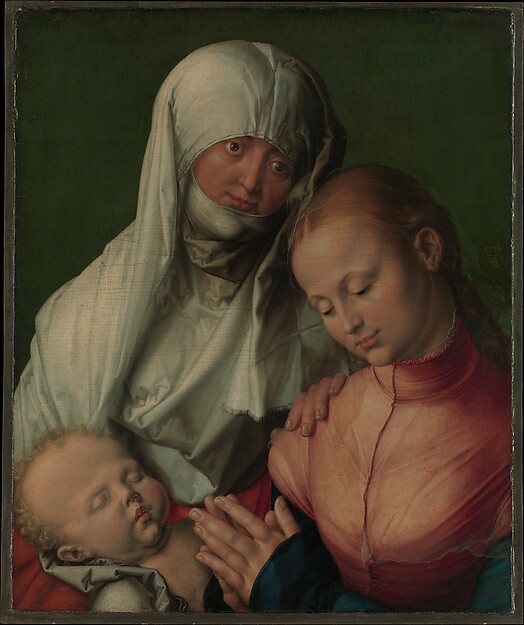
    Virgin and Child with Saint Anne, Albrecht Dürer, probably 1519

    Virgin and Child with Saint Anne

    probably 1519 · Metropolitan Museum of Art

    Madonna and Child [obverse], Albrecht Dürer, c. 1496/1499

    Madonna Haller

    c. 1496/1499 · National Gallery of Art

    Lot and His Daughters [reverse], Albrecht Dürer, c. 1496/1499

    Lot and His Daughters [reverse]

    c. 1496/1499 · National Gallery of Art

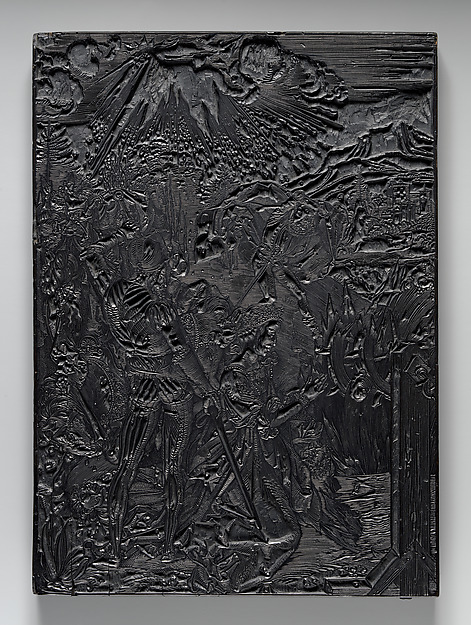
    The Martyrdom of Saint Catherine, Albrecht Dürer, ca. 1498

    The Martyrdom of Saint Catherine

    ca. 1498 · Metropolitan Museum of Art

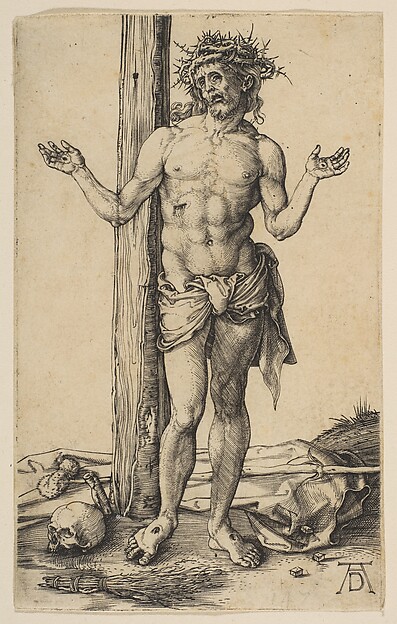
    Man of Sorrows with Arms Outstretched, Albrecht Dürer, ca. 1500

    Man of Sorrows with Arms Outstretched

    ca. 1500 · Metropolitan Museum of Art

    Nemesis (The Great Fortune), Albrecht Dürer, c. 1501/1502

    Nemesis (The Great Fortune)

    c. 1501/1502 · National Gallery of Art

    Large Horse, Albrecht Dürer, 1505

    Large Horse

    1505 · National Gallery of Art

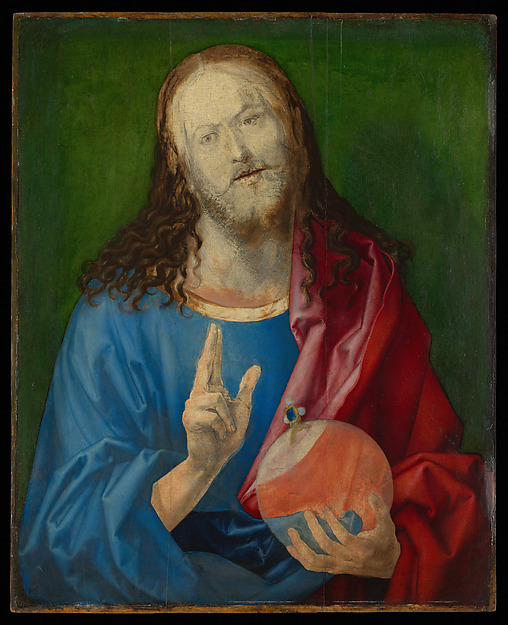
    Salvator Mundi, Albrecht Dürer, ca. 1505

    Salvator Mundi

    ca. 1505 · Metropolitan Museum of Art

    The Bedroom, Vincent van Gogh, 1889

    Vincent van Gogh

    The Bedroom, 1889

    A Sunday on La Grande Jatte — 1884, Georges Seurat, 1884–86, border added 1888–89

    Georges Seurat

    Una domenica pomeriggio sull'isola della Grande-Jatte, 1884–86, border added 1888–89

    Paris Street; Rainy Day, Gustave Caillebotte, 1877

    Gustave Caillebotte

    Strada di Parigi in un giorno di pioggia, 1877

    Two Sisters (On the Terrace), Pierre-Auguste Renoir, 1881

    Pierre-Auguste Renoir

    Sulla terrazza, 1881

    The Basket of Apples, Paul Cézanne, c. 1893

    Paul Cézanne

    il cesto di mele, c. 1893

    Stacks of Wheat (End of Summer), Claude Monet, 1890–91

    Claude Monet

    Stacks of Wheat (End of Summer), 1890–91

    American Gothic, Grant Wood, 1930

    Grant Wood

    American Gothic, 1930

    Nighthawks, Edward Hopper, 1942

    Edward Hopper

    I nottambuli, 1942

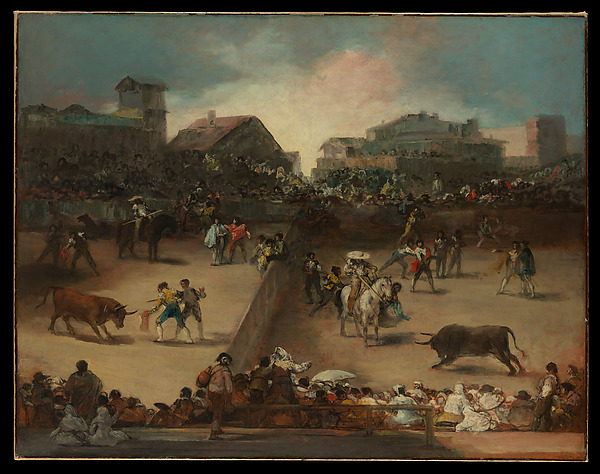
    Bullfight in a Divided Ring, Goya, ca. 1810

    Francisco de Goya

    Bullfight in a Divided Ring, ca. 1810

    Metropolitan Museum of Art

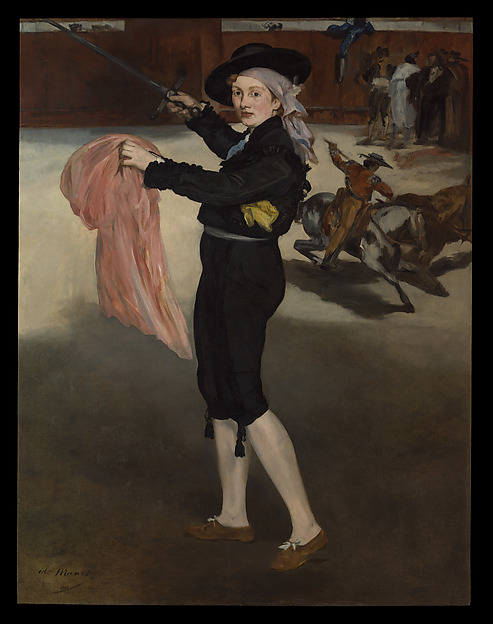
    Mademoiselle V. . . in the Costume of an Espada, Edouard Manet, 1862

    Édouard Manet

    Mademoiselle V. . . in costume di Espada, 1862

    Metropolitan Museum of Art

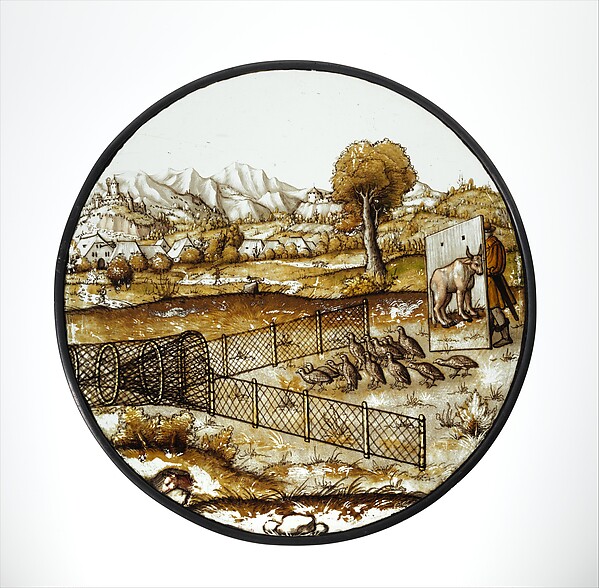
    Roundel with Netting Quail, Augustin Hirschvogel, 16th century

    Augustin Hirschvogel

    Roundel with Netting Quail, 16th century

    Metropolitan Museum of Art

    Dagger with Hilt in the Form of a Blue Bull (Nilgai), ca. 1640

    Dagger with Hilt in the Form of a Blue Bull (Nilgai), ca. 1640

    Metropolitan Museum of Art

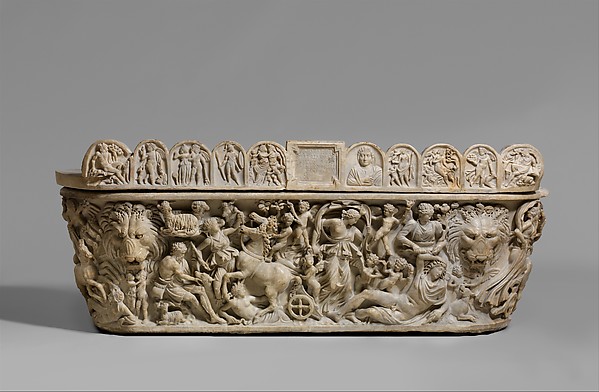
    Marble sarcophagus with the myth of Selene and Endymion, early 3rd century CE

    Marble sarcophagus with the myth of Selene and Endymion, early 3rd century CE

    Metropolitan Museum of Art

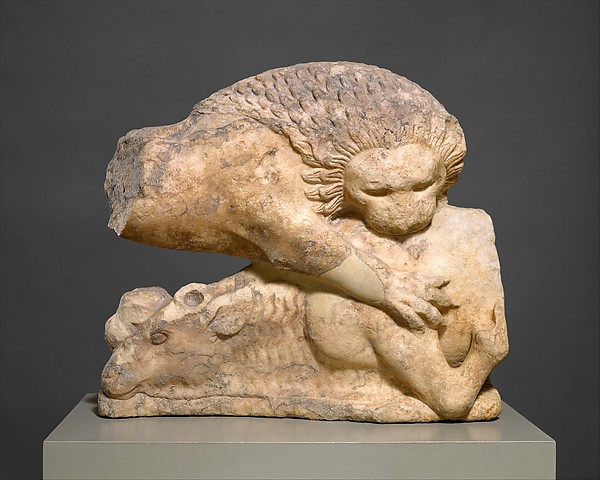
    Lion felling a bull, from a marble pediment, ca. 525–500 BCE

    Lion felling a bull, from a marble pediment, ca. 525–500 BCE

    Metropolitan Museum of Art

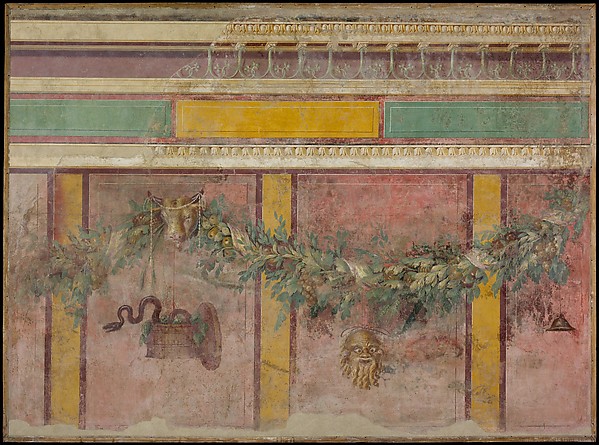
    Wall painting from the west wall of Room L of the Villa of P. Fannius Synistor at Boscoreale, ca. 50–40 BCE

    Wall painting from the west wall of Room L of the Villa of P. Fannius Synistor at Boscoreale, ca. 50–40 BCE

    Metropolitan Museum of Art

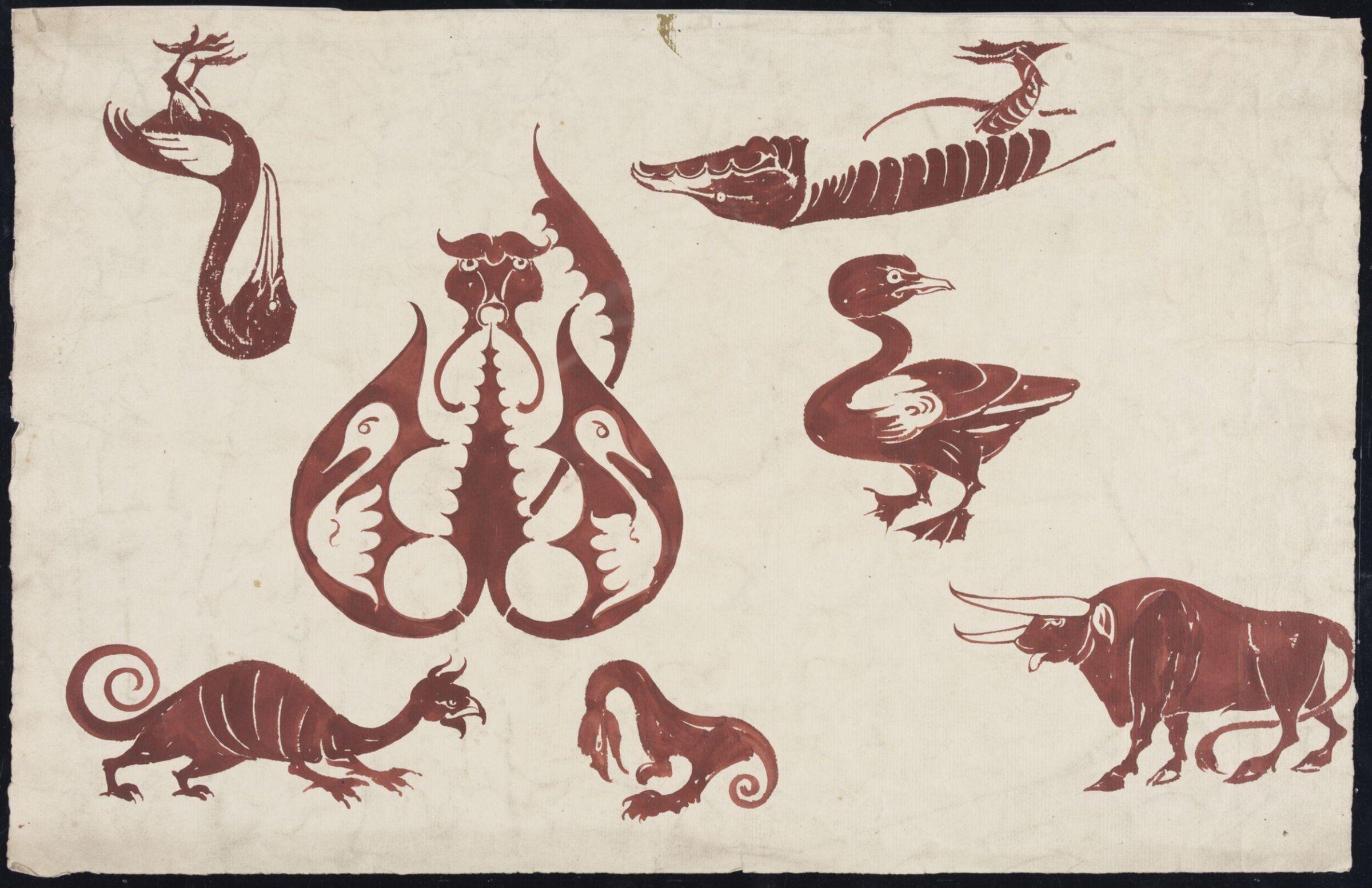
    Drawing, William De Morgan, late 19th century

    William De Morgan

    Drawing, late 19th century

    Non esposta · Victoria and Albert Museum

    Che cosa raffigura

    BullsAnimale

    In catalogo

    Disegni e acquerelliPennaRinascimentoXV secoloGermania