ART WIKI32.963 in sala
MappaCollezioneArtistiMuseiMostreRivista
Accedi

ART WIKI

Dove è appeso il capolavoro, e quando si può entrare.

Collezioni: Art Institute of Chicago, Cleveland Museum of Art, Ermitage, Galleria Tret'jakov, Getty Museum, Harvard Art Museums, Hirshhorn Museum and Sculpture Garden, Metropolitan Museum of Art, Minneapolis Institute of Art, Museo del Louvre, Museo Puškin delle belle arti, Museo russo, Museum of Modern Art, National Gallery of Art, National Museum of Asian Art, National Portrait Gallery, Rijksmuseum, Smithsonian American Art Museum, Statens Museum for Kunst, Victoria and Albert Museum, Villa Getty, Whitney Museum of American Art, Catalogo statale del fondo museale russo (274 musei), Europeana (19 musei), Wikidata (6 musei), Paris Musées (12 musei) e Joconde, la banca dati dei musei del Ministero della Cultura francese (495 musei). Le immagini appartengono ai titolari dei diritti.

Sezioni

  • Mappa
  • Ricerca
  • Collezione
  • Capolavori
  • Esposte ora
  • Artisti

Altro

  • Musei e gallerie
  • Mostre
  • Rivista
  • Da dove vengono i dati
  • Privacy e cookie
HomeMappaCatalogo
  1. Collezione/
  2. Art Institute of Chicago/
  3. The Bedroom
The Bedroom, Vincent van Gogh, 1889

The Bedroom

1889 · Oil on canvas

Sul dipinto

Vincent van Gogh so highly esteemed his bedroom painting that he made three distinct versions: the first, now in the collection of the Van Gogh Museum, Amsterdam; the second, belonging to the Art Institute of Chicago, painted a year later on the same scale and almost identical; and a third, smaller canvas in the collection of the Musée d’Orsay, Paris, which he made as a gift for his mother and sister. Van Gogh conceived the first Bedroom in October 1888, a month after he moved into his “Yellow House” in Arles, France. This moment marked the first time the artist had a home of his own, and he had immediately and enthusiastically set about decorating, painting a suite of canvases to fill the walls. Completely exhausted from the effort, he spent two-and-a-half days in bed and was then inspired to create a painting of his bedroom.

Continua a leggere

As he wrote to his brother Theo, “It amused me enormously doing this bare interior. With a simplicity à la Seurat. In flat tints, but coarsely brushed in full impasto, the walls pale lilac, the floor in a broken and faded red, the chairs and the bed chrome yellow, the pillows and the sheet very pale lemon green, the bedspread blood-red, the dressing-table orange, the washbasin blue, the window green. I had wished to express utter repose with all these very different tones.” Although the picture symbolized relaxation and peace to the artist, to our eyes the canvas seems to teem with nervous energy, instability, and turmoil, an effect heightened by the sharply receding perspective.

Art Institute of Chicago ·

Nel frattempo, nella vita di Vincent van Gogh

Tutta la vita
  1. February 1888

    To Arles, dreaming of a “Studio of the South”

    The public still neither accepted nor bought his paintings, and in February 1888 Van Gogh left for Arles in the south of France to found a “Studio of the South”, a brotherhood of like-minded artists in which he gave Gauguin the leading role. Theo backed the plan with money.

  2. 23 October 1888

    Gauguin arrives in Arles

    After much pleading Gauguin arrived in Arles, and in November the two painted together: Gauguin portrayed Van Gogh in “The Painter of Sunflowers”, and their first joint outing was to the Alyscamps. At Gauguin's suggestion Vincent painted from memory, producing “Memory of the Garden at Etten”.

  3. 23 December 1888

    The severed ear

    After an altercation on the evening of 23 December, Van Gogh, seemingly hearing voices, severed his left ear, wholly or in part, with a razor and delivered it, wrapped in paper, to a woman at a brothel. Next morning a policeman found him unconscious; in hospital he was diagnosed with “acute mania with generalised delirium”.

  4. May 1889

    Voluntarily into the Saint-Paul asylum

    Van Gogh left Arles and voluntarily entered the Saint-Paul-de-Mausole asylum, a former monastery in Saint-Rémy-de-Provence, accompanied by the Protestant clergyman Frédéric Salles. Of his two cells with barred windows one became a studio, and the clinic and its garden became the main subjects of his paintings.

  5. 27 July 1890

Altre opere di Vincent van Gogh

Tutte le opere

Nella stessa sala · Gallery 241, Art Institute of Chicago

Pagina del museo

Sullo stesso tema · Interior

Tutte le opere sul tema
CC BY 4.0

Scheda

1889 · a 36 anni
18531890

Fonti

  • Art Institute of Chicago
  • Immagine: Wikimedia Commons — Public domain (PD-Art)

A fatal wound: a revolver shot

Out painting, Van Gogh shot himself in the chest with a revolver he had bought to scare off birds while working outdoors; the bullet passed below his heart, and he made his own way back to his room at the inn. Theo arrived the next day and stayed with him to the end; according to Theo, Vincent's last words were: “The sadness will last forever.”

  • 29 luglio 1890

    Died

  • Vincent van Gogh, ritrattoVincent van GoghPaesi Bassi, 1853–1890

    Si può ammirare?

    Sì, riceve visite

    Art Institute of Chicago

    Chicago, Stati Uniti

    Sala241

    Esposta al pubblico. Chi lo garantisce è indicato qui sotto.

    Verificato
    3 giorni fa
    Ultimo cambio di stato
    16 ago 2026
    Fonte
    Il museo
    Sulla mappaPagina del museo
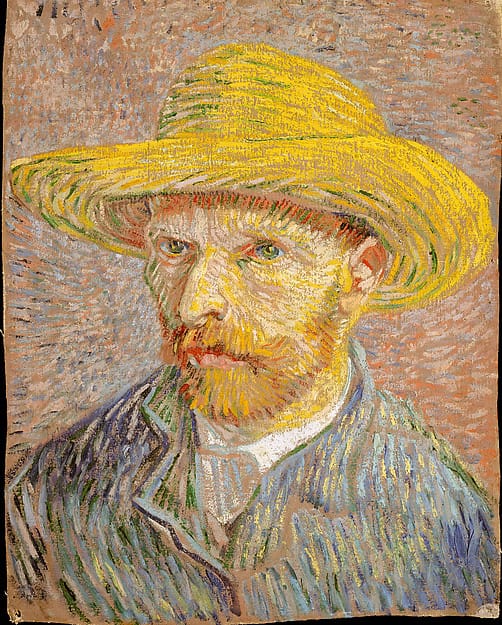
    Self-Portrait with a Straw Hat (obverse: The Potato Peeler), Vincent van Gogh, 1887

    Self-Portrait with a Straw Hat (obverse: The Potato Peeler)

    1887 · Metropolitan Museum of Art

    Self-portrait, Vincent van Gogh, 1887

    Self-portrait

    1887 · Rijksmuseum

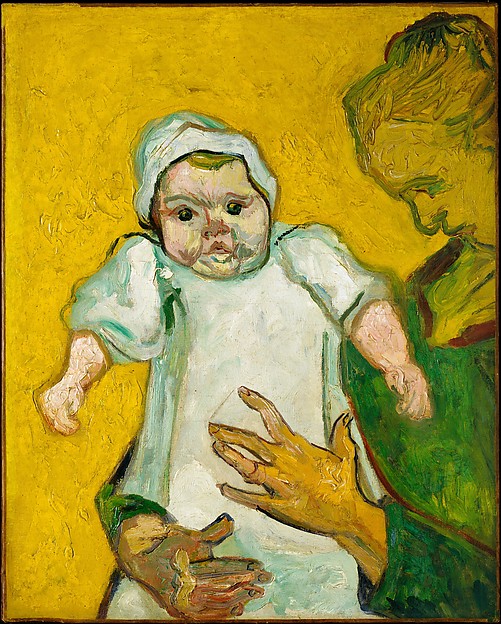
    Madame Roulin and Her Baby, Vincent van Gogh, 1888

    Madame Roulin and Her Baby

    1888 · Metropolitan Museum of Art

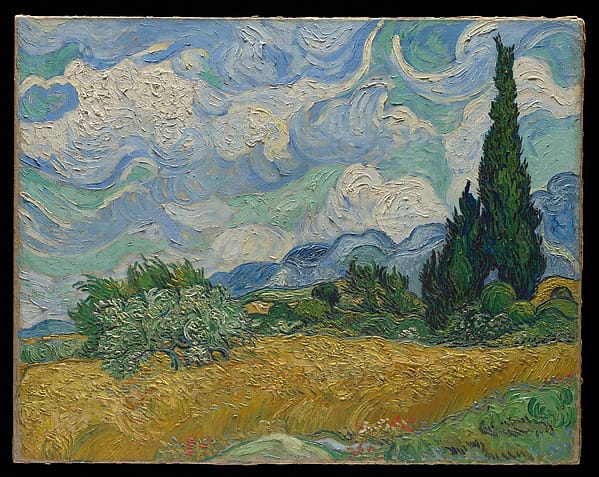
    Wheat Field with Cypresses, Vincent van Gogh, 1889

    Wheat Field with Cypresses

    1889 · Metropolitan Museum of Art

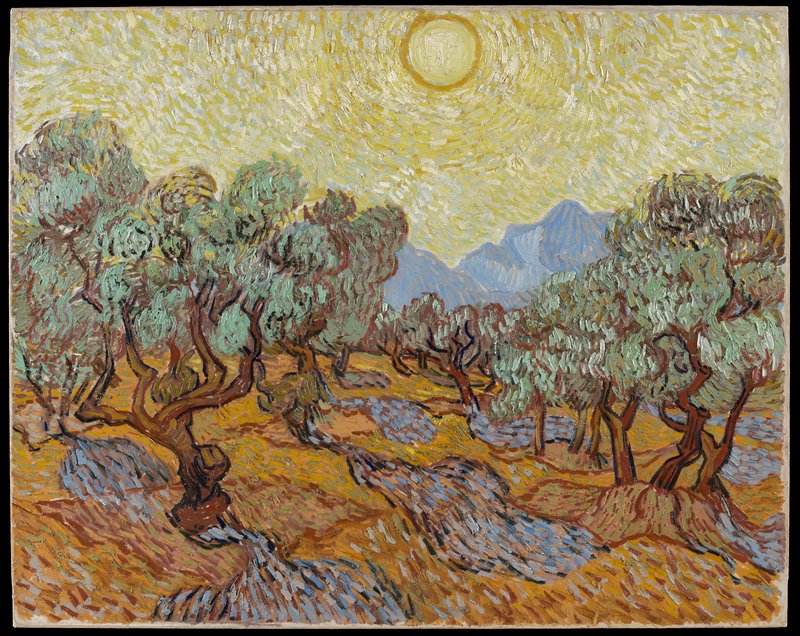
    Olive Trees, Vincent van Gogh, 1889

    Olive Trees

    1889 · Minneapolis Institute of Art

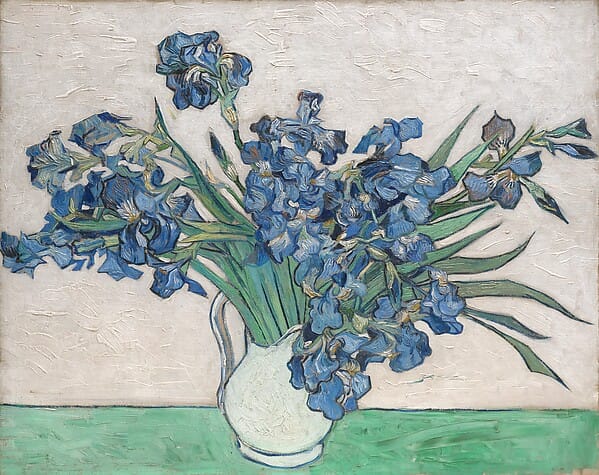
    Irises, Vincent van Gogh, 1890

    Irises

    1890 · Metropolitan Museum of Art

    Het Singel bij de Lutherse Kerk te Amsterdam, Vincent van Gogh, 1885

    Het Singel bij de Lutherse Kerk te Amsterdam

    1885 · Rijksmuseum

    The Potato Peeler (reverse: Self-Portrait with a Straw Hat), Vincent van Gogh, 1885

    The Potato Peeler (reverse: Self-Portrait with a Straw Hat)

    1885 · Metropolitan Museum of Art

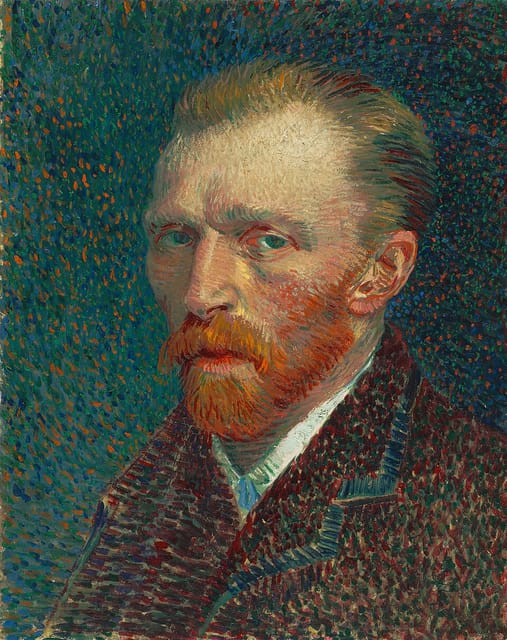
    Self-Portrait, Vincent van Gogh, 1887

    Vincent van Gogh

    Self-Portrait, 1887

    Terrace and Observation Deck at the Moulin de Blute-Fin, Montmartre, Vincent van Gogh, Early 1887

    Vincent van Gogh

    Terrace and Observation Deck at the Moulin de Blute-Fin, Montmartre, Early 1887

    Fishing in Spring, the Pont de Clichy (Asnières), Vincent van Gogh, 1887

    Vincent van Gogh

    Fishing in Spring, the Pont de Clichy (Asnières), 1887

    A Peasant Woman Digging in Front of Her Cottage, Vincent van Gogh, c. 1885

    Vincent van Gogh

    A Peasant Woman Digging in Front of Her Cottage, c. 1885

    Madame Roulin Rocking the Cradle (La berceuse), Vincent van Gogh, 1889

    Vincent van Gogh

    Madame Roulin Rocking the Cradle (La berceuse), 1889

    The Drinkers, Vincent van Gogh, 1890

    Vincent van Gogh

    The Drinkers, 1890

    Arlésiennes (Mistral), Paul Gauguin, 1888

    Paul Gauguin

    Arlésiennes (Mistral), 1888

    The Harvest of Buckwheat, Paul Sérusier, 1899

    Sérusier, Paul

    The Harvest of Buckwheat, 1899

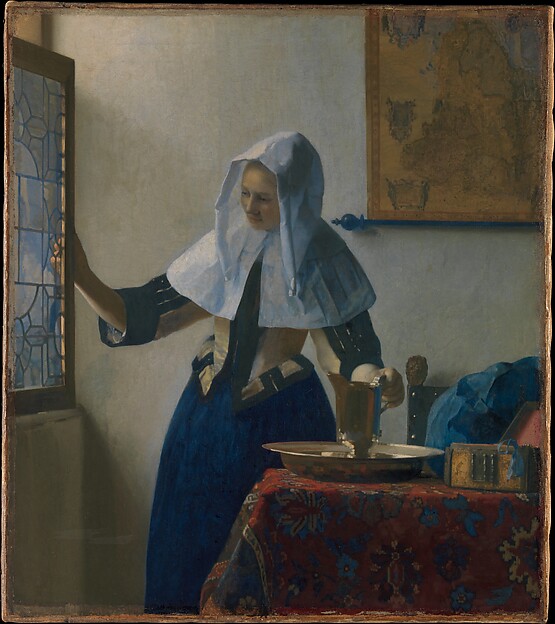
    Young Woman with a Water Pitcher, Johannes Vermeer, ca. 1662

    Johannes Vermeer

    Donna con brocca d'acqua, ca. 1662

    Metropolitan Museum of Art

    Interior, Penitente Morada, Abiquiu, Northern New Mexico, Ansel Adams, c. 1930

    Ansel Adams

    Interior, Penitente Morada, Abiquiu, Northern New Mexico, c. 1930

    Non esposta · National Gallery of Art

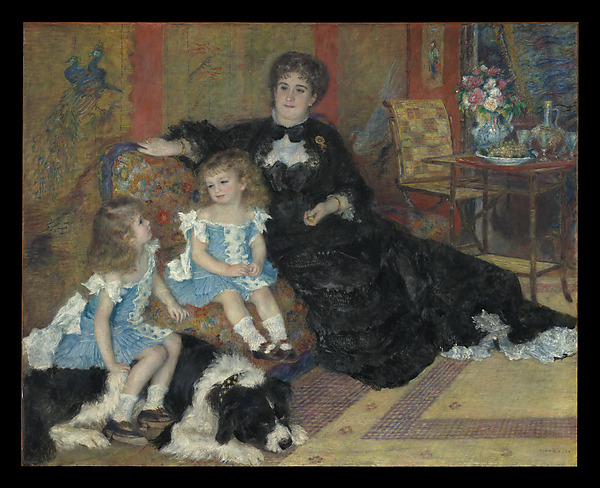
    Madame Georges Charpentier (Marguerite-Louise Lemonnier, 1848–1904) and Her Children, Georgette-Berthe (1872–1945) and Paul-Emile-Charles (1875–1895), Auguste Renoir, 1878

    Pierre-Auguste Renoir

    Madame Georges Charpentier (nata Marguérite-Louise Lemonnier, 1848-1904) con i figli, Georgette-Berthe (1872-1945) e Paul-Émile-Charles, 1878

    Metropolitan Museum of Art

    Potato Eaters, Vincent van Gogh, 1885

    Vincent van Gogh

    Potato Eaters, 1885

    Non esposta · National Gallery of Art

    Boy and Sleeping Girl in Candlelight (Garçon et dormeuse à la chandelle), Pablo Picasso, 1934

    Pablo Picasso

    Boy and Sleeping Girl in Candlelight (Garçon et dormeuse à la chandelle), 1934

    Non esposta · National Gallery of Art

    Two Women Waking Up (Deux Femmes au Réveil), Pablo Picasso, 1959, printed 1964

    Pablo Picasso

    Two Women Waking Up (Deux Femmes au Réveil), 1959, printed 1964

    Non esposta · National Gallery of Art

    Faun Unveiling a Woman (Faune dévoilant une femme), Pablo Picasso, 1936

    Pablo Picasso

    Faun Unveiling a Woman (Faune dévoilant une femme), 1936

    Non esposta · National Gallery of Art

    The Frugal Repast (Le repas frugal), Pablo Picasso, 1904, published 1913

    Pablo Picasso

    The Frugal Repast (Le repas frugal), 1904, published 1913

    Non esposta · National Gallery of Art

    Che cosa raffigura

    InteriorBasinBlue (color)SediaChairsDoorsFranciaGreen (color)MirrorPitcherRed (color)TavoloFinestra
    Domestic scenes
    Century of Progress
    World's fairs
    Chicago World's Fairs
    Beds
    Bedrooms

    In catalogo

    DipintiPittura olandeseImpressionismoXIX secoloPost-impressionismoSaint-Rémy-de-Provence