Giorgio de ChiricoItalia, 1888–1978
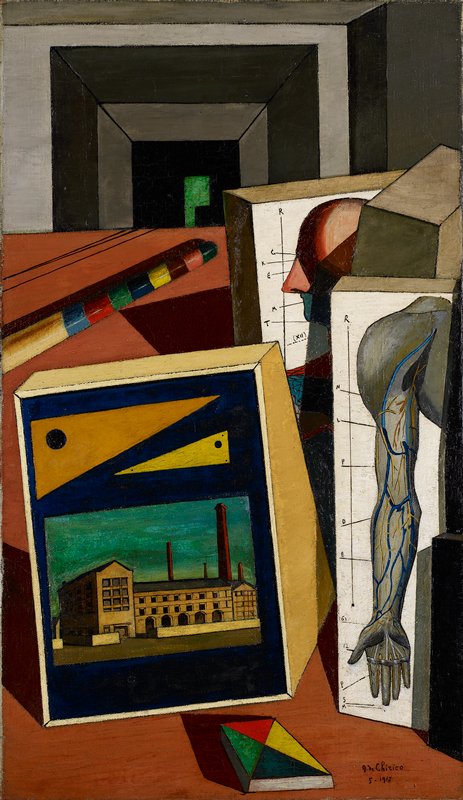
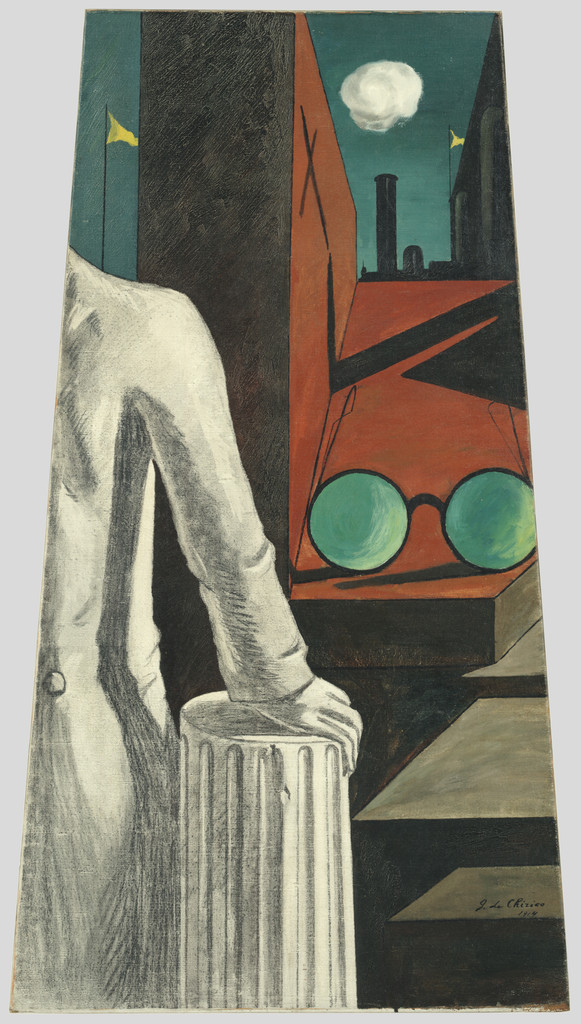
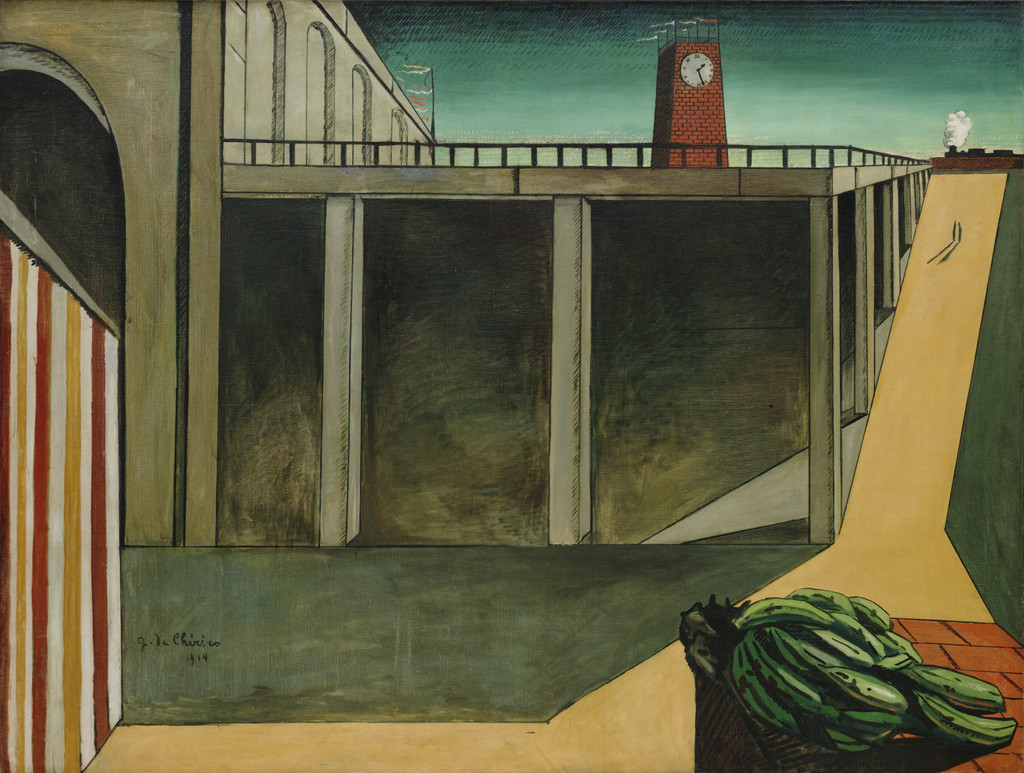
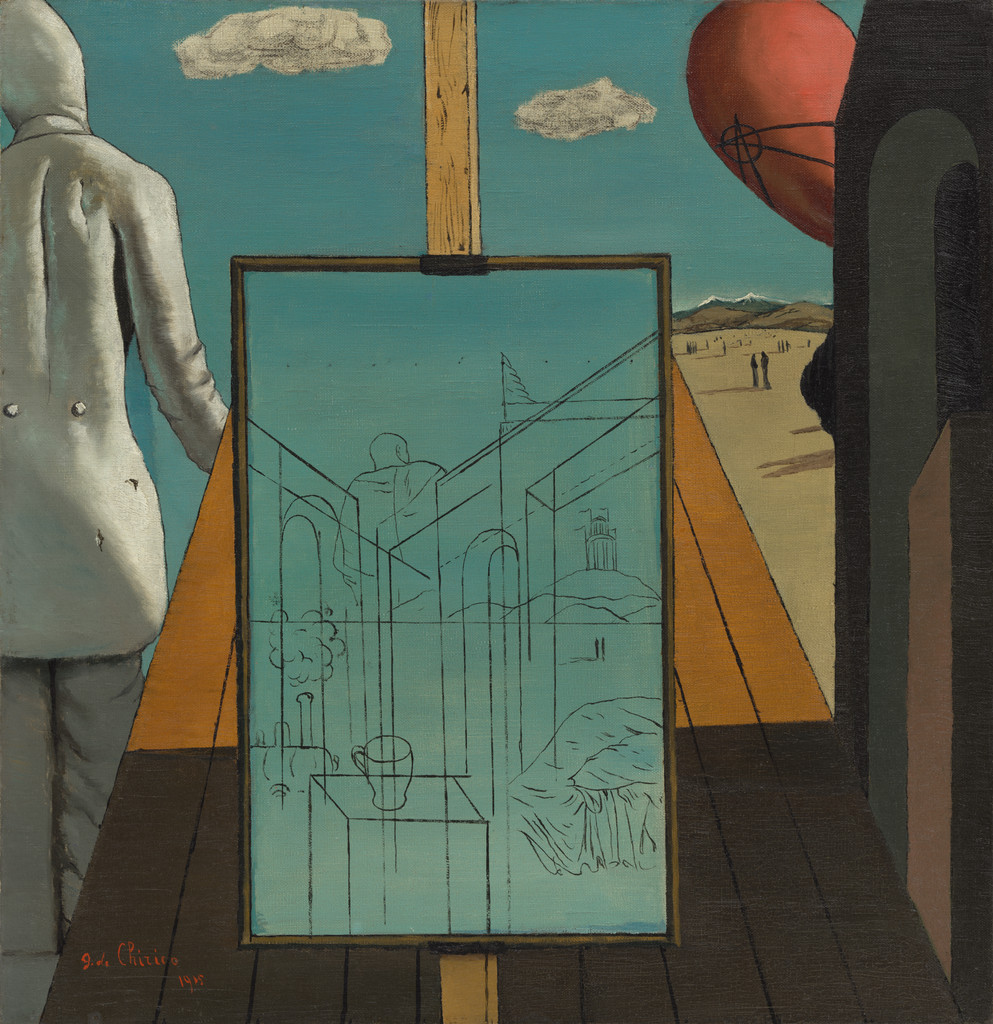
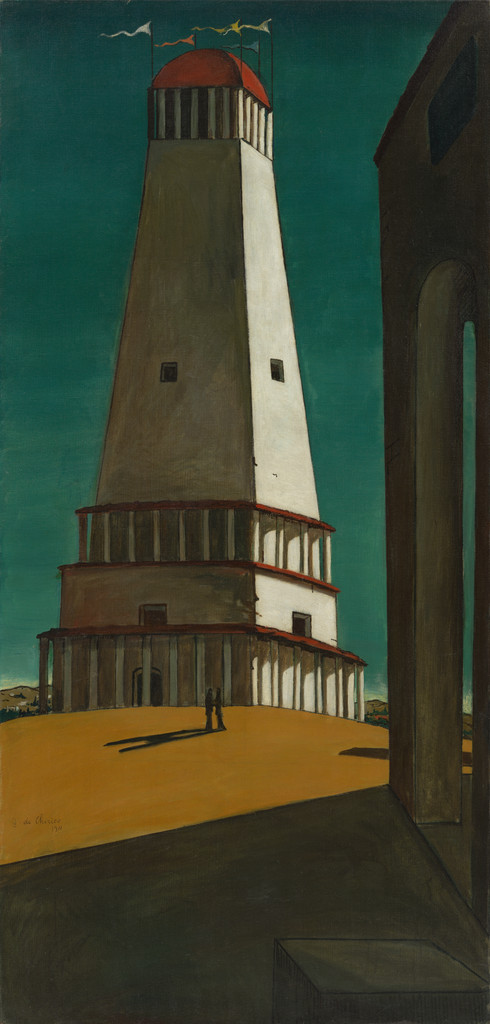
Warriors and Philosophers
Si può vedere?
Non esposta al momento
Dove si trova «Warriors and Philosophers» oggi? Collezione: Art Institute of Chicago, Chicago. Non esposta al momento. Verificato 29 settembre 2026.

Chicago, Stati Uniti
Appartiene alla collezione, ma al momento non è esposta.
- Verificato
- Ultimo cambio di stato
- Fonte
- Il museo
Scheda
- Numero di inventario
- 1954.305
In catalogo
Esposizioni
Al momento non esposta
Art Institute of Chicago · 28 set 2026 — oggi · Verificato
Non si sa se fosse esposta
Art Institute of Chicago · Non confermato
Fonti
- Art Institute of Chicago
- Immagine: Art Institute of Chicago — © the artist or rights holder
Nella vita di Giorgio de Chirico
Tutta la vita1926
The break with the Surrealists
De Chirico's relationship with the Surrealists grows increasingly contentious as they publicly disparage his new work; by 1926 he has come to regard them as “cretinous and hostile.” They soon part ways in acrimony.
1928
A first exhibition in New York, then in London
In 1928 de Chirico holds his first exhibition in New York City and, shortly afterwards, in London.
1929
The novel “Hebdomeros” appears
In 1929 (by other accounts, in 1925) de Chirico's novel “Hebdomeros, the Metaphysician” appears; around then he also writes essays on art and other subjects. The poet John Ashbery has called the book probably the finest major work of Surrealist fiction.
1929
Stage designs for Sergei Diaghilev
In 1929 de Chirico makes stage designs for Sergei Diaghilev.
1929–1930
Illustrations for Apollinaire's “Calligrammes”
In 1929–1930 de Chirico creates illustrations for Guillaume Apollinaire's “Calligrammes” — the poet who was among the first to praise his work and who helped introduce it to the later Surrealists.
1930
Meeting Isabella Pakszwer
In 1930 de Chirico meets Isabella Pakszwer Far (1909–1990), a Russian, with whom he will remain for the rest of his life; his marriage to Raissa Gurievich ends in divorce in 1931.