Paulus PotterPaesi Bassi, 1625–1654
The "Piebald" Horse
Si può vedere?
Sì, esposta ora
Dove si trova «The "Piebald" Horse» oggi? Getty Museum, Museum East Pavilion, Gallery E204, Los Angeles. Sì, esposta ora. Verificato 5 ottobre 2026.
Chiude a breve· fino alle 17:30
Esposta al pubblico.
- Verificato
- Ultimo cambio di stato
- Fonte
- Il museo
Sul dipinto
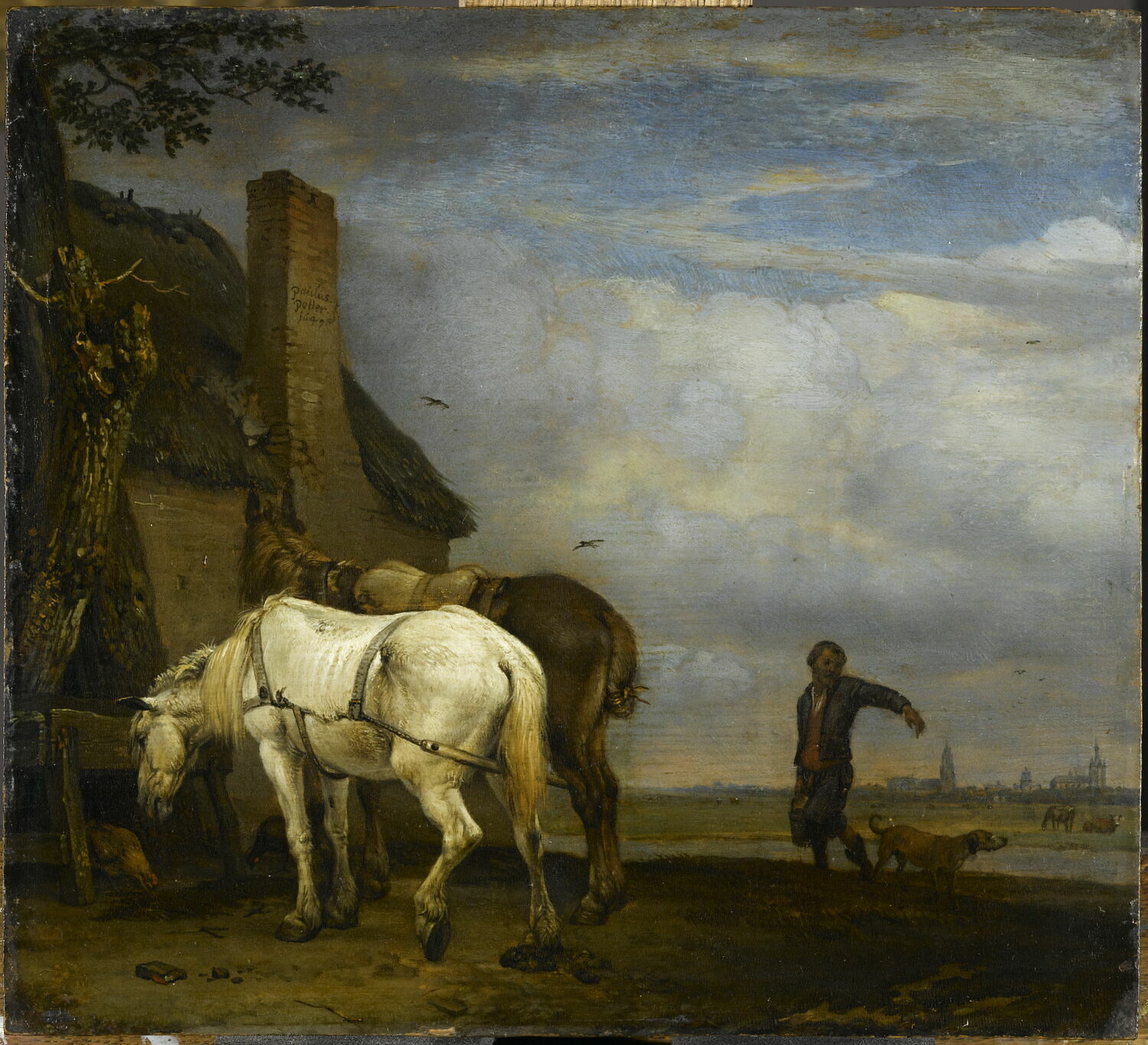
Silhouetted against rolling, stormy, clouds, a gray, spotted horse stands, turning its head slightly to suggest its alertness to its surroundings. Paulus Potter, the finest Dutch animal painter of his day, described the horse with scrupulous attention to physical detail: the glossy sheen of its coat and mane, the watery moistness of its eye, and the sleekly elegant lines of the animal's body. At the same time, the artist imbued the horse with an individualized personality that combines wildness with acute sensitivity. Indeed, the animal seems to respond to the distant sound of the hunt transpiring in the middle distance. The meaning of the painting is twofold. It is probably a horse portrait, perhaps commissioned by the owner of the country house at the right.
Leggi
The closely observed rendering of this domestic animal implies the pride of ownership that a wealthy Dutch landowner might have taken in the possession of such livestock. On the other hand, the horse is untethered and seems to roam free. His immaculate grooming and position before cultivated fields, however, imply that the source of Dutch prosperity lay in the control that humans were able to exert over brute nature.
Getty Museum
Scheda
- Numero di inventario
- 88.PA.87
In catalogo
Fonti
- Getty Museum
- Immagine: Getty Museum — Open Content
Nella vita di Paulus Potter
Tutta la vita1649
Moves to The Hague: a house from van Goyen
Potter rents a house in The Hague from the painter Jan van Goyen and joins the local painters' guild; for several years he lives next door to van Goyen.
1649–1652 · Luogo di lavoro
The Hague
3 July 1650
Marries Adriana van Balckeneynde
Potter marries Adriana van Balckeneynde, daughter of the Hague master carpenter and building contractor Claes Dircksz, who lived nearby; his father-in-law introduces him to the Dutch elite. None of their children will reach adulthood.
1 May 1652
Moves to Amsterdam at Tulp's invitation
At the invitation of the physician Nicolaes Tulp, who already owned a number of his paintings, Potter goes to Amsterdam. Impressed by the artist's civilized behaviour and politeness, Tulp has him paint his son Dirck as a noble equestrian, life-size, with the head painted on a portrait originally intended for someone else.
1652–1654 · Luogo di lavoro
Amsterdam
17 gennaio 1654
Died