ART WIKI32.963 in sala
MappaCollezioneArtistiMuseiMostreRivista
Accedi

ART WIKI

Dove è appeso il capolavoro, e quando si può entrare.

Collezioni: Art Institute of Chicago, Cleveland Museum of Art, Ermitage, Galleria Tret'jakov, Getty Museum, Harvard Art Museums, Hirshhorn Museum and Sculpture Garden, Metropolitan Museum of Art, Minneapolis Institute of Art, Museo del Louvre, Museo Puškin delle belle arti, Museo russo, Museum of Modern Art, National Gallery of Art, National Museum of Asian Art, National Portrait Gallery, Rijksmuseum, Smithsonian American Art Museum, Statens Museum for Kunst, Victoria and Albert Museum, Villa Getty, Whitney Museum of American Art, Catalogo statale del fondo museale russo (274 musei), Europeana (19 musei), Wikidata (6 musei), Paris Musées (12 musei) e Joconde, la banca dati dei musei del Ministero della Cultura francese (495 musei). Le immagini appartengono ai titolari dei diritti.

Sezioni

  • Mappa
  • Ricerca
  • Collezione
  • Capolavori
  • Esposte ora
  • Artisti

Altro

  • Musei e gallerie
  • Mostre
  • Rivista
  • Da dove vengono i dati
  • Privacy e cookie
HomeMappaCatalogo
  1. Collezione/
  2. Getty Museum/
  3. Horse Stable
Horse Stable, Gerard ter Borch, about 1654
Gerard ter Borch, ritrattoGerard ter BorchPaesi Bassi, 1617–1681

Horse Stable

about 1654 · Painting · 45.4 × 53.5 cm

Si può ammirare?

Sì, riceve visite

GM
Getty Museum

Los Angeles, Stati Uniti

SalaMuseum East Pavilion, Gallery E204

Esposta al pubblico. Chi lo garantisce è indicato qui sotto.

Verificato
l’altro ieri
Ultimo cambio di stato
5 ott 2026
Fonte
Il museo
Sulla mappaPagina del museo

Sul dipinto

A dappled gray horse feeds at a manger while a man brushes his coat. A horse blanket and bridle hang from a pole in the foreground and other barnyard utensils--a pitchfork, broom, and pail--fill the stable. To the right, a fashionably dressed woman appears at a doorway that connects to the main farmhouse. Light from the open doorway illuminates the animal, the painting's center of attention. Domestic animals like this carefully groomed horse would have been valued possessions of their prosperous owners during the 1600s in Holland. Clues such as the orderly and well-built stable and the woman's handsome dress and jewelry indicate that this was a well-to-do middle-class household. Gerard ter Borch's paintings are noted for their subtlety of composition, close attention to detail, and delicate color. In *Horse Stable* he used a palette of warm browns and grays, brightened by the red accents of the man's hat, the woman's skirt, and the bricks on the left-hand wall.

GMGetty Museum

Scheda

about 1654 · a 37 anni
16171681
Numero di inventario
86.PB.631

In catalogo

DipintiOlioPittura olandeseBaroccoXVII secoloPaesi Bassi

Fonti

  • Getty Museum
  • Immagine: Getty Museum — Open Content

Nel frattempo, nella vita di Gerard ter Borch

Tutta la vita
  1. 14 February 1654

    Marries and settles in Deventer

    He marries Gertruid Matthijsen and settles in Deventer; in the 1650s he concentrates on genre painting, showing people in ordinary everyday surroundings and sometimes in mysterious or amorous relationships.

  2. 1655

    Granted citizenship of Deventer

    In 1655, a year after settling there, he is granted citizenship of Deventer.

  3. not after 1655

    Caspar Netscher becomes his pupil

    Caspar Netscher studies under ter Borch in 1655 at the latest. Together with his master he makes nine of the ten portraits of the Craeyvanger family.

Altre opere di Gerard ter Borch

Tutte le opere
Vrouw in boerenkostuum, Gerard ter Borch, c. 1648 - c. 1650

Vrouw in boerenkostuum

c. 1648 - c. 1650 · Rijksmuseum

Helena van der Schalcke, Gerard ter Borch, c. 1648

Helena van der Schalcke

c. 1648 · Rijksmuseum

Galante conversatie, bekend als ‘De vaderlijke vermaning’, Gerard ter Borch, c. 1654 - c. 1655

Galante conversatie, bekend als ‘De vaderlijke vermaning’

c. 1654 - c. 1655 · Rijksmuseum

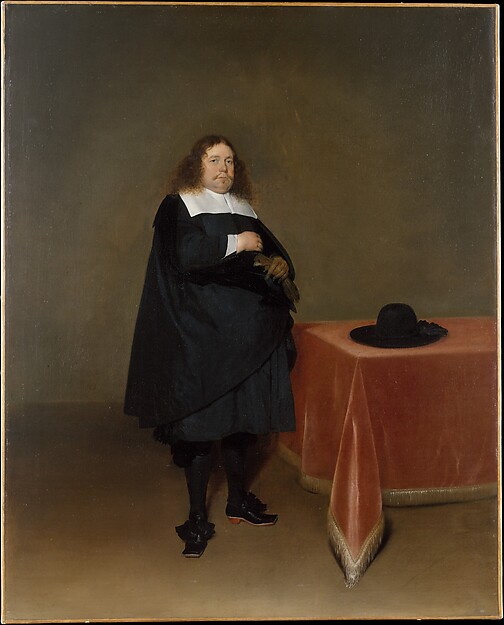
Burgomaster Jan van Duren (1613–1687), Gerard ter Borch the Younger, ca. 1666–67

Burgomaster Jan van Duren (1613–1687)

ca. 1666–67 · Metropolitan Museum of Art

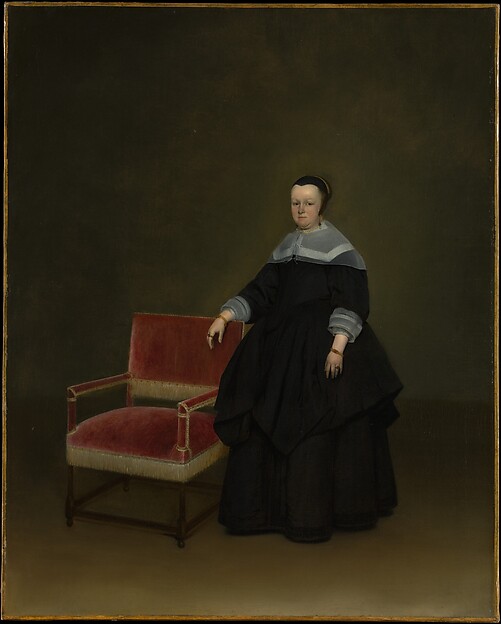
Margaretha van Haexbergen (1614–1676), Gerard ter Borch the Younger, ca. 1666–67

Margaretha van Haexbergen (1614–1676)

ca. 1666–67 · Metropolitan Museum of Art

Het sluiten van de Vrede van Munster, Gerard ter Borch, 1648

Het sluiten van de Vrede van Munster

1648 · Rijksmuseum

A Young Woman at Her Toilet with a Maid, Gerard ter Borch the Younger, ca. 1650–51

A Young Woman at Her Toilet with a Maid

ca. 1650–51 · Metropolitan Museum of Art

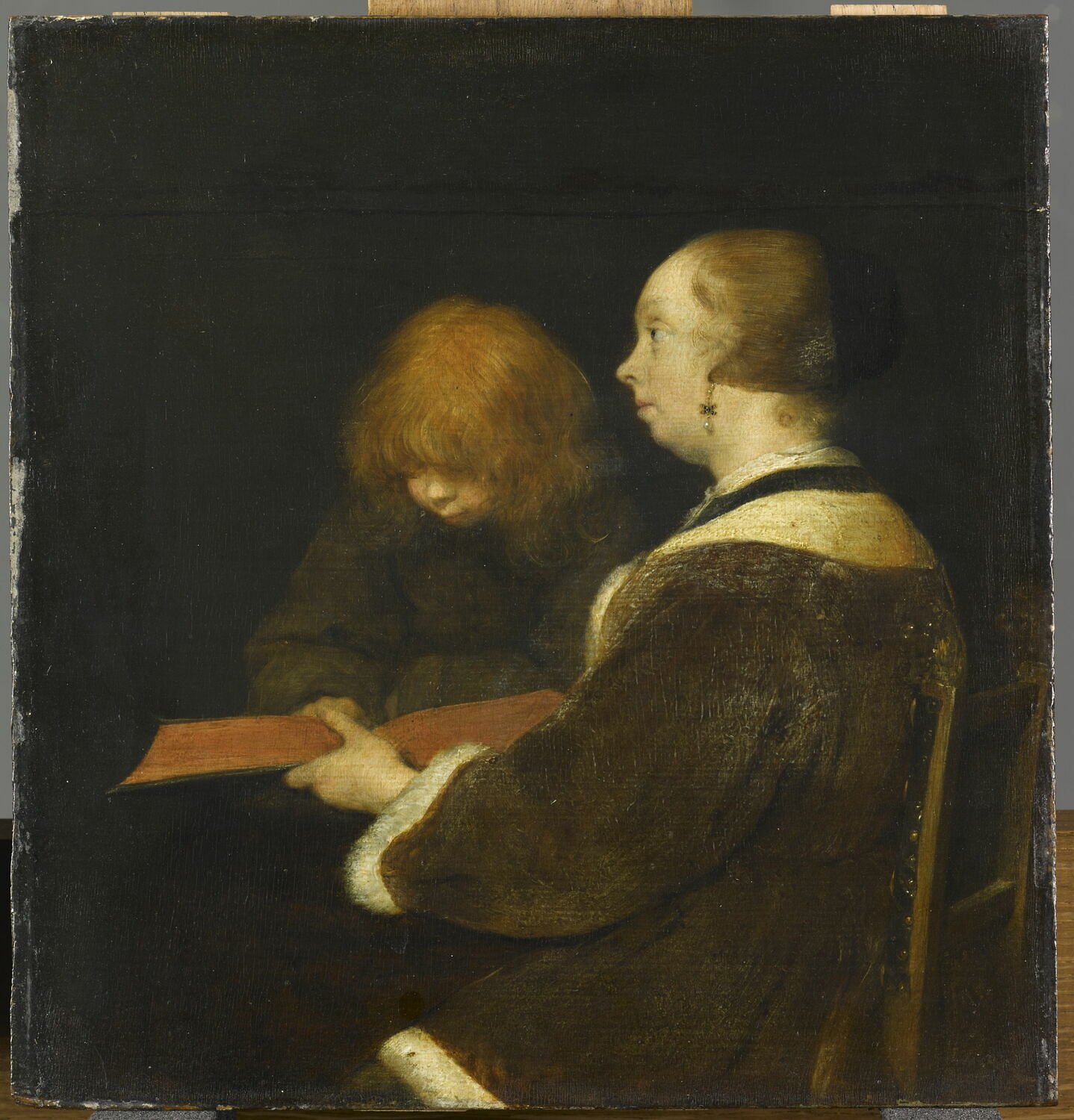
La Leçon de lecture, Borch, Gerard ter, 2e quart du XVIIe siècle (vers 1652)

La Leçon de lecture

2e quart du XVIIe siècle (vers 1652) · Museo del Louvre

Nella stessa sala · Museum East Pavilion, Gallery E204, Getty Museum

Pagina del museo
Bathsheba After the Bath, Jan Steen, about 1670–1675

Jan Havicksz. Steen

Bathsheba After the Bath, about 1670–1675

The Drawing Lesson, Jan Steen, about 1665

Jan Havicksz. Steen

The Drawing Lesson, about 1665

The Satyr and the Peasant Family, Jan Steen, about 1660–1662

Jan Havicksz. Steen

The Satyr and the Peasant Family, about 1660–1662

Two Watermills and an Open Sluice, Jacob van Ruisdael, 1653

Jacob Isaacksz. van Ruisdael

Two Watermills and an Open Sluice, 1653

Bridge with a Sluice, Jacob van Ruisdael, about 1648–1649

Jacob Isaacksz. van Ruisdael

Bridge with a Sluice, about 1648–1649

A Woman Preparing Bread and Butter for a Boy, Pieter de Hooch, about 1660–1663

Pieter de Hooch

A Woman Preparing Bread and Butter for a Boy, about 1660–1663

The Music Lesson, Gerard ter Borch, about 1668

Gerard ter Borch

The Music Lesson, about 1668

A Maid Milking a Cow in a Barn, Gerard ter Borch, about 1652–1654

Gerard ter Borch

A Maid Milking a Cow in a Barn, about 1652–1654