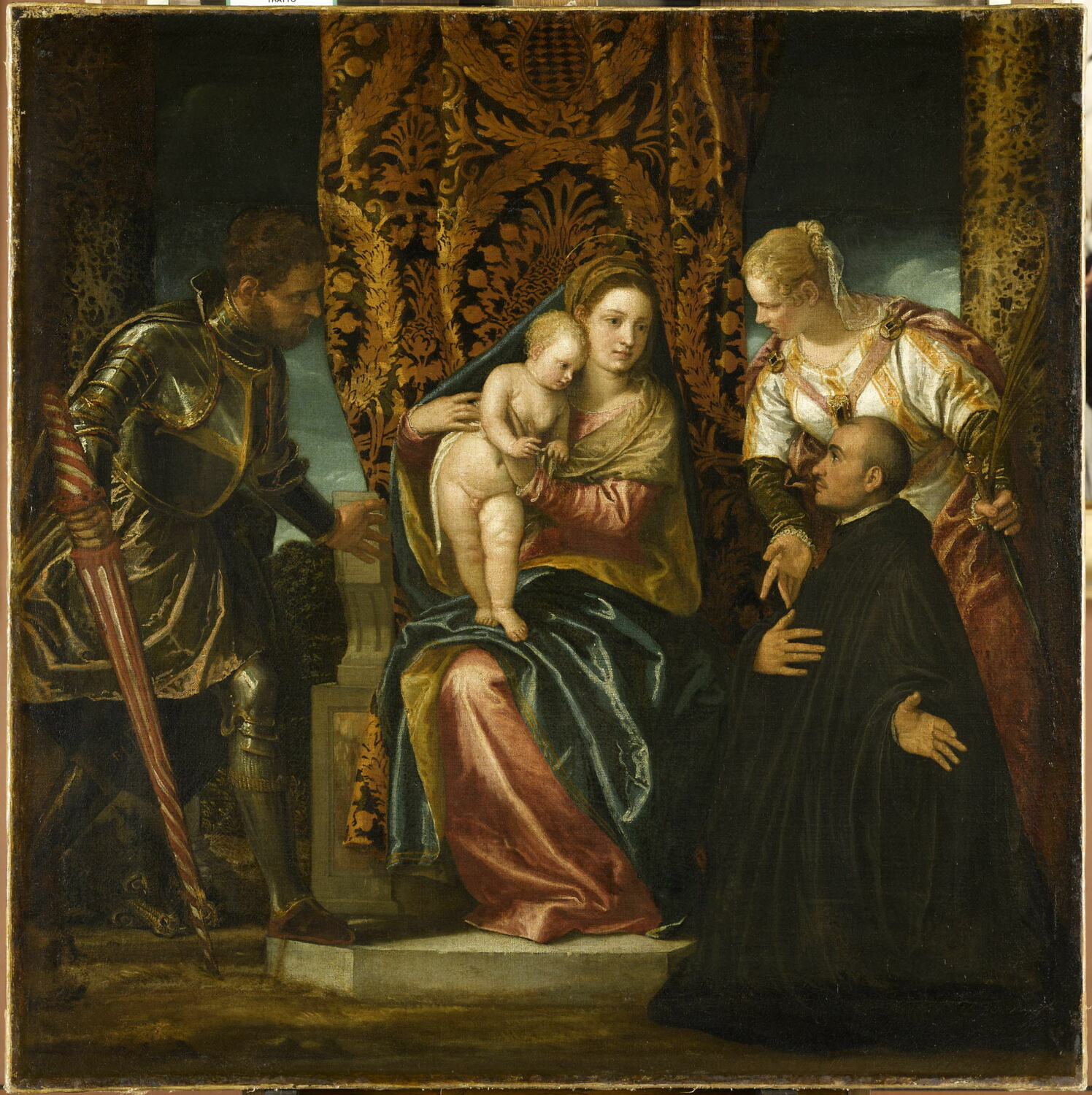
Paolo VeroneseItalia, 1528–1588
The Peace
Si può vedere?
Non si sa
Dove si trova «The Peace» oggi? Collezione: Musei Capitolini, Roma. Non si sa se oggi sia esposta.
Roma, Italia
Il proprietario è noto; non si sa se oggi sia esposta.
- Ultimo cambio di stato
- Fonte
- Il museo
Scheda
- Numero di inventario
- PC 50
In catalogo
Fonti
- Wikidata
- Immagine: Musei Capitolini — Veronese (1528 - 1588) – Painter (Italian) Born in Verona. Died in Venice. Details on Google Art Project · Public domain · Wikimedia Commons
Nella vita di Paolo Veronese
Tutta la vita1540s
Verona and Mantua: lessons from Giulio Romano and Mantegna
In the 1540s, working in Verona and Mantua, Caliari already showed the foundations of his own style: pure tones suffused with light, joined by transparent shadows. From the frescoes of Giulio Romano and Andrea Mantegna he also learned the art of dramatic foreshortening.
1551
A Giustiniani commission: the San Francesco della Vigna altarpiece
In 1551 the Venetian branch of the important Giustiniani family commissioned Caliari to paint the altarpiece for their chapel in the church of San Francesco della Vigna, which was then being entirely rebuilt to the design of Jacopo Sansovino.
1552–1553
Cardinal Gonzaga's commission: the “Temptation of St Anthony”
In 1552 Cardinal Ercole Gonzaga commissioned altarpieces for Mantua Cathedral from Caliari and three other painters: Battista del Moro, Farinati and Brusasorci. Caliari painted the “Temptation of St Anthony” (now in Caen, France), completing it in 1553; it shows the influence of Michelangelo and, according to the Enciclopedia Italiana, far surpassed the work of the others.
1553
Moves to Venice: his first state commission
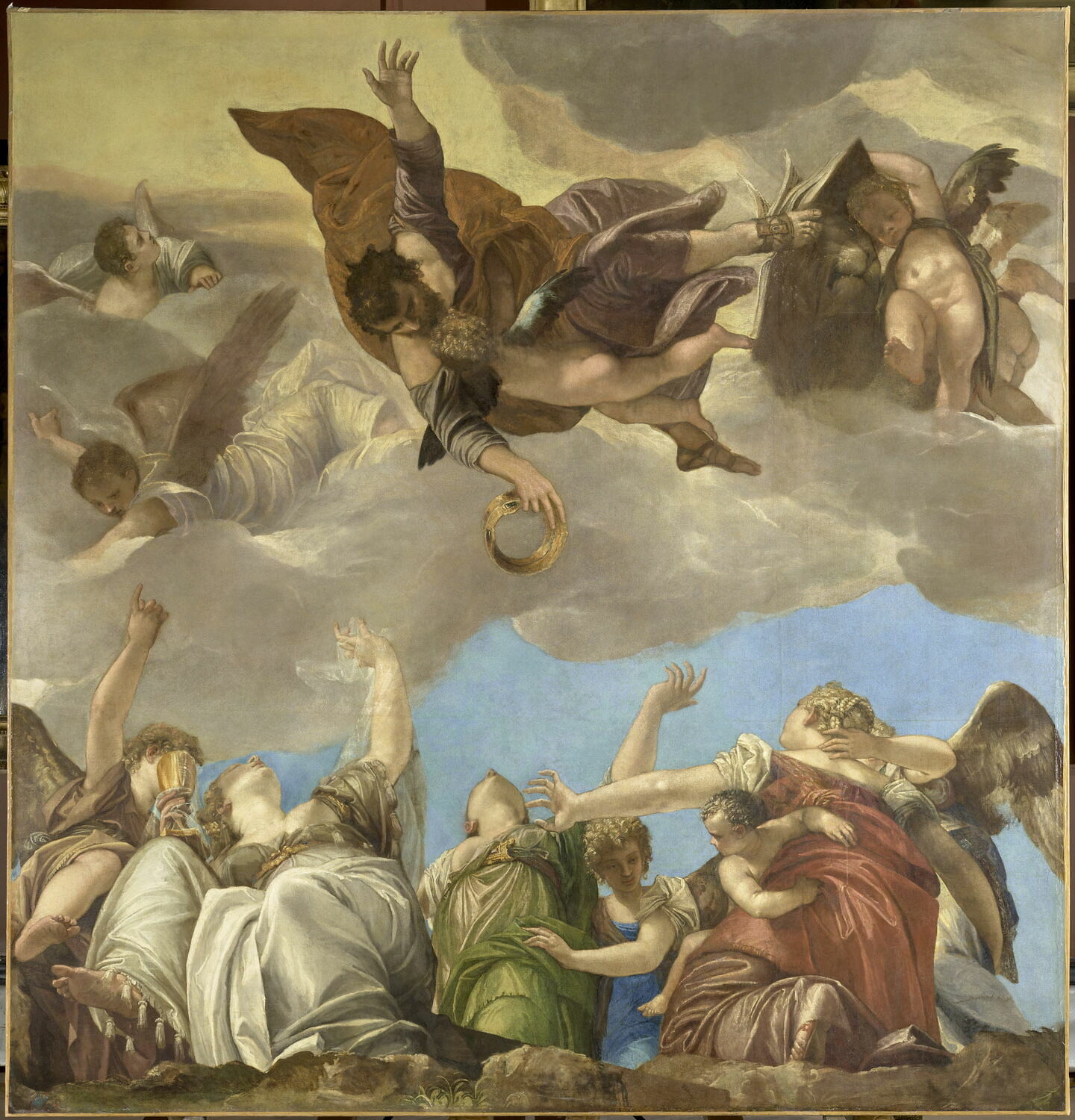
In 1553 Caliari began working in Venice, possibly on the recommendation of the painter Giambattista Ponchino, then popular there. His first commission was the ceiling of the newly renovated Hall of the Council of Ten in the Doge's Palace: it already shows a mature style, with foreshortening that makes the figures seem to hang in the air above the viewer, a rich palette and sumptuous multi-figure compositions that fit naturally into a large room.
c. mid-1550s
Settles in Venice for good: signing as “Veronese”
For several years Caliari divided his time between Verona, Venice and commissions in other cities, but around the middle of the 1550s he finally settled in Venice, where he spent most of the rest of his life. From then on he signed his paintings “Veronese”, “the Veronese”; the earliest of them that can be exactly dated, the “Transfiguration” in Montagnana cathedral, was finished on 3 June 1555.
1560
A trip to Rome with Girolamo Grimani
Apparently in 1560 Veronese visited Rome with Girolamo Grimani, but in the opinion of art historians the trip had no significant consequences for his creative career.