ART WIKI32.963 in sala
MappaCollezioneArtistiMuseiMostreRivista
Accedi

ART WIKI

Dove è appeso il capolavoro, e quando si può entrare.

Collezioni: Art Institute of Chicago, Cleveland Museum of Art, Ermitage, Galleria Tret'jakov, Getty Museum, Harvard Art Museums, Hirshhorn Museum and Sculpture Garden, Metropolitan Museum of Art, Minneapolis Institute of Art, Museo del Louvre, Museo Puškin delle belle arti, Museo russo, Museum of Modern Art, National Gallery of Art, National Museum of Asian Art, National Portrait Gallery, Rijksmuseum, Smithsonian American Art Museum, Statens Museum for Kunst, Victoria and Albert Museum, Villa Getty, Whitney Museum of American Art, Catalogo statale del fondo museale russo (274 musei), Europeana (19 musei), Wikidata (6 musei), Paris Musées (12 musei) e Joconde, la banca dati dei musei del Ministero della Cultura francese (495 musei). Le immagini appartengono ai titolari dei diritti.

Sezioni

  • Mappa
  • Ricerca
  • Collezione
  • Capolavori
  • Esposte ora
  • Artisti

Altro

  • Musei e gallerie
  • Mostre
  • Rivista
  • Da dove vengono i dati
  • Privacy e cookie
HomeMappaCatalogo
  1. Collezione/
  2. Art Institute of Chicago/
  3. The Earth Is a Man
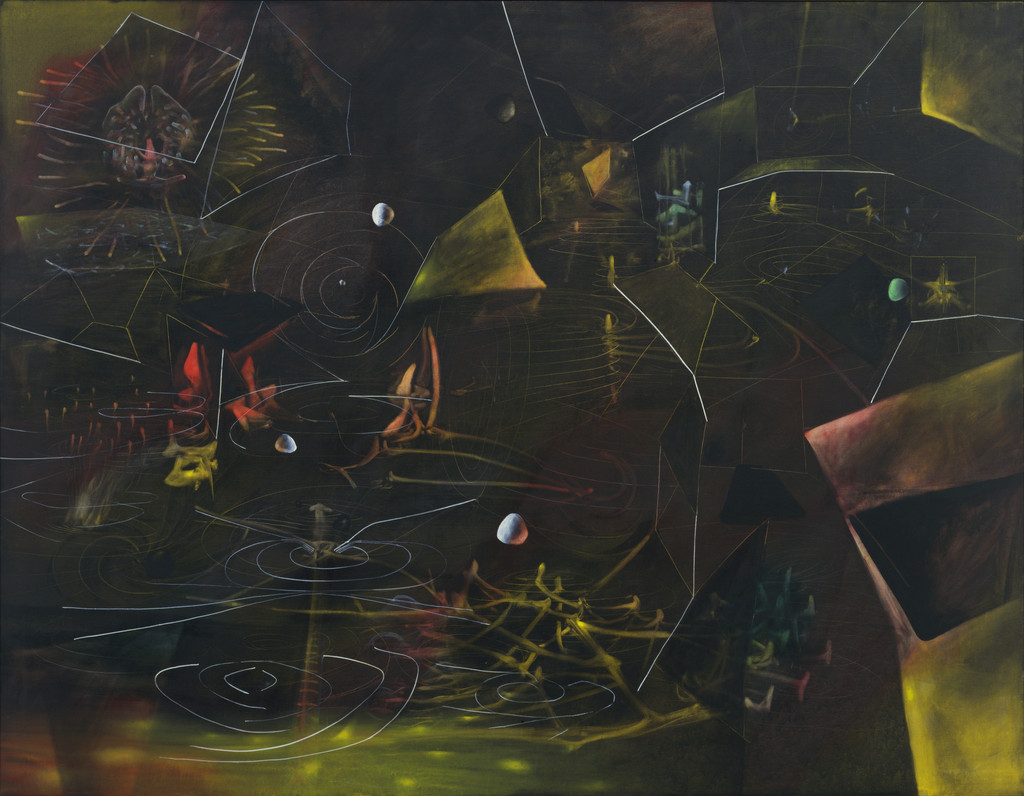
The Earth Is a Man, Matta, 1942

The Earth Is a Man

1942 · Painting

Sul dipinto

Trained as an architect, the Chilean-born Roberto Matta moved to France in 1933, where he worked in the studio of Le Corbusier. The following year, he met the poet Federico García Lorca in Spain. After Lorca was assassinated by agents of Francisco Franco in 1936, Matta began a screenplay, The Earth Is a Man, which he wrote in tribute to the slain hero. The play’s apocalyptic imagery, rapidly shifting perspectives, and emotionally charged language became the principal source of Matta’s visual art over the next five years. The painting The Earth Is a Man represents the culmination of this project and draws on the artist’s earlier compositions, which he called “Inscapes” or “Psychological Morphologies.” In these, using a technique of psychic automatism developed by the Surrealists, Matta created turbulent forms that serve as visual analogues for states of consciousness.

Continua a leggere

In this powerful, enigmatic work, forces of brilliant light seem to battle those of darkness. The artist spilled, brushed, and wiped on vaporous washes of paint to render the invisible waves of energy that shape and dissolve a molten, primordial terrain. The painting’s visual intensity evokes the tumultuous eruption of a volcano, such as one Matta had witnessed in Mexico in 1941. Exhibited shortly after its completion in New York City, where he had immigrated at the onset of World War II, the mural- size canvas, with its abstract and visionary qualities, enthralled and influenced a new generation of American artists, who would come to be known as the Abstract Expressionists.

Art Institute of Chicago · CC BY 4.0

Scheda

1942 · a 31 anni
19112002
Numero di inventario
1992.168

Altre opere di Matta

Tutte le opere

Nella stessa sala · Gallery 398, Art Institute of Chicago

Pagina del museo

Sullo stesso tema · Blue (color)

Tutte le opere sul tema
Matta, ritrattoMattaCile, 1911–2002

Si può ammirare?

Sì, riceve visite

Art Institute of Chicago

Chicago, Stati Uniti

Sala398

Esposta al pubblico. Chi lo garantisce è indicato qui sotto.

Verificato
3 giorni fa
Ultimo cambio di stato
19 ago 2026
Fonte
Il museo
Sulla mappaPagina del museo

Che cosa raffigura

Blue (color)Federico Garcia LorcaYellow (color)Light

In catalogo

DipintiOlioPittura franceseModernismoXX secoloSurrealismoFrancia

Fonti

  • Art Institute of Chicago
  • Immagine: Art Institute of Chicago — © the artist or rights holder
Genesis, Matta, 1942

Genesis

1942 · National Gallery of Art

The Vertigo of Eros, Roberto Matta, 1944

The Vertigo of Eros

1944 · Museum of Modern Art

Untitled, Matta, n.d.

Untitled

n.d. · Art Institute of Chicago

Untitled, Matta, 1938/39

Untitled

1938/39 · Art Institute of Chicago

Untitled (Psychological Morphology), Matta, 1939

Untitled (Psychological Morphology)

1939 · Art Institute of Chicago

Untitled (Flying People Eaters), Matta, 1942

Untitled (Flying People Eaters)

1942 · Art Institute of Chicago

Drive in the Knife, Matta, May 1943

Drive in the Knife

May 1943 · Art Institute of Chicago

Medraumonde, Matta, 1945/46

Medraumonde

1945/46 · Art Institute of Chicago

The Policeman, Joan Miró, 1925

Joan Miró

The Policeman, 1925

Walking Man II, Alberto Giacometti, 1960

Alberto Giacometti

Walking Man II, 1960

Two Figures (Menhirs), Barbara Hepworth, c. 1954/55

Barbara Hepworth

Two Figures (Menhirs), c. 1954/55

Painting, Franz Kline, 1952

Franz Kline

Painting, 1952

Les Baux, Loren MacIver, 1952

Loren MacIver

Les Baux, 1952

PH-246, Clyfford Still, 1951/52

Clyfford Still

PH-246, 1951/52

Caos-Caos, Wifredo Lam, 1950

Wifredo Lam

Caos-Caos, 1950

Wake, Lee Mullican, 1949

Lee Mullican

Wake, 1949

The Old Guitarist, Pablo Picasso, late 1903–early 1904

Pablo Picasso

Il vecchio chitarrista cieco, late 1903–early 1904

Non esposta · Art Institute of Chicago

Two Sisters (On the Terrace), Pierre-Auguste Renoir, 1881

Pierre-Auguste Renoir

Sulla terrazza, 1881

Art Institute of Chicago

Merahi metua no Tehamana (Tehamana Has Many Parents or The Ancestors of Tehamana), Paul Gauguin, 1893

Paul Gauguin

Merahi metua no Tehamana (Tehamana Has Many Parents or The Ancestors of Tehamana), 1893

Art Institute of Chicago

American Collectors (Fred and Marcia Weisman), David Hockney, 1968

David Hockney

American Collectors (Fred and Marcia Weisman), 1968

Art Institute of Chicago

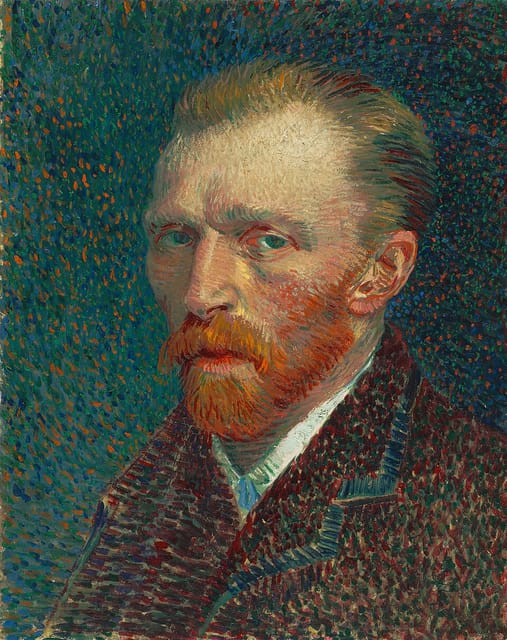
Self-Portrait, Vincent van Gogh, 1887

Vincent van Gogh

Self-Portrait, 1887

Art Institute of Chicago

Bathers by a River, Henri Matisse, 1909–10, 1913, and 1916–1917

Henri Matisse

Bathers by a River, 1909–10, 1913, and 1916–1917

Art Institute of Chicago

The Bedroom, Vincent van Gogh, 1889

Vincent van Gogh

The Bedroom, 1889

Art Institute of Chicago

Bordighera, Claude Monet, 1884

Claude Monet

Bordighera, 1884

Art Institute of Chicago