 André DerainFrancia, 1880–1954
The Bagpiper
Si può vedere?
Sì, esposta ora
Dove si trova «The Bagpiper» oggi? Minneapolis Institute of Art, G371, Minneapolis. Sì, esposta ora. Verificato 16 novembre 2026.

Minneapolis, Stati Uniti
Chiuso· apre alle 10:00
Esposta al pubblico.
- Verificato
- Ultimo cambio di stato
- Fonte
- Il museo
Sul dipinto
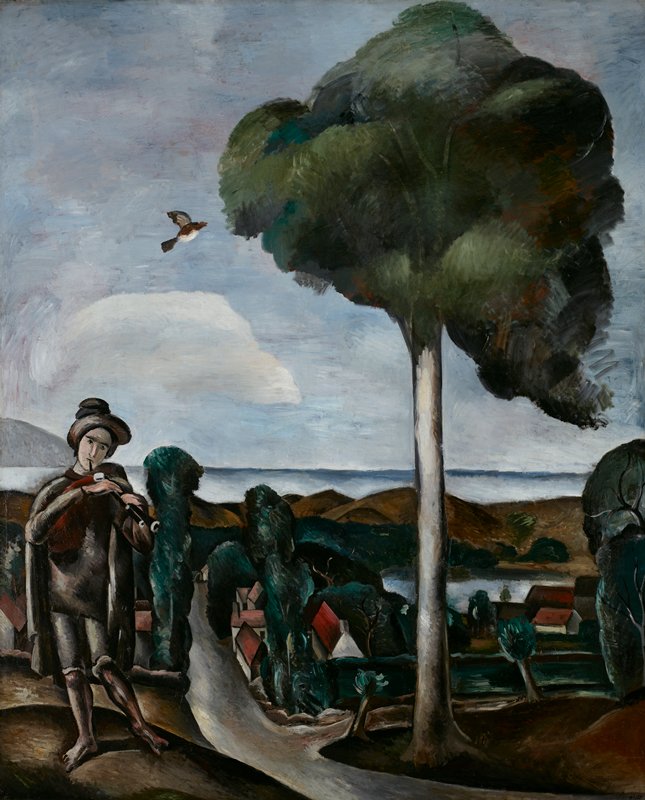
André Derain painted The Bagpiper in 1910–11; it is in the Minneapolis Institute of Art, Minneapolis. Colour, handling and composition owe much to Cézanne, while the pastoral subject recalls Titian and Claude Lorrain's scenes with shepherds and musicians. Derain had grown dissatisfied with Fauvism and Cubism, feeling that technical concerns displaced subject matter. His turn towards older painting helped shape this lyrical, romantic work, which became widely known before the war. Its large format continues that older tradition. The painting is exhibited in gallery G371.
Con le parole del museo
Although Derain had helped found Fauvism and had been an early adherent of Cubism, he increasingly fell away from both aesthetics, feeling their obsession with technique had supplanted the content of their work. Derain, instead, began to turn toward the Old Masters, even as he kept pace with the spirit of his own time. Thus, while The Bagpiper at Camiers owes much to Cézanne in color, brushwork and composition, a great debt to the Old Masters is also evident, especially the arcadian scenes peopled with shepherds and musicians by Titian, and Derain's countryman, Claude Lorrain. The Bagpiper at Camiers became one of Derain's best known pre-war pictures and its lyrical and romantic feeling established him as an artist in the grand tradition of large formats and timeless subjects.
Minneapolis Institute of Art
Scheda
- Numero di inventario
- 61.36.10
In catalogo
Fonti
- Minneapolis Institute of Art
- Immagine: Minneapolis Institute of Art — public domain
Nella vita di André Derain
Tutta la vita1909
Le incisioni per il primo libro di Apollinaire
Realizza xilografie di gusto primitivista per l'edizione del primo libro in prosa di Guillaume Apollinaire, «Гниющий чародей» (L'enchanteur pourrissant).
1910
La mostra della Nuova associazione degli artisti a Monaco
Espone opere alla mostra della Neue Künstlervereinigung a Monaco di Baviera.
1912
Alla mostra del Cavaliere azzurro
Espone alla mostra del gruppo secessionista Der Blaue Reiter; nello stesso anno illustra una raccolta di poesie di Max Jacob.
1913
All'Armory Show di New York
Partecipa alla storica mostra Armory Show di New York.