ART WIKI32.979 in sala
MappaCollezioneArtistiMuseiMostreRivista
Accedi

ART WIKI

Dove è appeso il capolavoro, e quando si può entrare.

Collezioni: Art Institute of Chicago, Cleveland Museum of Art, Ermitage, Galleria Tret'jakov, Getty Museum, Harvard Art Museums, Hirshhorn Museum and Sculpture Garden, Metropolitan Museum of Art, Minneapolis Institute of Art, Museo del Louvre, Museo Puškin delle belle arti, Museo russo, Museum of Modern Art, National Gallery of Art, National Museum of Asian Art, National Portrait Gallery, Rijksmuseum, Smithsonian American Art Museum, Statens Museum for Kunst, Victoria and Albert Museum, Villa Getty, Whitney Museum of American Art, Catalogo statale del fondo museale russo (274 musei), Europeana (19 musei), Wikidata (6 musei), Paris Musées (12 musei) e Joconde, la banca dati dei musei del Ministero della Cultura francese (495 musei). Le immagini appartengono ai titolari dei diritti.

Sezioni

  • Mappa
  • Ricerca
  • Collezione
  • Capolavori
  • Esposte ora
  • Artisti

Altro

  • Musei e gallerie
  • Mostre
  • Rivista
  • Da dove vengono i dati
  • Privacy e cookie
HomeMappaCatalogo
  1. Collezione/
  2. Harvard Art Museums/
  3. Self-Portrait with Cat
Self-Portrait with Cat, Ernst Ludwig Kirchner, 1920

Self-Portrait with Cat

1920 · Painting

Sul dipinto

An avid commentator on his own work after World War I — in diaries, correspondence, and even publicly under a pseudonym — Kirchner contributed to the legend of his wartime experi-ence as a soldier. The Brücke expressionist had suffered a breakdown during the war, and is now known to have partially feigned illness to avoid returning to the front. To recuperate, he eventually left Germany permanently for rural Frauenkirch, near Davos, Switzerland, in 1917. Despite the self-imposed isolation in the mountains depicted here, Kirchner kept abreast of developments in Germany, debating details of the history of Brücke and consistently emphasizing his own artistic leadership and autonomy. Thickly painted on a red-and-white checkered cloth — a rare example of a work by Kirchner on an unconventional support — Self-Portrait with Cat retains the more vigorous paint application of the artist’s prewar years, a style he soon abandoned for large, flat planes of color.

Harvard Art Museums

Scheda

1920 · a 40 anni
18801938
Numero di inventario
BR50.12

Nel frattempo, nella vita di Ernst Ludwig Kirchner

Tutta la vita
  1. 1917–1918

    The Bellevue Sanatorium in Kreuzlingen

    At the end of August 1917 Kirchner was visited once more by Henry van de Velde, through whose good offices he was admitted to Ludwig Binswanger’s Bellevue Sanatorium in Kreuzlingen, where he went on painting and making woodcuts.

  2. 1918

    Moves to the “In den Lärchen” farm in Davos

    In 1918 Kirchner received a residence permit and moved to the “In den Lärchen” farm above Längmatte in Davos — first renting a room in the upper hut, and in 1919 the rooms above — and furnished it with furniture he carved himself; he wrote to Henry van de Velde of a beautiful old Grisons house with a kitchen like Rembrandt’s studio.

  3. 1919–1920

    Health mends, exhibitions multiply

    In 1919–1920 Kirchner’s health improved markedly: he was still dependent on morphine, but his doctor was slowly reducing the doses, and several exhibitions in Germany and Switzerland in 1920 strengthened his reputation. He grew close to the local farmers, who were amazed by his gramophone, and found many subjects among them.

  4. c. 1920

    Reviewing his own art under a pseudonym

    To control public opinion of him and free himself from dependence on the art critics, Kirchner began writing critiques of his own art under the pseudonym Louis de Marsalle.

  5. 1921

    A large exhibition in Berlin

    In 1921 a major display of Kirchner’s work was held in Berlin, and the reviews were favourable.

Altre opere di Ernst Ludwig Kirchner

Tutte le opere

Nella stessa sala · Gallery 1500, floor 1, Modern and Contemporary Art, Harvard Art Museums

Pagina del museo
  • May 1921

    Meets the dancer Nina Hard

    At the beginning of May 1921, in Zurich, Kirchner met Nina Hard and, despite Erna’s objections, invited her to Frauenkirch; the dancer became an important model and appears in many of his works.

  • Ernst Ludwig Kirchner, ritrattoErnst Ludwig KirchnerGermania, 1880–1938

    Si può ammirare?

    Sì, riceve visite

    Harvard Art Museums

    Cambridge, Stati Uniti

    Sala1500, floor 1, Modern and Contemporary Art

    Esposta al pubblico. Chi lo garantisce è indicato qui sotto.

    Verificato
    3 giorni fa
    Ultimo cambio di stato
    27 set 2026
    Fonte
    Il museo
    Sulla mappaPagina del museo

    In catalogo

    DipintiOlioPittura tedescaModernismoXX secoloGermania

    Fonti

    • Harvard Art Museums
    • Immagine: Harvard Art Museums — © President and Fellows of Harvard College
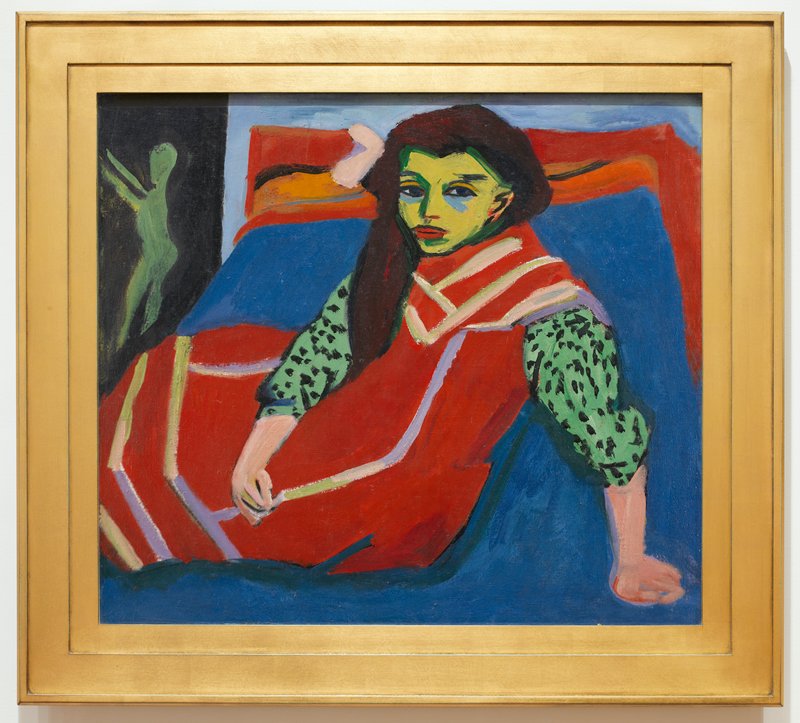
    Seated Girl (Fränzi Fehrmann), Ernst Ludwig Kirchner, 1910 (altered 1920)

    Seated Girl (Fränzi Fehrmann)

    1910 (altered 1920) · Minneapolis Institute of Art

    Dance Hall Bellevue [obverse], Ernst Ludwig Kirchner, 1909/1910

    Dance Hall Bellevue [obverse]

    1909/1910 · National Gallery of Art

    Two Girls under an Umbrella, Ernst Ludwig Kirchner, 1910

    Two Girls under an Umbrella

    1910 · National Gallery of Art

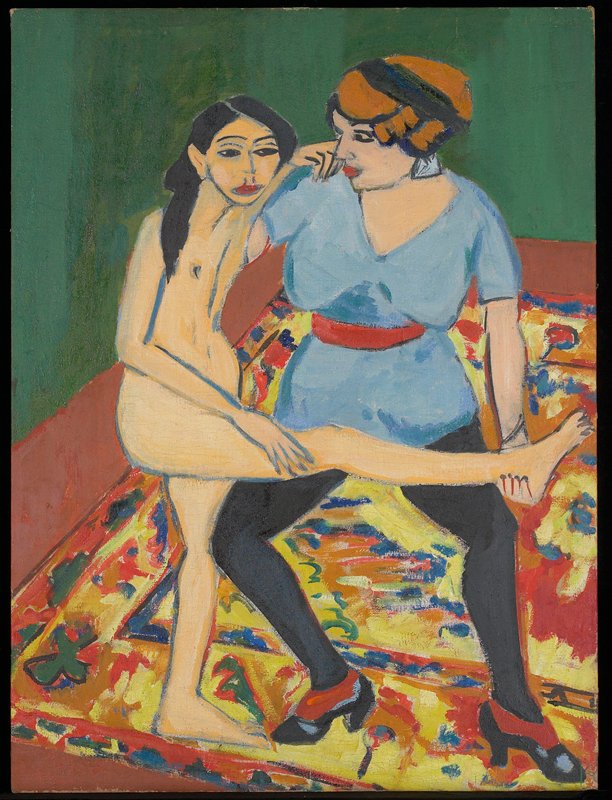
    Dance Training, Ernst Ludwig Kirchner, 1910–11 (altered 1920)

    Dance Training

    1910–11 (altered 1920) · Minneapolis Institute of Art

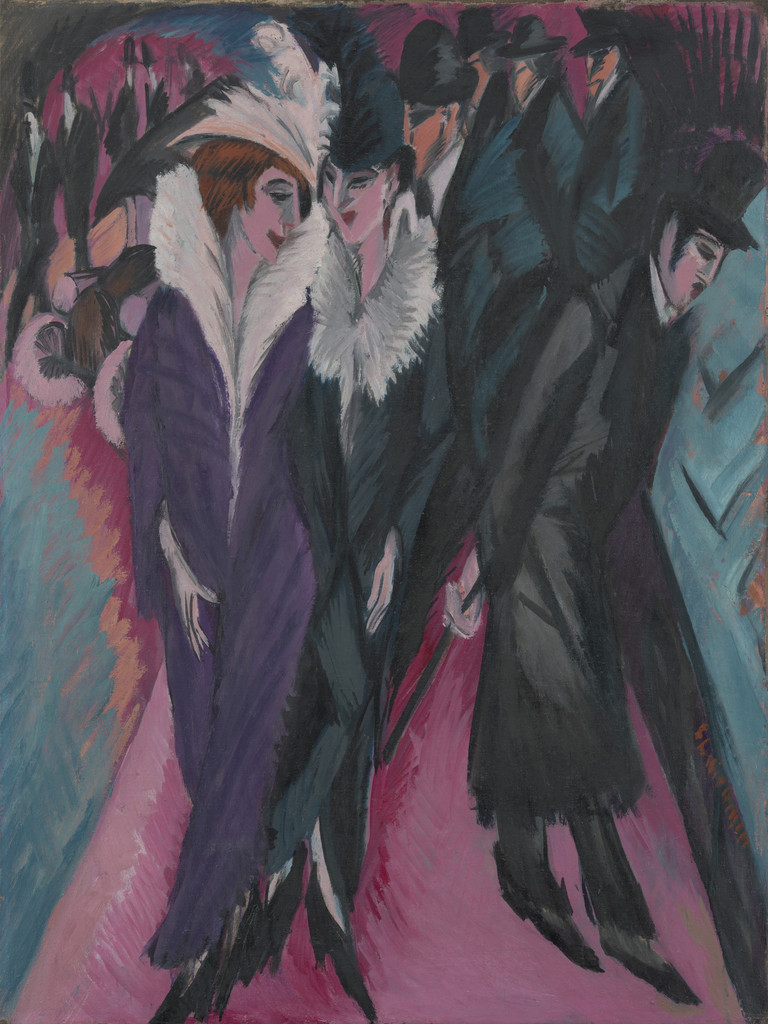
    Street, Berlin, Ernst Ludwig Kirchner, 1913

    Street, Berlin

    1913 · Museum of Modern Art

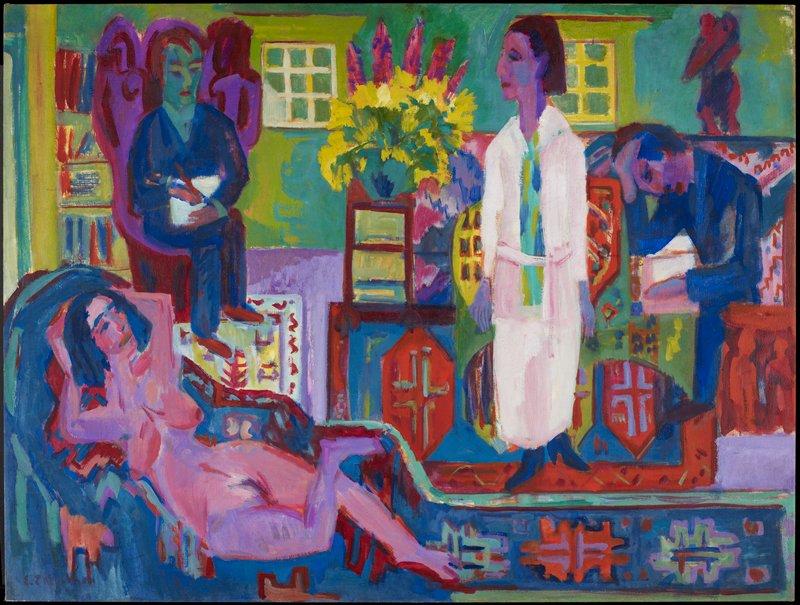
    Modern Bohemia, Ernst Ludwig Kirchner, 1924

    Modern Bohemia

    1924 · Minneapolis Institute of Art

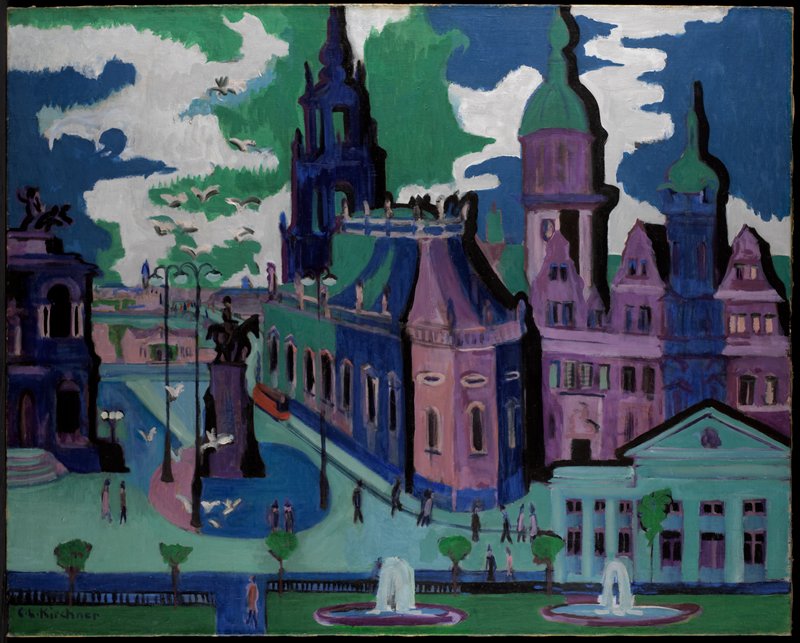
    View of Dresden: Schlossplatz, Ernst Ludwig Kirchner, 1926

    View of Dresden: Schlossplatz

    1926 · Minneapolis Institute of Art

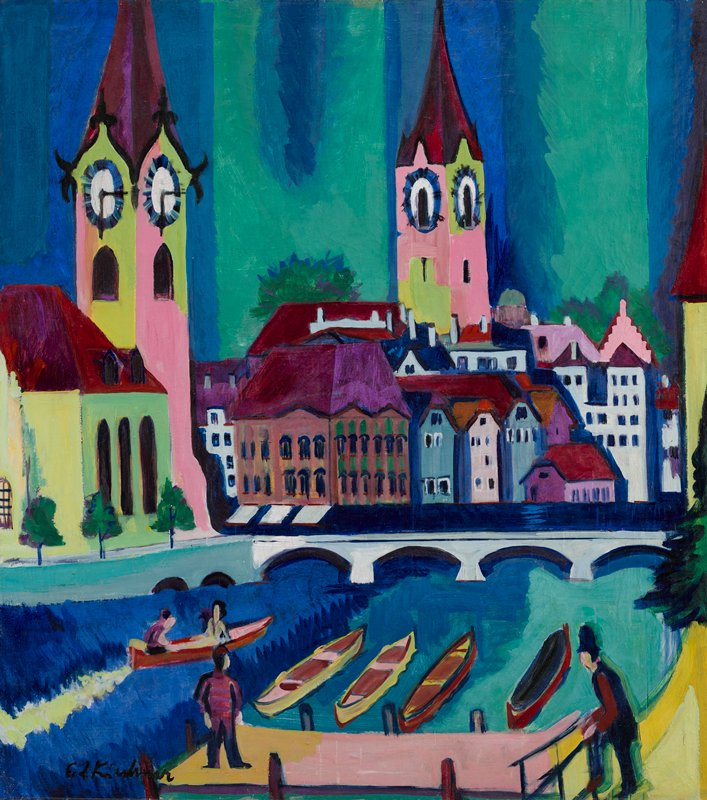
    Zurich, Ernst Ludwig Kirchner, 1926

    Zurich

    1926 · Minneapolis Institute of Art

    Adam and Eve, Max Beckmann, 1936 (cast c. 1959)

    Max Beckmann

    Adam and Eve, 1936 (cast c. 1959)

    Three Figures with Furniture-like Forms, Oskar Schlemmer, 1929

    Oskar Schlemmer

    Three Figures with Furniture-like Forms, 1929

    Self-Portrait in Tuxedo, Max Beckmann, 1927

    Max Beckmann

    Self-Portrait in Tuxedo, 1927

    Child from the Old Town, Ernst Thoms, 1925

    Ernst Thoms

    Child from the Old Town, 1925

    Composition No. 1, Sunrise, Alexei von Jawlensky, c. 1924

    Alexei von Jawlensky

    Composition No. 1, Sunrise, c. 1924

    Grazing Horses IV, Franz Marc, 1911

    Franz Marc

    Grazing Horses IV, 1911