Gustave MoreauFrancia, 1826–1898
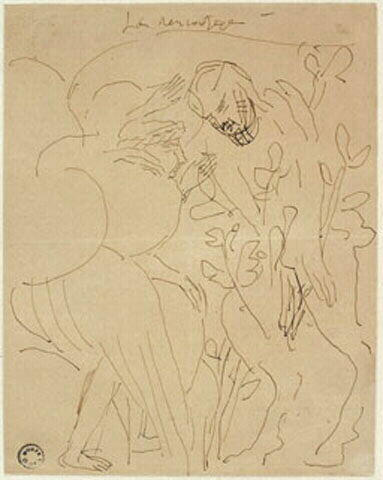
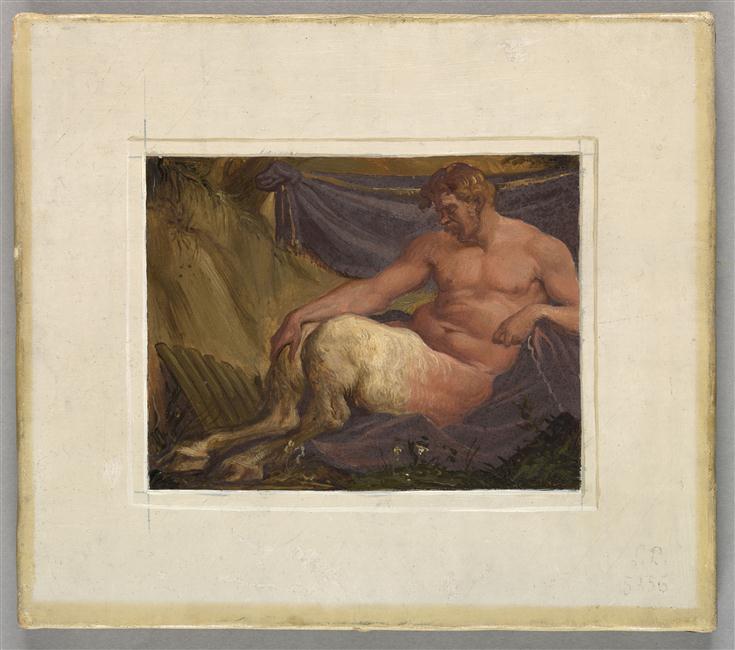
Pan
Si può ammirare?
Non si sa
Parigi, Francia
Il proprietario è noto; non si sa se oggi sia esposta.
- Ultimo cambio di stato
- Fonte
- Il museo
Scheda
- Numero di inventario
- Des. 989
Che cosa raffigura
In catalogo
Fonti
- Museo Gustave Moreau
- Immagine: Museo Gustave Moreau — © R.G. Ojeda ; Réunion des musées nationaux - utilisation soumise à autorisation; Ministère de la Culture (France), base Joconde
Nel frattempo, nella vita di Gustave Moreau
Tutta la vita1846–1849 · Formazione
Beaux-Arts de Paris
1852
Salon debut: the state buys his “Pietà”
In 1852 Moreau took part in the Paris Salon for the first time, presenting a Pietà that the state bought for 600 francs. From the 1850s he exhibited with some regularity and, with his father’s help, secured commissions from the city.
1864
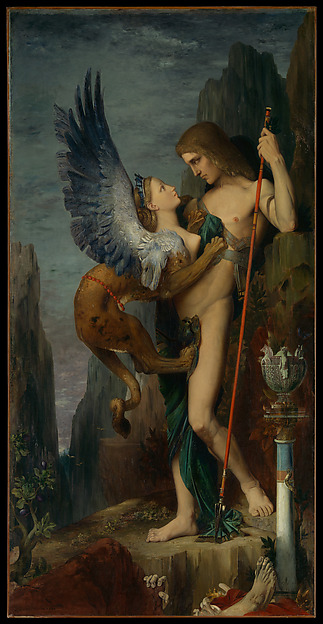
A Salon medal for “Oedipus and the Sphinx”
“Oedipus and the Sphinx”, one of Moreau’s first Symbolist paintings, won a medal at the Paris Salon of 1864 and established his reputation. One commentator likened it to a pastiche of Mantegna created by a German student who relaxes from his painting by reading Schopenhauer.
1876
Return to the Salon: “Salome”
After the break Moreau returned to the Salon. That year he completed “Salome Dancing before Herod”, which announced the more painterly style that would characterize his later works.
1895
Turns his townhouse into a museum
After finishing “Jupiter and Semele” Moreau began his last great project, a museum in his own townhouse, to make his art accessible to all and to ensure it would be preserved for future generations. He sold few works in his lifetime: only three were bought by French museums and none by foreign ones.
18 aprile 1898
Died