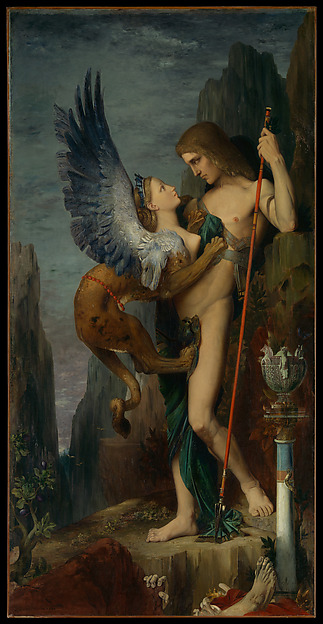
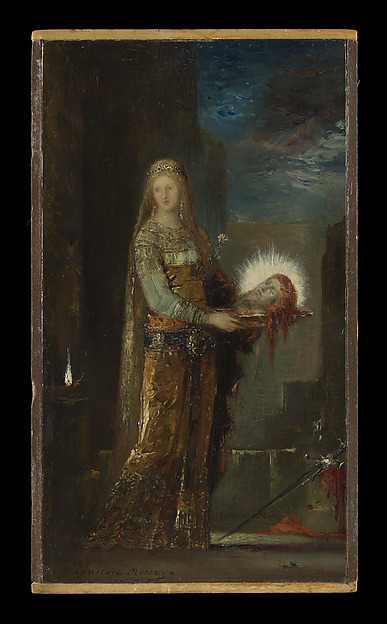
Gustave MoreauFrancia, 1826–1898
The Sirens
Si può ammirare?
Sì, riceve visite

Esposta al pubblico. Chi lo garantisce è indicato qui sotto.
- Verificato
- l’altro ieri
- Ultimo cambio di stato
- 27 set 2026
- Fonte
- I dati di collezione del museo stesso
Scheda
- Numero di inventario
- 1943.392
In catalogo
Fonti
- Harvard Art Museums: the museum's own open data · acquisita 5 giorni fa
- Immagine: Harvard Art Museums — © President and Fellows of Harvard College
Nel frattempo, nella vita di Gustave Moreau
Tutta la vita1859–1888 · Luogo di lavoro
Paris
1880
His last exhibition: “Helen” and “Galatea”
In 1880 Moreau took part in an exhibition for the last time, showing “Helen at the Walls of Troy”, in which the woman appears as a depraved creature guilty of war and the death of men, and “Galatea”, whose heroine is an object of desire on which the huge eye of the cyclops in love is vainly fixed.
1881
The Fables watercolours at the Cercle des Aquarellistes
In 1881 all the commissioned works were exhibited together at the Cercle des Aquarellistes in Paris. The critics celebrated the show: Moreau’s work (he completed 25 pieces, more than anyone else) was judged far superior to most of the others, and he alone was commissioned to continue the series.
1881–1898
An increasingly reclusive life
In his later years Moreau withdrew increasingly from society: he did not exhibit at the Salon, refused to exhibit abroad, rarely let visitors into his studio and turned down prestigious offers, including the Les XX exhibition in Brussels (1887) and decorations for the Sorbonne (1891). He was exceptionally erudite, with a personal library of over 1,600 volumes, and lived fairly modestly; Degas described him as a hermit who knows what time the trains leave.
1884
The death of his mother
In 1884 Moreau’s mother died at the age of 82. They had been very close: she lost her hearing in her later years, and Gustave communicated with her by writing notes, often giving his thoughts on the paintings he was working on. Her death threw him into deep despair; for a while he could not spend nights alone in the family house and took refuge in Alexandrine Dureux’s apartment, and the room where his mother died was left unchanged, a shrine he never entered.
1884
Huysmans praises Moreau in “Against Nature”
In his famous novel “Against Nature” (À rebours, 1884) the writer Joris-Karl Huysmans called Moreau a unique artist with neither real predecessors nor possible successors.