ART WIKI32.963 in sala
MappaCollezioneArtistiMuseiMostreRivista
Accedi

ART WIKI

Dove è appeso il capolavoro, e quando si può entrare.

Collezioni: Art Institute of Chicago, Cleveland Museum of Art, Ermitage, Galleria Tret'jakov, Getty Museum, Harvard Art Museums, Hirshhorn Museum and Sculpture Garden, Metropolitan Museum of Art, Minneapolis Institute of Art, Museo del Louvre, Museo Puškin delle belle arti, Museo russo, Museum of Modern Art, National Gallery of Art, National Museum of Asian Art, National Portrait Gallery, Rijksmuseum, Smithsonian American Art Museum, Statens Museum for Kunst, Victoria and Albert Museum, Villa Getty, Whitney Museum of American Art, Catalogo statale del fondo museale russo (274 musei), Europeana (19 musei), Wikidata (6 musei), Paris Musées (12 musei) e Joconde, la banca dati dei musei del Ministero della Cultura francese (495 musei). Le immagini appartengono ai titolari dei diritti.

Sezioni

  • Mappa
  • Ricerca
  • Collezione
  • Capolavori
  • Esposte ora
  • Artisti

Altro

  • Musei e gallerie
  • Mostre
  • Rivista
  • Da dove vengono i dati
  • Privacy e cookie
HomeMappaCatalogo
  1. Collezione/
  2. Cleveland Museum of Art/
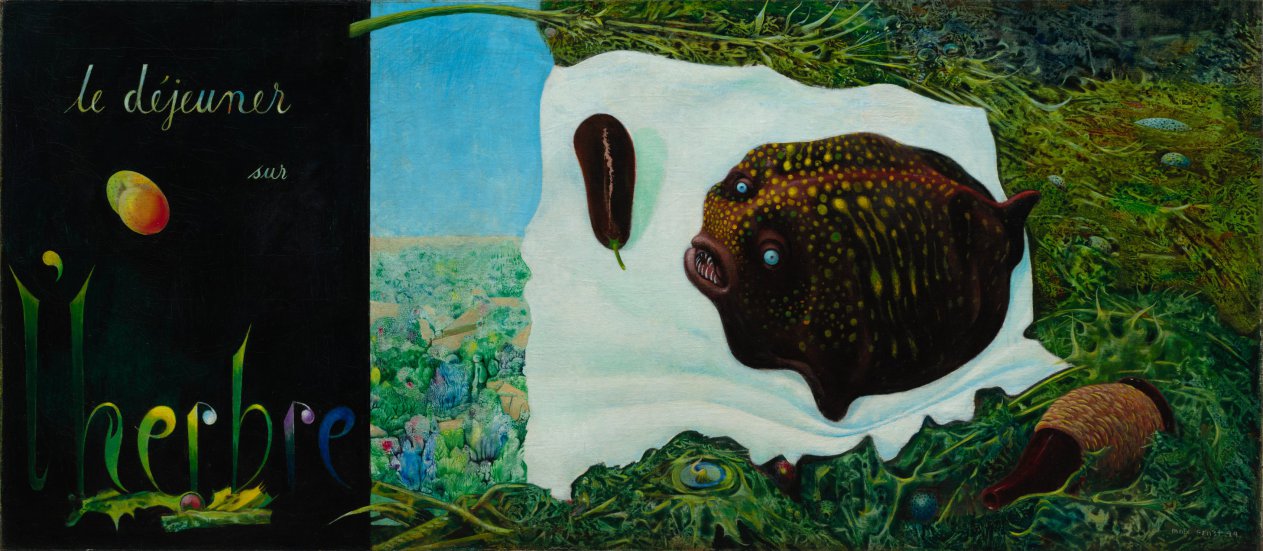
  3. Le Déjeuner sur l'Herbre
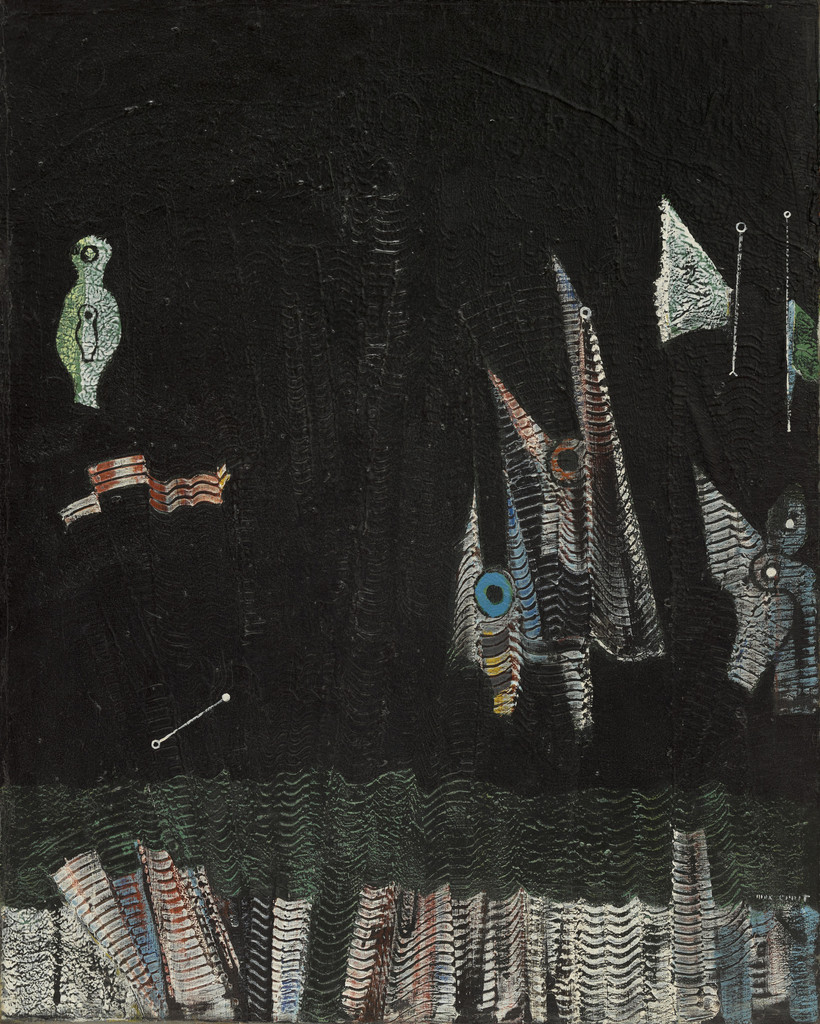
Le Déjeuner sur l'Herbre, Max Ernst, 1944
Max Ernst, ritrattoMax ErnstFrancia, 1891–1976

Le Déjeuner sur l'Herbre

1944 · Painting

Sul dipinto

This painting depicts the remains of a picnic on a cloth and a bottle of wine abandoned on the grass. Painted during World War II while the artist was in exile in the United States, the fish out of water has been seen as a symbol of suffering and the scene itself as a poisoned paradise. At the left Max Ernst painted a chalkboard, similar to daily specials in French restaurants. The text satirically alludes to Édouard Manet’s Le Déjeuner sur l’Herbe (Luncheon on the Grass), 1863, a painting that shocked viewers when first exhibited but later became celebrated as an early example of modern art.

Cleveland Museum of Art

Scheda

1944 · a 53 anni
18911976
Numero di inventario
2002.55

Nel frattempo, nella vita di Max Ernst

Tutta la vita
  1. late 1942

    Dorothea Tanning and “Birthday”

    Selecting pictures for an exhibition of women artists at Peggy’s gallery, Ernst noticed Dorothea Tanning’s Birthday. Julien Levy introduced him to the painter, and a few meetings were enough for him to fall in love.

  2. 1942

    Married: Peggy Guggenheim

  3. October 1942

    “First Papers of Surrealism” and “Art of This Century”

    In October 1942 the exhibition First Papers of Surrealism opened, its catalogue laid out as a list of modern myths in which “interplanetary communication” was credited to Ernst. That month Peggy Guggenheim’s gallery Art of This Century opened on 57th Street, and Ernst drew the cover of its catalogue.

  4. 1946

    Married: Dorothea Tanning

  5. October 1946

    A double wedding in Hollywood with Man Ray

    Ernst and Dorothea Tanning went to Hollywood to marry, asking Man Ray and his friend Juliet Browner to be their witnesses; the two decided to marry as well, and the result was a double ceremony in Beverly Hills.

  6. 1946–1953

    Sedona: a house and “Capricorn” built with his own hands

    Ernst built the house himself, helped by a young admirer and short of money, and made the 2.4-metre Capricorn, a seated bull-man, from empty bottles, springs and cement; the property became known as Capricorn Hill. The couple took an interest in the rites of the local Native American tribes, Ernst buying objects and masks from them, and friends visited only occasionally.
Altre opere di Max Ernst

Tutte le opere

Nella stessa sala · 225 German Expressionism & Surrealism, Cleveland Museum of Art

Pagina del museo

Si può ammirare?

Sì, riceve visite

Cleveland Museum of Art

Cleveland, Stati Uniti

Sala225 German Expressionism & Surrealism

Esposta al pubblico. Chi lo garantisce è indicato qui sotto.

Verificato
3 giorni fa
Ultimo cambio di stato
19 ago 2026
Fonte
Il museo
Sulla mappaPagina del museo

In catalogo

DipintiOlioPittura francesePittura tedescaPittura americanaModernismoXX secoloGermany, 20th century

Fonti

  • Cleveland Museum of Art
  • Immagine: Cleveland Museum of Art — © 1944 Artists Rights Society (ARS), New York/ ADAGP, Paris
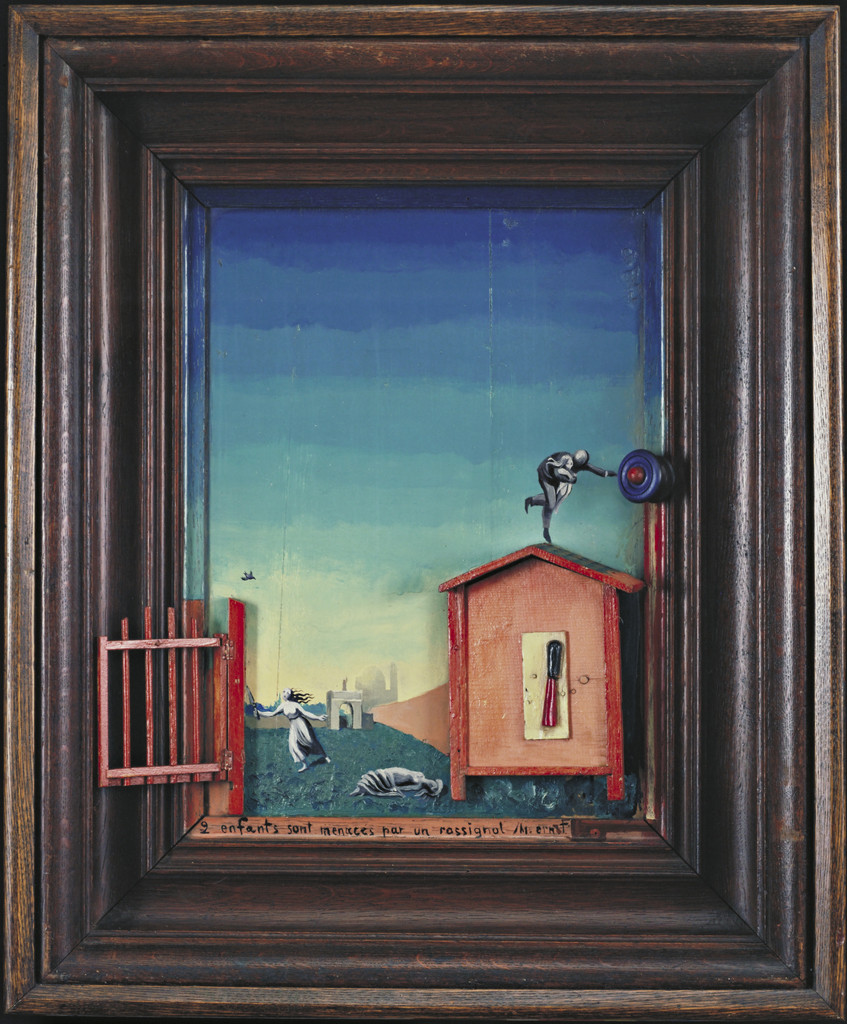
Two Children Are Threatened by a Nightingale (Deux Enfants sont menacés par un rossignol), Max Ernst, 1924

Two Children Are Threatened by a Nightingale (Deux Enfants sont menacés par un rossignol)

1924 · Museum of Modern Art

Birds above the Forest (Oiseaux au-dessus de la forêt), Max Ernst, 1929

Birds above the Forest (Oiseaux au-dessus de la forêt)

1929 · Museum of Modern Art

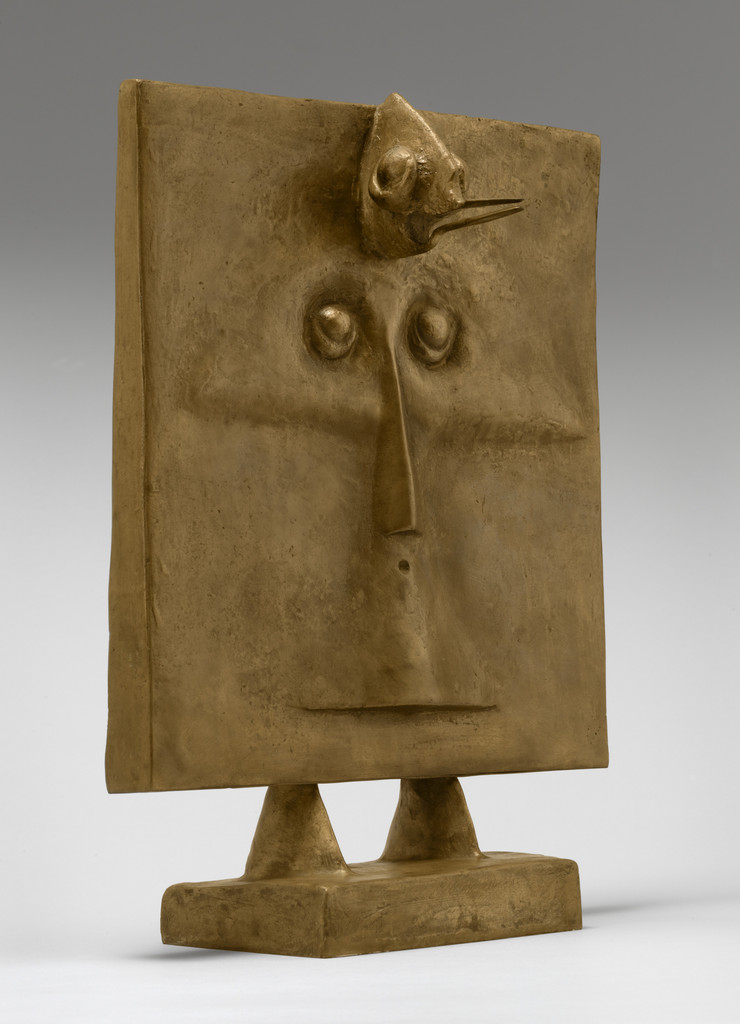
Bird-Head (Oiseau-tête), Max Ernst, 1934-35

Bird-Head (Oiseau-tête)

1934-35 · Museum of Modern Art

A Moment of Calm, Max Ernst, 1939

A Moment of Calm

1939 · National Gallery of Art

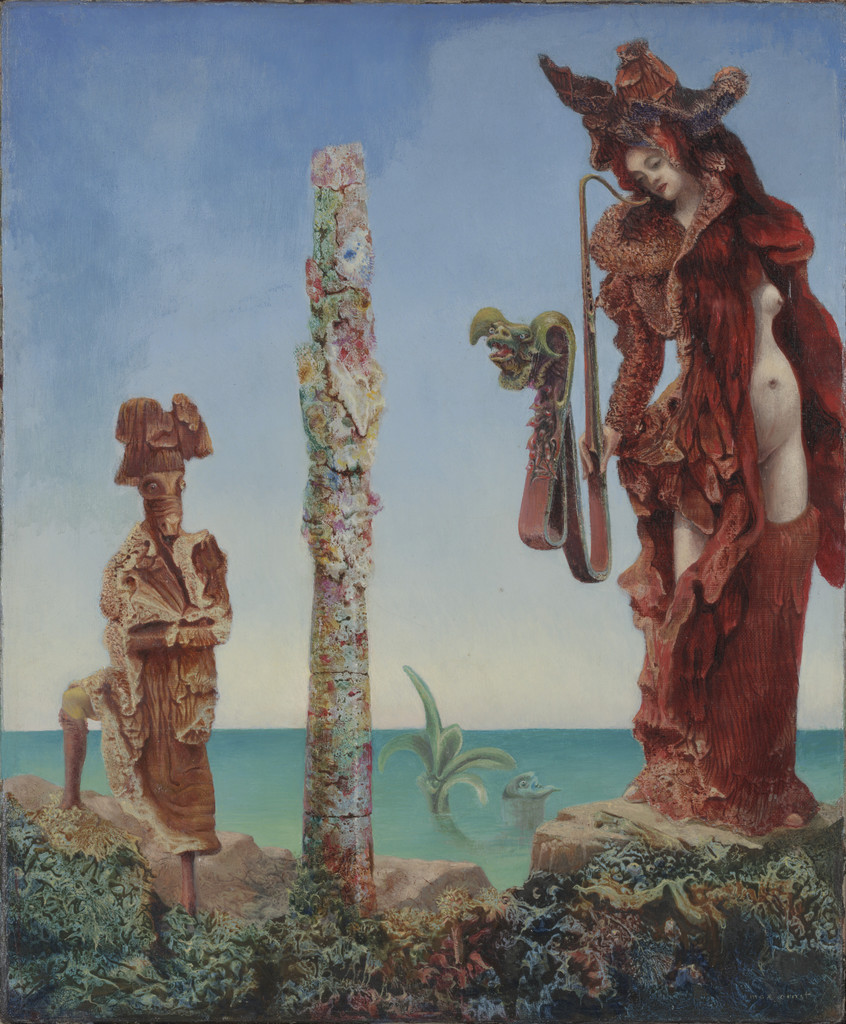
Napoleon in the Wilderness, Max Ernst, 1941

Napoleon in the Wilderness

1941 · Museum of Modern Art

Forest and Sun, Max Ernst, 1927

Forest and Sun

1927 · Art Institute of Chicago

Self-Constructed Little Machine, Max Ernst, 1919/20

Self-Constructed Little Machine

1919/20 · Art Institute of Chicago

The Massacre of the Innocents, Max Ernst, 1920

The Massacre of the Innocents

1920 · Art Institute of Chicago

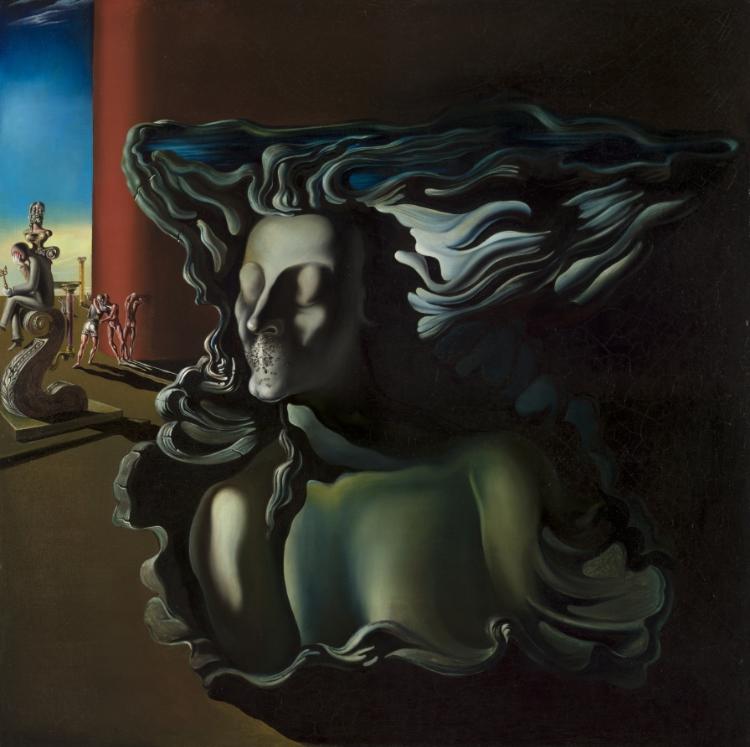
The Dream, Salvador Dalí, 1931

Salvador Dalí

The Dream, 1931

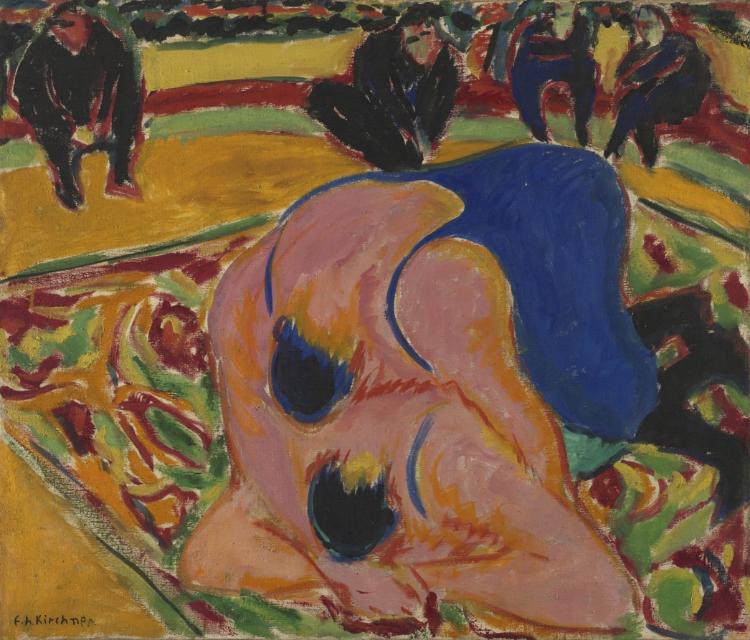
Wrestlers in a Circus, Ernst Ludwig Kirchner, 1909

Ernst Ludwig Kirchner

Wrestlers in a Circus, 1909

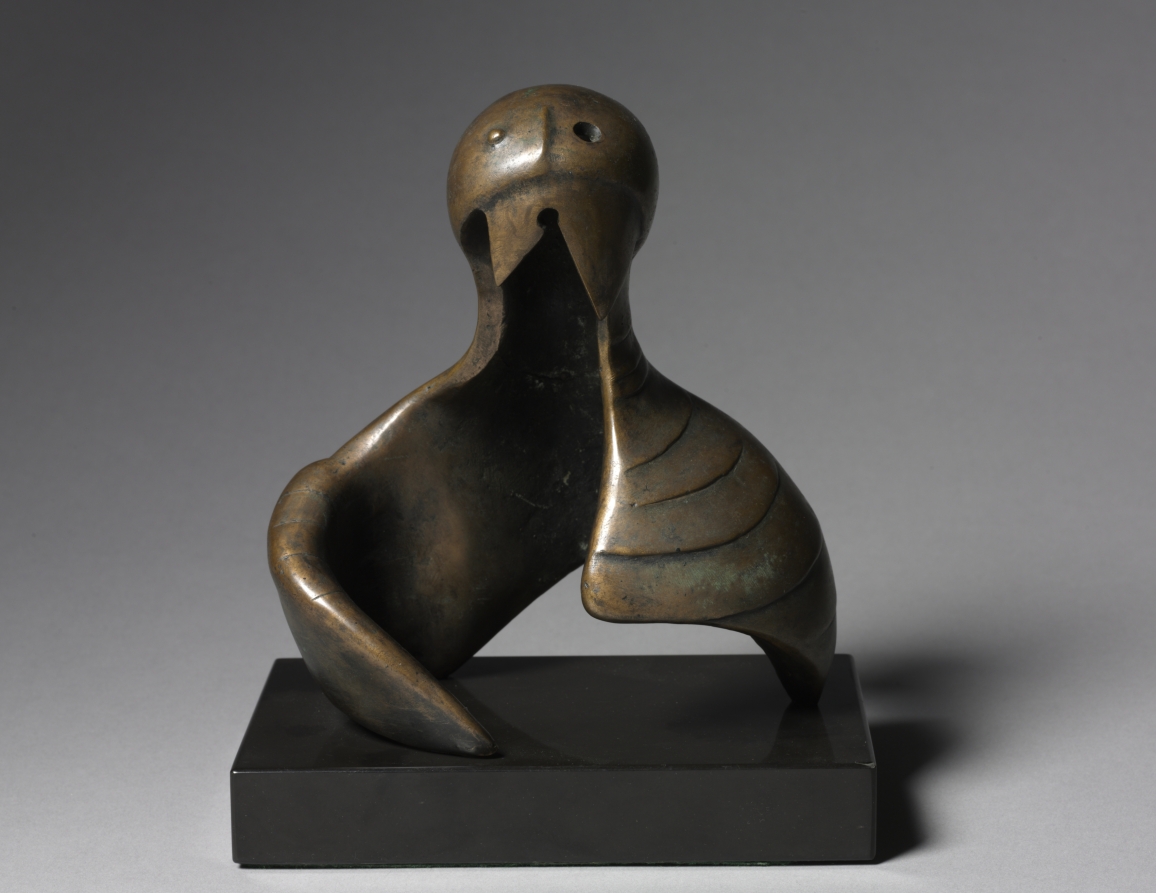
Helmet Head, Henry Moore, 1952

Henry Moore

Helmet Head, 1952

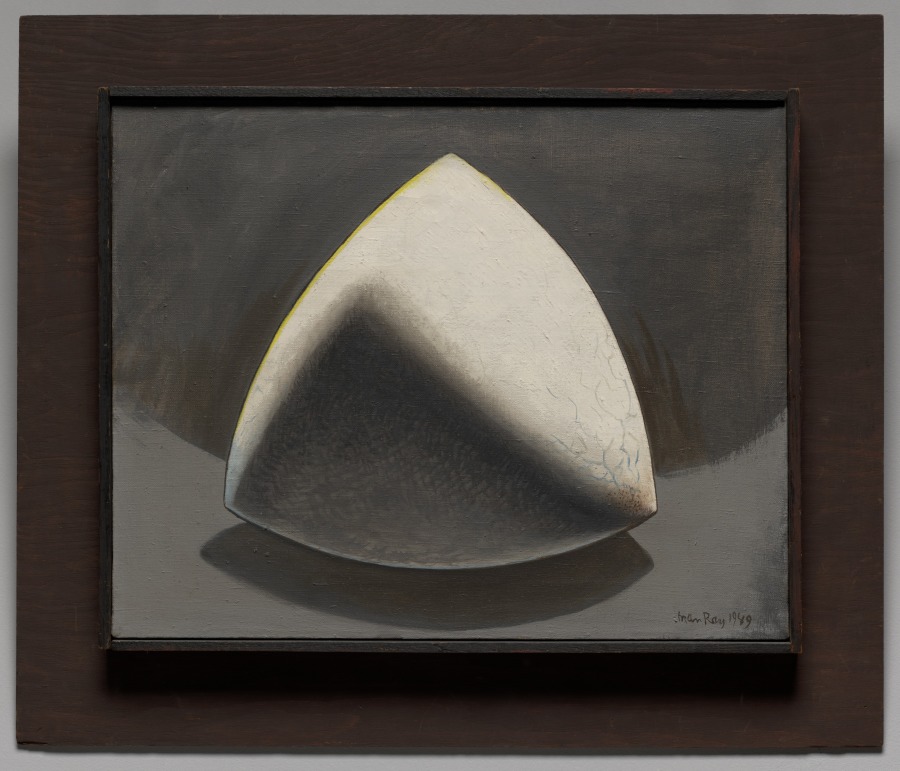
Shakespearean Equation: Hamlet, Man Ray, 1949

Man Ray

Shakespearean Equation: Hamlet, 1949

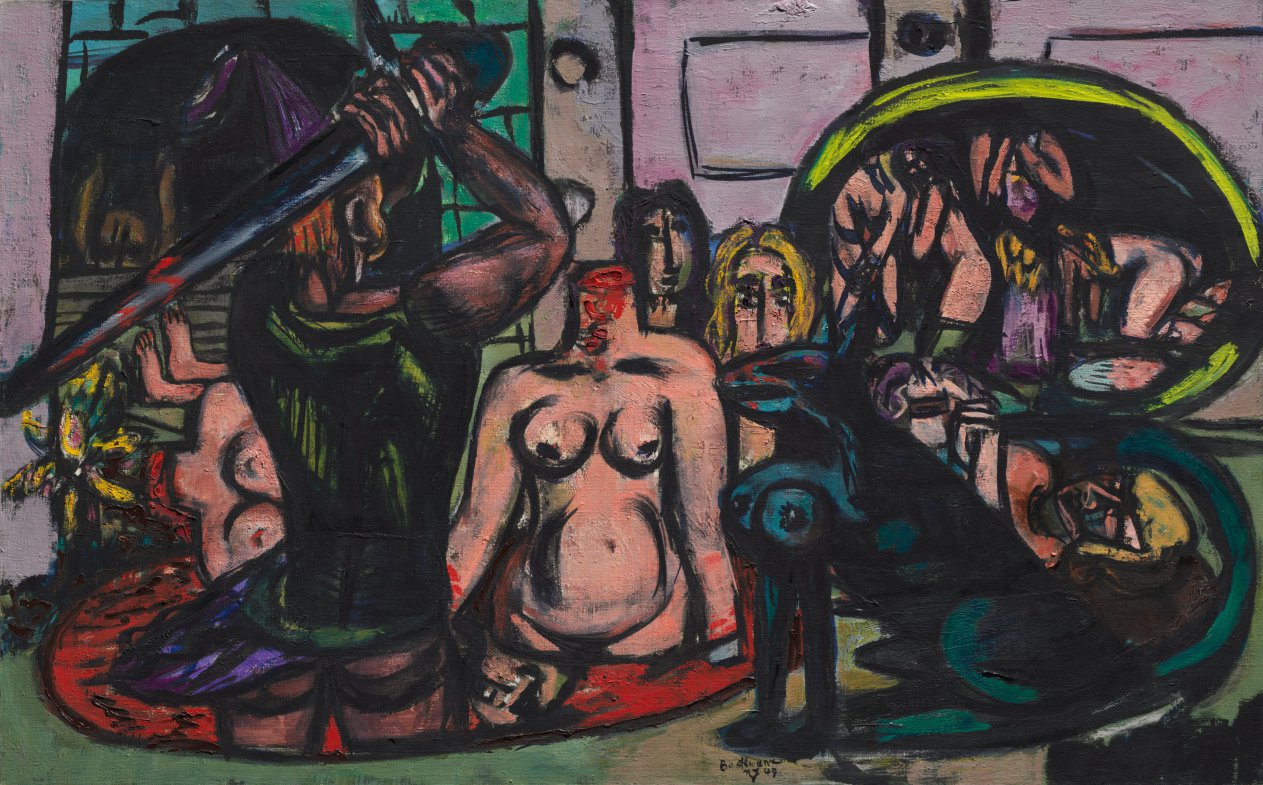
Perseus's Last Duty, Max Beckmann, 1949

Max Beckmann

Perseus's Last Duty, 1949

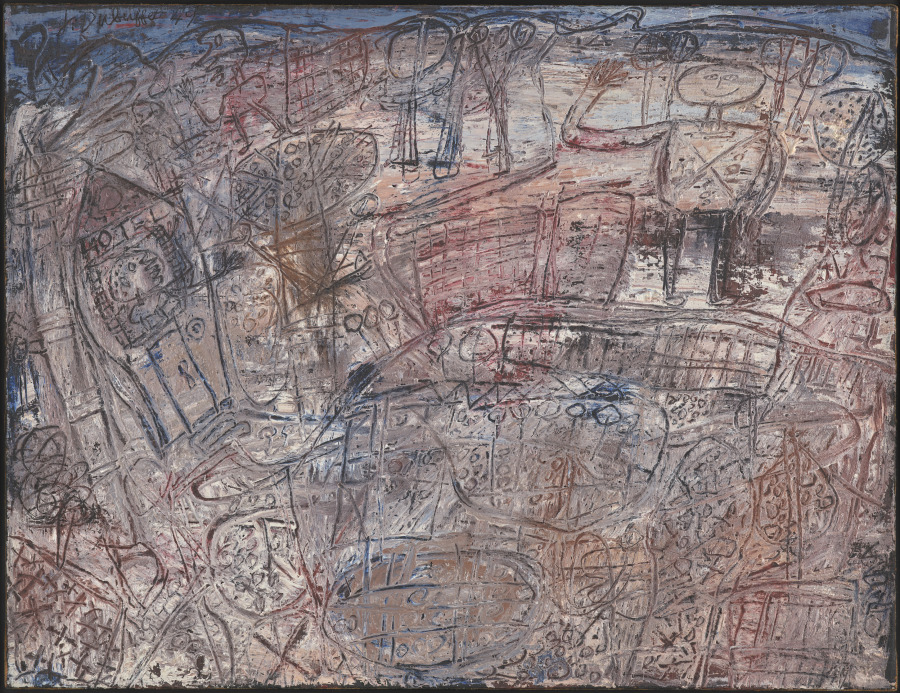
Landscape with a Walker Greeting the Public, Jean Dubuffet, 1949

Jean Dubuffet

Landscape with a Walker Greeting the Public, 1949

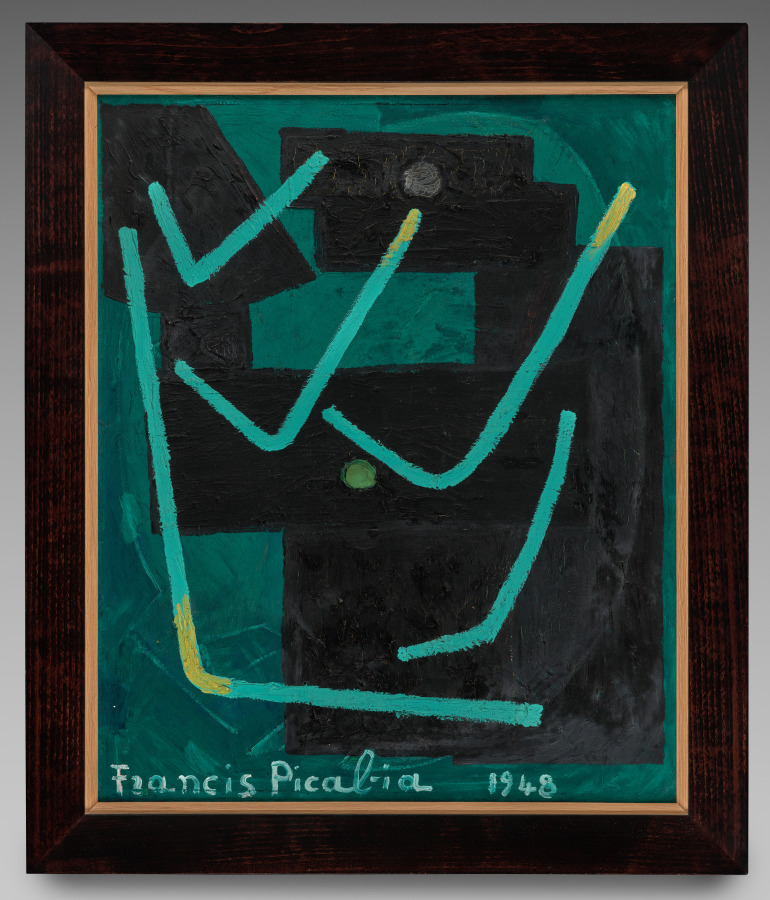
Untitled, Francis Picabia, 1948

Francis Picabia

Untitled, 1948

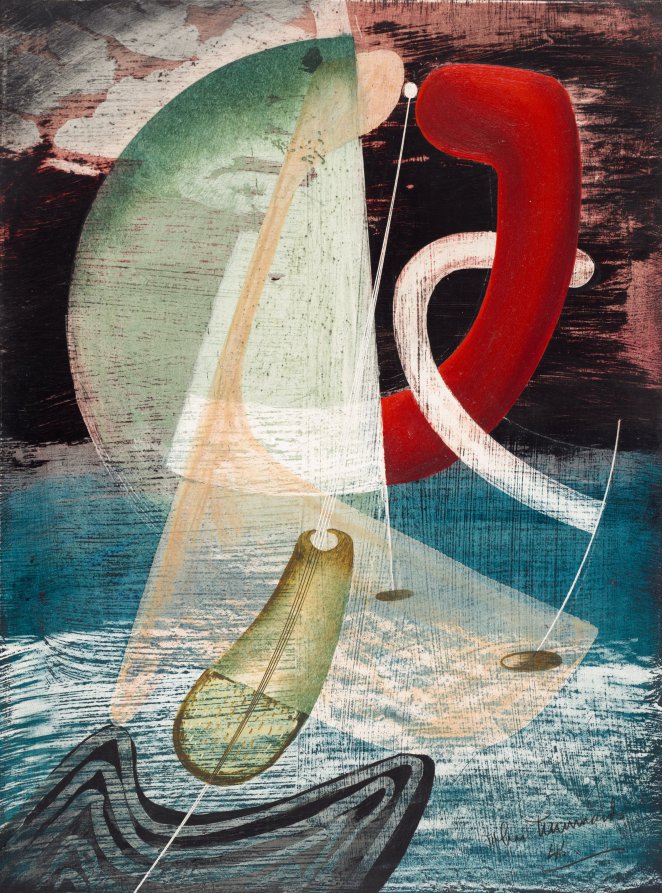
Seascape, John Tunnard, 1945

John Tunnard

Seascape, 1945