Diego VelázquezSpagna, 1599–1660
Kitchen Scene
Si può ammirare?
Sì, riceve visite

Art Institute of Chicago
Sala211Chicago, Stati Uniti
Esposta al pubblico. Chi lo garantisce è indicato qui sotto.
- Verificato
- Ultimo cambio di stato
- Fonte
- I dati di collezione del museo stesso
About the painting
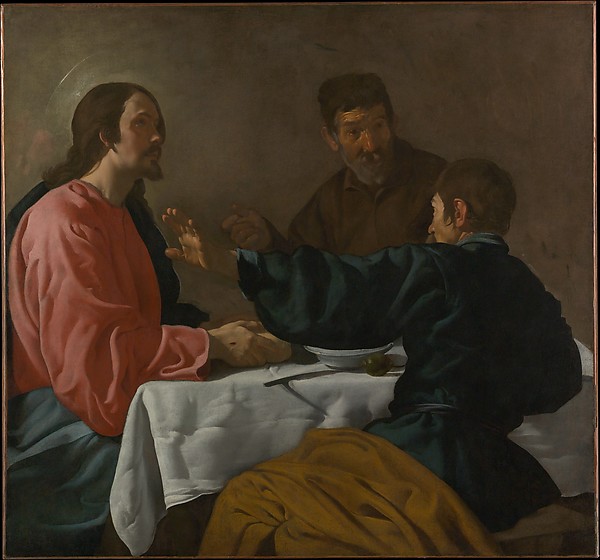
Una domestica (in lingua spagnola La cocinera o Escena de cocina (Scena in cucina)) è un dipinto di Diego Velázquez del periodo di Siviglia. Si tratta di una rivisitazione di Una domestica per la cena in Emmaus. L'anno in cui è stato eseguito il dipinto non è certo, ma viene indicato tra il 1620 il 1622. Il dipinto è esposto al Art Institute of Chicago mentre la seconda versione si trova alla Galleria nazionale d'Irlanda a Dublino.
In the museum's words
In this modest kitchen scene, a type known as a bodegón (from the Spanish for pantry), Diego Velázquez depicted a young African woman at work, surrounded by exquisitely rendered pots, jugs, a mortar and pestle, and a crumpled paper wrapper for spices. Slavery was widespread in the young artist’s hometown of Seville: Velázquez, his father, and his teacher, Francisco Pacheco, were all enslavers. In creating this painting, Velázquez may have used an enslaved woman from one of these households as a model.
Art Institute of ChicagoCC BY 4.0
Scheda
- Numero di inventario
- 1935.380
What it shows
In catalogo
Andirivieni
Esposta · Sala 211
Art Institute of Chicago · 28 set 2026 — oggi · Verificato
Esposta · Sala 212
Art Institute of Chicago · 19 ago 2026 — 28 set 2026 · Verificato
Fonti
- Art Institute of Chicago: the museum's own open data · acquisita 6 giorni fa
- Immagine: Art Institute of Chicago — CC0
Nel frattempo, nella vita di Diego Velázquez
Tutta la vita1611–1617
Friendship with Alonso Cano and Francisco de Zurbarán
In the school of Pacheco — a man of broad culture and censor of religious painting for the Inquisition in Seville — Velázquez befriended the future sculptor and painter Alonso Cano and Francisco de Zurbarán.
1611–1622 · Luogo di lavoro
Seville
14 March 1617
Qualifies as a master painter
Velázquez passed his examination and, with Pacheco's backing, was admitted to the painters' guild of Seville, with the right “to practise his art in the kingdom, keep a workshop and hire apprentices”.
23 April 1618
Marries Juana, his teacher's daughter
The nineteen-year-old Velázquez married Pacheco's fifteen-year-old daughter Juana. Such marriages between painters' families were common, as they eased the search for work and commissions.
23 aprile 1618
Married: Juana Pacheco
1619–1621
Births of his daughters Francisca and Ignacia
His elder daughter Francisca was born in 1619, and Ignacia in 1621; Ignacia died in infancy.