 Charles DemuthStati Uniti, 1883–1935
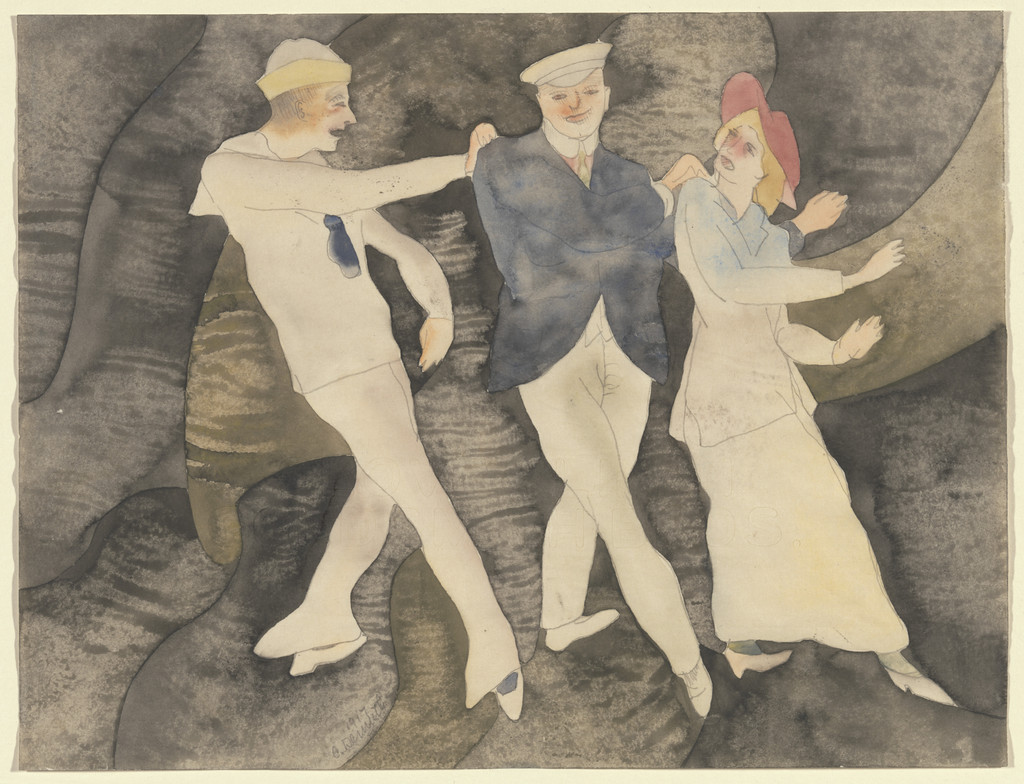
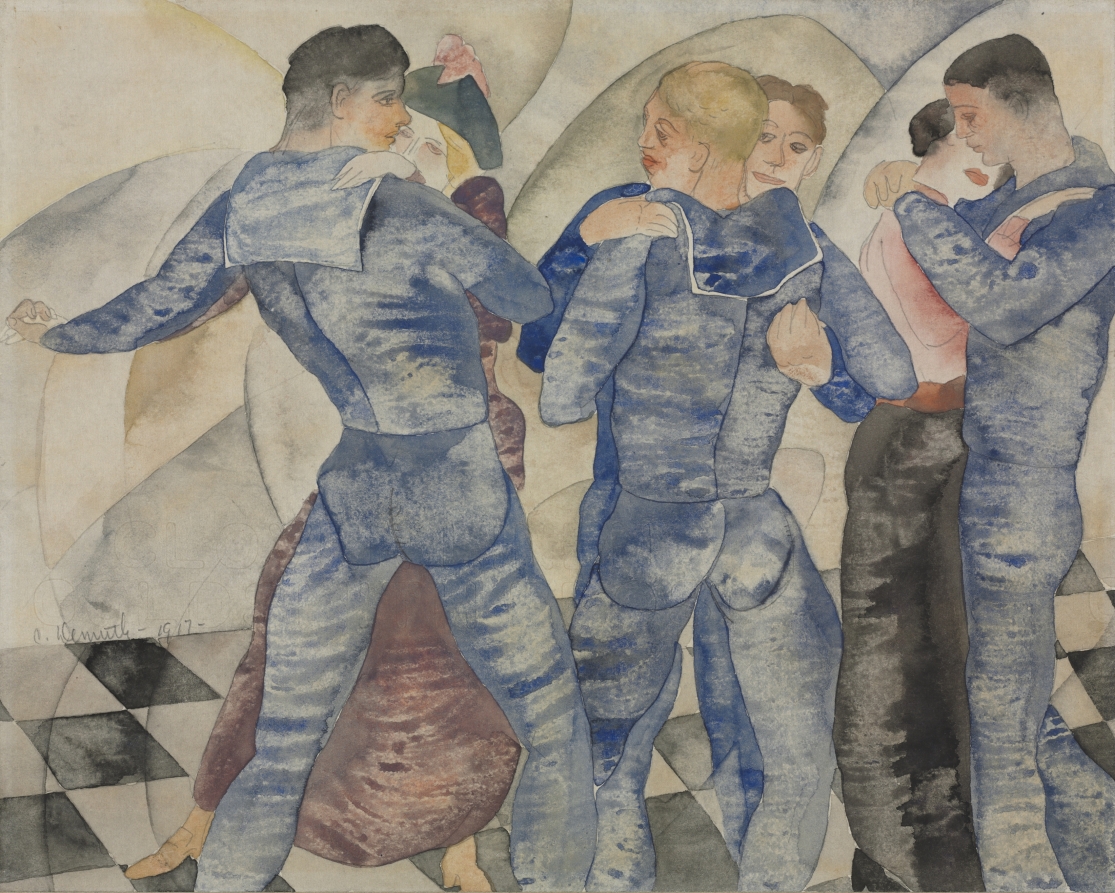
Dancing Sailors
Si può vedere?
Non esposta al momento
Dove si trova «Dancing Sailors» oggi? Collezione: Cleveland Museum of Art, Cleveland. Non esposta al momento. Verificato 23 novembre 2026.

Cleveland, Stati Uniti
Appartiene alla collezione, ma al momento non è esposta.
- Verificato
- Ultimo cambio di stato
- Fonte
- Il museo
Sull’opera
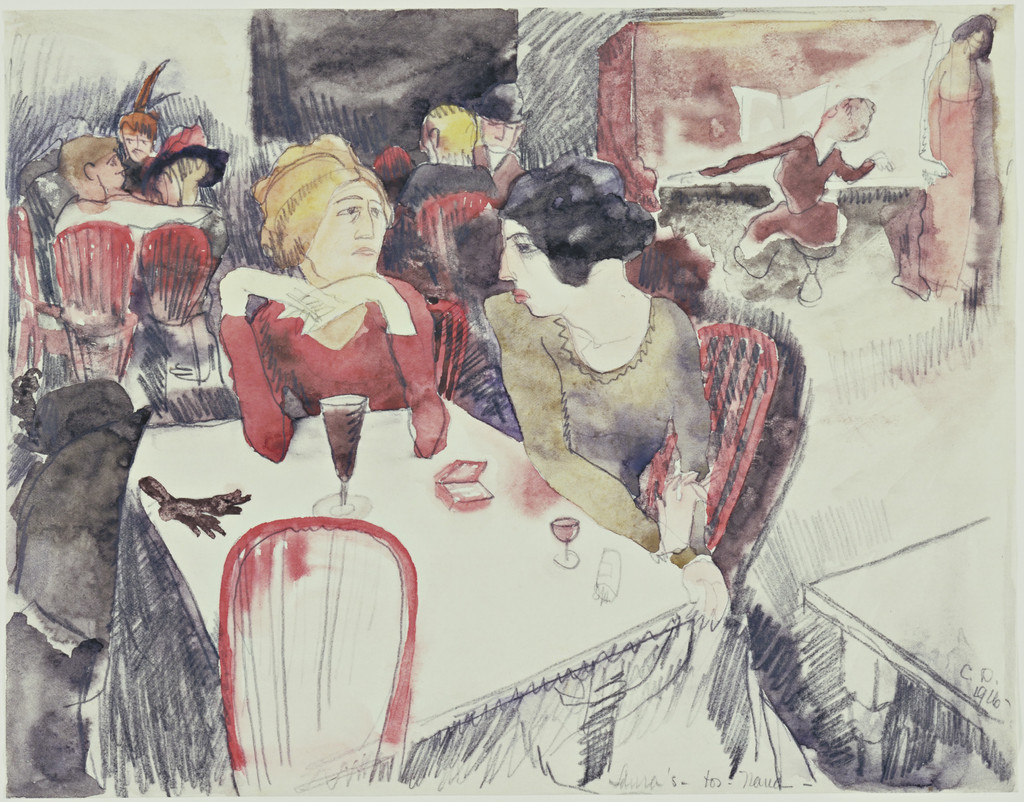
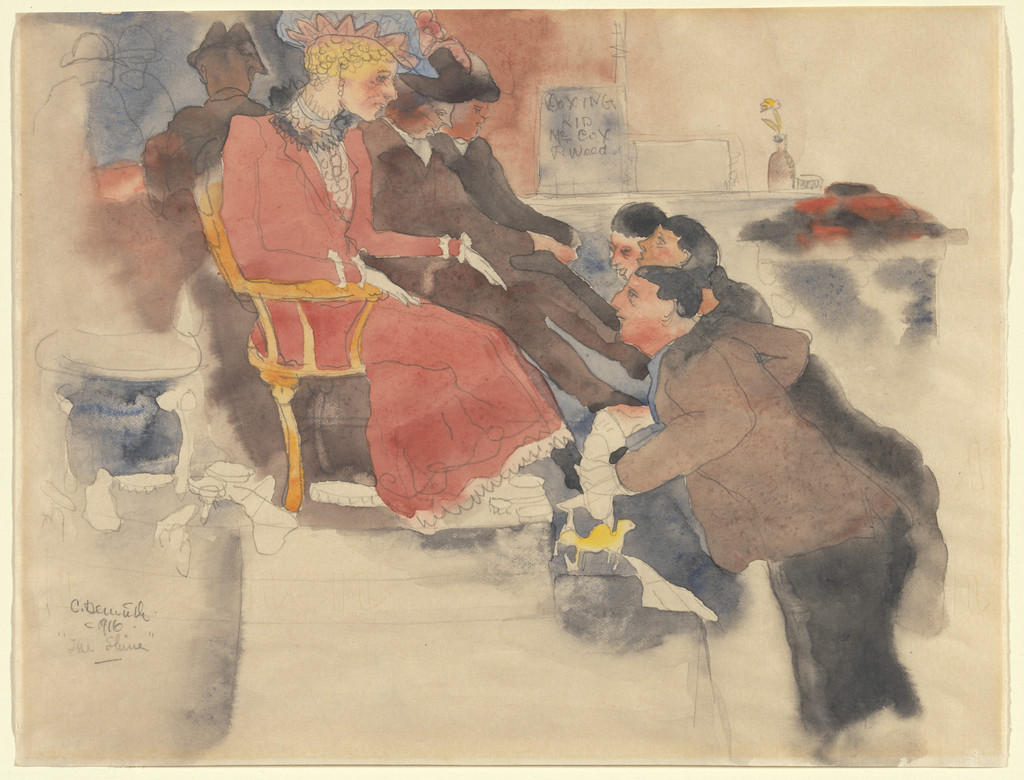
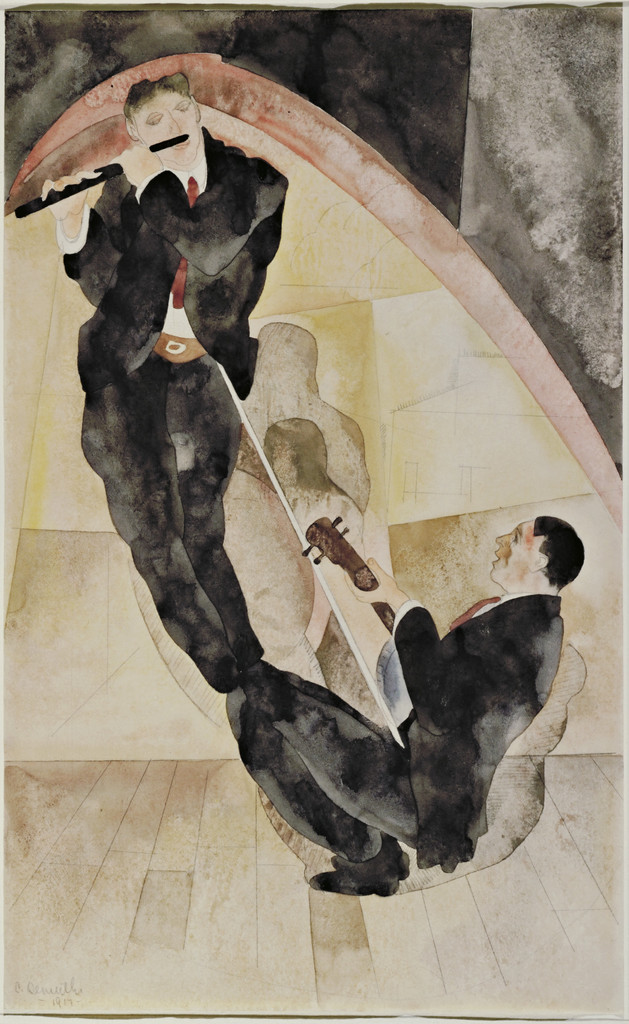
Charles Demuth drew Dancing Sailors in 1917 from his experience of Greenwich Village nightlife; the watercolour is at the Cleveland Museum of Art, Cleveland. Three couples dance, including two sailors partnered together while the others dance with women. Demuth made a nearly identical version now in New York's Museum of Modern Art. Textured washes blur the boundary between bodies and background. He kept these and other homoerotic watercolours private during his career, almost never exhibiting them publicly. Nightclubs and performers supplied many of his subjects at this time.
Con le parole del museo
This drawing was inspired by Charles Demuth's participation in the nightlife of New York's Greenwich Village during the early 20th century. Around this time, the artist made numerous watercolors of nightclubs, performers, and bathhouses. Demuth created two almost identical compositions (the other is in the collection of the Museum of Modern Art, New York), which both show groups of three couples, with two sailors dancing together while others dance with women. Demuth kept these and other homoerotic watercolors private throughout his career, and almost never showed them publicly. The sheet's planes of textured watercolor blur figure and background, presenting a subtle but pointedly erotic scene.
Cleveland Museum of Art
Scheda
- Numero di inventario
- 1980.9
In catalogo
Fonti
- Cleveland Museum of Art
- Immagine: Cleveland Museum of Art — Museum open access
Nella vita di Charles Demuth
Tutta la vita1907–1921
Encounters modernism on trips to Europe
On trips to Europe between 1907 and 1921 he is introduced to modernism; in Paris he studies at the Académie Colarossi and the Académie Julian and joins the avant-garde scene, where his homosexuality is accepted. Before that he had studied in Philadelphia, at the Pennsylvania Academy of the Fine Arts under Thomas Anshutz, where he befriended the future poet William Carlos Williams — the two remained close for life.
1907–1921
Meets Hartley, and through him Stieglitz
In Paris he walks up to a table of American artists and asks to join them, and so meets Marsden Hartley; his humour, rich in double entendres, makes him a regular member of their group. Through Hartley he meets Alfred Stieglitz and joins the Stieglitz group; he is also a regular guest at Gertrude Stein’s salon.
c. 1915
Helps shape Precisionism
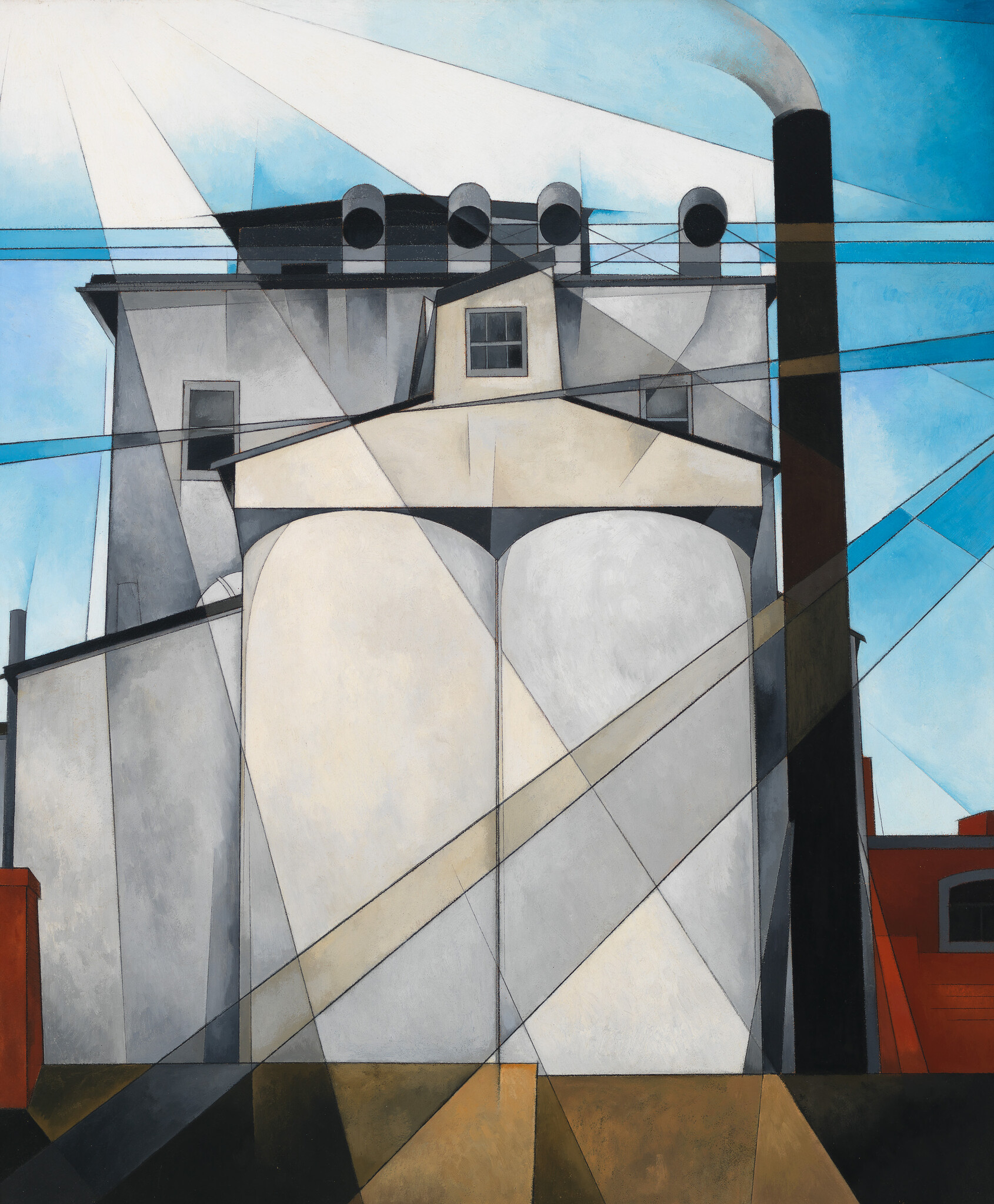
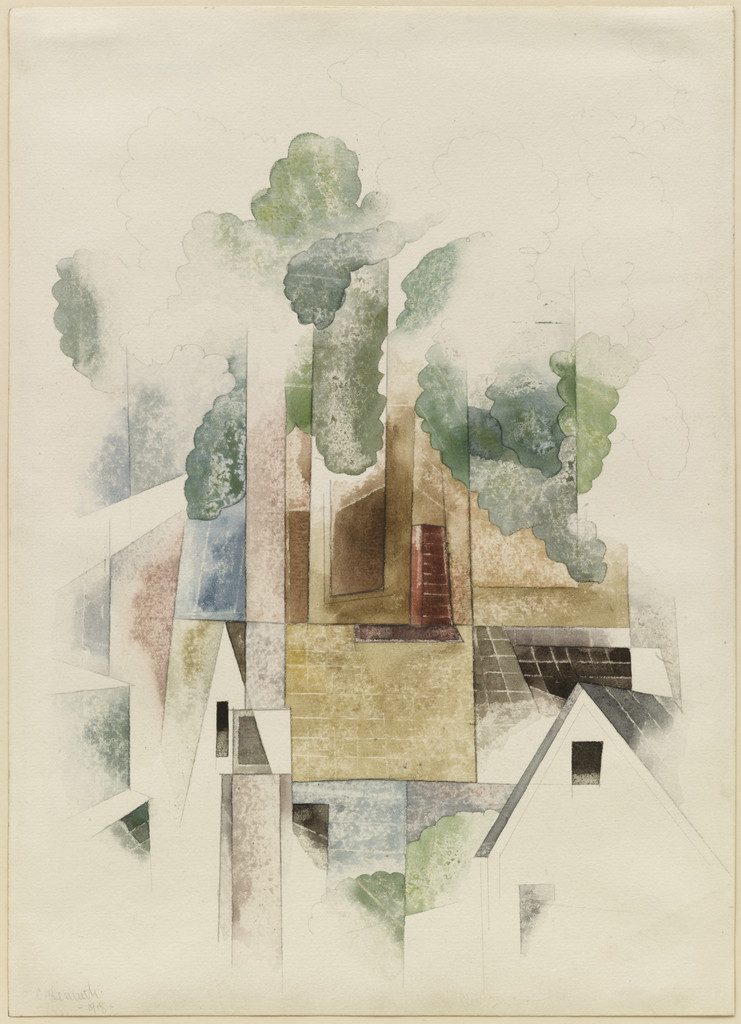
Around 1915 Precisionism begins to evolve in America, and Demuth, with Georgia O’Keeffe and Charles Sheeler, becomes one of its major contributors. His works typically show sharply defined, quasi-Cubist forms and urban and rural scenes with bridges, smokestacks and skyscrapers.