Édouard ManetFrancia, 1832–1883
Berthe Morisot
Si può ammirare?
Al momento non riceve

Art Institute of Chicago
Chicago, Stati Uniti
Appartiene alla collezione, ma al momento non è esposta.
- Verificato
- Ultimo cambio di stato
- Fonte
- Il museo
Scheda
- Numero di inventario
- 1970.148
In catalogo
Fonti
- Art Institute of Chicago
- Immagine: Art Institute of Chicago — CC0
Nel frattempo, nella vita di Édouard Manet
Tutta la vita1870
The siege of Paris: Manet in the army
During the siege of Paris Manet, a convinced republican, sent his family to Oloron-Sainte-Marie in the south of France, while he himself, with many fellow artists, joined the army and took part in the defence of the capital; he was lucky to survive.
1870s
Refuses to exhibit with the Impressionists
Although his own work influenced and anticipated the Impressionist style, Manet resisted involvement in Impressionist exhibitions: he did not wish to be seen as the representative of a group identity and held that modern artists should seek to exhibit at the Salon.
1871
Manet's name on the Commune's Fédération des artistes
In his absence his friends added his name to the Paris Commune's “Fédération des artistes”; he himself stayed out of politics and perhaps returned to the city only after the “bloody week” — in a letter to Berthe Morisot of 10 June he writes that they had come back a few days earlier.
1871
Oloron and Bordeaux: letters to Bracquemond
In January 1871 Manet travelled to Oloron-Sainte-Marie in the Pyrenees and then visited Bordeaux, the provisional seat of the National Assembly, where Émile Zola showed him the sights. On 18 March he wrote to Félix Bracquemond that he had never imagined France could be represented by such doddering old fools.
1873
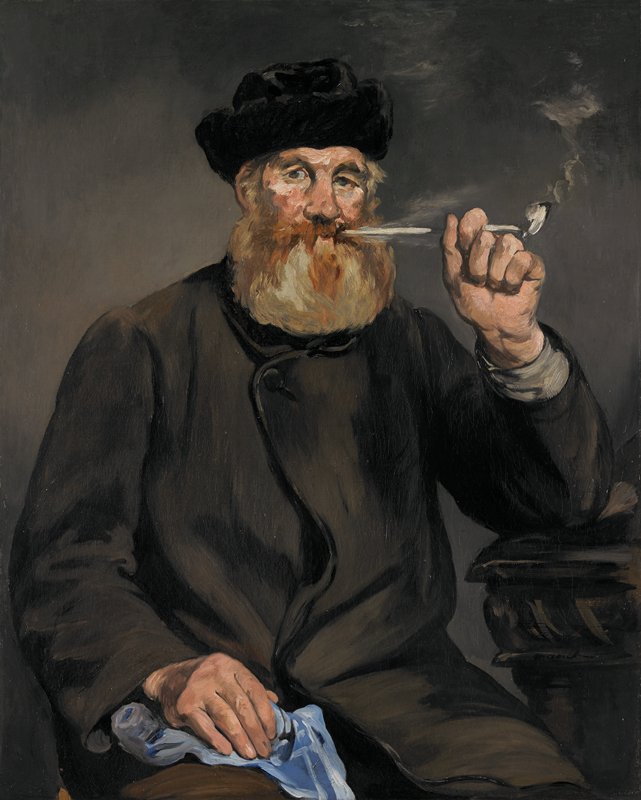
“Le Bon Bock”: a huge success
In his new studio in 1873 Manet painted “Le Bon Bock”, which became famous: for the first time in almost fifteen years he had a huge success, yet he did not turn into a fashionable, opportunistic painter.
1874
“The Railway”: ridicule at the Salon of 1874
“The Railway”, painted in 1873, puzzled visitors and critics at the Salon of 1874: its subject seemed baffling, its composition incoherent and its execution sketchy; caricaturists ridiculed it, and only later was it recognised as a symbol of modernity. The model was Victorine Meurent, for the last time.