 Édouard ManetFrancia, 1832–1883
Ragazzo con spada
Boy with a Sword
Si può ammirare?
Sì, riceve visite

Metropolitan Museum of Art
Sala810New York, Stati Uniti
Esposta al pubblico. Chi lo garantisce è indicato qui sotto.
- Verificato
- Ultimo cambio di stato
- Fonte
- I dati di collezione del museo stesso
About the painting
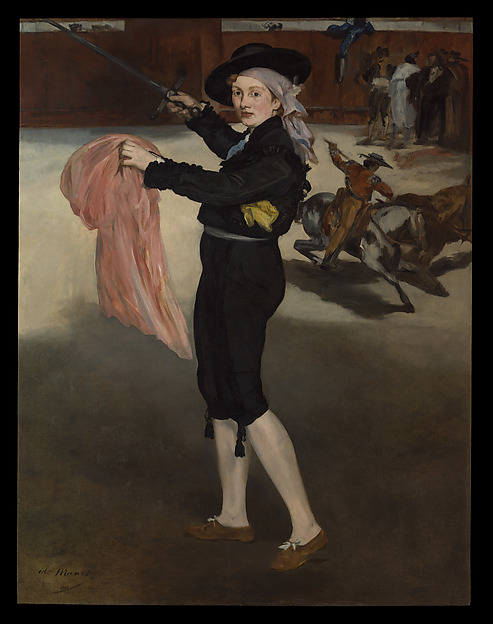
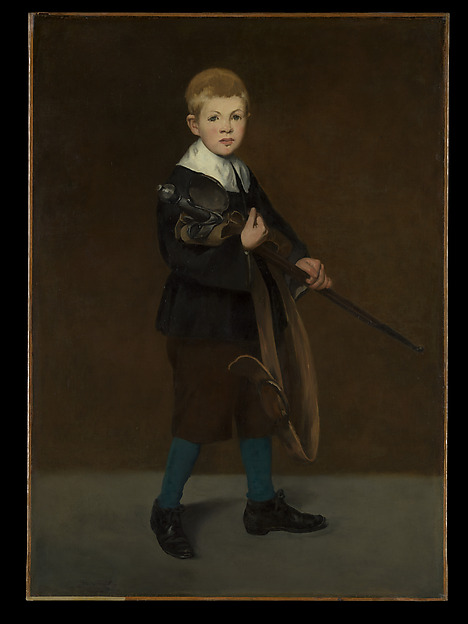
Ragazzo con spada (L'Enfant à l'épée) è un dipinto a olio su tela realizzato nel 1861 dal pittore impressionista francese Édouard Manet. La tela è conservata nel Metropolitan Museum of Art di New York.
Il dipinto è stato realizzato nell'atelier di rue Goyot. Rappresenta il probabile figlio naturale dell'artista, Léon Leenhoff, vestito come un paggio della corte di Spagna del XVII secolo. Léon non fu mai riconosciuto ufficialmente da suo padre. La spada, troppo pesante per il ragazzo potrebbe simboleggiare sia il padre assente sia il pesante segreto da nascondere. La posa dell'effigiato è inconsueta in quanto è dinamica, in atto di muoversi verso destra. Si nota un evidente pentimento nell'esecuzione del piede sinistro, con l'intento di ridurne la dimensione.
Read on
Tipica del periodo spagnoleggiante di Manet, la tela mostra la notevole influenza che esercitavano su di lui le opere di Diego Velázquez e di Frans Hals.
Scheda
- Numero di inventario
- 89.21.2
What it shows
In catalogo
Fonti
- Metropolitan Museum of Art: the museum's own open data · acquisita 7 giorni fa
- Immagine: Metropolitan Museum of Art — Open Access (CC0)
Nel frattempo, nella vita di Édouard Manet
Tutta la vita1859
“The Absinthe Drinker” rejected; a final break with Couture
In 1859 Manet decided that his education was complete and submitted “The Absinthe Drinker” to the Salon; Couture reacted negatively and Manet finally broke with his teacher. The Salon jury rejected the painting: only Delacroix voted for it, while Couture voted against.
1861
His first participation in the Salon
In 1861 the Salon accepted two canvases by Manet: “Portrait of Monsieur and Madame Manet” and “The Spanish Singer”. Critics received the portrait coldly, while “The Spanish Singer” was admired by Théophile Gautier and, because of its popularity, hung in a more conspicuous place; the work intrigued young artists and brought new business to his studio.
1862
“Music in the Tuileries”: the fury of the public
In 1862 Manet exhibited “Music in the Tuileries” (probably painted in 1860), where the strollers include the poet Baudelaire, the musician Offenbach and the artist himself. It mostly provoked fury: the thick brushstrokes looked crude and unfinished, several visitors threatened to destroy the canvas; Delacroix defended it, and the controversy made Manet a well-known name in Paris.
1863
“The Luncheon on the Grass” at the Salon des Refusés
The Salon of 1863 rejected “The Luncheon on the Grass” (originally “Le Bain”), and Manet exhibited it at the Salon des Refusés, a parallel exhibition initiated by Napoleon III after a public outcry, the jury having accepted only 2,217 of more than 5,000 submissions. The juxtaposition of dressed men and a nude woman and the sketch-like handling caused a scandal; one critic compared the brushwork to a “floor mop”.
1863
Marries Suzanne Leenhoff
In 1863, a year after his father's death, Manet married Suzanne Leenhoff at a Protestant church: a Dutch-born piano teacher two years his senior with whom he had been romantically involved for about ten years. Auguste Manet had employed her to teach his sons the piano, and she may also have been Auguste's mistress.
1863
Married: Suzanne Manet