
Germania · 1933–2012
Horst Faas
Horst Faas: dove vedere le opere. Opere nel nostro catalogo: 11; collezioni: 3. Nessuna risulta esposta oggi.
- 11in catalogo
- 0esposte ora
- 3collezioni
- 1paese
Domande
- Quale museo ha più opere di Horst Faas?
- Art Institute of Chicago ne ha di più nel nostro catalogo: 5 opere.
- Quante opere di Horst Faas sono nelle collezioni dei musei?
- Opere nel nostro catalogo: 11. Collezioni museali: 3. Paesi: 1.
- Quando visse Horst Faas?
- Anno di nascita: 1933. Anno di morte: 2012. Nazionalità: Germania.

Title from caption on object: “Body of a Child...”
1964 · Non esposta · National Gallery of Art

Title from caption on object: “Friendship”
1967 · Non esposta · National Gallery of Art

Along the Open Road to the DMZ: a military convoy heads along Route One toward the demilitarized zone in South Vietnam from Hue. Route One, the main south-north line of communication between Saigon and the DMZ, is open and passable. During the day, traffic is considered secure between Phan Rang and the DMZ. The only area where Viet Cong roadblocks must be expected is about 60-90 miles northeast of Saigon
1969 · Non esposta · Art Institute of Chicago

"Aftermath of Vietcong Massacre"
1969 · Non esposta · Museum of Modern Art

Meo Hamlet: view of typical Meo Hamlet, at Ban Xon, 65 miles North of Vientiane in Laos. The Hamlet is located on a hilltop in the Central Laotian mountain and its inhabitants have fled further South every year. All able-bodied men and women carry weapons, provided by the Americans. They are prepared to defend against local enemy, but would abandon the village in event of massive attack. A trench surrounds the village which has a communal bunker in the center
1971 · Non esposta · Art Institute of Chicago

Country of Contrasts: this square in Teheran, with tree-lined boulevards and highrise buildings exemplifies modern Iran. Although two-thirds of Iran is still rural, a rapid modernization has been taking place over the past two decades
1971 · Non esposta · Art Institute of Chicago
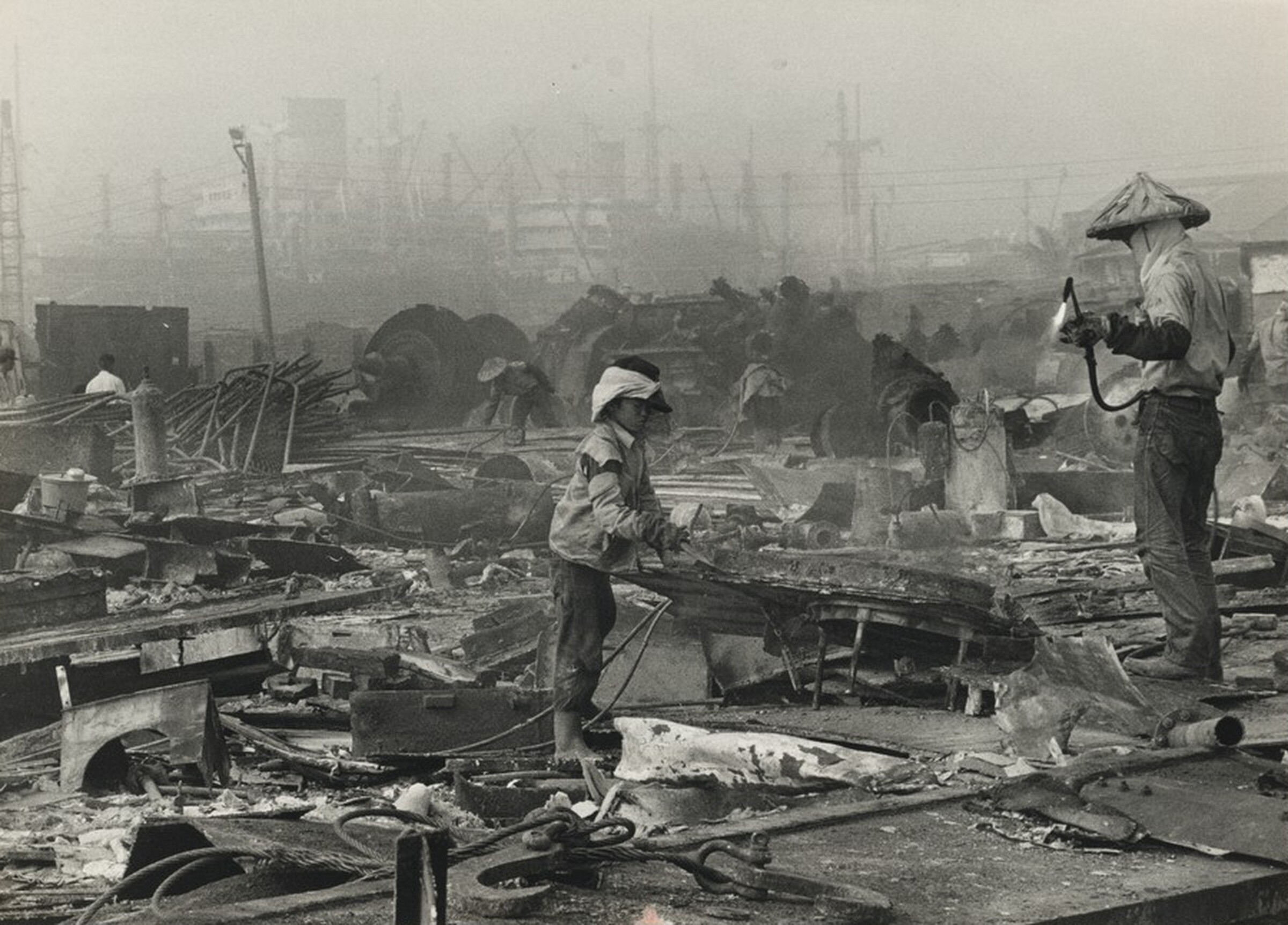
Title from caption on object: “The Shipbreakers”
1972 · Non esposta · National Gallery of Art

Resort Town: unusual forms are prefab bungalows, part of a resort community built by Israel at a beach near Sharm el Sheik
1973 · Non esposta · Art Institute of Chicago

Title from caption on object: “New and Old Heavyweight Champion Muhammad Ali...”
1974 · Non esposta · National Gallery of Art

Title from caption on object: “Candid Closeup of a Profusely Sweating Muhammad Ali...”
1974 · Non esposta · National Gallery of Art

Hallowed Ground: variously shaped stones mark tombs in the Jewish burial ground of the Kidron Valley, to the southwest Jerusalem. The Jewish tradition has it that the Last Judgment will take place here. In the background, the silvery dome of Al-Aqsa Mosque is visible over the wall surrounding the Haram Sharif, or Noble Sanctuary, a holy site of Islam, in East Jerusalem
1980 · Non esposta · Art Institute of Chicago