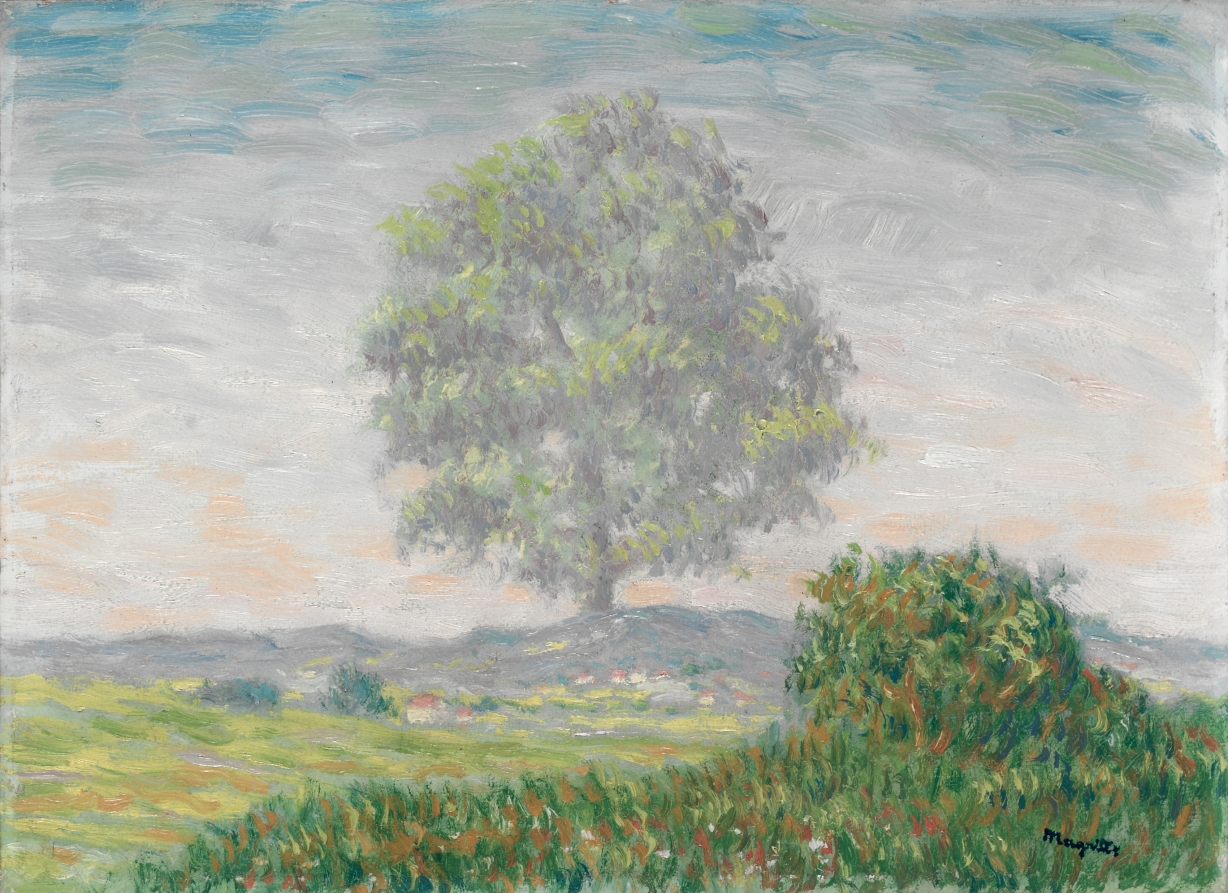
 René MagritteBelgique, 1898–1967
World Tour
Peut-on la contempler ?
Elle ne reçoit pas en ce moment

Cleveland, États-Unis
Elle appartient à la collection, mais n’est pas présentée en ce moment.
- Vérifié
- Dans cet état depuis
- Source
- Le musée
Notice
- Numéro d’inventaire
- 1992.299
Au catalogue
Sources
- Cleveland Museum of Art
- Image : Cleveland Museum of Art — © C. Herscovici / Artists Rights Society (ARS), New York
Pendant ce temps, chez René Magritte
La vie entière1930–1954 · Résidence
René Magritte House
after 1945
Real commercial success arrives
By Magritte’s own account, real commercial success came only after 1945, and from then on he did not worry about money; in an interview in 1962 he declared that he would rather stop selling and live in poverty than become a businessman.
1945
Joins the Party a third time; writes an “Explanation”
In 1945 — according to Georgette, out of gratitude to the Russians — he joined the Communist Party again and the same year wrote a confidential “Explanation” to communist intellectuals. He feared that art would be reduced to propaganda for Marxism through easily understood styles and subjects, and equated such an approach with the methods of Nazi propaganda.
1946
The manifesto “Surrealism in Full Sunlight”
Renouncing the violence and pessimism of his earlier work, he signed, with several other Belgian artists, the manifesto “Surrealism in Full Sunlight”.
1947–1948
Fake Picassos and forged banknotes
During the lean postwar years Magritte supported himself by producing fake Picassos, Braques and de Chiricos, later expanding into the printing of forged banknotes; he did it together with his brother Paul and the Surrealist Marcel Mariën, his “surrogate son”, who was left with the task of selling it all.