 Grosz, GeorgeAllemagne, 1893–1959
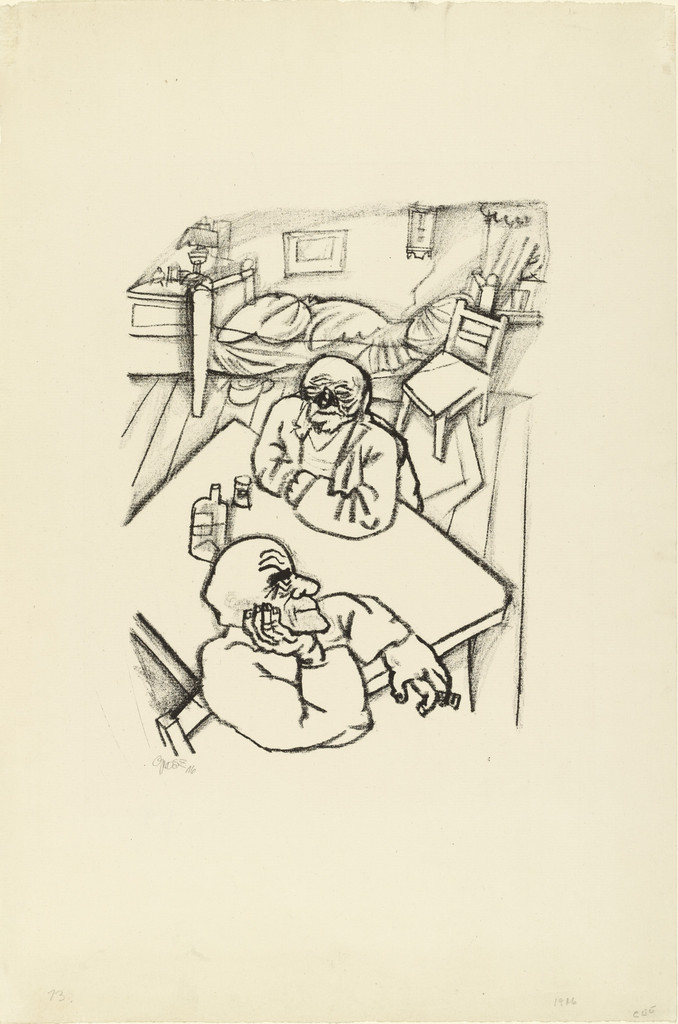
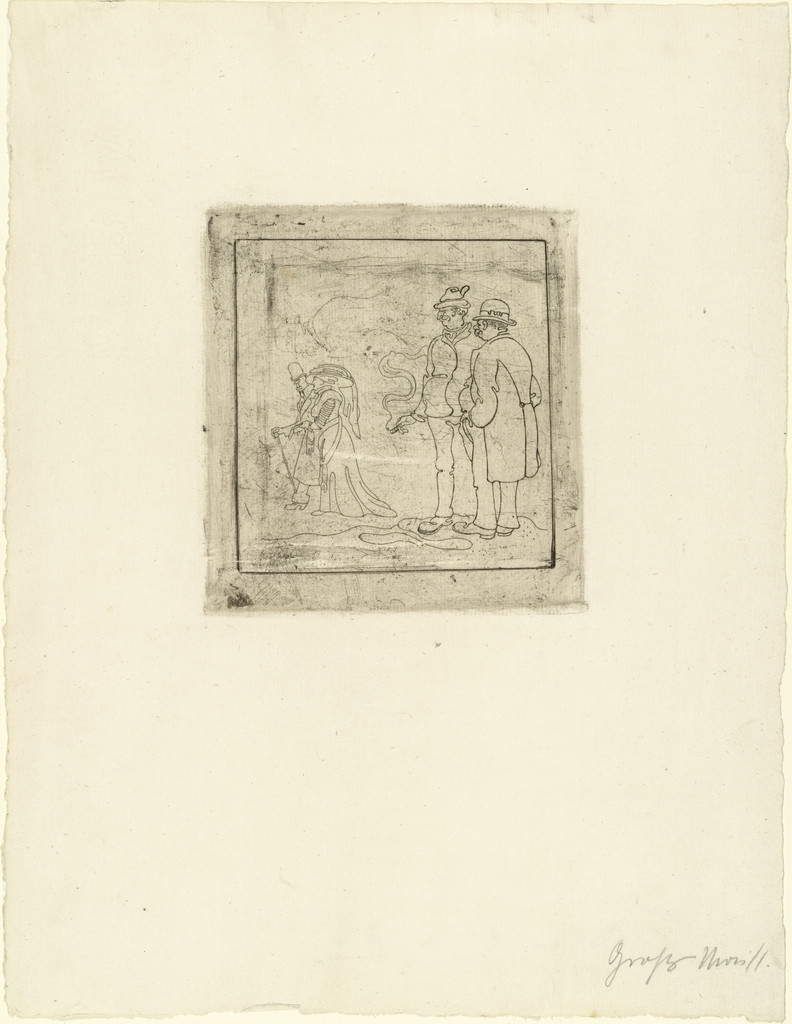
Two Men (Zwei Männer)
Peut-on la voir ?
Pas exposée actuellement
Où est « Two Men (Zwei Männer) » aujourd’hui ? Collection: Museum of Modern Art, New York. Pas exposée actuellement. Vérifié 22 septembre 2026.

New York, États-Unis
Elle appartient à la collection, mais n’est pas présentée en ce moment.
- Vérifié
- Source
- Le musée
Notice
- Numéro d’inventaire
- 648.1966
Au catalogue
Sources
- Museum of Modern Art
- Image : Museum of Modern Art — © the artist or rights holder
Dans la vie de Grosz, George
La vie entière1912–1913
Paris: Daumier and Toulouse-Lautrec
In Paris Grosz becomes acquainted with the newest art and discovers the graphic work of Daumier and Toulouse-Lautrec.
1915–1917 · Résidence
Steglitz
1916
A new name: Georg Groß becomes George Grosz
To 'de-Germanise' and internationalise his name, Grosz changes its spelling: Georg becomes the English 'George' and the German 'ß' in his surname is replaced by 'sz'. It is a protest against German nationalism and a romantic enthusiasm for America, drawn from the books of James Fenimore Cooper, Bret Harte and Karl May; his friend and collaborator Helmut Herzfeld likewise becomes John Heartfield at the same time.
1918
A founder of Berlin Dada
Grosz settles in Berlin and becomes one of the founders of Berlin Dada, using his satirical drawings to attack the bourgeois supporters of the Weimar Republic.
1918–1919
Joining the Spartacist League, later the KPD
Following the November Revolution Grosz joins the Spartacist League, which is renamed the Communist Party of Germany in December 1918.
1918–1921 · Résidence
Wilmersdorf
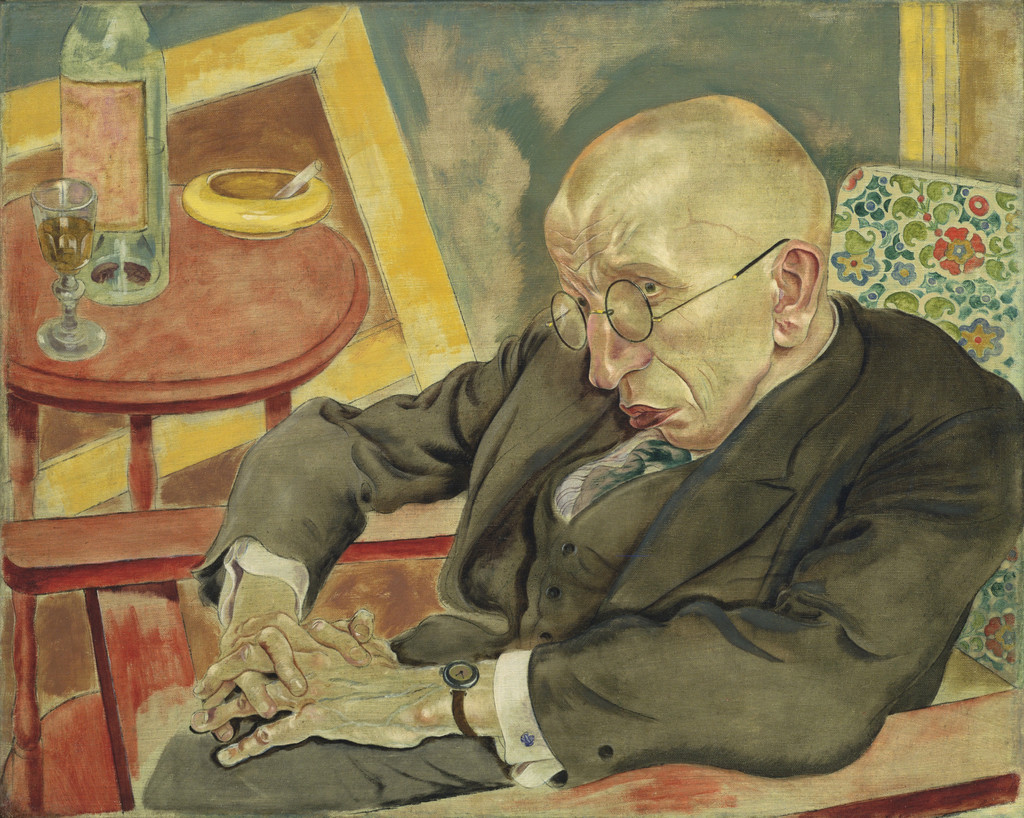


![The End of the Road (Out of Fear of Starvation) [Das Ende des Weges (Aus Nahrungssorgen)], George Grosz, 1913](https://www.moma.org/media/W1siZiIsIjEyMTkwNyJdLFsicCIsImNvbnZlcnQiLCItcmVzaXplIDEwMjR4MTAyNFx1MDAzZSJdXQ.jpg?sha=864379f3ce59af36)