.jpg?width=96) Vincent van GoghPays-Bas, 1853–1890
Vincent van GoghPays-Bas, 1853–1890La Nuit étoilée
The Starry Night
Peut-on la contempler ?
Oui, elle reçoit

Présentée au public.
- Vérifié
- Source
- Le musée
À propos du tableau
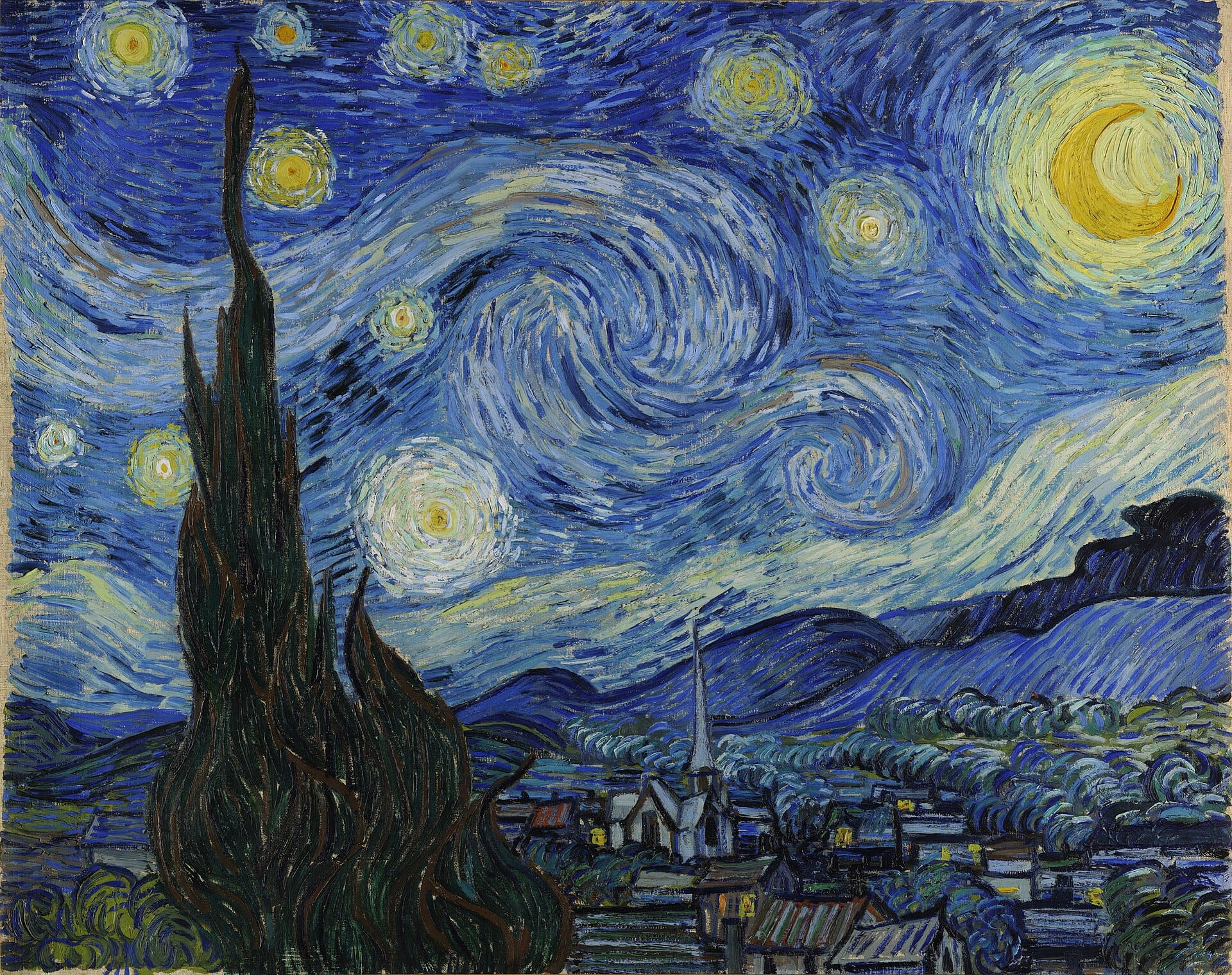
La Nuit étoilée (en néerlandais De sterrennacht) est une peinture de l'artiste peintre postimpressionniste néerlandais Vincent van Gogh.
Le tableau représente ce que Van Gogh pouvait voir et extrapoler de la chambre qu'il occupait dans l'asile du monastère Saint-Paul-de-Mausole à Saint-Rémy-de-Provence en mai 1889. Souvent présenté comme son grand œuvre, le tableau a été reproduit à de très nombreuses reprises. Il est maintenant conservé dans le Museum of Modern Art (MoMA) à New York depuis 1941.
Notice
- Numéro d’inventaire
- 472.1941
Au catalogue
Sources
- Les recherches d’ART WIKI
- Museum of Modern Art
- Image : Wikimedia Commons — Public domain (PD-Art)
Pendant ce temps, chez Vincent van Gogh
La vie entière1888
To Arles, dreaming of a “Studio of the South”
The public still neither accepted nor bought his paintings, and in February 1888 Van Gogh left for Arles in the south of France to found a “Studio of the South”, a brotherhood of like-minded artists in which he gave Gauguin the leading role. Theo backed the plan with money.
23 October 1888
Gauguin arrives in Arles
After much pleading Gauguin arrived in Arles, and in November the two painted together: Gauguin portrayed Van Gogh in “The Painter of Sunflowers”, and their first joint outing was to the Alyscamps. At Gauguin's suggestion Vincent painted from memory, producing “Memory of the Garden at Etten”.
23 December 1888
The severed ear
After an altercation on the evening of 23 December, Van Gogh, seemingly hearing voices, severed his left ear, wholly or in part, with a razor and delivered it, wrapped in paper, to a woman at a brothel. Next morning a policeman found him unconscious; in hospital he was diagnosed with “acute mania with generalised delirium”.
1889
Voluntarily into the Saint-Paul asylum
Van Gogh left Arles and voluntarily entered the Saint-Paul-de-Mausole asylum, a former monastery in Saint-Rémy-de-Provence, accompanied by the Protestant clergyman Frédéric Salles. Of his two cells with barred windows one became a studio, and the clinic and its garden became the main subjects of his paintings.
27 July 1890
A fatal wound: a revolver shot
Out painting, Van Gogh shot himself in the chest with a revolver he had bought to scare off birds while working outdoors; the bullet passed below his heart, and he made his own way back to his room at the inn. Theo arrived the next day and stayed with him to the end; according to Theo, Vincent's last words were: “The sadness will last forever.”
29 juillet 1890
Died