 Auguste RodinFrance, 1840–1917
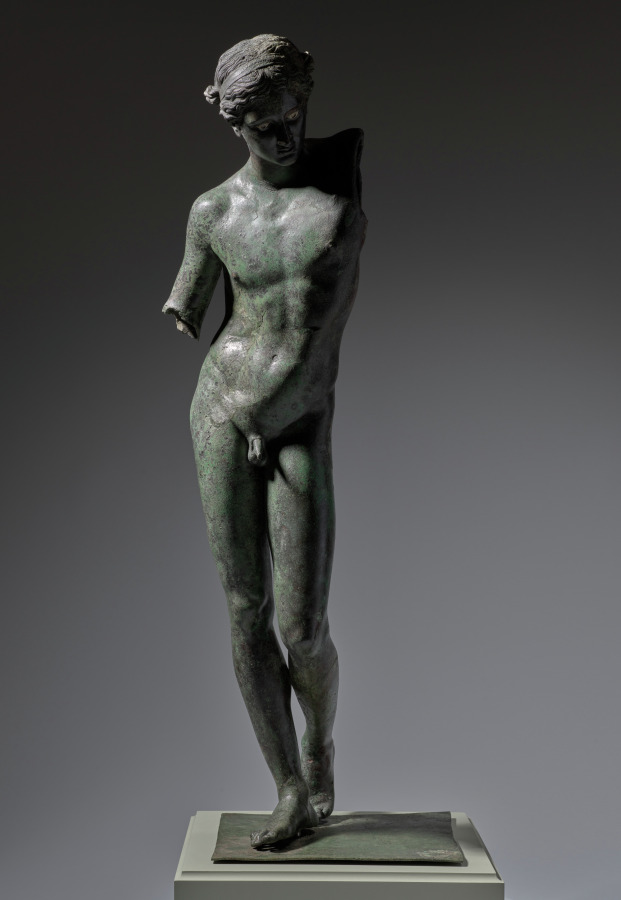
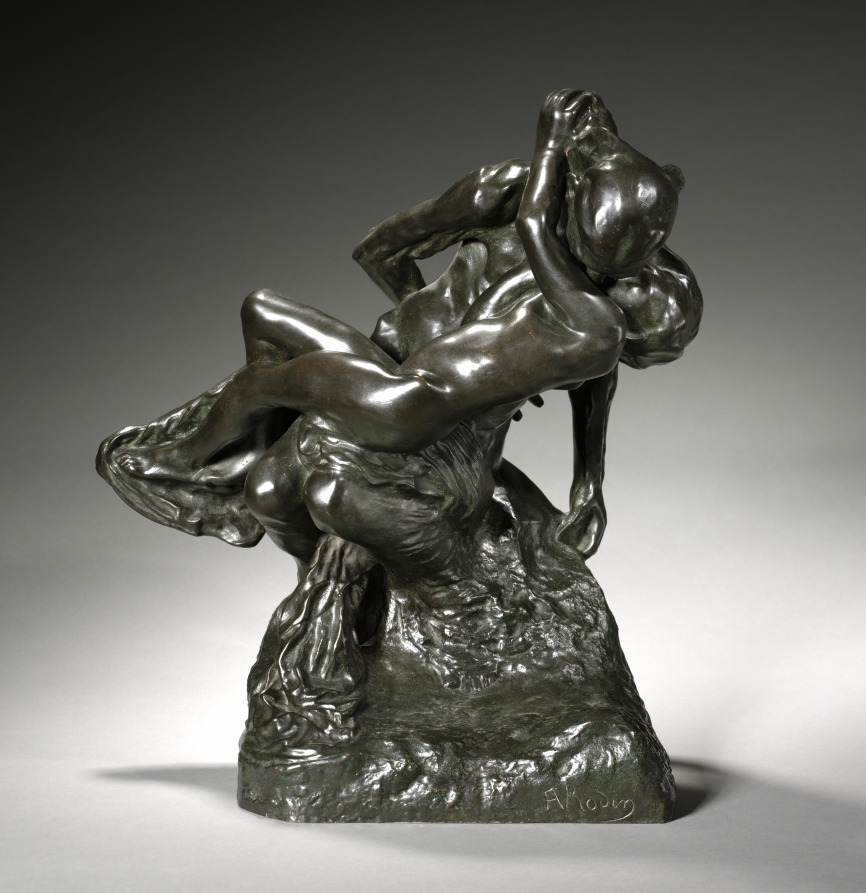
Triumphant Youth
Peut-on la voir ?
Pas exposée actuellement
Où est « Triumphant Youth » aujourd’hui ? Collection: Cleveland Museum of Art, Cleveland. Pas exposée actuellement. Vérifié 29 septembre 2026.

Cleveland, États-Unis
Elle appartient à la collection, mais n’est pas présentée en ce moment.
- Vérifié
- Dans cet état depuis
- Source
- Le musée
À propos de la sculpture
La Jeunesse triomphante est l'une des sculptures créées par Auguste Rodin dans le cadre de la planification de son groupe de sculptures La Porte de l'Enfer. Elle est inspirée du Baiser de l'aïeule de Jean Dampt, exposé en 1893. Cette œuvre montre une jeune femme reposant dans les bras d'une vieille femme, les deux s'embrassant profondément.
Il a également produit des variantes de l'œuvre. George Grappe conclut que – après que Rodin est devenu plus populaire et que lui et sa compagne Rose Beuret ont signé un contrat de dix ans avec la fonderie Fumière et Gavinot – l'œuvre a été reproduite dans des formats différents. L'une d'entre elles se trouve au musée Soumaya.
Notice
- Numéro d’inventaire
- 1960.88
Au catalogue
Sources
- Cleveland Museum of Art
- Image : Cleveland Museum of Art — Museum open access
Dans la vie de Auguste Rodin
La vie entière1890s–1900s
Young sculptors in Rodin's studio
His income let him hire gifted young sculptors, among them Antoine Bourdelle, Charles Despiau, Jules Desbois, François Pompon and Aristide Maillol. Constantin Brancusi left after two months, convinced that nothing grows under a big tree.
19 janvier 1892 · Distinction
Officer of the Legion of Honour
1893
Chicago: nudes behind a drape
Through the curator Sarah Hallowell, Rodin sent “Cupid and Psyche”, “Sphinx” and “Andromeda” to the Chicago World's Fair; the nudes caused such controversy that they were hidden behind a drape, with special permission needed to see them. Even so, the financier Charles Yerkes bought two large marbles and was probably the first American to own a Rodin.
1895
Buys the Villa des Brillants at Meudon
Rodin bought the Villa des Brillants estate near Paris and moved his studio there, but there was not enough room and two years later it went back to Paris. His income let him collect: Egyptian, Greek and Roman sculpture, Persian miniatures and paintings by his contemporaries, including Van Gogh's “Portrait of Père Tanguy”.
1895
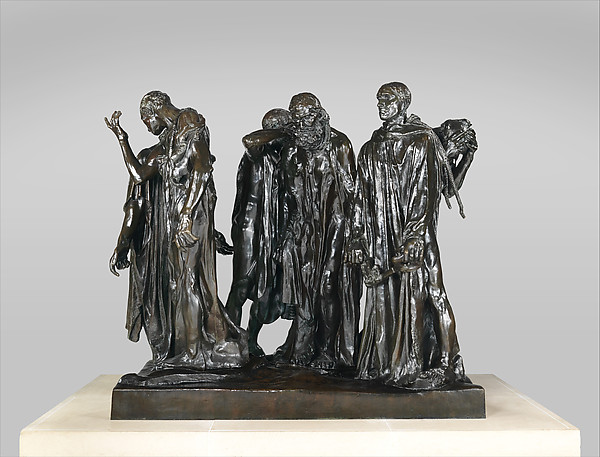
“The Burghers of Calais” installed in Calais
Against Rodin's wishes — he had hoped to place the group at ground level near the town hall — Calais chose a high platform in front of a public garden, with a cast-iron railing. Rodin had proposed doing without a pedestal so that viewers could “penetrate to the heart of the subject”.