ART WIKI32 963 en salle
CarteCollectionArtistesMuséesExpositionsJournal
Connexion

ART WIKI

Où est accroché le chef-d’œuvre, et quand on vous laisse entrer.

Collections : Art Institute of Chicago, Cleveland Museum of Art, Galerie Tretiakov, Hirshhorn Museum and Sculpture Garden, J. Paul Getty Museum, Metropolitan Museum of Art, Minneapolis Institute of Art, Musée de l'Ermitage, Musée des Beaux-Arts Pouchkine, Musée du Louvre, musée national d'art asiatique, Musée russe, Musées d'Art de Harvard, Museum of Modern Art, National Gallery of Art, National Portrait Gallery, Rijksmuseum Amsterdam, Smithsonian American Art Museum, Statens Museum for Kunst, Victoria and Albert Museum, Villa Getty, Whitney Museum of American Art, Catalogue d’État du fonds muséal de Russie (274 musées), Europeana (19 musées), Wikidata (6 musées), Paris Musées (12 musées) et Joconde, la base des musées du ministère de la Culture (495 musées). Les images appartiennent à leurs ayants droit.

Rubriques

  • Carte
  • Recherche
  • Collection
  • Chefs-d’œuvre
  • Exposées en ce moment
  • Artistes

Et aussi

  • Musées et galeries
  • Expositions
  • Journal
  • D’où viennent les données
  • Confidentialité et cookies
AccueilCarteCatalogue
  1. Collection/
  2. Mauritshuis/
  3. The Huntsman
The Huntsman, Gabriel Metsu, 1661
Gabriël Metsu, portraitGabriël MetsuPays-Bas, 1629–1667

The Huntsman

1661 · Painting · 28 × 22.8 cm

Peut-on la contempler ?

Inconnu

Mauritshuis

La Haye, Pays-Bas

Le propriétaire est connu ; on ignore si l’œuvre est exposée aujourd’hui.

Dans cet état depuis
29 sept. 2026
Source
Le musée
Sur la cartePage du musée

Notice

1661 · à 32 ans
16291667
Numéro d’inventaire
93

Au catalogue

PeinturesPeinture néerlandaiseBaroqueXVIIe siècle

Sources

  • Wikidata
  • Image : Mauritshuis — Gabriel Metsu · Public domain · Wikimedia Commons

Pendant ce temps, chez Gabriël Metsu

La vie entière
  1. 1657–1667 · Lieu de travail

    Amsterdam

  2. early 1660s

    Turns to the Leiden “fijnschilders”

    At the onset of the 1660s he turned for inspiration to the art of the Leiden “fijnschilders” (“fine painters”), whose origin is traced to Dou: their paintings on wood or copper are marked by exceptional rendering of minute detail and a smooth, glowing surface. He was apparently responding to the market for Dou’s paintings, which Dou sold at exorbitant prices.

  3. c. 1661

    Wins the patronage of the cloth merchant Jan Hinlopen

    He won the patronage of the Amsterdam cloth merchant Jan J. Hinlopen, one of his most important patrons, and painted his family more than once in a fashionable setting. Such works include the “Portrait of the Hinlopen Family” (Berlin) and “Visit to the Nursery” (Metropolitan Museum).

  4. 1662

    Jan Vos’s poem on “Visit to the Nursery”

    Jan Vos published a poem about this painting, which belonged to Jan Hinlopen: the scene is set in an imaginary room of unrealistically large proportions, and hung in the reception room of Hinlopen’s house it alluded to his powerful role in local politics.

Autres œuvres : Gabriël Metsu

Toutes les œuvres
De jagersbuit, Gabriël Metsu, c. 1658 - c. 1661

De jagersbuit

c. 1658 - c. 1661 · Rijksmuseum Amsterdam

Het zieke kind, Gabriël Metsu, c. 1664 - c. 1666

Het zieke kind

c. 1664 - c. 1666 · Rijksmuseum Amsterdam

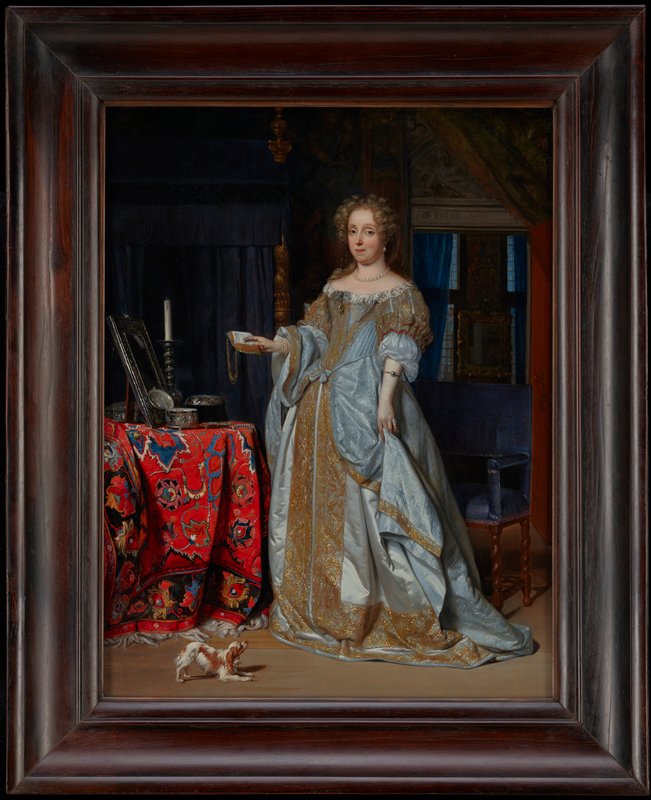
Portrait of Lucia Wijbrants, Gabriël Metsu, 1667

Portrait of Lucia Wijbrants

1667 · Minneapolis Institute of Art

Lace-Maker, Gabriël Metsu, 17th century

Lace-Maker

17th century · Musée de l'Ermitage

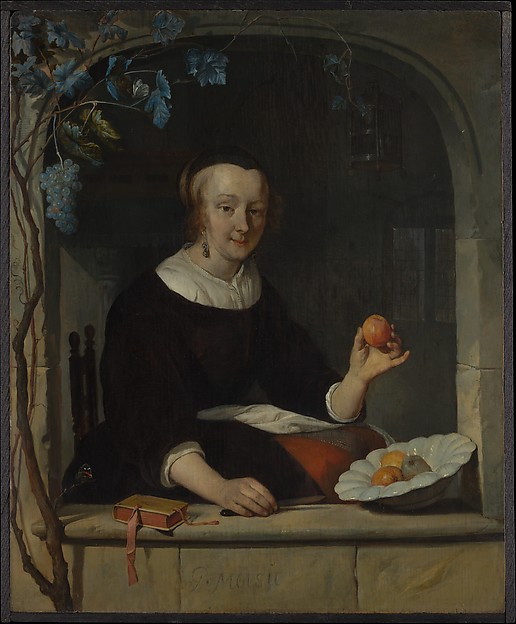
A Woman Seated at a Window, Gabriël Metsu, early 1660s

A Woman Seated at a Window

early 1660s · Metropolitan Museum of Art

Prodigal Son, Gabriël Metsu, 1649

Prodigal Son

1649 · Musée de l'Ermitage

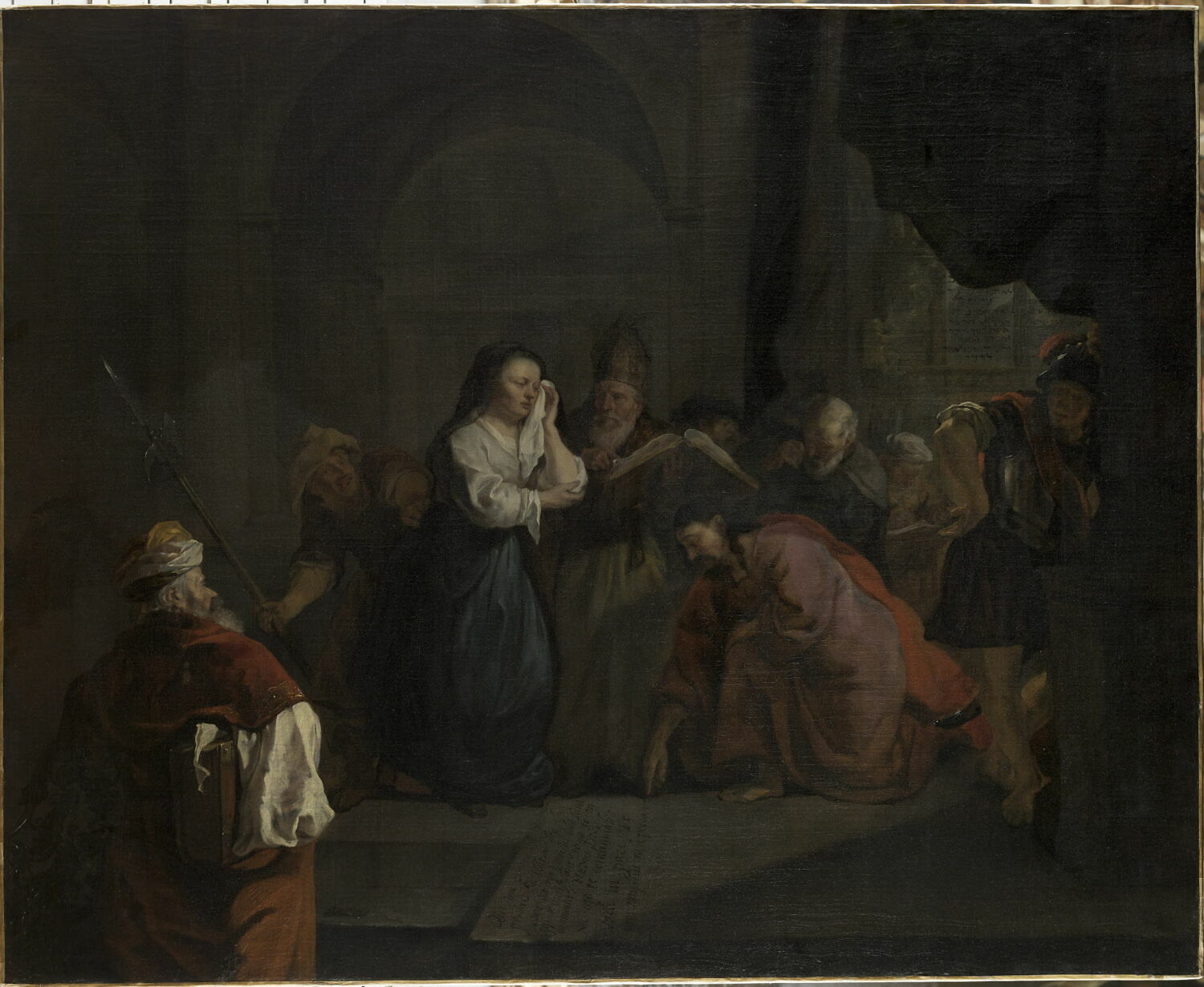
Le Christ prenant la défense de la femme adultère, Metsu, Gabriel, 3e quart du XVIIe siècle (1653)

Le Christ prenant la défense de la femme adultère

3e quart du XVIIe siècle (1653) · Musée du Louvre

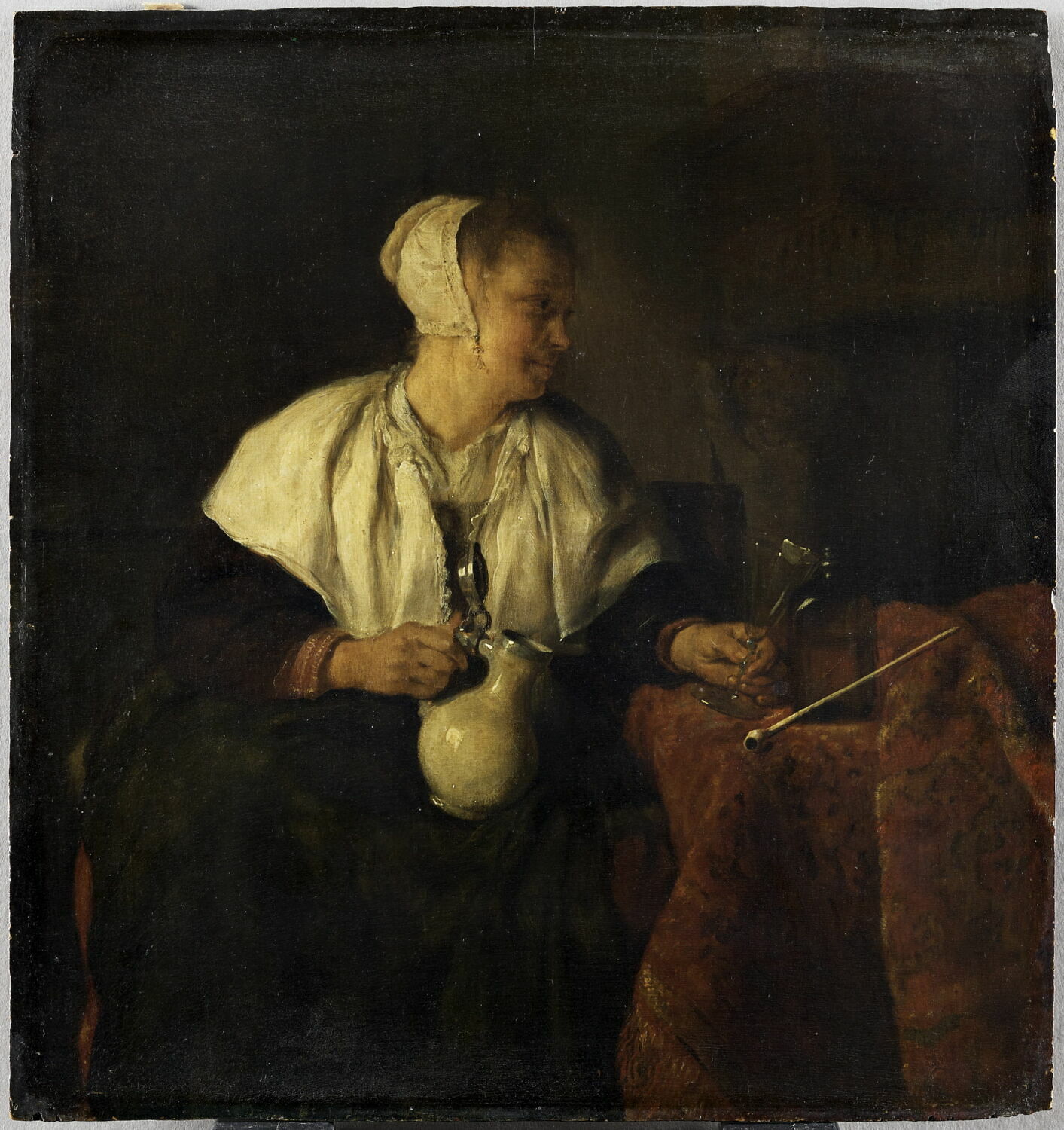
La Riboteuse hollandaise, Metsu, Gabriel, 3e quart du XVIIe siècle (A dater vers 1657-1658, à la fin de la période leydoise de l'artiste sinon au début de sa période amsterdamoise, marquée par l'exemple de Ter Borch.) (1657 - 1658)

La Riboteuse hollandaise

3e quart du XVIIe siècle (A dater vers 1657-1658, à la fin de la période leydoise de l'artiste sinon au début de sa période amsterdamoise, marquée par l'exemple de Ter Borch.) (1657 - 1658) · Musée du Louvre

De la collection : Mauritshuis

Page du musée
Portrait of a Nobleman, possibly Adriaan van der Borcht, Anthony van Dyck, 1634 - c. 1635

Anthony van Dyck

Portrait of a Nobleman, possibly Adriaan van der Borcht, 1634 - c. 1635

Self-portrait, Rembrandt, 1669

Rembrandt van Rijn

Self-portrait, 1669

Portrait of an old man, Rembrandt, 1667

Rembrandt van Rijn

Portrait of an old man, 1667

Homer, Rembrandt, 1663

Rembrandt van Rijn

Homer, 1663

Two African men, Rembrandt, 1661

Rembrandt van Rijn

Two African men, 1661

Saul and David, Rembrandt, 1650

Rembrandt van Rijn

Saül et David, 1650

Portrait of an older man, Rembrandt, 1650

Rembrandt van Rijn

Portrait of an older man, 1650

Susanna, Rembrandt, 1636

Rembrandt van Rijn

Susanna, 1636