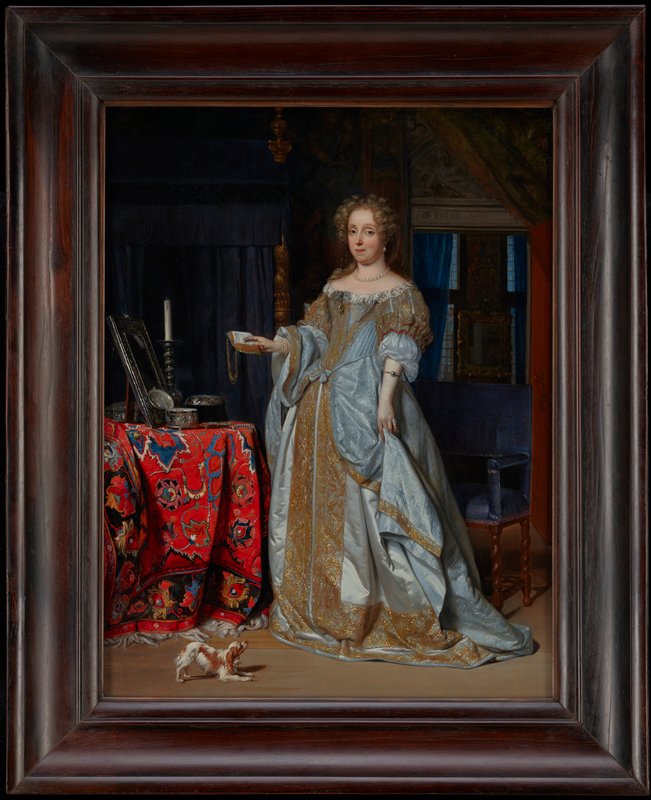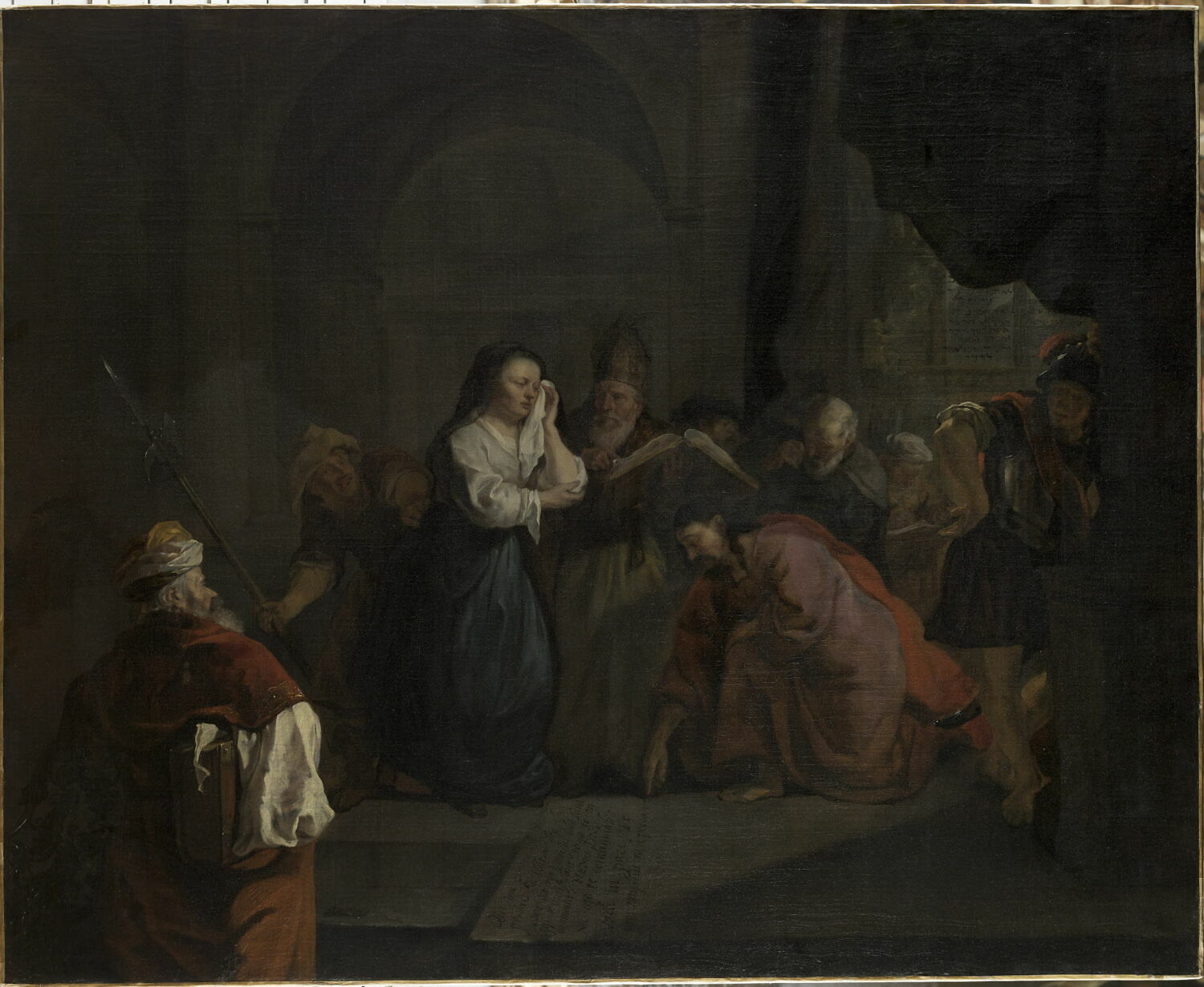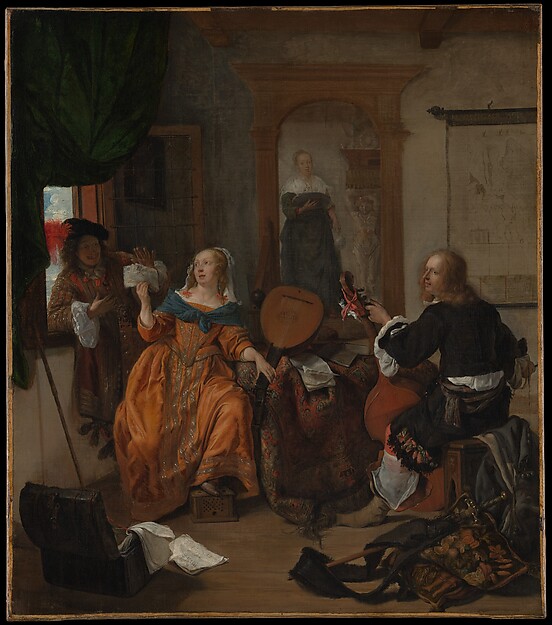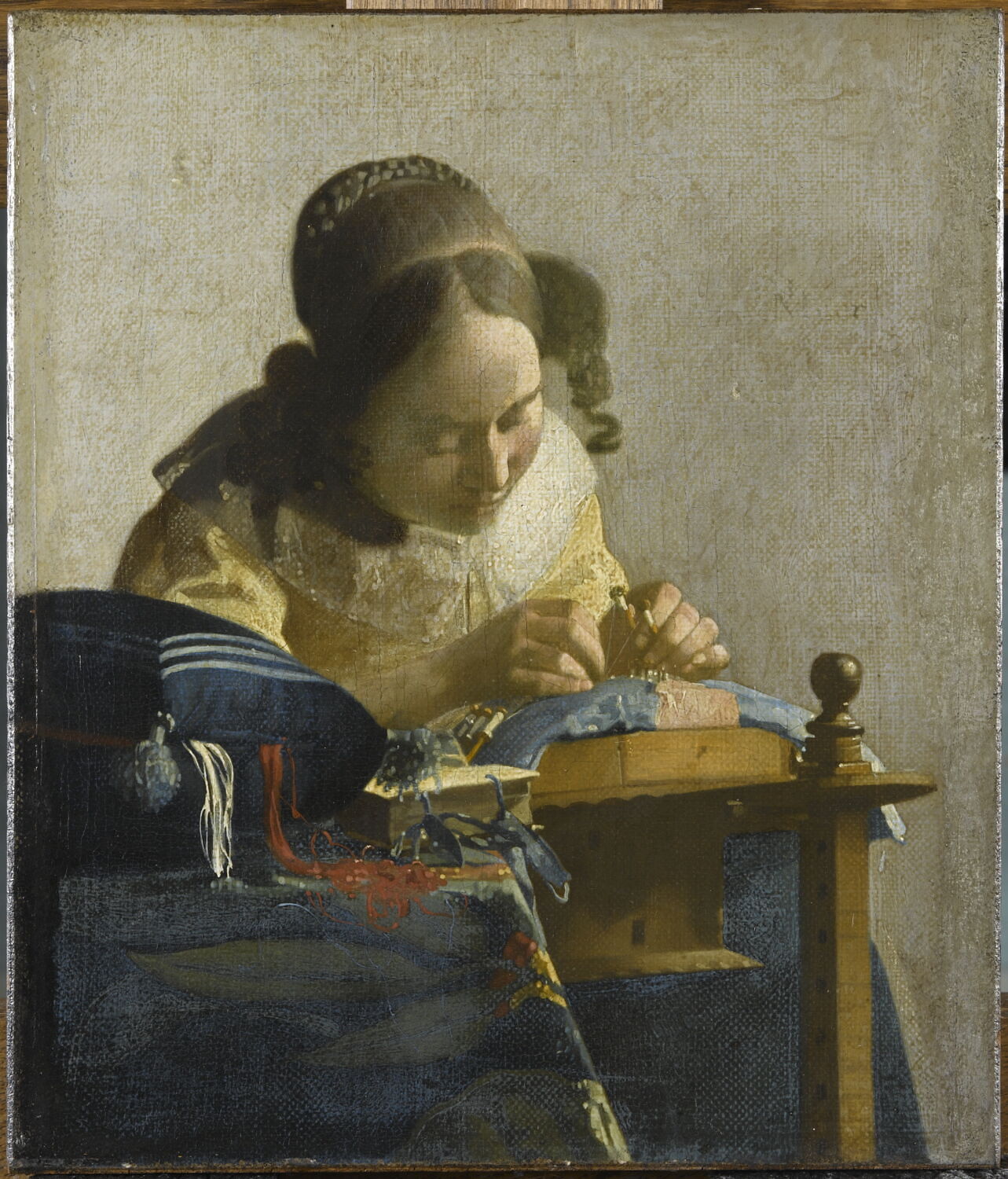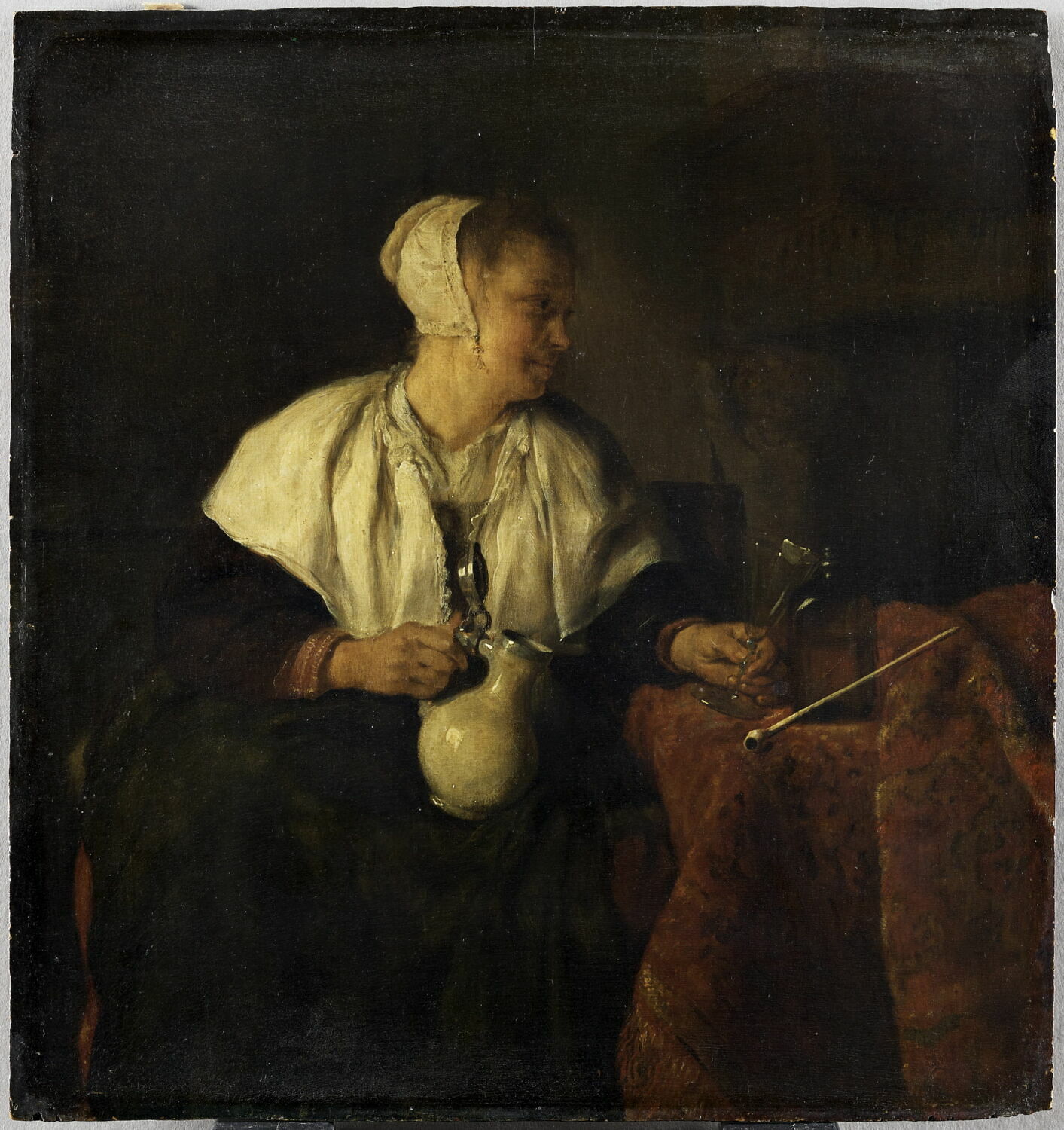
 Gabriël MetsuPays-Bas, 1629–1667
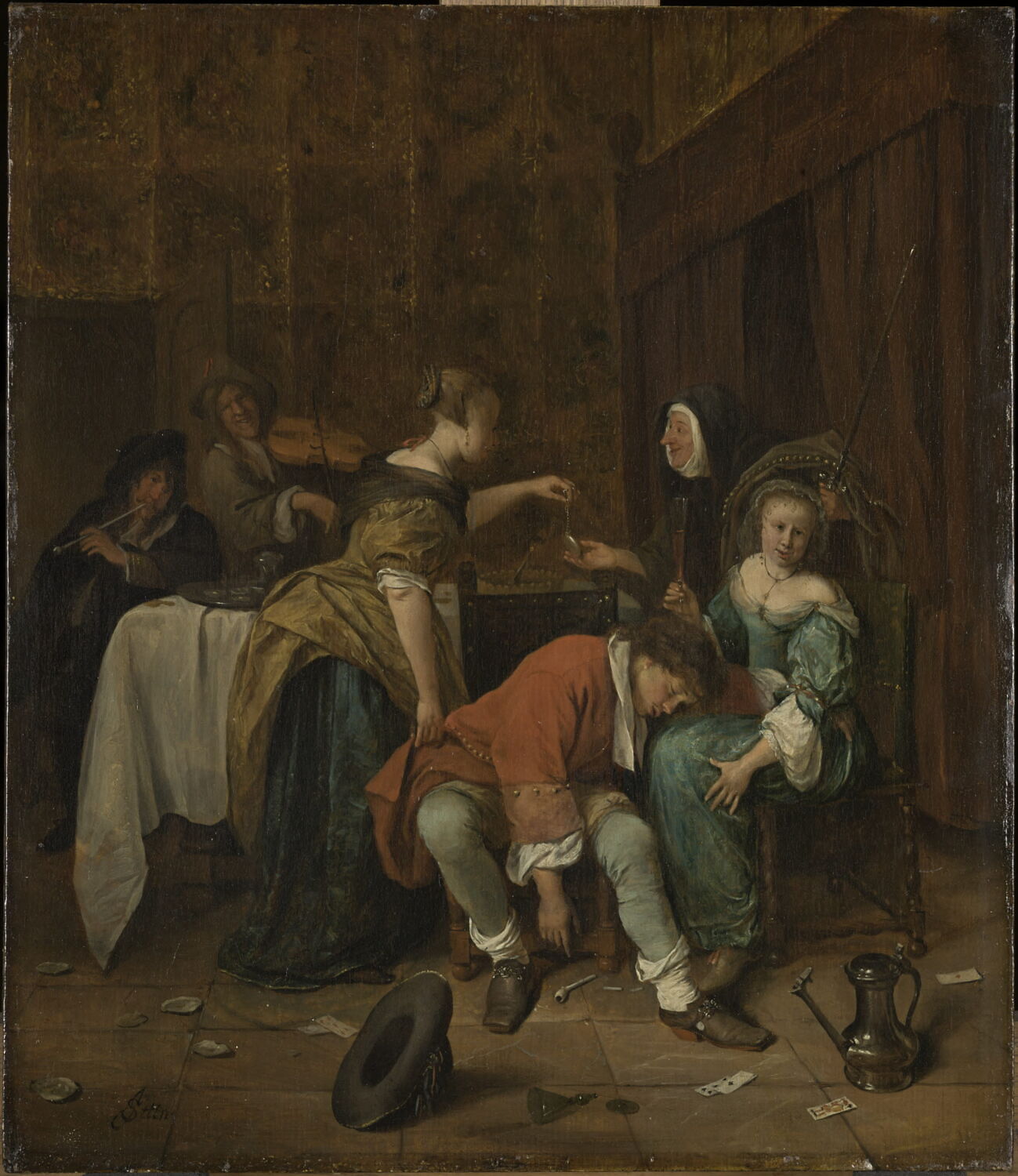
La Riboteuse hollandaise
Peut-on la contempler ?
Oui, elle reçoit

Présentée au public.
- Vérifié
- Dans cet état depuis
- Source
- Le musée
Notice
- Numéro d’inventaire
- INV 1464
Au catalogue
Sources
- Musée du Louvre
- Image : Musée du Louvre — © 2016 GrandPalaisRmn (musée du Louvre) / Tony Querrec
Pendant ce temps, chez Gabriël Metsu
La vie entière1644–1655 · Lieu de travail
Leiden
c. 1655
Moves from Leiden to Amsterdam
With money troubles during the First Anglo-Dutch War he moved to Amsterdam — though other accounts say he settled there only in 1657, living in Leiden with short breaks until then. He lived in an alley on the Prinsengracht next to a brewery and near his relatives, the children of the sugar refiner Philips Metsu; in Amsterdam he came under the influence of Gerard ter Borch and possibly Pieter Codde.
1657
A quarrel with a neighbour and a move beside the vegetable market
In 1657 he quarrelled with a neighbour (it was alleged that Metsu had left a brothel at six in the morning) and moved to a house on a canal-side where a daily vegetable market was held.
1657–1667 · Lieu de travail
Amsterdam
27 avril 1658
Married: Isabella de Wolff
early 1660s
Turns to the Leiden “fijnschilders”
At the onset of the 1660s he turned for inspiration to the art of the Leiden “fijnschilders” (“fine painters”), whose origin is traced to Dou: their paintings on wood or copper are marked by exceptional rendering of minute detail and a smooth, glowing surface. He was apparently responding to the market for Dou’s paintings, which Dou sold at exorbitant prices.