ART WIKI32 963 en salle
CarteCollectionArtistesMuséesExpositionsJournal
Connexion

ART WIKI

Où est accroché le chef-d’œuvre, et quand on vous laisse entrer.

Collections : Art Institute of Chicago, Cleveland Museum of Art, Galerie Tretiakov, Hirshhorn Museum and Sculpture Garden, J. Paul Getty Museum, Metropolitan Museum of Art, Minneapolis Institute of Art, Musée de l'Ermitage, Musée des Beaux-Arts Pouchkine, Musée du Louvre, musée national d'art asiatique, Musée russe, Musées d'Art de Harvard, Museum of Modern Art, National Gallery of Art, National Portrait Gallery, Rijksmuseum Amsterdam, Smithsonian American Art Museum, Statens Museum for Kunst, Victoria and Albert Museum, Villa Getty, Whitney Museum of American Art, Catalogue d’État du fonds muséal de Russie (274 musées), Europeana (19 musées), Wikidata (6 musées), Paris Musées (12 musées) et Joconde, la base des musées du ministère de la Culture (495 musées). Les images appartiennent à leurs ayants droit.

Rubriques

  • Carte
  • Recherche
  • Collection
  • Chefs-d’œuvre
  • Exposées en ce moment
  • Artistes

Et aussi

  • Musées et galeries
  • Expositions
  • Journal
  • D’où viennent les données
  • Confidentialité et cookies
AccueilCarteCatalogue
  1. Collection/
  2. Art Institute of Chicago/
  3. The Fountains
The Fountains, Hubert Robert, 1787/88

The Fountains

1787/88 · Painting

À propos du tableau

The painting of Classical ruins had reached the zenith of its popularity when Hubert Robert, the leading French practitioner of this specialty, was commissioned in 1787 to paint a suite of four canvases for a wealthy financier’s château at Méréville, near Paris. The Fountains and its companion pieces were set into the paneled walls of a salon in the château, creating an alternate space that played off of the elegant, Neoclassical decor of the room. Robert has studied in Rome from 1754 to 1765 and there had gleaned his artistic vocabulary. Like the other three large paintings from the group painted for Méréville, all in the Art Institute, The Fountains exploits Robert’s typical vocabulary of fictive niches, arches, coffered vaults, colonnades, majestic stairwells, and Roman statuary to create a fantasy of expansive space.

Lire la suite

The four paintings are inhabited by tiny figures in the foreground; these serve only to set the scale and animate the scene, for the ruins themselves are the true subject of the pictures. In his use of ruins, Robert embodied the notion of the relationship of mankind and the built environment to nature that was expressed by the French philosopher and encyclopedist Denis Diderot: “Everything vanishes, everything dies, only time endures.”

Art Institute of Chicago · CC BY 4.0

Notice

Autres œuvres : Hubert Robert

Toutes les œuvres

Dans la même salle · Gallery 218, Art Institute of Chicago

Page du musée

Sur le même thème · Ruins

Toutes les œuvres sur ce thème
1787/88 · à 54 ans
17331808
Numéro d’inventaire
1900.385

Sources

  • Art Institute of Chicago
  • Image : Art Institute of Chicago — CC0
Hubert Robert, portraitHubert RobertFrance, 1733–1808

Peut-on la contempler ?

Oui, elle reçoit

Art Institute of Chicago

Chicago, États-Unis

Salle218

Présentée au public. Qui s’en porte garant est indiqué ci-dessous.

Vérifié
il y a 3 jours
Dans cet état depuis
19 août 2026
Source
Le musée
Sur la cartePage du musée
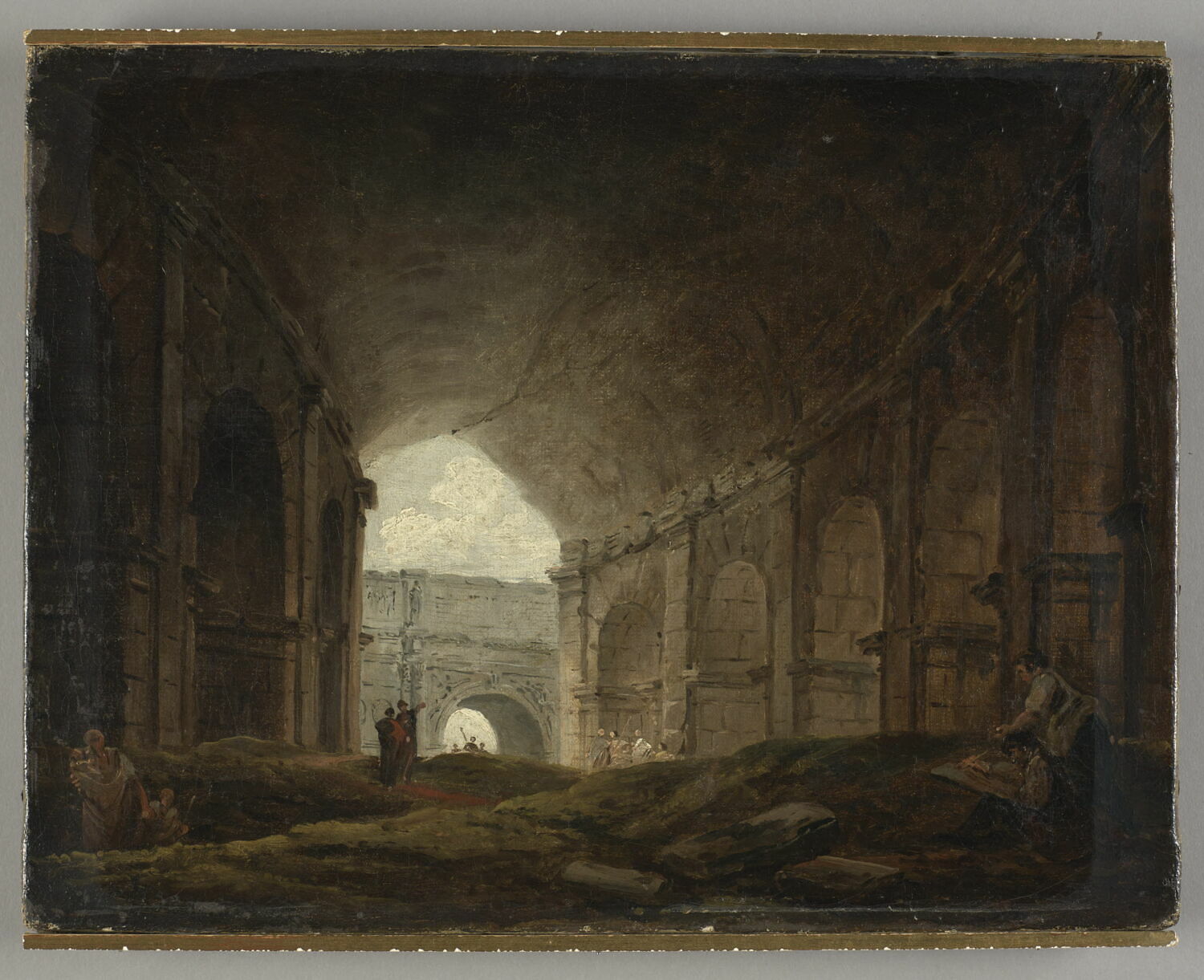
Intérieur du Colisée, Robert, Hubert, 3e quart du XVIIIe siècle (vers 1759)

Intérieur du Colisée

3e quart du XVIIIe siècle (vers 1759) · Musée du Louvre

Laundresses in the Ruins, Hubert Robert, 1760

Laundresses in the Ruins

1760 · Musée de l'Ermitage

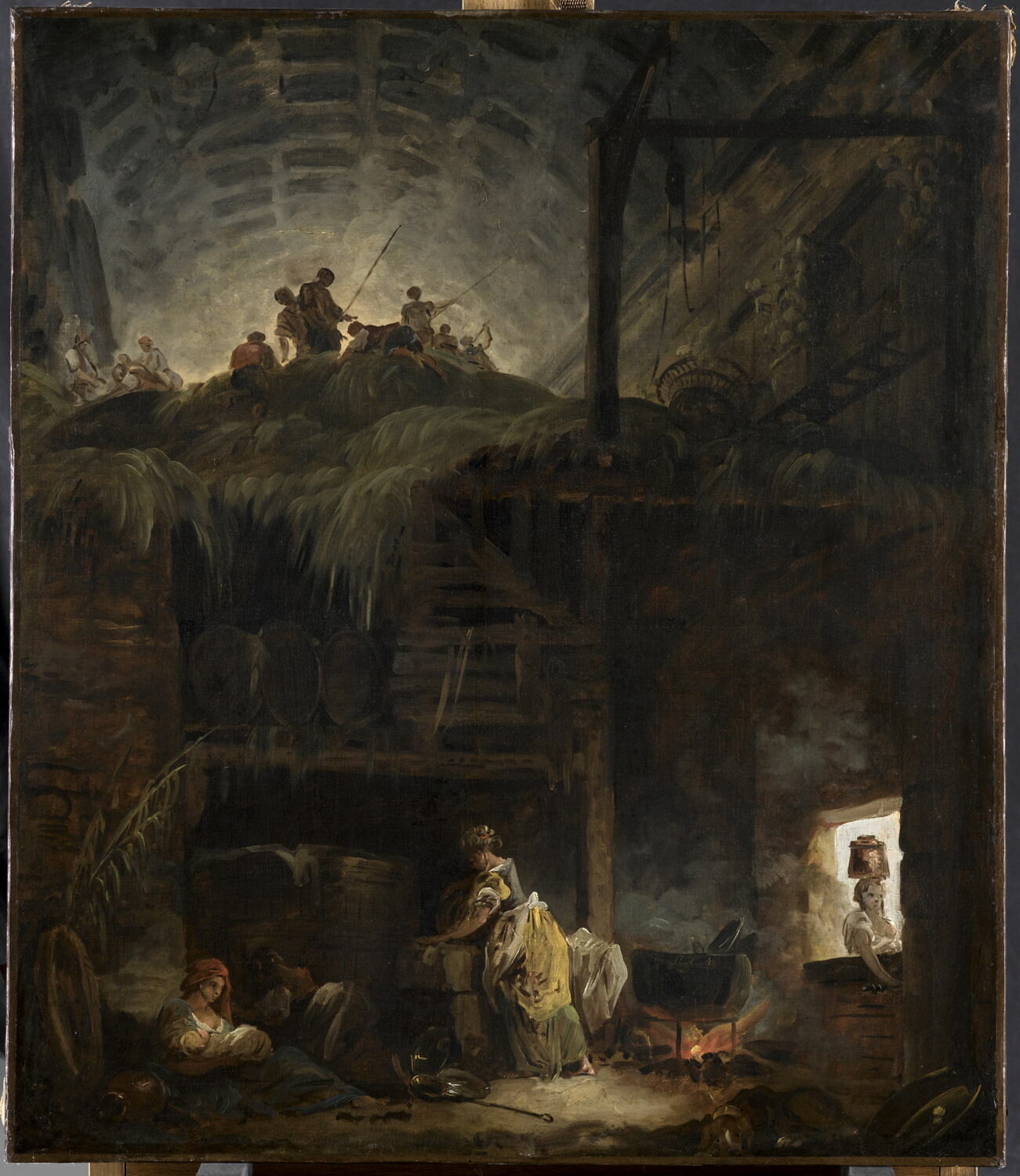
La Grange, Robert, Hubert, 3e quart du XVIIIe siècle (1760)

La Grange

3e quart du XVIIIe siècle (1760) · Musée du Louvre

A Hermit Praying in the Ruins of a Roman Temple, Hubert Robert, about 1760

A Hermit Praying in the Ruins of a Roman Temple

about 1760 · J. Paul Getty Museum

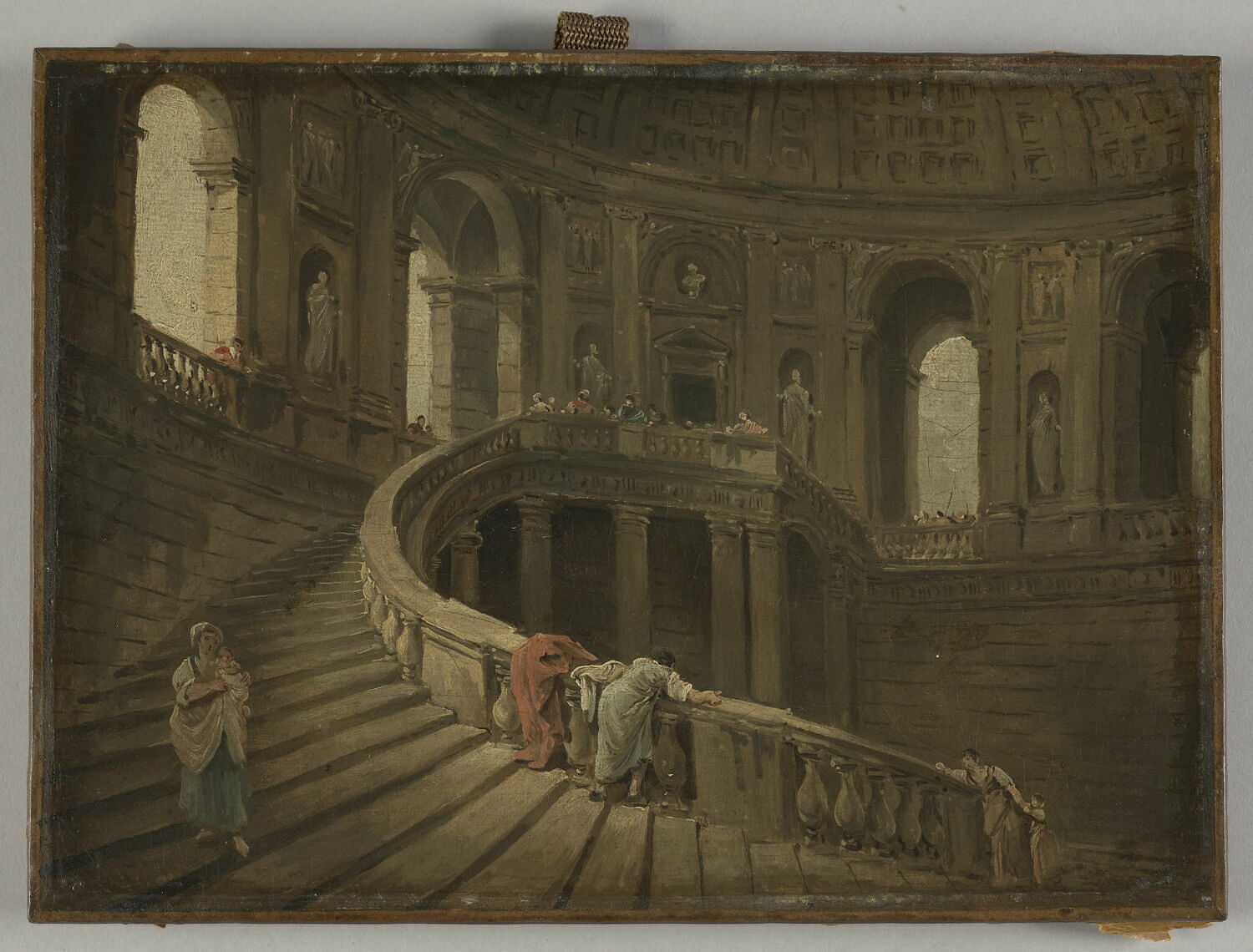
L'escalier tournant du palais Farnèse à Caprarola, Robert, Hubert, 3e quart du XVIIIe siècle (1764)

L'escalier tournant du palais Farnèse à Caprarola

3e quart du XVIIIe siècle (1764) · Musée du Louvre

At the Hermit's, Hubert Robert, 1770s

At the Hermit's

1770s · Musée de l'Ermitage

Landscape with a Stairs and Obelisk, Hubert Robert, 1770s

Landscape with a Stairs and Obelisk

1770s · Musée de l'Ermitage

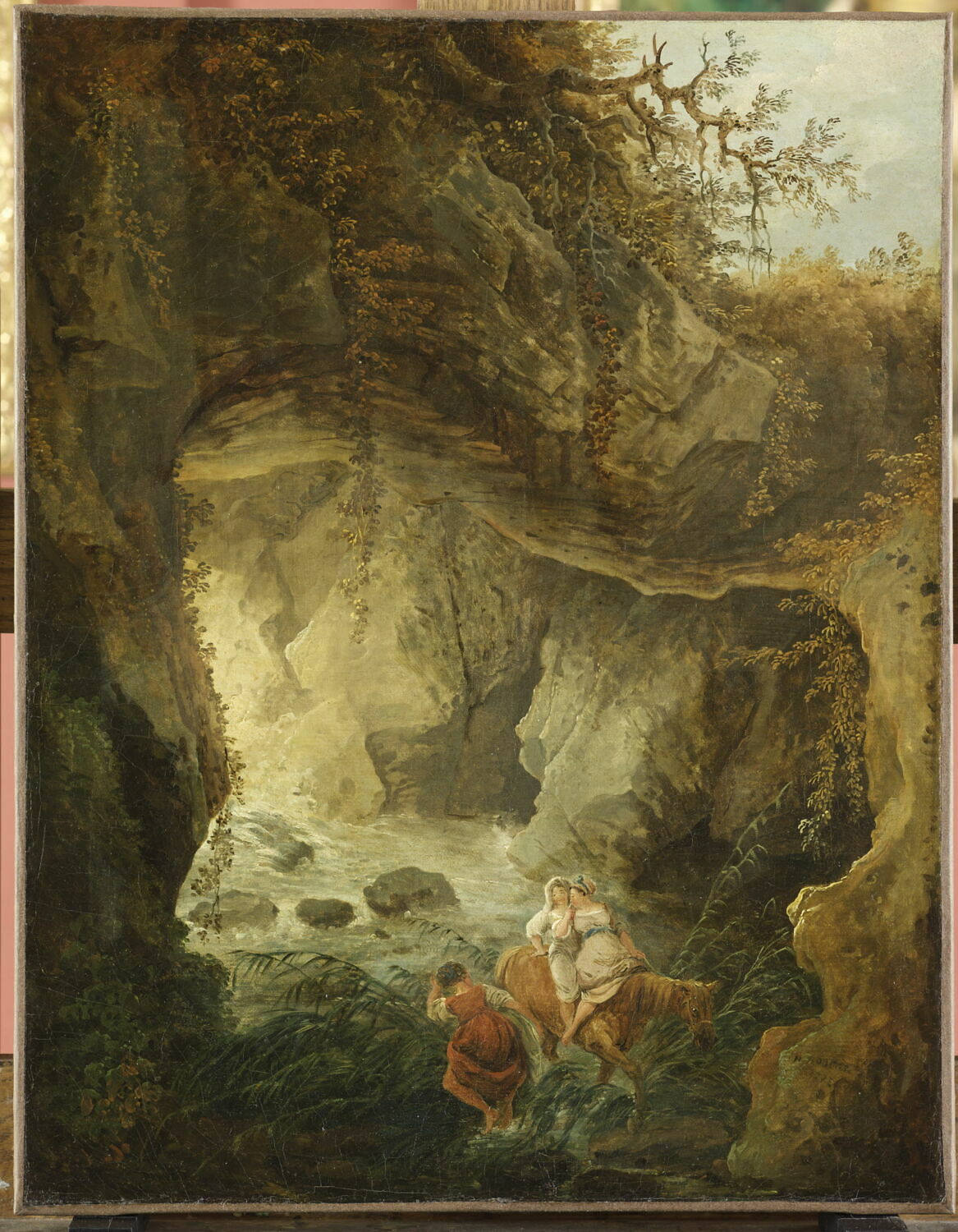
La Grotte, Robert, Hubert, 3e quart du XVIIIe siècle (1772)

La Grotte

3e quart du XVIIIe siècle (1772) · Musée du Louvre

Madame de Pastoret and Her Son, Jacques Louis David, 1791–92

Jacques-Louis David

Madame de Pastoret and Her Son, 1791–92

Virgil Reading the "Aeneid" to Augustus, Octavia, and Livia, Jean Baptiste Joseph Wicar, 1790/93

Jean Baptiste Joseph Wicar

Virgil Reading the "Aeneid" to Augustus, Octavia, and Livia, 1790/93

Portrait of Constance Pipelet, Jean Baptiste François Désoria, 1797

Jean Baptiste François Désoria

Portrait of Constance Pipelet, 1797

Bust of Paris, Antonio Canova, 1809

Antonio Canova

Bust of Paris, 1809

Lady Sarah Bunbury Sacrificing to the Graces, Sir Joshua Reynolds, 1763–65

Joshua Reynolds

Lady Sarah Bunbury Sacrificing to the Graces, 1763–65

Self-Portrait, Antonio D'Este, 1810

Antonio D'Este

Self-Portrait, 1810

Portrait of the Katchef Dahouth, Christian Mameluke, Anne-Louis Girodet de Roussy-Trioson, 1804

Anne-Louis Girodet

Portrait of the Katchef Dahouth, Christian Mameluke, 1804

Deposition (after Antonio Canova), Bernardino Nocchi, 1800

Bernardino Nocchi

Deposition (after Antonio Canova), 1800

White House Ruin, Canyon de Chelly National Monument, Arizona, Ansel Adams, 1942, printed 1981

Ansel Adams

White House Ruin, Canyon de Chelly National Monument, Arizona, 1942, printed 1981

Non exposée · National Gallery of Art

Christ and the Woman of Samaria Among Ruins, Rembrandt van Rijn, 1634

Rembrandt van Rijn

Christ and the Woman of Samaria Among Ruins, 1634

Non exposée · National Gallery of Art

The Destruction of Job's Sons, William Blake, 1825

William Blake

The Destruction of Job's Sons, 1825

Non exposée · National Gallery of Art

Job's Comforters, William Blake, 1825

William Blake

Job's Comforters, 1825

Non exposée · National Gallery of Art

The Nativity, Albrecht Dürer, 1504

Albrecht Dürer

The Nativity, 1504

Non exposée · Cleveland Museum of Art

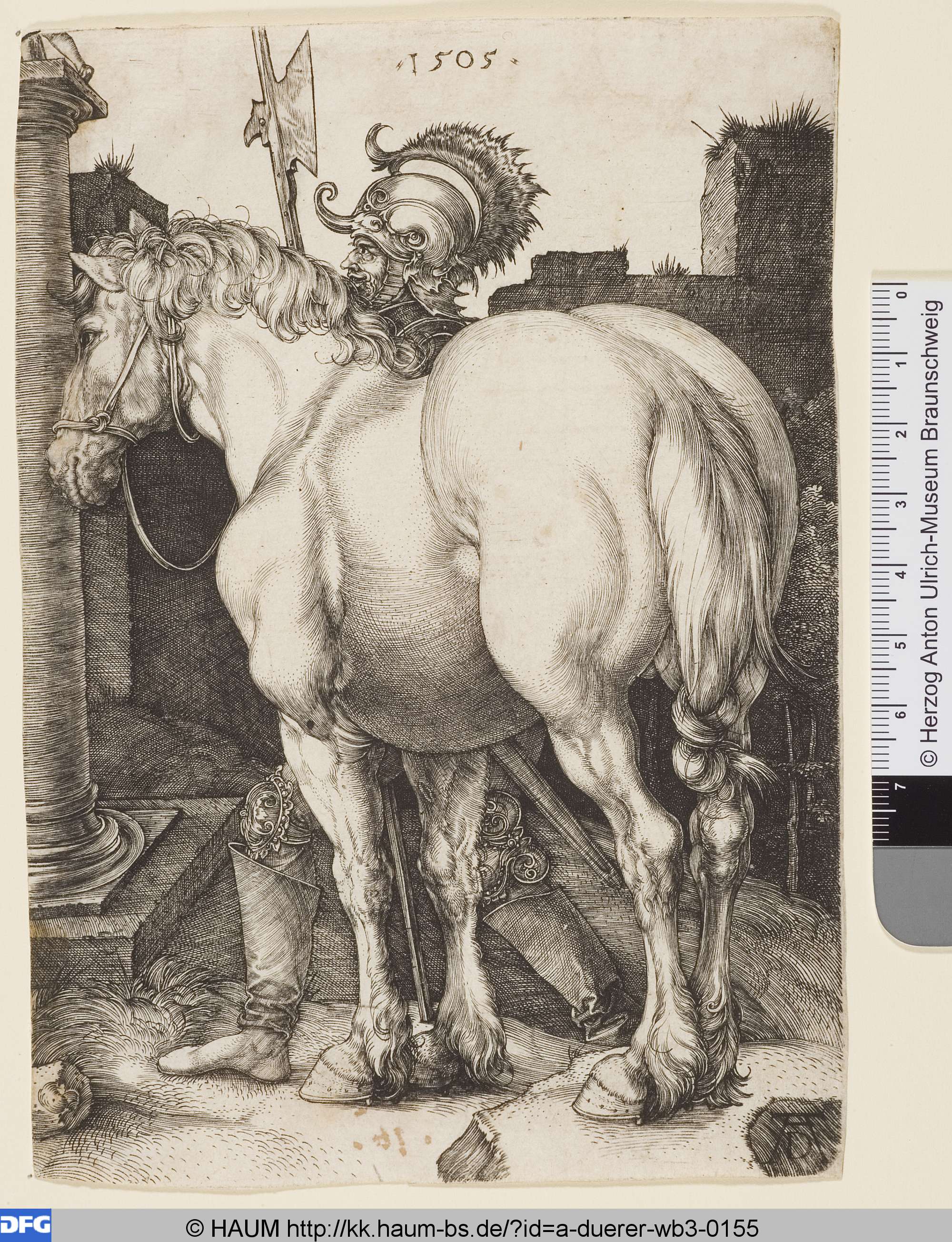
Das große Pferd, Albrecht Dürer, 1505

Albrecht Dürer

Das große Pferd, 1505

Musée Herzog Anton Ulrich

Das große Pferd, Albrecht Dürer, 1505

Albrecht Dürer

Das große Pferd, 1505

Musée Herzog Anton Ulrich

Civil War (Guerre civile), Edouard Manet, 1871

Édouard Manet

Civil War (Guerre civile), 1871

Non exposée · National Gallery of Art

Ce qu’elle montre

RuinsArchitechtureArchitectureClassicalDecorationDecorativeItalieFountainsLandscapeCentury of ProgressWorld's fairsChicago World's Fairs
Monumental structures
Equestrienne statues
Cheval
Arches

Au catalogue

PeinturesHuilePeinture françaiseNéoclassicismeXVIIIe siècleNeoclassicismFrance