
 John Everett MillaisRoyaume-Uni, 1829–1896
Ophélie
Ophelia
Peut-on la contempler ?
Nous l’ignorons : le musée garde le silence

National Gallery
Londres, Royaume-Uni
Le propriétaire est connu. Si elle est exposée aujourd’hui, le musée ne le dit pas, et l’on ne nous a pas appris à deviner.
- Dans cet état depuis
- 29 sept. 2026
- Source
- Les données de collection du musée lui-même
About the painting
Ophélie, en anglais Ophelia, est un tableau du peintre britannique John Everett Millais réalisé en 1851-1852. Cette peinture à l'huile sur toile représente Ophélie, un personnage de fiction de la tragédie Hamlet, de William Shakespeare, chantant juste avant sa noyade. Elle fait partie d'une exposition avec Un huguenot, le jour de la Saint-Barthélemy, un autre tableau de Millais de cette année. Typique de la peinture pré-raphaélite, elle est conservée à la Tate Britain, à Londres.
Notice
- Numéro d’inventaire
- NG1506
Sources
- Wikidata · obtenue il y a 6 jours
- Image : National Gallery — John Everett Millais · Public domain · Wikimedia Commons
Pendant ce temps, chez John Everett Millais
La vie entière1850
The scandal over “Christ in the House of His Parents”
Christ in the House of His Parents (1850) was judged excessively realistic, showing a working-class Holy Family in a messy carpentry workshop, and The Times called it outrageous. Millais was undaunted: the critic John Ruskin saw his outstanding talent at once and backed him, and his works were always accepted for the Academy’s exhibitions, however radical.
1851–1852
Elizabeth Siddal sits for “Ophelia”
For Ophelia (1851–52), his best-known painting, Millais portrayed Rossetti’s beloved Elizabeth Siddal as the heroine. The dense, elaborate pictorial surface, weaving the figure into the natural world, has been described as a kind of “pictorial eco-system”.
1853
Elected an associate member of the Royal Academy
In 1853 Millais was elected an associate member of the Royal Academy of Arts.
summer 1853
A summer at Glenfinlas: falling in love with Effie Ruskin
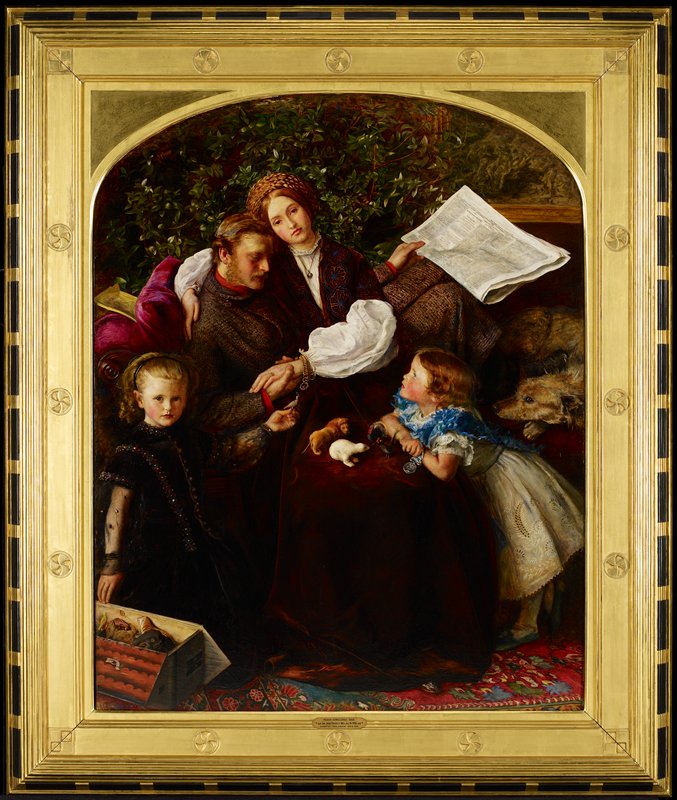
In the summer of 1853 John Ruskin and his wife Effie invited Millais to spend the summer with them at Glenfinlas, where Millais and Effie fell in love. Effie modelled for his The Order of Release; her marriage to Ruskin, which had lasted several years, was annulled after her parents realised something was wrong and she filed for annulment, and Millais and Effie then married.


![Study of a Pottery Jug [recto], John Everett Millais, c. 1842](https://api.nga.gov/iiif/bd3617b6-ebda-468c-9b54-142851ab029e/full/!2400,2400/0/default.jpg)