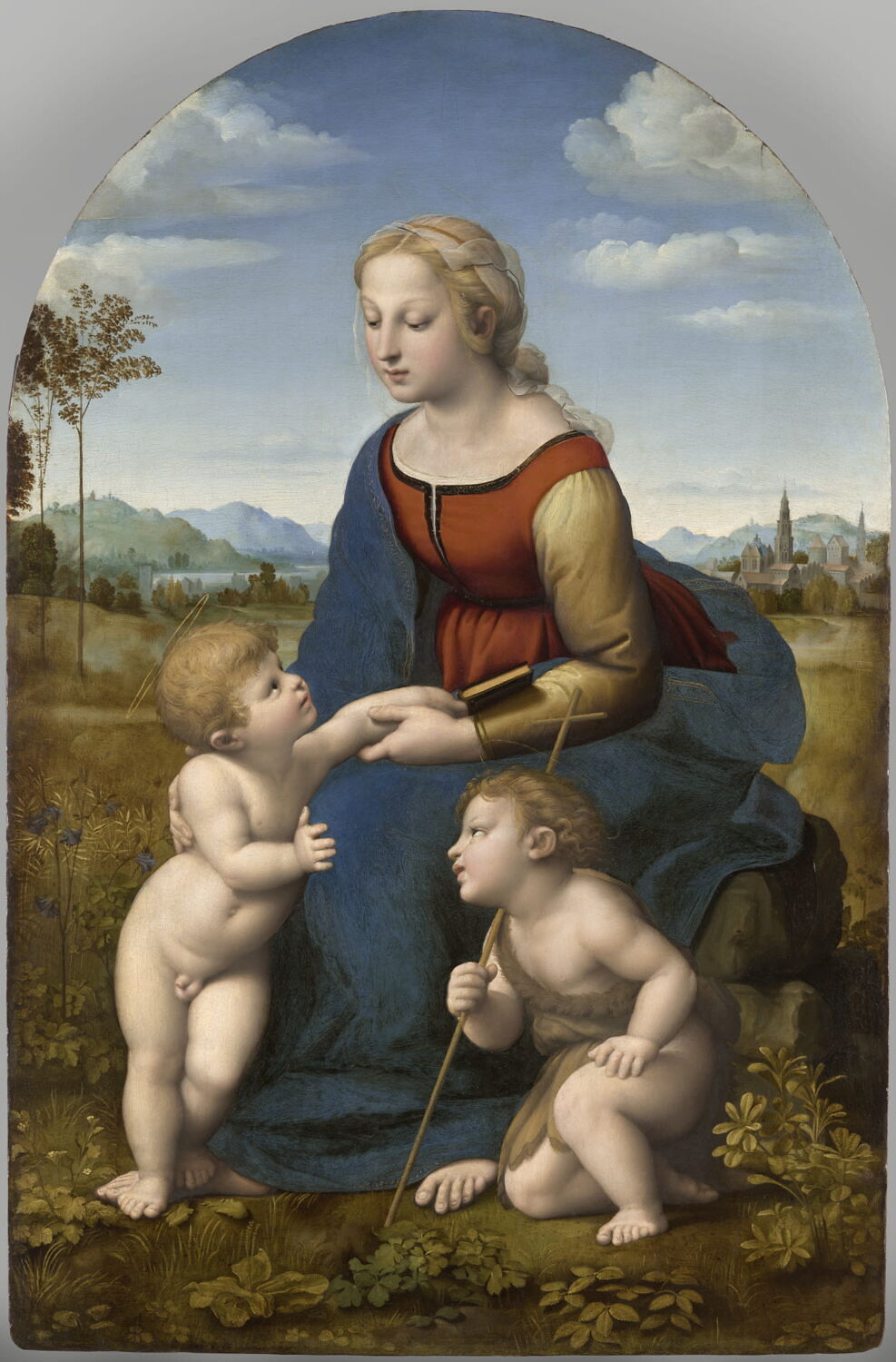
RaphaelItalie, 1483–1520
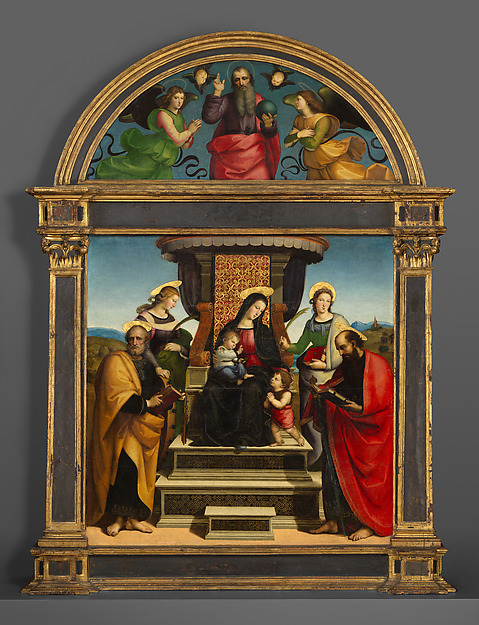
Modello pour le retable de Sainte Cécile de Raphaël
Peut-on la contempler ?
Inconnu

Paris, France
Le propriétaire est connu ; on ignore si l’œuvre est exposée aujourd’hui.
- Dans cet état depuis
- Source
- Le musée
Notice
- Numéro d’inventaire
- DDUT980
Au catalogue
Sources
- Petit Palais
- Image : Petit Palais — CC0 Paris Musées / Petit Palais, musée des Beaux-Arts de la Ville de Paris; Ministère de la Culture (France), base Joconde
Pendant ce temps, chez Raphael
La vie entière1508–1520 · Lieu de travail
Rome
1513
Leo X becomes pope
The death of Julius II did not interrupt the work: his successor, the Medici Pope Leo X, became Raphael's last and even closer patron, and Raphael's friend Cardinal Bibbiena was a close friend and adviser of the new pope.
1514
Chief architect of St Peter's
After Bramante's death Raphael became chief architect of the new St Peter's and continued Bramante's construction of the Vatican Loggias, whose vaults his pupils painted.
1514
Engaged to Maria Bibbiena
Raphael became engaged to Cardinal Bibbiena's niece Maria, apparently talked into it by his friend the cardinal and without much enthusiasm: the marriage had still not taken place when she died in 1520. A permanent fixture in his Roman life was “La Fornarina”, Margherita Luti, a baker's daughter.
1515
Prefect of the antiquities of Rome
Raphael was given powers as Prefect over all antiquities unearthed in Rome or within a mile of it: finds had to be reported to him within three days, and inscriptions could not be destroyed without permission. He wrote to the pope proposing ways to halt the destruction of ancient monuments and a survey to record them all.
1515
An exchange of works with Albrecht Dürer
Raphael gave Albrecht Dürer one of his drawings, and the German master sent him his self-portrait in return; its fate is unknown.