ART WIKI32 963 en salle
CarteCollectionArtistesMuséesExpositionsJournal
Connexion

ART WIKI

Où est accroché le chef-d’œuvre, et quand on vous laisse entrer.

Collections : Art Institute of Chicago, Cleveland Museum of Art, Galerie Tretiakov, Hirshhorn Museum and Sculpture Garden, J. Paul Getty Museum, Metropolitan Museum of Art, Minneapolis Institute of Art, Musée de l'Ermitage, Musée des Beaux-Arts Pouchkine, Musée du Louvre, musée national d'art asiatique, Musée russe, Musées d'Art de Harvard, Museum of Modern Art, National Gallery of Art, National Portrait Gallery, Rijksmuseum Amsterdam, Smithsonian American Art Museum, Statens Museum for Kunst, Victoria and Albert Museum, Villa Getty, Whitney Museum of American Art, Catalogue d’État du fonds muséal de Russie (274 musées), Europeana (19 musées), Wikidata (6 musées), Paris Musées (12 musées) et Joconde, la base des musées du ministère de la Culture (495 musées). Les images appartiennent à leurs ayants droit.

Rubriques

  • Carte
  • Recherche
  • Collection
  • Chefs-d’œuvre
  • Exposées en ce moment
  • Artistes

Et aussi

  • Musées et galeries
  • Expositions
  • Journal
  • D’où viennent les données
  • Confidentialité et cookies
AccueilCarteCatalogue
  1. Collection/
  2. Art Institute of Chicago/
  3. Composition (No. 1) Gray-Red
Composition (No. 1) Gray-Red, Piet Mondrian, 1935

Composition (No. 1) Gray-Red

1935 · Painting

À propos du tableau

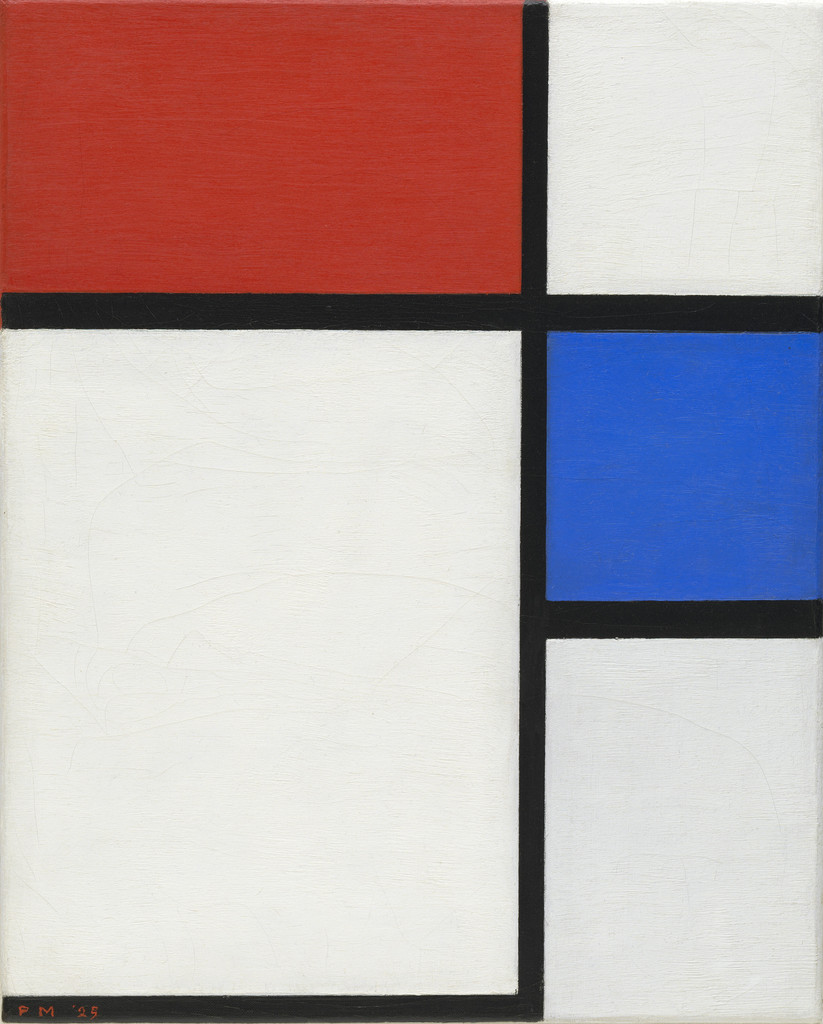
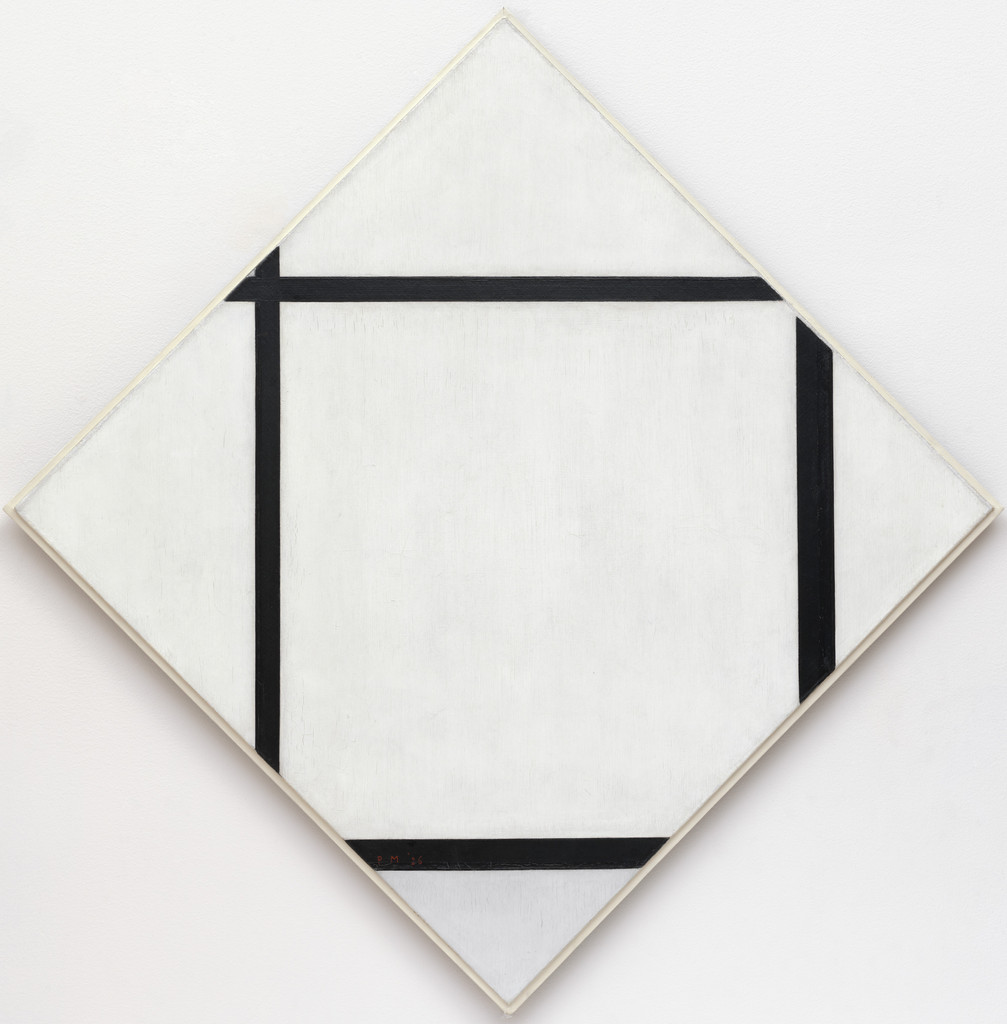
The roots of 20th-century abstract art can be traced to the late 19th century, when artists began to move away from the direct representation of objects toward the communication of emotional states or moods. In doing so, the formal properties of art—such visual elements as line, color, and composition—assumed a primary role in its production. After World War I, many artists, including Piet Mondrian, believed that abstract art could contribute to a more harmonious society by communicating in a universal, visual language. In the wake of the war's destruction, artists associated with De Stijl (meaning, "the style") in the Netherlands recognized the need for a break with the past, as well as a new aesthetic language to correspond to their utopian vision of the world. In 1917 Mondrian joined the De Stijl movement and began to develop a purely visual language of verticals and horizontals, restricting his compositions to predominantly off-white grounds divided by black rectilinear lines that framed smaller blocks of primary colors.

Art Institute of Chicago · CC BY 4.0

Notice

1935 · à 63 ans

Pendant ce temps, chez Piet Mondrian

La vie entière
  1. 1919–1938

    Return to Paris

    In 1919 Mondrian left the Netherlands for Paris for the second and last time and at once turned to his studio: to hide its flaws he tacked large single-colour placards to the walls, accented by compositions of smaller coloured paper rectangles. From then on, periods of painting alternated with experiments in regrouping the papers on the walls.

  2. 1930s

    Double lines, influenced by Marlow Moss

    In the 1930s Mondrian began to use thinner and double lines more often, punctuated by a few small coloured forms; the double line, in which he saw a new dynamism, was influenced by the work of his friend and contemporary Marlow Moss.

  3. 1934–1935

    The “Abstract and Concrete” exhibitions in Britain

    Three of Mondrian's paintings were shown in the “Abstract and Concrete” exhibitions at Oxford, London and Liverpool.

Autres œuvres : Piet Mondrian

Toutes les œuvres

Dans la même salle · Gallery 393, Art Institute of Chicago

Page du musée

Sur le même thème · Geometric

Toutes les œuvres sur ce thème
18721944
Numéro d’inventaire
1949.518

Sources

  • Art Institute of Chicago
  • Image : Art Institute of Chicago — CC0
Piet Mondrian, portraitPiet MondrianPays-Bas, 1872–1944

Peut-on la contempler ?

Oui, elle reçoit

Art Institute of Chicago

Chicago, États-Unis

Salle393

Présentée au public. Qui s’en porte garant est indiqué ci-dessous.

Vérifié
il y a 3 jours
Dans cet état depuis
19 août 2026
Source
Le musée
Sur la cartePage du musée
Oostzijdse Mill along the River Gein by Moonlight, Piet Mondriaan, c. 1903

Oostzijdse Mill along the River Gein by Moonlight

c. 1903 · Rijksmuseum Amsterdam

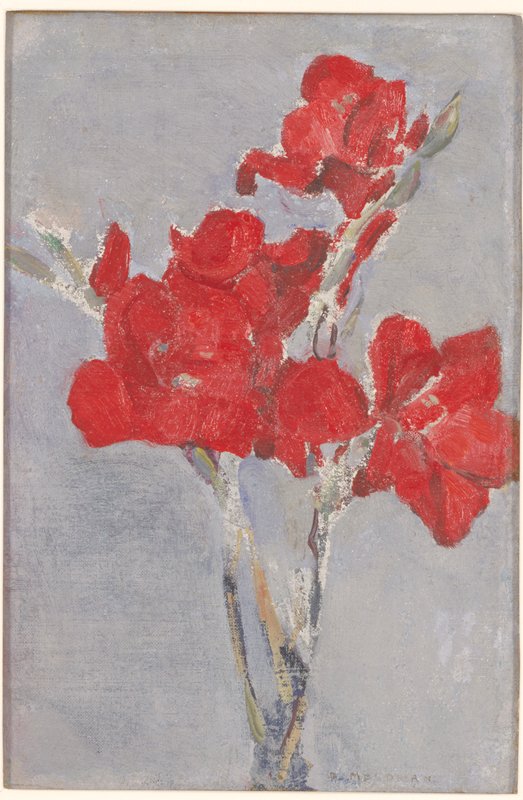
Red Gladioli, Piet Mondrian, c. 1906

Red Gladioli

c. 1906 · Minneapolis Institute of Art

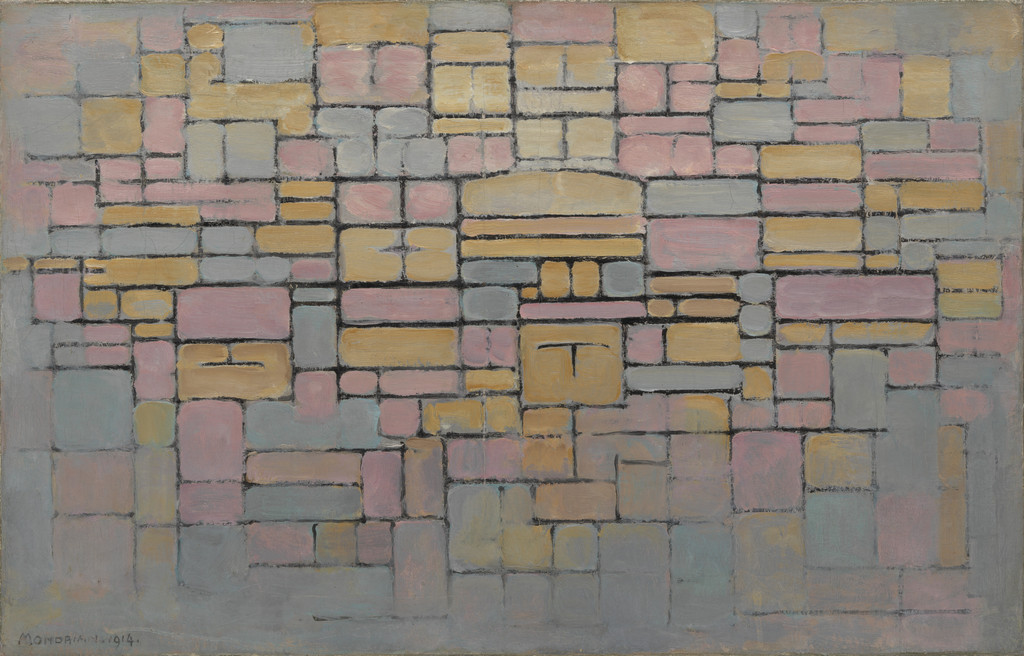
Tableau no. 2 / Composition no. V, Piet Mondrian, 1914

Tableau no. 2 / Composition no. V

1914 · Museum of Modern Art

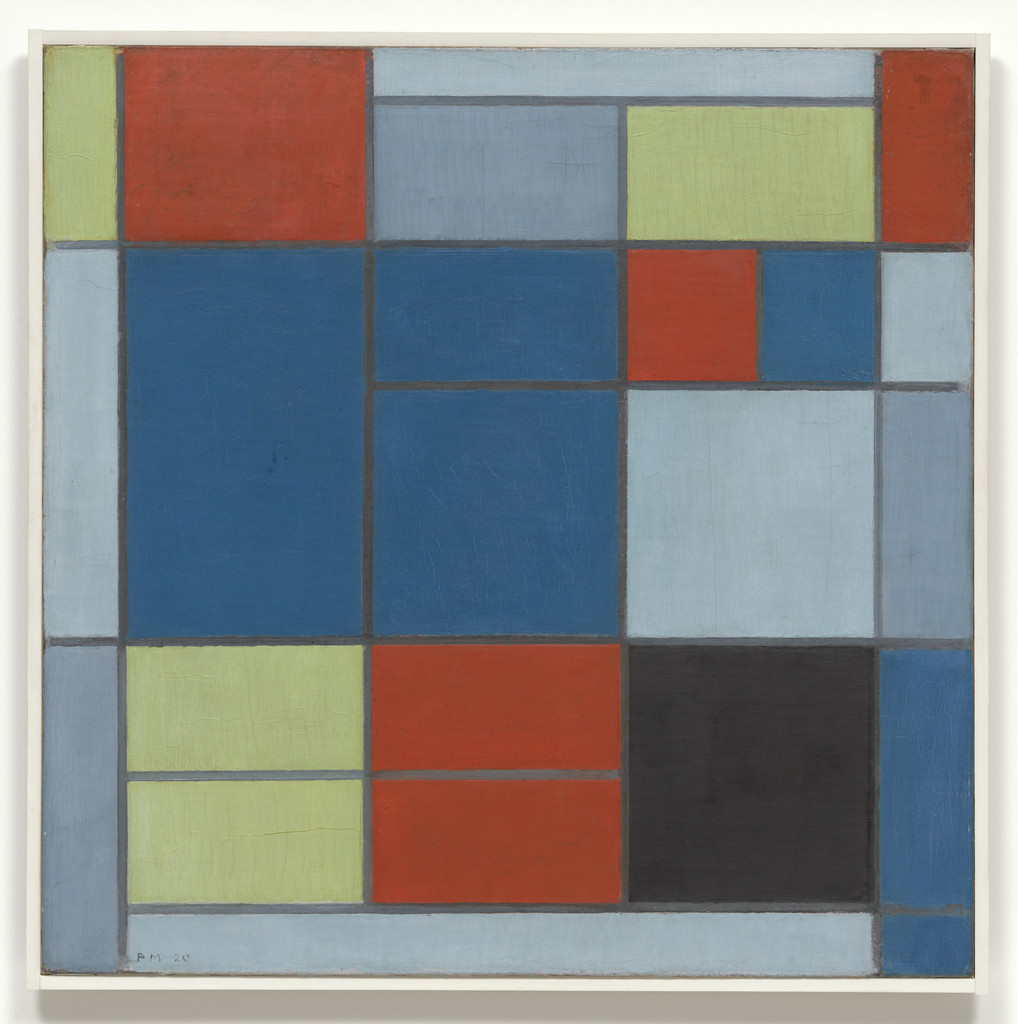
Composition C, Piet Mondrian, 1920

Composition C

1920 · Museum of Modern Art

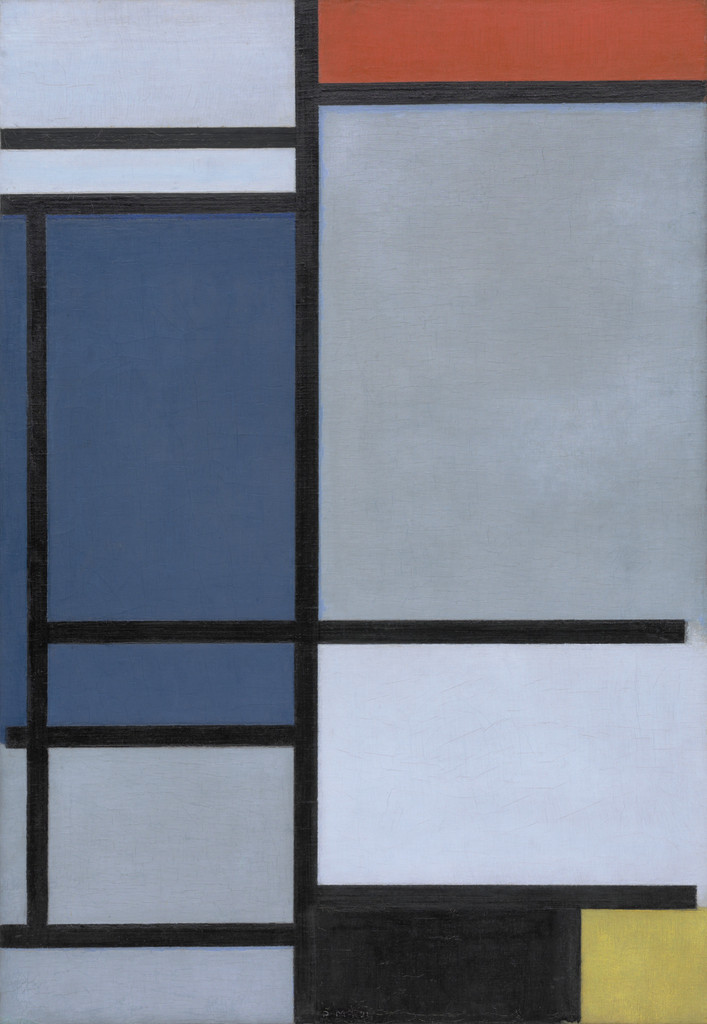
Composition with Red, Blue, Black, Yellow, and Gray, Piet Mondrian, 1921

Composition with Red, Blue, Black, Yellow, and Gray

1921 · Museum of Modern Art

Tableau No. IV; Lozenge Composition with Red, Gray, Blue, Yellow, and Black, Piet Mondrian, c. 1924/1925

Tableau No. IV; Lozenge Composition with Red, Gray, Blue, Yellow, and Black

c. 1924/1925 · National Gallery of Art

Composition No. II, with Red and Blue, Piet Mondrian, 1929 (original date partly obliterated; mistakenly repainted 1925 by Mondrian)

Composition No. II, with Red and Blue

1929 (original date partly obliterated; mistakenly repainted 1925 by Mondrian) · Museum of Modern Art

Tableau I: Lozenge with Four Lines and Gray, Piet Mondrian, 1926

Tableau I: Lozenge with Four Lines and Gray

1926 · Museum of Modern Art

Lozenge Composition with Yellow, Black, Blue, Red, and Gray, Piet Mondrian, 1921

Piet Mondrian

Lozenge Composition with Yellow, Black, Blue, Red, and Gray, 1921

Interrelation of Volumes from the Ellipsoid, Georges Vantongerloo, 1926

Georges Vantongerloo

Interrelation of Volumes from the Ellipsoid, 1926

Reclining Woman, Fernand Léger, 1922

Fernand Léger

Reclining Woman, 1922

Painterly Realism of a Football Player—Color Masses in the 4th Dimension, Kasimir Malevich, Summer/fall 1915

Kazimir Malevich

Painterly Realism of a Football Player—Color Masses in the 4th Dimension, Summer/fall 1915

Edtaonisl (Ecclesiastic), Francis Picabia, 1913

Francis Picabia

Edtaonisl (Ecclesiastic), 1913

Fresco (For a Cathedral), Antoine Pevsner, 1944

Antoine Pevsner

Fresco (For a Cathedral), 1944

Divers on a Yellow Background, Fernand Léger, 1941

Fernand Léger

Divers on a Yellow Background, 1941

Relief no. 12B, César Domela, 1936

César Domela

Relief no. 12B, 1936

Fourth Knot, after Leonardo da Vinci, c. 1490/1500

Leonardo da Vinci

Fourth Knot, c. 1490/1500

Non exposée · National Gallery of Art

First Knot, after Leonardo da Vinci, c. 1490/1500

Leonardo da Vinci

First Knot, c. 1490/1500

Non exposée · National Gallery of Art

Dream and Lie of Franco II, Pablo Picasso, 1937

Pablo Picasso

Dream and Lie of Franco II, 1937

Non exposée · National Gallery of Art

The Bull (Le taureau), Pablo Picasso, 1946

Pablo Picasso

The Bull (Le taureau), 1946

Non exposée · National Gallery of Art

Pike (Pique), Pablo Picasso, 1959

Pablo Picasso

Pike (Pique), 1959

Non exposée · National Gallery of Art

Dream and Lie of Franco I, Pablo Picasso, 1937

Pablo Picasso

Dream and Lie of Franco I, 1937

Non exposée · National Gallery of Art

The Bull (Le taureau), Pablo Picasso, 1946

Pablo Picasso

The Bull (Le taureau), 1946

Non exposée · National Gallery of Art

The Bull (Le taureau), Pablo Picasso, 1945

Pablo Picasso

The Bull (Le taureau), 1945

Non exposée · National Gallery of Art

Ce qu’elle montre

GeometricRed (color)White (color)Black (color)GridsLines

Au catalogue

PeinturesHuilePeinture néerlandaiseModernismeXXe sièclePays-Bas