 Marcel DuchampFrancia, 1887–1968
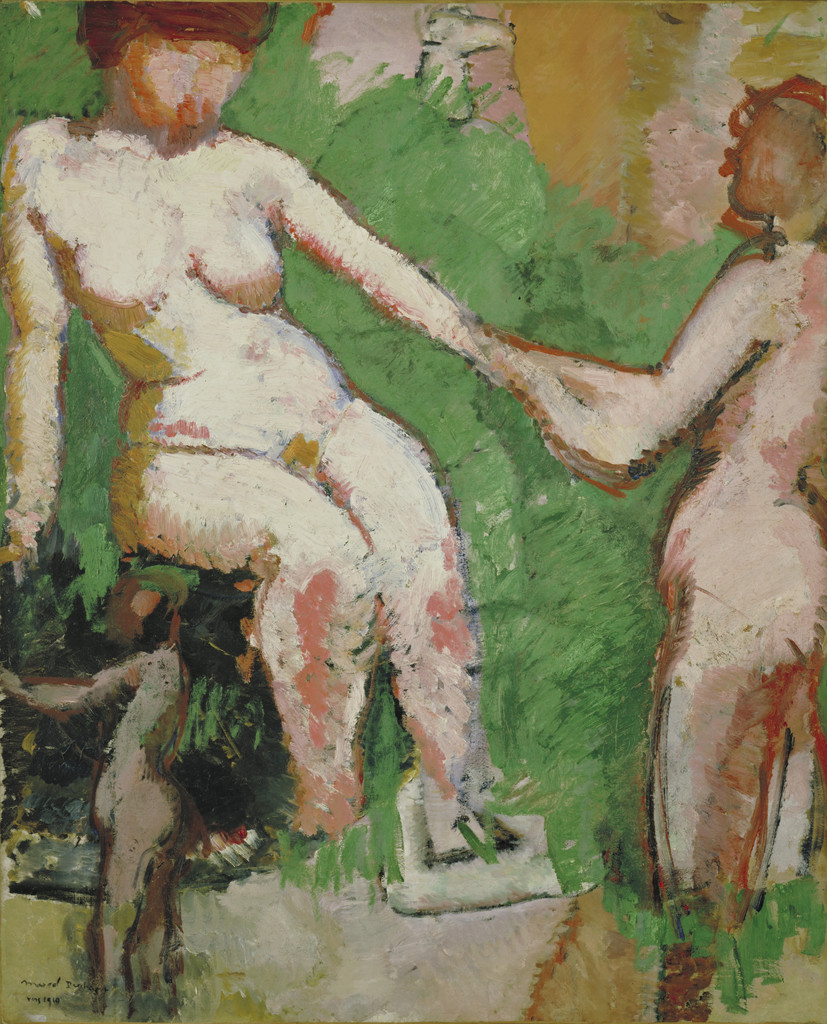
Two Nudes
¿Se puede contemplar?
Por ahora no recibe

MoMA
Nueva York, Estados Unidos
Pertenece a la colección, pero ahora mismo no está expuesta.
- Comprobado
- hace 12 días
- Fuente
- Los datos de colección del propio museo
Ficha
- Número de inventario
- 678.1990
Fuentes
- MoMA: the museum's own open data · obtenido hace 12 días
- Imagen: MoMA — © the artist or rights holder
Mientras tanto, en la vida de Marcel Duchamp
La vida enteraSeptember 1911
Meeting Francis Picabia
They met at the Salon d’Automne in Paris, where both were exhibiting; Duchamp showed a larger version of his “Young Man and Girl in Spring”. “Our friendship began right there,” he said.
1912
Takes the “Nude” back from the Salon des Indépendants
Through Duchamp’s brothers, Albert Gleizes asked him to withdraw the painting or at least rename it (as Duchamp later told it); he quietly refused, but went straight to the show and took the canvas home by taxi. “It was really a turning point in my life,” he recalled, adding that after this he would not be very much interested in groups.
c. 1912
Reads Max Stirner
He read the philosophical tract The Ego and Its Own and regarded it as another turning point in his artistic and intellectual development: in his words, a book that advances no formal theories but keeps saying that the ego is always there in everything.
1912
A stage version of Raymond Roussel
He saw a stage adaptation of Raymond Roussel’s novel Impressions of Africa, with plots that turned in on themselves, word play, surrealistic sets and humanoid machines. He credited it with radically changing his approach to art and inspiring the Large Glass.
1912
Two months in Munich
He painted the last of his Cubist-like paintings, started the image of The Bride Stripped Bare by Her Bachelors, Even and began scribbling plans for the Large Glass, which would take more than ten years to complete. He walked to Munich’s Alte Pinakothek every day, where he was struck by the works of Lucas Cranach the Elder, while the friend he visited kept showing him the sights and the nightlife.
noviembre de 1912 · Formación
École des chartes