.jpg?width=96) Vincent van GoghPaíses Bajos, 1853–1890
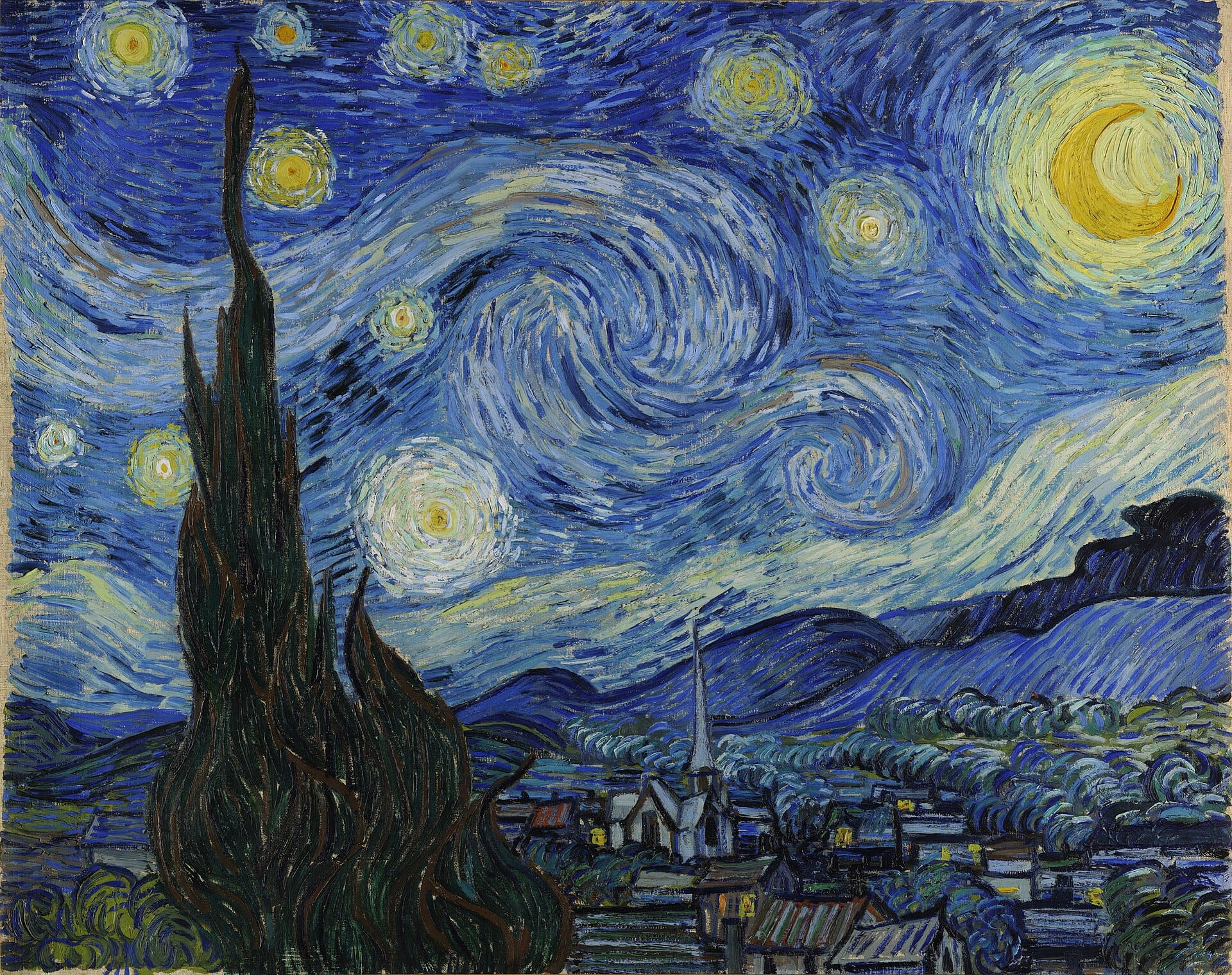
Vincent van GoghPaíses Bajos, 1853–1890La noche estrellada
The Starry Night
¿Se puede contemplar?
Sí, recibe visitas

Expuesta al público.
- Comprobado
- Fuente
- El museo
Sobre el cuadro
La noche estrellada (neerlandés: De sterrennacht) es un óleo sobre lienzo del pintor postimpresionista neerlandés Vincent van Gogh. Pintado en junio de 1889, representa la vista desde la ventana orientada al este de su habitación en el asilo en Saint-Rémy-de-Provence, justo antes del amanecer, donde incluye un pueblo imaginario. Ha estado en la colección permanente del Museo de Arte Moderno de la ciudad de Nueva York desde 1941, adquirida a través de Lillie P. Bliss Bequest. Ampliamente considerada como la obra maestra del pintor. La noche estrellada es una de las pinturas más reconocidas en la historia de la cultura occidental.
Ficha
- Número de inventario
- 472.1941
En el catálogo
Fuentes
- Las investigaciones de ART WIKI
- MoMA
- Imagen: Wikimedia Commons — Public domain (PD-Art)
Mientras tanto, en la vida de Vincent van Gogh
La vida entera1888
To Arles, dreaming of a “Studio of the South”
The public still neither accepted nor bought his paintings, and in February 1888 Van Gogh left for Arles in the south of France to found a “Studio of the South”, a brotherhood of like-minded artists in which he gave Gauguin the leading role. Theo backed the plan with money.
23 October 1888
Gauguin arrives in Arles
After much pleading Gauguin arrived in Arles, and in November the two painted together: Gauguin portrayed Van Gogh in “The Painter of Sunflowers”, and their first joint outing was to the Alyscamps. At Gauguin's suggestion Vincent painted from memory, producing “Memory of the Garden at Etten”.
23 December 1888
The severed ear
After an altercation on the evening of 23 December, Van Gogh, seemingly hearing voices, severed his left ear, wholly or in part, with a razor and delivered it, wrapped in paper, to a woman at a brothel. Next morning a policeman found him unconscious; in hospital he was diagnosed with “acute mania with generalised delirium”.
1889
Voluntarily into the Saint-Paul asylum
Van Gogh left Arles and voluntarily entered the Saint-Paul-de-Mausole asylum, a former monastery in Saint-Rémy-de-Provence, accompanied by the Protestant clergyman Frédéric Salles. Of his two cells with barred windows one became a studio, and the clinic and its garden became the main subjects of his paintings.
27 July 1890
A fatal wound: a revolver shot
Out painting, Van Gogh shot himself in the chest with a revolver he had bought to scare off birds while working outdoors; the bullet passed below his heart, and he made his own way back to his room at the inn. Theo arrived the next day and stayed with him to the end; according to Theo, Vincent's last words were: “The sadness will last forever.”
29 de julio de 1890
Died