Constantin BrancusiRumania, 1876–1957
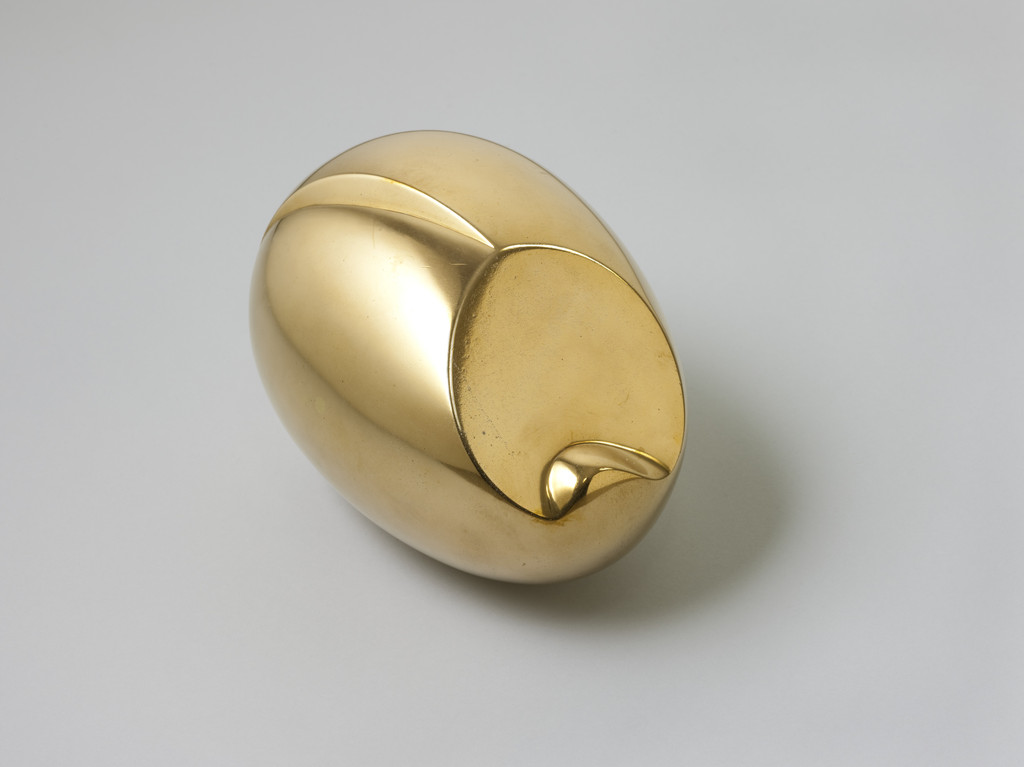
The First Step
¿Se puede contemplar?
Por ahora no recibe

Instituto de Arte de Chicago
Chicago, Estados Unidos
Pertenece a la colección, pero ahora mismo no está expuesta.
- Comprobado
- ayer
- En este estado desde
- 19 ago 2026
- Fuente
- Los datos de colección del propio museo
Ficha
- Número de inventario
- 1954.1353
What it shows
En el catálogo
Fuentes
- Instituto de Arte de Chicago: the museum's own open data · obtenido hace 5 días
- Imagen: Instituto de Arte de Chicago — © the artist or rights holder
Mientras tanto, en la vida de Constantin Brancusi
La vida entera1910s
“Mobile groups”: rearranging the sculptures
During the 1910s Brâncuși arranges sculptures and pedestals in changing compositions that he calls “mobile groups”: he moves the works and watches how each change alters the space around them. When he sells a sculpture he often puts a plaster version in the same position, and by the 1920s the studio is also an exhibition space whose arrangement forms part of the work.
autumn 1912
The Grand Palais aviation show with Duchamp and Léger
In the fall of 1912 Brâncuși visits an aviation exhibition at the Grand Palais with Marcel Duchamp and Fernand Léger; the three stop before an airplane propeller, and its mechanical precision leads them into a conversation about machine-made forms and the direction sculpture might take. In May of that year he had rented a second studio at 47 rue du Montparnasse, across from the first.
17 February 1913
The Armory Show in New York: five sculptures
In December 1912 the Armory Show organisers Arthur Bowen Davies, Walt Kuhn and Walter Pach visit Paris in search of works; the catalogue lists five sculptures by Brâncuși — “The Kiss”, “Sleeping Muse”, “A Muse”, “Mademoiselle Pogany” and “Torso”. The exhibition opens in New York on 17 February 1913 and travels to Chicago and Boston; his compact forms provoke laughter, caricatures and arguments in the press, and “Mademoiselle Pogany” is compared to an egg.
1914
The patron John Quinn
The lawyer and collector John Quinn, a supporter of the Armory Show, buys works from Brâncuși and remains in contact with him until his death in 1924; in 1914 he acquires a version of “Mademoiselle Pogany” from 291.
12 March – 4 April 1914
His first US solo show at the gallery 291
Edward Steichen selects the works for Brâncuși’s first solo exhibition in the United States: eight sculptures, including “Măiastra” and “Mademoiselle Pogany”, are shown at 291, the gallery run by Alfred Stieglitz. Agnes and Eugene Meyer pay for their transportation and begin buying works directly from Brâncuși.