 John Everett MillaisReino Unido, 1829–1896
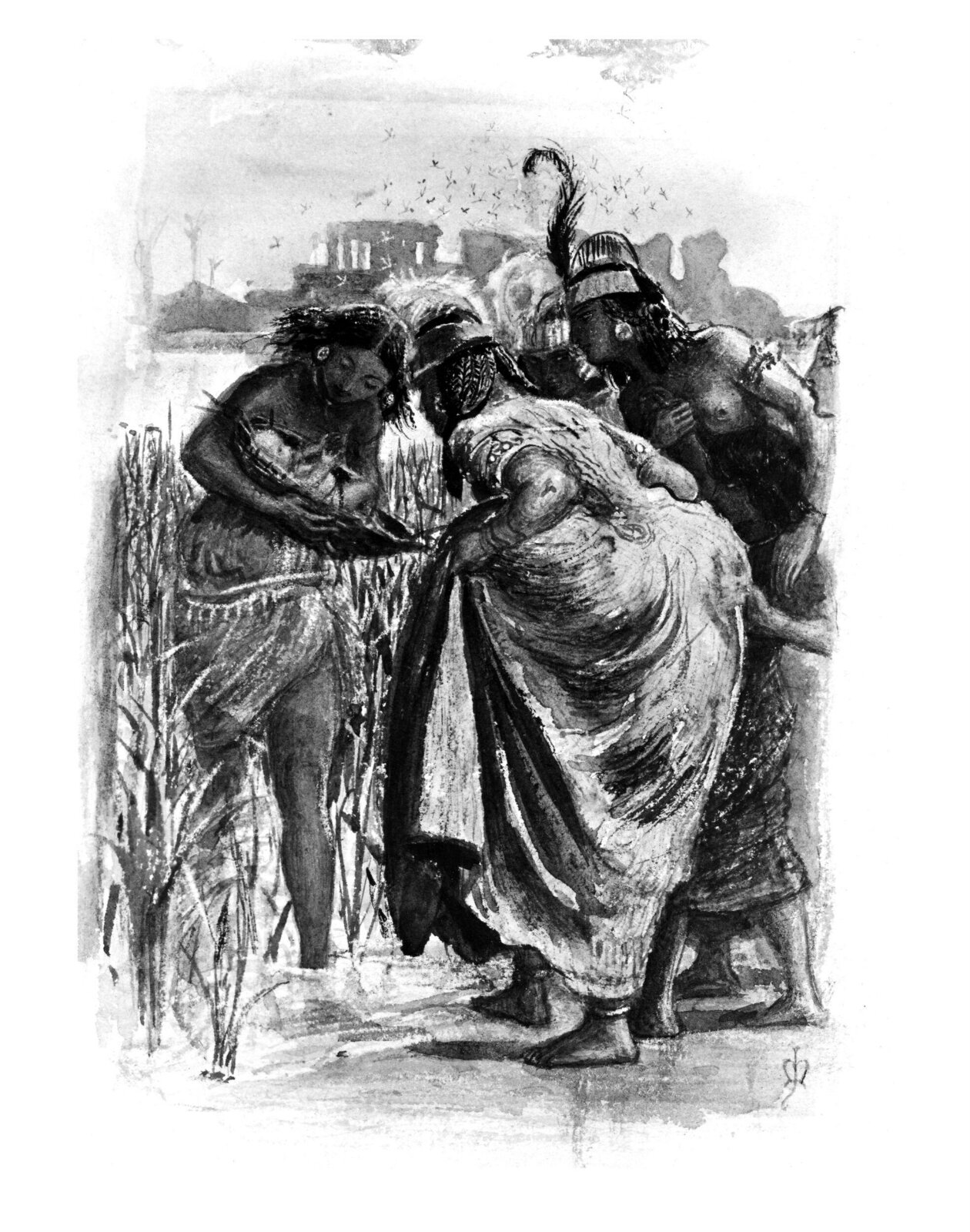
The Finding of Moses
¿Puedo verla?
No expuesta por ahora
¿Dónde está «The Finding of Moses» hoy? Colección: Museo de Victoria y Alberto, Londres. No expuesta por ahora. Comprobado 25 de septiembre de 2026.

Londres, Reino Unido
Pertenece a la colección, pero ahora mismo no está expuesta.
- Comprobado
- En este estado desde
- Fuente
- El museo
Sobre la obra
J. Everett Millais produced over three hundred designs for illustrations in poetry books, periodicals, novels, religious literature, and books for children. This particular drawing was engraved by the Dalziel Brothers, a London-based printmaking firm, to illustrate Moses on the Nile, a poem by James Grahame, published in Lays of the Holy Land from Ancient and Modern Poets (1858). The use of the watercolour technique in this drawing suggests that the artist may have retouched the sheet for presentation or perhaps for sale after it had been used for the book illustration.
Museo de Victoria y Alberto
Ficha
- Número de inventario
- E.1047-1948
En el catálogo
Fuentes
- Museo de Victoria y Alberto
- Imagen: Museo de Victoria y Alberto — © Victoria and Albert Museum, London
En la vida de John Everett Millais
La vida entera8 de junio de 1829
Born
1840
The youngest student in the Royal Academy’s history
In December 1840, at the age of eleven, he entered the Royal Academy Schools, the youngest student ever admitted, and studied there for six years.
1847
Founds the Pre-Raphaelite Brotherhood with Hunt and Rossetti
While at the Royal Academy Schools he met William Holman Hunt and Dante Gabriel Rossetti, and in September 1847 the three formed the Pre-Raphaelite Brotherhood at the Millais family home at 83 Gower Street, off Bedford Square.
1850
The scandal over “Christ in the House of His Parents”
Christ in the House of His Parents (1850) was judged excessively realistic, showing a working-class Holy Family in a messy carpentry workshop, and The Times called it outrageous. Millais was undaunted: the critic John Ruskin saw his outstanding talent at once and backed him, and his works were always accepted for the Academy’s exhibitions, however radical.
summer 1853
A summer at Glenfinlas: falling in love with Effie Ruskin
In the summer of 1853 John Ruskin and his wife Effie invited Millais to spend the summer with them at Glenfinlas, where Millais and Effie fell in love. Effie modelled for his The Order of Release; her marriage to Ruskin, which had lasted several years, was annulled after her parents realised something was wrong and she filed for annulment, and Millais and Effie then married.
13 de agosto de 1896
Died



![Study of a Pottery Jug [recto], John Everett Millais, c. 1842](https://api.nga.gov/iiif/bd3617b6-ebda-468c-9b54-142851ab029e/full/!2400,2400/0/default.jpg)