ART WIKI32.963 en sala
MapaColecciónArtistasMuseosExposicionesRevista
Acceder

ART WIKI

Dónde cuelga la obra maestra y cuándo le dejan pasar.

Colecciones: Galería Nacional de Arte, Galería Nacional de Dinamarca, Galería Nacional de Retratos, Galería Tretiakov, Harvard Art Museums, Instituto de Arte de Chicago, Instituto de Artes de Mineápolis, MoMA, Museo de Arte de Cleveland, Museo de Victoria y Alberto, Museo del Hermitage, Museo del Louvre, Museo Estatal Ruso, Museo Hirshhorn y Jardín de Esculturas, Museo J. Paul Getty, Museo Metropolitano de Arte, Museo Pushkin, Museo Smithsoniano de Arte Americano, Museo Whitney de Arte Estadounidense, National Museum of Asian Art, Rijksmuseum, Villa Getty, Catálogo Estatal del Fondo Museístico de Rusia (274 museos), Europeana (19 museos), Wikidata (6 museos), Paris Musées (12 museos) y Joconde, la base de museos del Ministerio de Cultura de Francia (495 museos). Las imágenes pertenecen a sus titulares de derechos.

Secciones

  • Mapa
  • Búsqueda
  • Colección
  • Obras maestras
  • Expuestas ahora
  • Artistas

Más

  • Museos y galerías
  • Exposiciones
  • Revista
  • De dónde salen los datos
  • Privacidad y cookies
InicioMapaCatálogo
  1. Colección/
  2. Instituto de Arte de Chicago/
  3. Mz 13 Call
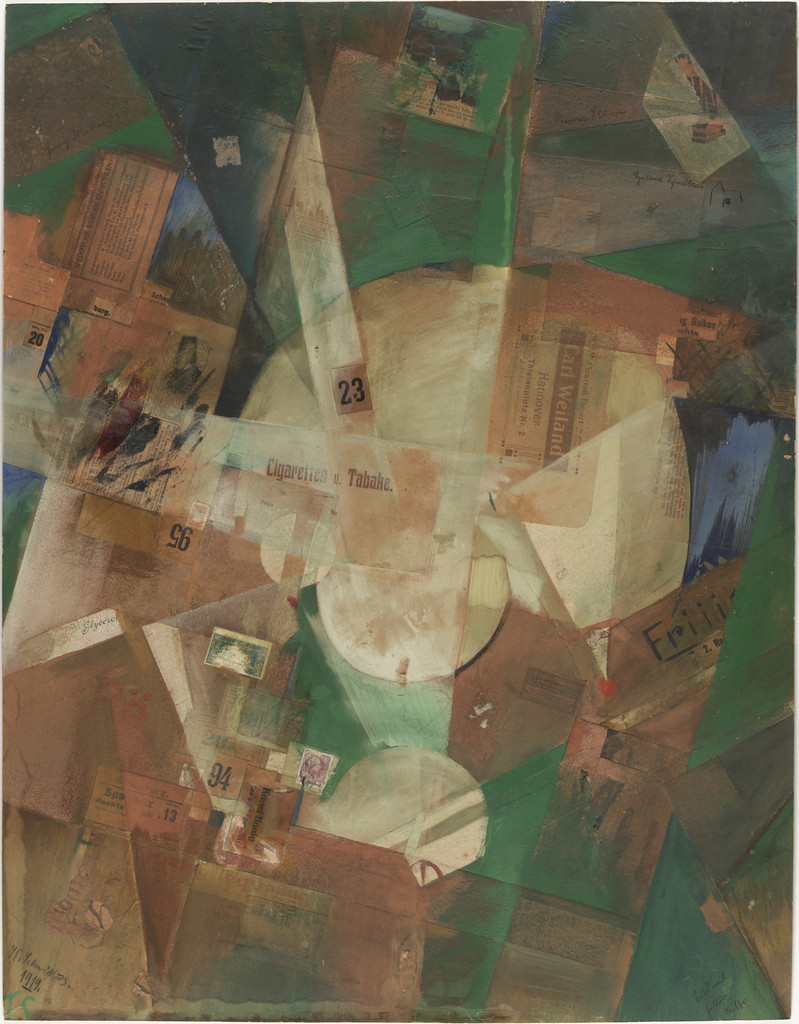
Mz 13 Call, Kurt Schwitters, 1919
Kurt Schwitters, retratoKurt SchwittersAlemania, 1887–1948

Mz 13 Call

1919 · Drawing and Watercolor

¿Se puede contemplar?

Por ahora no recibe

Instituto de Arte de Chicago

Chicago, Estados Unidos

Pertenece a la colección, pero ahora mismo no está expuesta.

Comprobado
hace 3 días
En este estado desde
19 ago 2026
Fuente
El museo
En el mapaPágina del museo

Ficha

1919 · a los 32 años
18871948
Número de inventario
1953.24

En el catálogo

Dibujos y acuarelasPlumaModernismoSiglo XXVanguardismoAlemania

Fuentes

  • Instituto de Arte de Chicago
  • Imagen: Instituto de Arte de Chicago — © the artist or rights holder

Mientras tanto, en la vida de Kurt Schwitters

La vida entera
  1. 1918

    Germany’s collapse transforms his art

    Germany’s economic, political and military collapse at the end of the First World War changes his art dramatically: by his own account, what he had learned at the academy was of no use and new things had to be made out of the fragments — this is Merz, like a revolution within him.

  2. February 1918

    Hanover Secession show and contact with Walden

    After showing Expressionist paintings at the Hanover Secession, Schwitters comes into contact with Herwarth Walden, whose gallery Der Sturm is in Berlin.

  3. June 1918

    Two ‘Abstractions’ at the Der Sturm gallery

    At Walden’s gallery in Berlin he shows two ‘Abstraktionen’, semi-abstract Expressionist landscapes.

  4. autumn 1918

    Meets the Berlin avant-garde

    He meets Raoul Hausmann, Hannah Höch and Jean Arp; Hausmann recalled how Schwitters introduced himself at the Café des Westens: ‘I’m a painter,’ he said, ‘and I nail my pictures together.’ He remains close to Höch and Hausmann for the rest of his career.

  5. June 1919

    First solo exhibition at Der Sturm

    His first solo exhibition opens at the Der Sturm gallery in Berlin in June 1919; together with the poem published that August, it makes him a well-known artist by the end of the year.

  6. August 1919

    The poem ‘An Anna Blume’ is published

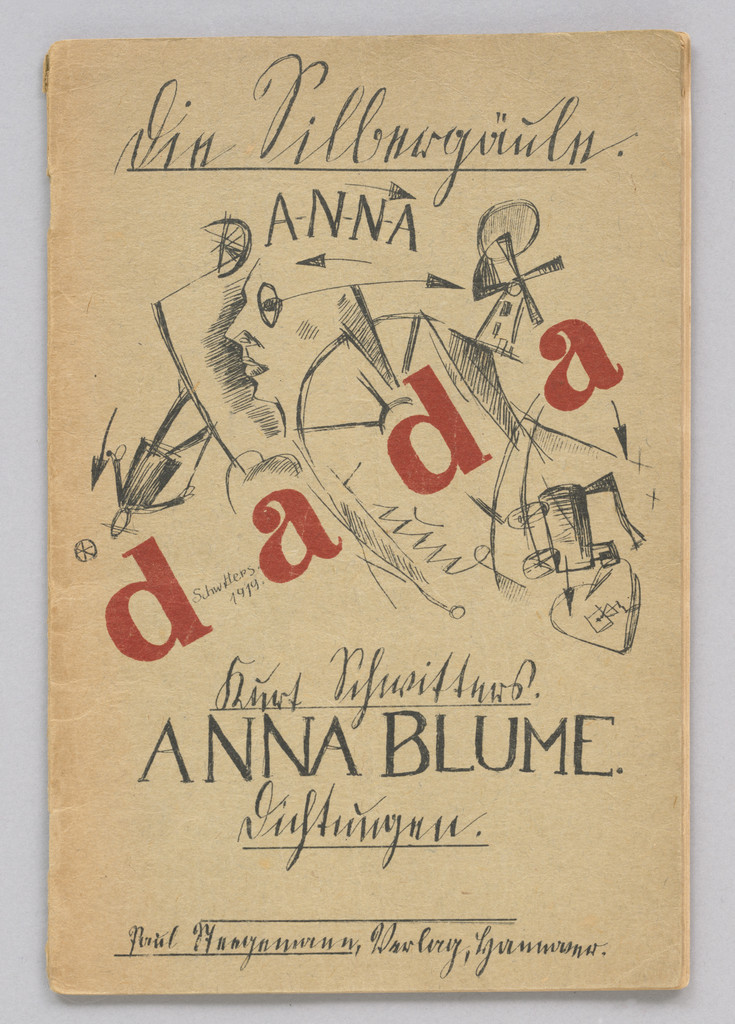
    The Dadaist, nonsensical love poem ‘An Anna Blume’ is published in August 1919, with the word ‘Dada’ on its cover.
Más obras de Kurt Schwitters

Todas las obras
Picture with Light Center (Bild mit heller Mitte), Kurt Schwitters, 1919

Picture with Light Center (Bild mit heller Mitte)

1919 · MoMA

Untitled, Kurt Schwitters, c. 1946

Untitled

c. 1946 · Instituto de Arte de Chicago

For the Modern, Kurt Schwitters, 1947

For the Modern

1947 · Instituto de Arte de Chicago

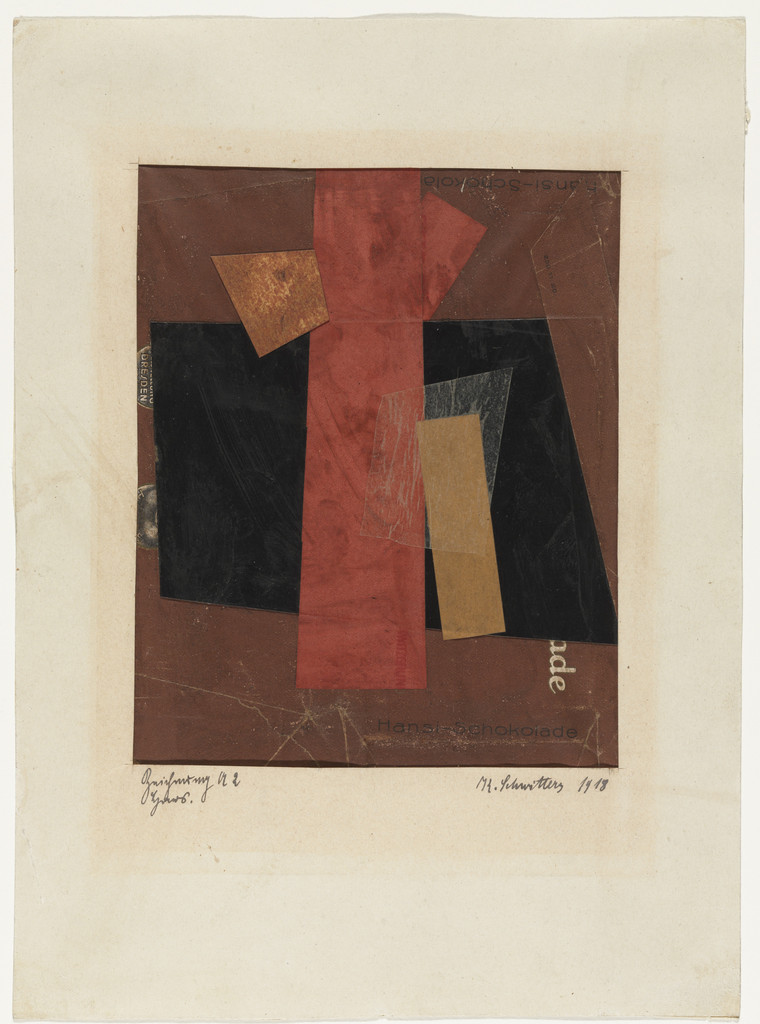
Drawing A2: Hansi, Kurt Schwitters, 1918

Drawing A2: Hansi

1918 · No expuesta · MoMA

Untitled, Kurt Schwitters, 1919

Untitled

1919 · No expuesta · Galería Nacional de Arte

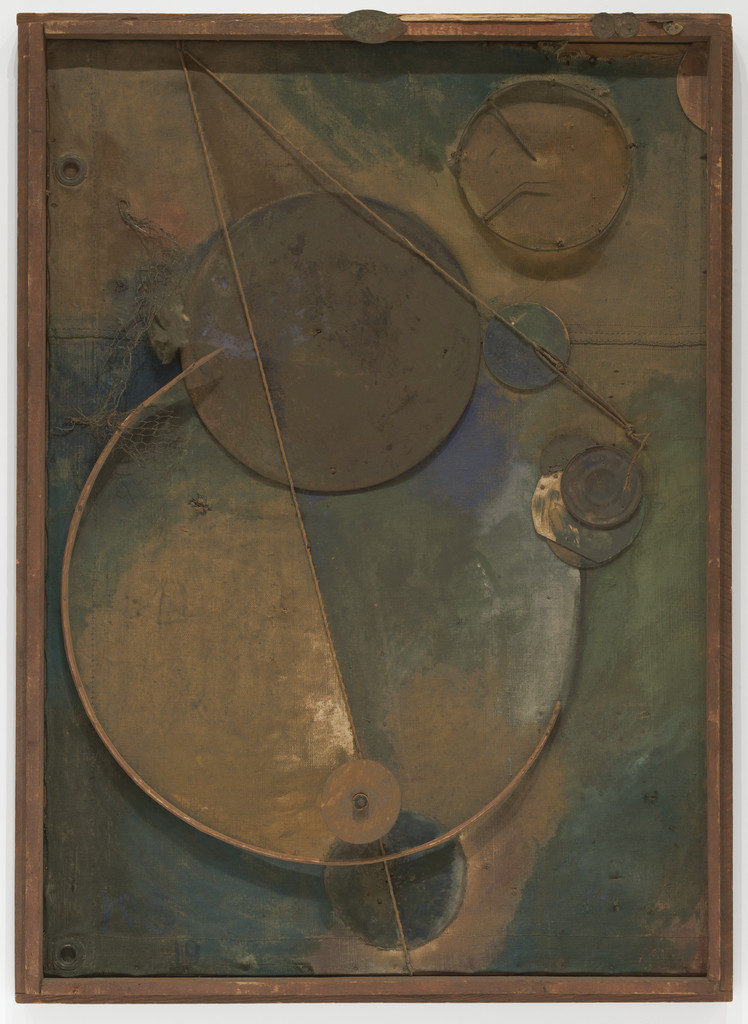
Revolving, Kurt Schwitters, 1919

Revolving

1919 · No expuesta · MoMA

Anna Blume: Dichtungen (Die Silbergäule, vol. 39/40), Kurt Schwitters, 1919

Anna Blume: Dichtungen (Die Silbergäule, vol. 39/40)

1919 · No expuesta · MoMA

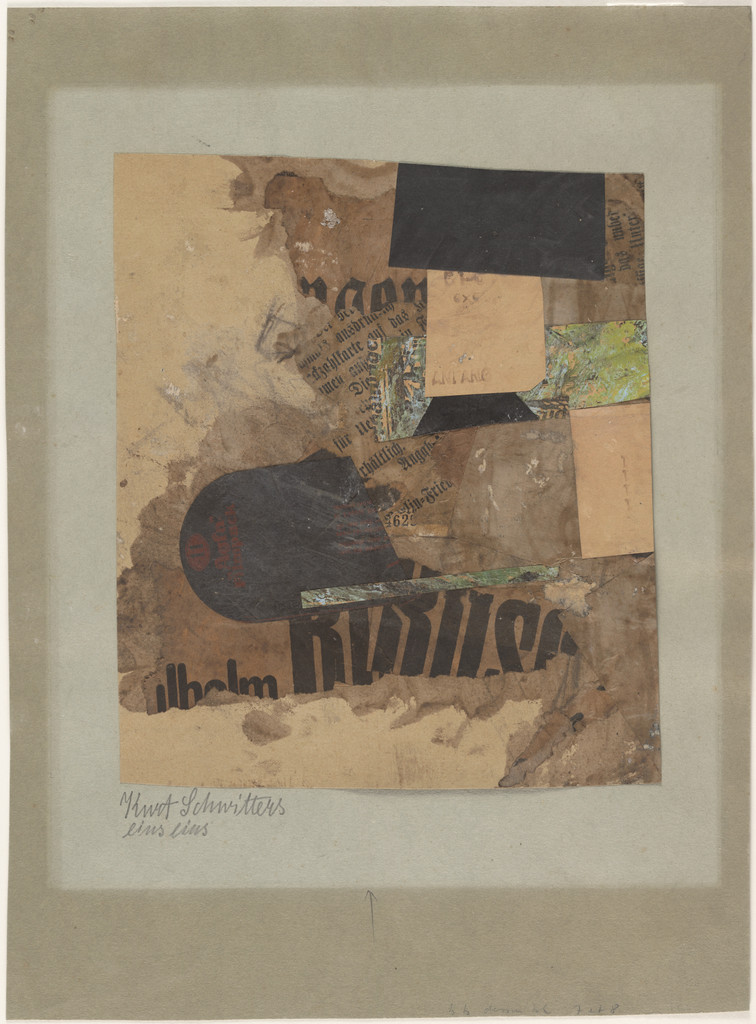
One One (Eins Eins), Kurt Schwitters, 1919–20

One One (Eins Eins)

1919–20 · No expuesta · MoMA

Bajo el mismo techo: Instituto de Arte de Chicago

Página del museo
The Bedroom, Vincent van Gogh, 1889

Vincent van Gogh

The Bedroom, 1889

A Sunday on La Grande Jatte — 1884, Georges Seurat, 1884–86, border added 1888–89

Georges Seurat

Tarde de domingo en la isla de la Grande Jatte, 1884–86, border added 1888–89

Paris Street; Rainy Day, Gustave Caillebotte, 1877

Gustave Caillebotte

Calle de Paris, dia de lluvia, 1877

Two Sisters (On the Terrace), Pierre-Auguste Renoir, 1881

Pierre-Auguste Renoir

En la terraza, 1881

The Basket of Apples, Paul Cézanne, c. 1893

Paul Cézanne

Cesto de manzanas, c. 1893

Stacks of Wheat (End of Summer), Claude Monet, 1890–91

Claude Monet

Stacks of Wheat (End of Summer), 1890–91

American Gothic, Grant Wood, 1930

Grant Wood

American Gothic, 1930

Nighthawks, Edward Hopper, 1942

Edward Hopper

Noctámbulos, 1942