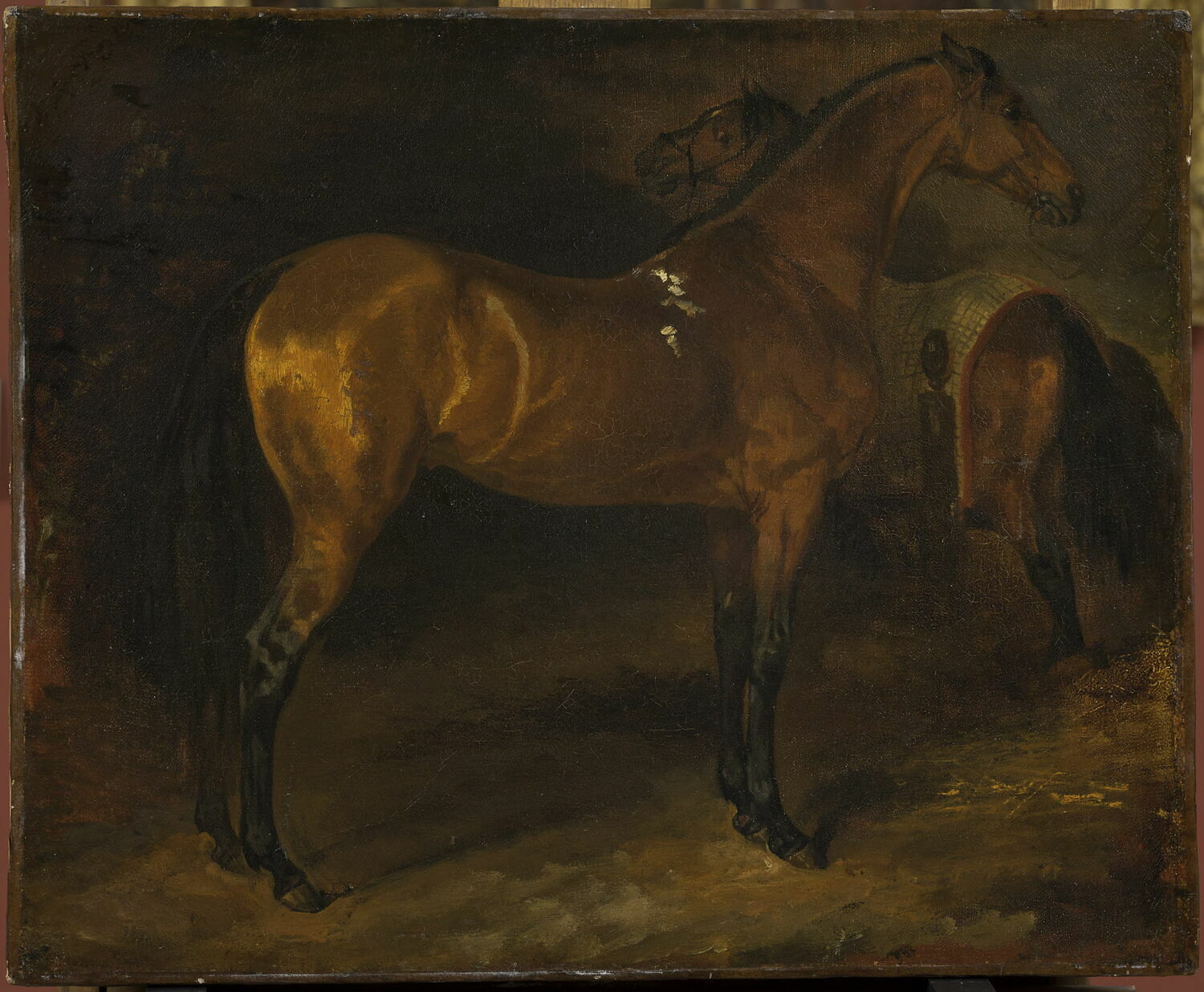
 Théodore GéricaultFrancia, 1791–1824
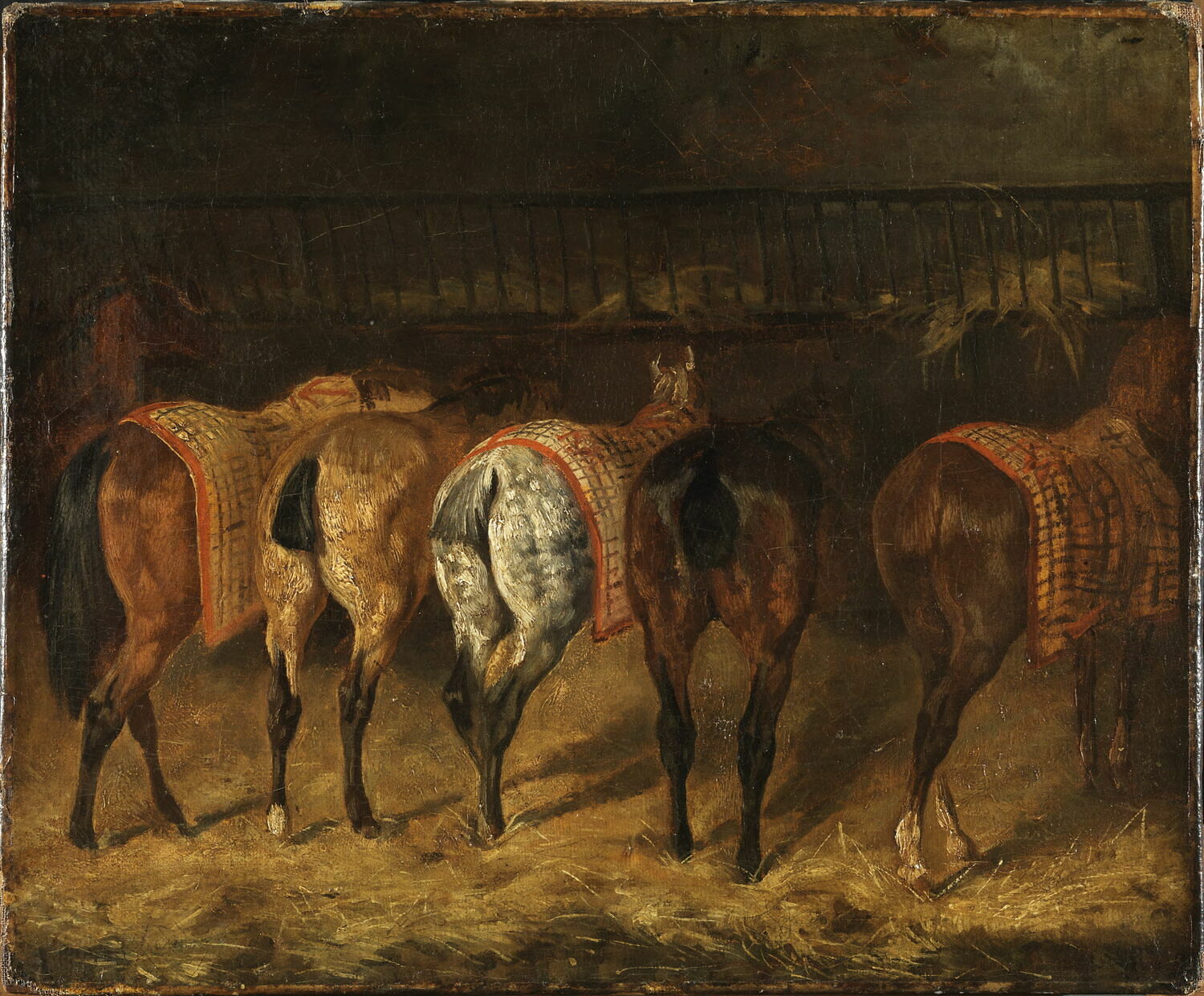
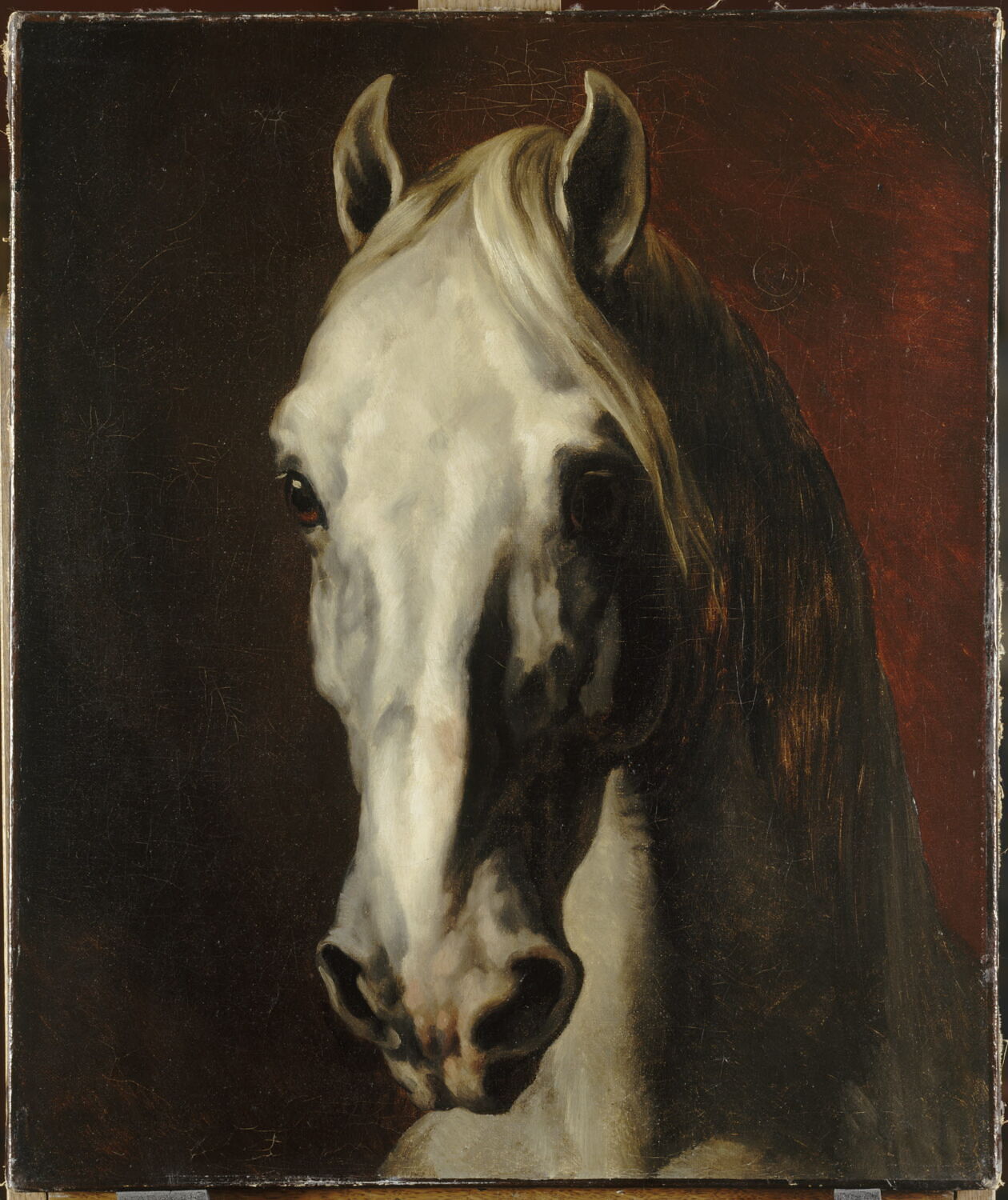
Cheval espagnol dans une écurie
¿Puedo verla?
Sí, expuesta ahora
¿Dónde está «Cheval espagnol dans une écurie» hoy? Museo del Louvre, Salle 941, Aile Sully, Niveau 2, París. Sí, expuesta ahora. Comprobado 26 de septiembre de 2026.

Cerrado· abre mañana a las 9:00
Expuesta al público.
- Comprobado
- En este estado desde
- Fuente
- El museo
Ficha
- Número de inventario
- INV 4890
En el catálogo
Fuentes
- Museo del Louvre
- Imagen: Museo del Louvre — © 2013 GrandPalaisRmn (musée du Louvre) / Michel Urtado
En la vida de Théodore Géricault
La vida enteralate 1808
Carle Vernet's studio: horses and the Cirque Franconi
In late 1808 Géricault began training with Carle Vernet, a master of battle and genre scenes. He mostly practised drawing horses, saw engravings after English animal painters, visited the Cirque Franconi, riding schools and stud farms with his teacher, and it was here that his friendship with Vernet's son Horace began.
1810
To Pierre Guérin: six months of irregular lessons
In 1810 Géricault left Vernet's studio for the rigorous classicist Pierre Guérin, who disapproved of his student's impulsive temperament while recognizing his talent. He attended the studio irregularly for about six months, probably to work from the live model and meet the other pupils, and painted “Samson and Delilah”, “The Departure of Odysseus from Ithaca” and “The Defense of Thermopylae” at the time.
5 de febrero de 1811 · Formación
Beaux-Arts de Paris
1812
Salon debut: “Officer of the Imperial Guard Chasseurs”
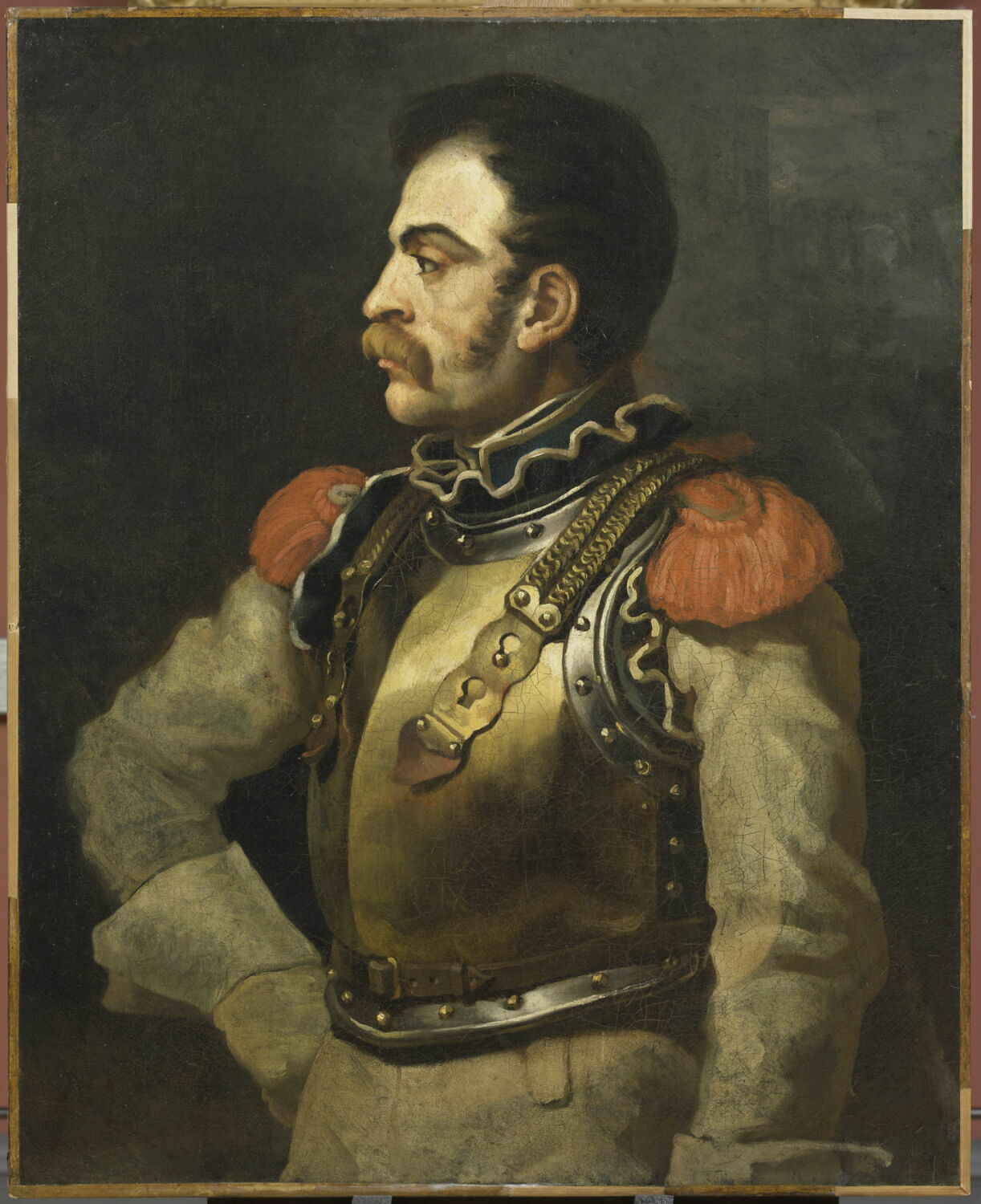
In 1812 Géricault sent “Portrait of Dieudonné” (now “Officer of the Imperial Guard Chasseurs Charging”, Louvre) to the Paris Salon. An artist unknown until then, said to have “hardly studied”, he at once drew the critics' attention: Boutard advised him to take up battle painting, Durdent called him “perhaps the best of all our painters”, and David himself noticed the picture.
1814
Salon of 1814: “Wounded Cuirassier” and cold reviews
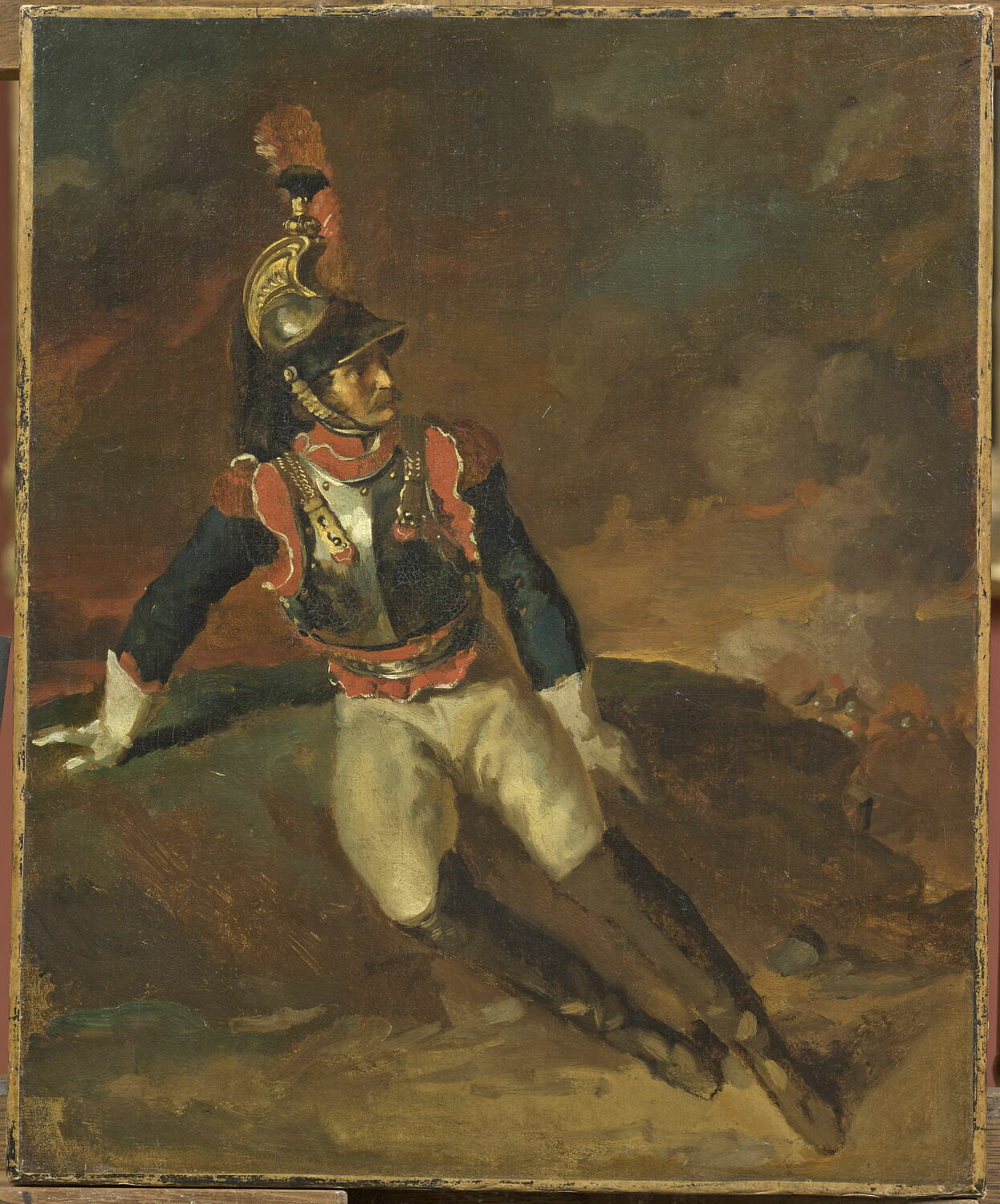
At the Salon of 1814, held after Napoleon's fall, the “Officer” was shown paired with “Wounded Cuirassier Leaving the Field of Battle”, the only reminder of a passing tragic and glorious era among the neutral subjects chosen by other artists. Critics either said nothing of Géricault's pictures or received them unfavorably.
December 1814
He buys a commission as a musketeer
Having recently evaded military service, in December 1814 Géricault, with the help of his father and uncle, bought a commission in the musketeer company commanded by Lauriston, a privileged military unit. His biographers find it hard to explain what motivated him.